Sognefjellet vs Trollstigen: Norway's Two Great Cycling Climbs
Both are iconic. Both are dramatic. But they are completely different experiences — here is how to choose, and why the best answer might be to ride both.
Sognefjellet
~45 km from Lom / 21 km from Fortun, 1,434 m summit, open plateau
Trollstigen
7.9 km, 870 m summit, eleven hairpins
Opens
Late May or early June
Best time
Late June – early September
Base for Sognefjellet
Skjolden, inner Sognefjord
Base for Trollstigen
Åndalsnes
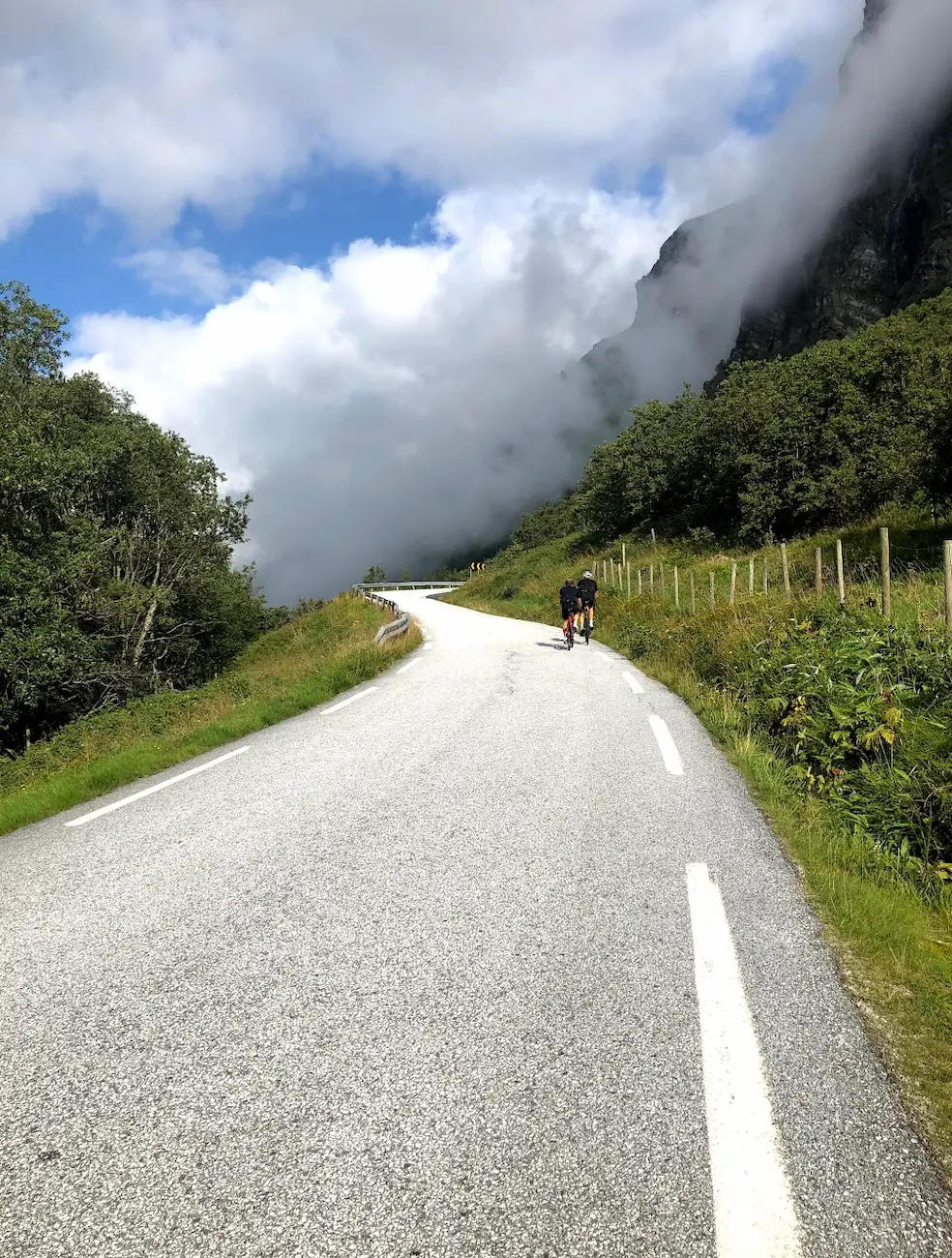
If you are planning a cycling trip to Norway's Western Fjords, these are the two climbs everyone asks about. Sognefjellet and Trollstigen are the most famous road cycling ascents in Norway — both spectacular, both world-class, but very different in character. Sognefjellet is remote, long and austere — a climb you earn across ~45 kilometres from Lom at a gentle gradient, or 21 hard kilometres from Fortun, to reach Northern Europe's highest public road. Trollstigen is shorter, more dramatic in its immediate visual impact, and considerably easier to fit into a single day's riding. Here is how to think about them.
Sognefjellet is longer, higher and more remote — ~45 km from Lom at a gentle gradient, or 21 km at 6.5% from the hard side at Fortun, reaching 1,434 m. Trollstigen is shorter and more theatrical — 7.9 km at 8.2% with eleven named hairpins beneath Stigfossen waterfall. Ride Trollstigen for maximum scenery per kilometre. Ride Sognefjellet for a full high-mountain day.
The climbs compared
Sognefjellet climbs to the summit at 1,434 metres — either ~45 kilometres at a gentle gradient from Lom, or 21 kilometres at 6.5% from Fortun with around 1,464 metres of climbing. The lower section is the steepest, with several hairpins that demand attention. Above 900 metres the road opens onto a vast high-altitude plateau of bare rock, glacial lakes and, earlier in the season, substantial snow banks. The final kilometres feel like riding across the roof of Norway.
Trollstigen is a different animal. The climb to the 870-metre summit is 7.9 kilometres at 8.2 per cent average, but the famous section is much shorter — eleven tight hairpins compressed into less than five kilometres above the Istra valley, with the Stigfossen waterfall cascading 320 metres alongside the road. The gradient through the hairpins exceeds 10 per cent. It is intense, photogenic and over quickly.
In terms of sheer climbing challenge, Sognefjellet is substantially harder. But Trollstigen is the more immediately spectacular road.
Elevation Profile
Sognefjellet (Fortun)
Distance
21.0 km
Avg. Gradient
6.5%
Elevation Gain
1357 m
Elevation Profile
Trollstigen
Distance
7.9 km
Avg. Gradient
8.2%
Elevation Gain
652 m
What you see
On Sognefjellet, the view evolves slowly. The lower forested section gives way to alpine meadow, which gives way to something more elemental — a wide plateau where the road seems to float above the landscape, and on clear days snowfields in every direction. The Sognefjellshytta mountain lodge sits near the top at 1,413 metres, and from there you look back down a valley that feels enormous.
Trollstigen is different. The drama comes at you immediately — waterfalls alongside the road, sheer rock walls on both sides, and the hairpins so tight that coaches have to perform multiple-point turns to navigate them. From the viewing platform at the top, the road you just climbed looks almost vertical. It is one of the most photographed roads in Norway for a reason.
Traffic and logistics
Sognefjellet carries light but steady traffic in July and August — mostly motorhomes on the scenic route between the fjords. Start early and you will have the lower hairpins to yourself. The road above the tree line is wide enough that overtaking is easy even when motorhomes are present.
Trollstigen is a different matter. It is one of the most visited tourist roads in Norway, and in midsummer the car park at the top and the viewpoint below are genuinely crowded. The trick is the same: ride early. At 7am on a July morning you will see cyclists and very little else. By 10am the coaches arrive. If you are planning a stop at the viewpoint, ride up early — the crowds thin as the afternoon goes on.
Choose Sognefjellet if…
- You want a full, immersive high-mountain day — not a single climb but a sustained traverse at altitude with snow walls well into summer.
- You want to avoid coach traffic. Sognefjellet has far fewer tour buses than Trollstigen, even in peak season.
- You want a climb you can pace yourself into. The ~45 km from Lom at a gentle gradient is long and steady — no savage ramps until the upper section.
- You want to cross a season in a single ride. You start in green valley and finish among snow walls and glacial lakes. It's a rare feeling.
- You want Norway's highest mountain road crossing — Sognefjellet tops out at 1,434 m, the highest paved road in Northern Europe.
Choose Trollstigen if…
- You have a single afternoon and want maximum drama per kilometre. Trollstigen delivers its full effect in under two hours of riding.
- You want to climb into a spectacle, not through one. The eleven hairpins stacked below Stigfossen are unlike anything else in Norway.
- You prefer a shorter, steeper effort. The 7.9 km at 8.2% is a sustained climb — a different kind of hard from Sognefjellet's long grind.
- You want a climb you can combine with other Western Fjords riding in the same day — Geiranger, Eagle Road, the Eidsdal ferry.
- You like coffee at the top. The café on the plateau sits right above the last hairpin.
Can you combine them?
Yes, and the best Western Fjords itineraries do. Sognefjellet and Trollstigen are roughly 150 kilometres apart by road. With four or five days, a base at Skjolden for Sognefjellet and a move to Åndalsnes for Trollstigen makes a natural two-centre trip. Some riders add Dalsnibba and the Eagle Road in between, building a Western Fjords loop that takes in all the major climbs.
If you only have time for one, the choice depends on what you want. First-time Norway rider who wants the full high-altitude plateau experience? Sognefjellet. Shorter trip, or you want something more immediately dramatic and photogenic? Trollstigen. Both will be among the best days on a bike you have ever had.
From Tommy, who has ridden both
Two completely different climbs. Sognefjellet is much longer and much harder in total — you feel the altitude, the wind, the scale of the landscape in a way that stays with you. Trollstigen is shorter, but the concentration of switchbacks and the theatre of the rock walls make it unforgettable in a different way. Both have the kind of scenery that makes you forget how hard the effort is while you're in it. Sognefjellet is remote and elemental. Trollstigen is dramatic and compressed.
Opening dates: which opens earlier?
Sognefjellet usually opens slightly earlier — the clearing crews can work from both Lom and Fortun simultaneously, and the approach from Lom is lower in altitude. Trollstigen depends on avalanche assessment above the hairpins, which can delay opening even when the road itself is clear. Typical pattern: Sognefjellet mid-May, Trollstigen late May to early June. In 2026 both opened unusually early — Sognefjellet on 2 April, Trollstigen on 27 April. If you're planning a trip in the first half of May, check the current season's opening dates before you commit.
Our verdict
Sognefjellet is the harder and more rewarding climb. It asks more of you and gives more back — the summit plateau is genuinely unforgettable. Trollstigen is the more immediately spectacular road and the more accessible first experience of Norwegian cycling. If you can, ride both.
Frequently asked questions
Is Sognefjellet or Trollstigen harder to cycle?
It depends on how you measure it. Sognefjellet is harder in total effort — ~45 km from Lom or 21 km at 6.5% from Fortun with 1,464 m of climbing. Trollstigen is harder per kilometre — 7.9 km at 8.2%. Sognefjellet punishes endurance; Trollstigen punishes power.
Which pass has better views?
Different kinds of better. Sognefjellet gives you a sustained high-mountain landscape — snow walls, alpine lakes, and Northern Europe's highest road crossing for an hour or more of riding. Trollstigen concentrates its drama into eleven hairpins with Stigfossen thundering alongside. Most cyclists who have ridden both cannot pick one.
Can I ride both in the same trip?
Yes. They sit in different regions — Sognefjellet on the Lom–Skjolden axis in Jotunheimen, Trollstigen on the Åndalsnes–Geiranger axis in Romsdalen — but both fit within a week-long Western Norway itinerary. Base in Lom for Sognefjellet, move to Åndalsnes for Trollstigen via one of the Storfjord ferries. Leave a rest day between — the legs will notice.
Which one has more traffic?
Trollstigen, by a clear margin. It sits closer to the cruise-ship tourism centre at Geiranger and the road is narrower, so coaches and motorhomes make more of an impression. Sognefjellet has less of both and feels quieter, especially above Sognefjellshytta.
Which opens earlier in the year?
Usually Sognefjellet, though the gap is typically only one to two weeks. In 2026 Sognefjellet opened on 2 April and Trollstigen on 27 April — both record-early. Check the dedicated opening-date pages for the current season's confirmed dates.
Do cyclists pay tolls on either pass?
No. All Norwegian mountain roads are free for cyclists — no tolls on either Sognefjellet or Trollstigen.