Where to Base Yourself on the Costa Blanca: Calpe, Altea or Dénia
Which town to stay in, when the season runs, and what the transfer from Alicante looks like — the practical side of a winter block on the Costa Blanca.
Terrain
Mountain passes, valley roads and coastal climbs
Best for
All levels — from beginners to advanced
Highlight
Coll de Rates — Pogačar's course record: 11:57
Season
Oct–Apr (winter sun destination)
Base
Calpe — compact and rider-friendly
Bike rental
Good options in Calpe and Altea
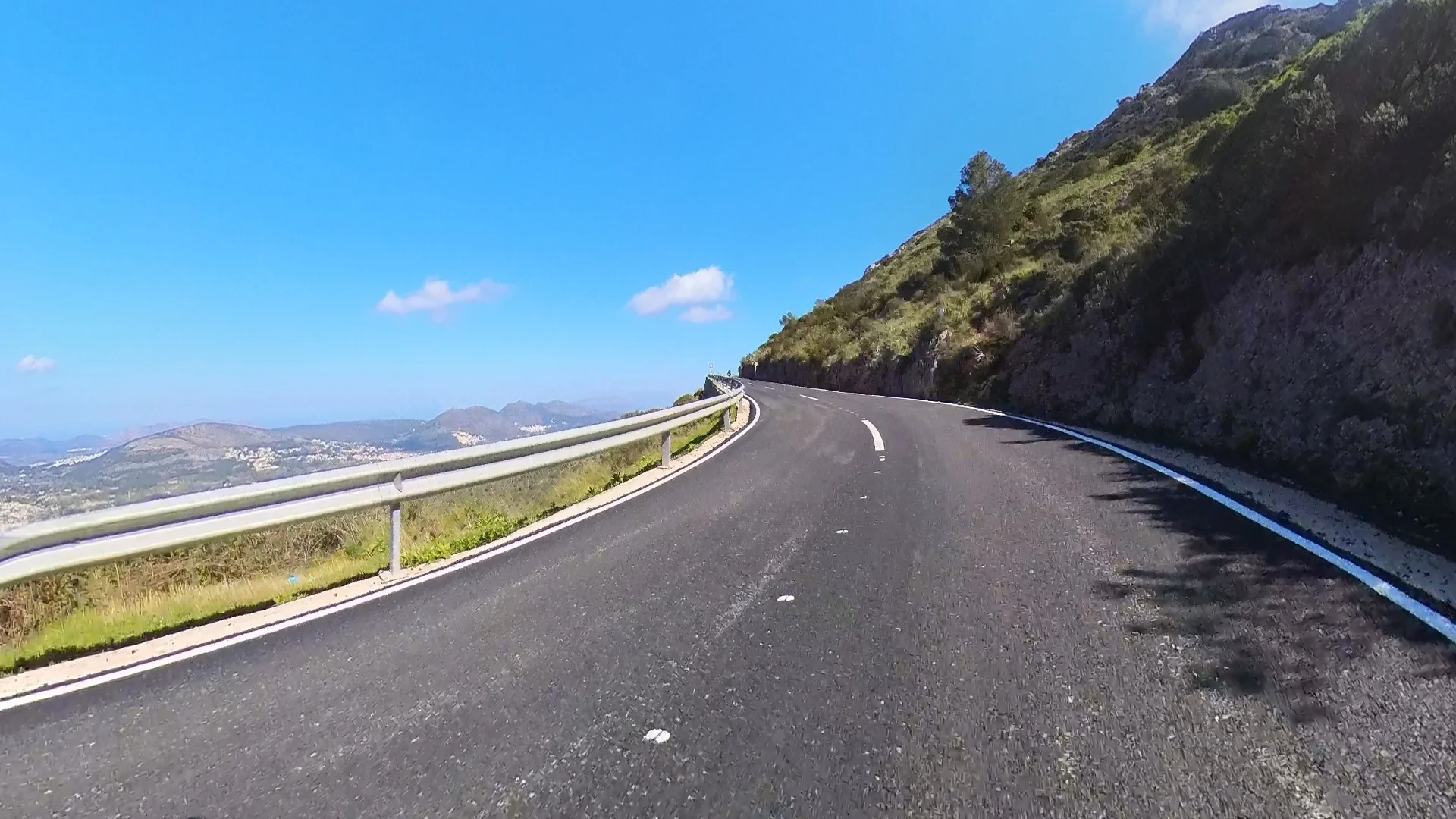
The Costa Blanca is Europe's best winter sun cycling destination. From October through April, while the rest of Europe is grey and wet, the hills above Calpe are bathed in low warm light and the mountain passes are empty. The climbs are serious — Coll de Rates, Cumbre del Sol, Guadalest, Vall d'Ebo — not tourist-grade hills but real cycling terrain that regularly draws WorldTour teams for winter training camps. Pogačar trains here. The roads have been ridden hard and they are excellent. If you want winter sun, challenging terrain and a compact base, this is where to go.
When to go
The season runs October through April. October is ideal — warm but not hot, the summer crowds have gone, and the roads are quiet. November through February is the sweet spot for training: mild temperatures, clear skies and very little traffic on the mountain roads. March and April warm up fast and are still excellent, though more cyclists from northern Europe start arriving for early-season form.
Avoid July and August entirely. Summer temperatures in the interior regularly exceed 35°C, and the coast is packed with tourists. This is a winter destination — treating it as one will reward you.
Rain comes mostly in autumn and occasionally in spring. It rarely lasts more than a day or two. Pack a light rain jacket and arm warmers — you might use them once across a week of riding, or not at all.
Where to base yourself
The Costa Blanca riding centres on the stretch of coast between Alicante and Valencia. Most cyclists base themselves in or around Calpe. The Peñón de Ifach — the enormous limestone rock that juts into the Mediterranean — makes Calpe unmistakable, and the town has quietly become one of Europe's most cyclist-friendly bases over the past decade.
Calpe
The best base. The town is compact enough that you can roll out from virtually any hotel and be climbing within five minutes. Bike infrastructure is taken seriously: most cyclist-oriented accommodation offers secure bike storage, laundry and early breakfast. From October to April you will see cyclists everywhere — from club riders on weekend breaks to WorldTour professionals doing winter training.
Altea
The more characterful option, 15 kilometres south of Calpe. Altea's old town sits on a hillside above the coast, and the riding from here is just as good. The routes overlap almost entirely with Calpe — it is a choice of character over convenience. A slight disadvantage: you spend a few minutes on the coastal strip before reaching proper roads.
Dénia
Further north along the coast. Quieter in winter, with a different atmosphere to Calpe or Altea. If you are doing the Calpe–Moraira–Dénia coastal loop you pass through — but it is not a natural base for most cyclists.
Getting there
The airport is Alicante (ALC), 45 minutes south by motorway. There are direct flights from most of northern Europe throughout the winter season — the winter sun market is well served. Valencia (VLC) is 90 minutes north and opens up more options if Alicante is expensive or full.
Getting your bike there is straightforward. Most airlines take bikes in boxes for a reasonable fee, and the motorway from Alicante to Calpe is a simple 45-minute drive. Car hire from Alicante is easy and affordable.
You do not strictly need a car once you are in Calpe — all the routes start and finish in town — but it is useful for varying start points and accessing the interior valleys. Bike rental is well established in Calpe, with several shops catering to visiting cyclists. Quality road bikes are available; book ahead during peak winter months.
Key stops along the way
Velosol, Xaló
The cycling café in the Xaló valley, about 25 kilometres inland from Calpe. Good coffee, home-cooked food and a terrace that fills with cyclists from November to March. It sits at the natural midpoint of several of the best routes — Guadalest, Vall d'Ebo, Coll de Rates — which makes it hard to avoid, in the best possible way. The owners know every road in the valley.
Bar La Fuente, Vall d'Ebo
A village bar at the foot of the Vall d'Ebo climb, tucked into the side of the valley. Simple food and cold drinks, almost always a few cyclists parked outside. The climb above it — 9 kilometres at 5.1 per cent — is one of the quietest roads in the region, visited only by those who know where to look.
Bar El Cantonet, Finestrat
At the far end of the Finestrat valley before the road climbs toward Sella. A remote bar that serves as a natural checkpoint on the longer routes. The kind of place that keeps remote valleys alive, and worth a visit on the Finestrat–Guadalest loop for that reason alone.
costaBlancaGuide.cafe4Title
costaBlancaGuide.cafe4Text
Coll de Rates — the Costa Blanca's signature climb
Coll de Rates is the definitive Costa Blanca climb. At 6.43 kilometres averaging 5.5 per cent, it is not the longest or steepest climb in the area — but the quality of the road, the consistency of the gradient and the views from the pass at 631 metres have made it the benchmark against which everything else is measured. The course record is held by Tadej Pogačar at 11 minutes 51 seconds.
The climb begins at Parcent in the Xaló valley and winds up through olive groves and pine forest. The gradient is consistent enough to settle into a rhythm, which makes it ideal for training efforts. From the top, the views south toward Calpe and the sea reward the effort fully. The descent on the far side toward Parcent is fast and technical — stay alert.
From November through February on any clear morning, you will share the road with riders from professional teams doing winter base training. Pull alongside someone on the lower slopes and there is a reasonable chance you are climbing with a WorldTour rider. That kind of proximity — pros and amateurs on the same roads, stopping at the same cafés — is unique to the Costa Blanca and part of what makes it special.
The routes
Eight routes from Calpe covering the Costa Blanca's best climbing terrain — Coll de Rates, Cumbre del Sol, Guadalest, Vall d'Ebo, Port de Tudons and the coastal roads north toward Dénia.
Calpe — Cumbre del Sol
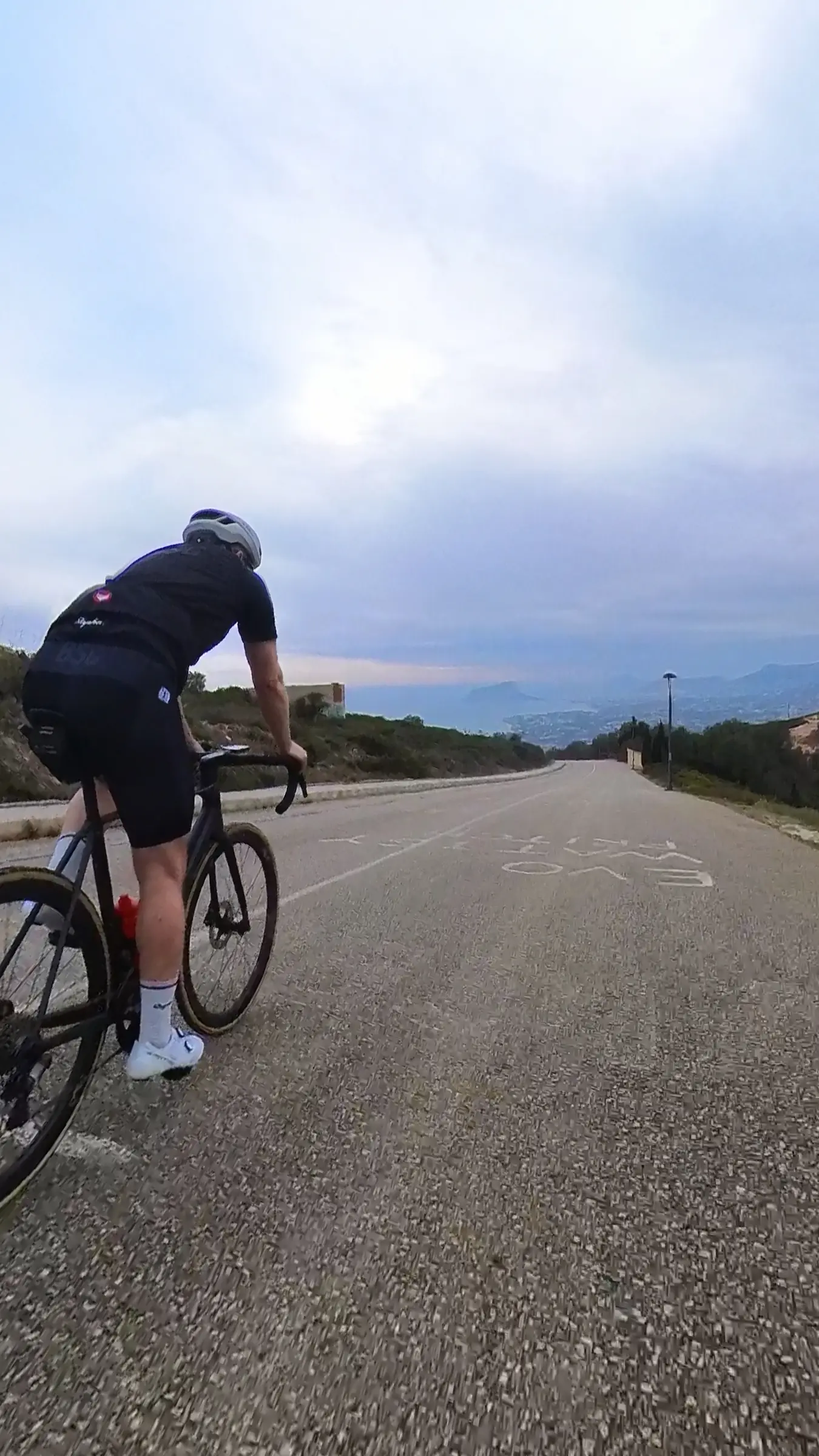
A short, sharp introduction to Costa Blanca cycling. 43 kilometres from Calpe along the coast to the Alcasar roundabout, then straight up Cumbre del Sol — 3.73km at 9.8% average with ramps pushing past 18% (max 19.6% per GPX). A Vuelta a España finish in 2015 and 2017, where Dumoulin defeated Froome and vice versa. The Strava segment KOM belongs to Mike Woods from the 2017 Vuelta. A perfect benchmark climb.
Calpe — Guadalest & Vall d'Ebo
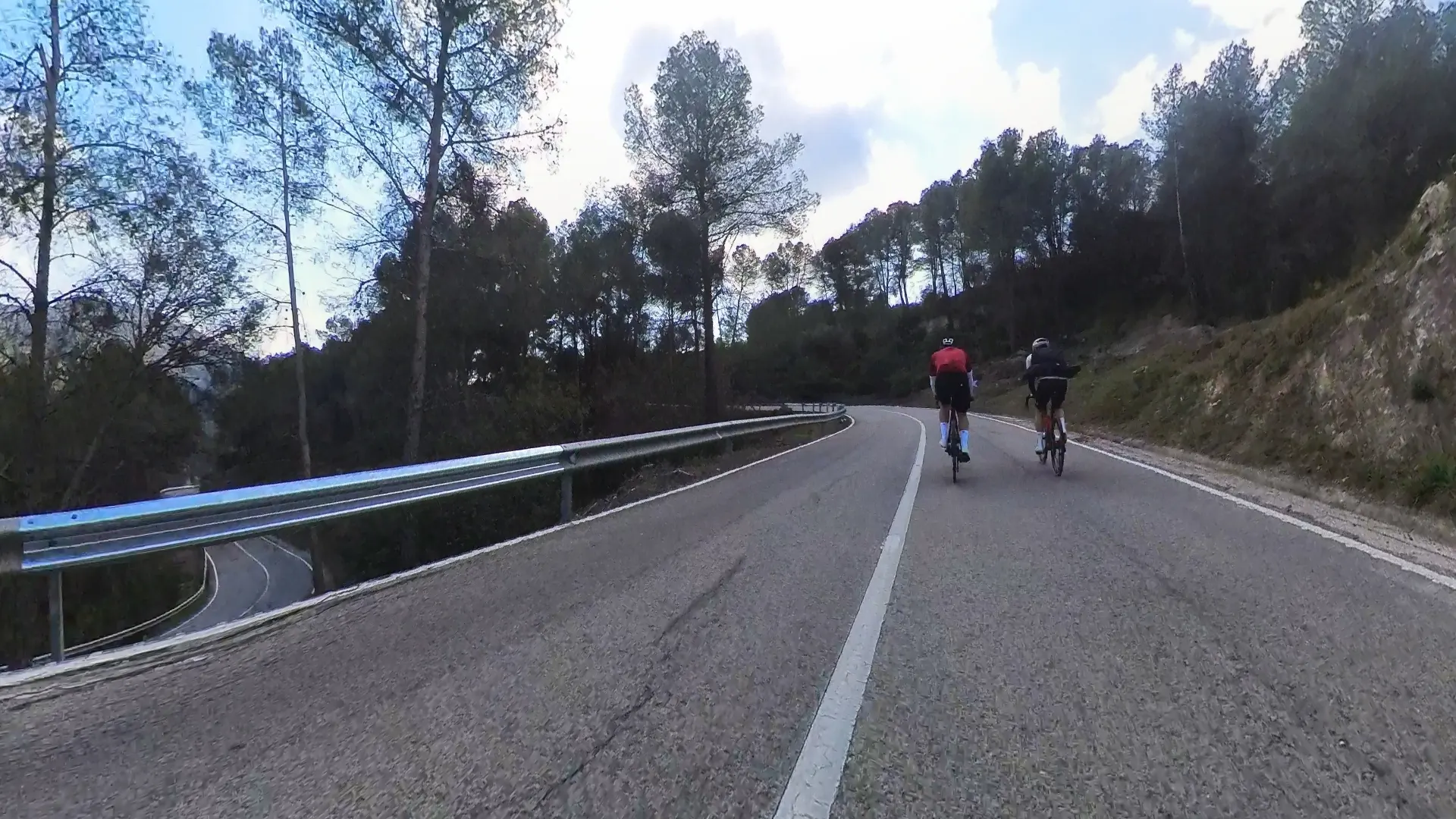
A front-loaded epic through the Costa Blanca mountains, designed for maximum enjoyment. From Calpe, the route climbs deep into the interior — through the Guadalest valley to Puerto de Confrides, across the rolling inland plateau, and up the iconic Vall d'Ebo from the easy western side. The reward: one of the finest descents in Spain, plunging through hairpin bends above the orange groves toward Pego, with the Mediterranean glittering in the distance. 137 kilometres, 2,681 metres of climbing.
Calpe — Coll de Rates
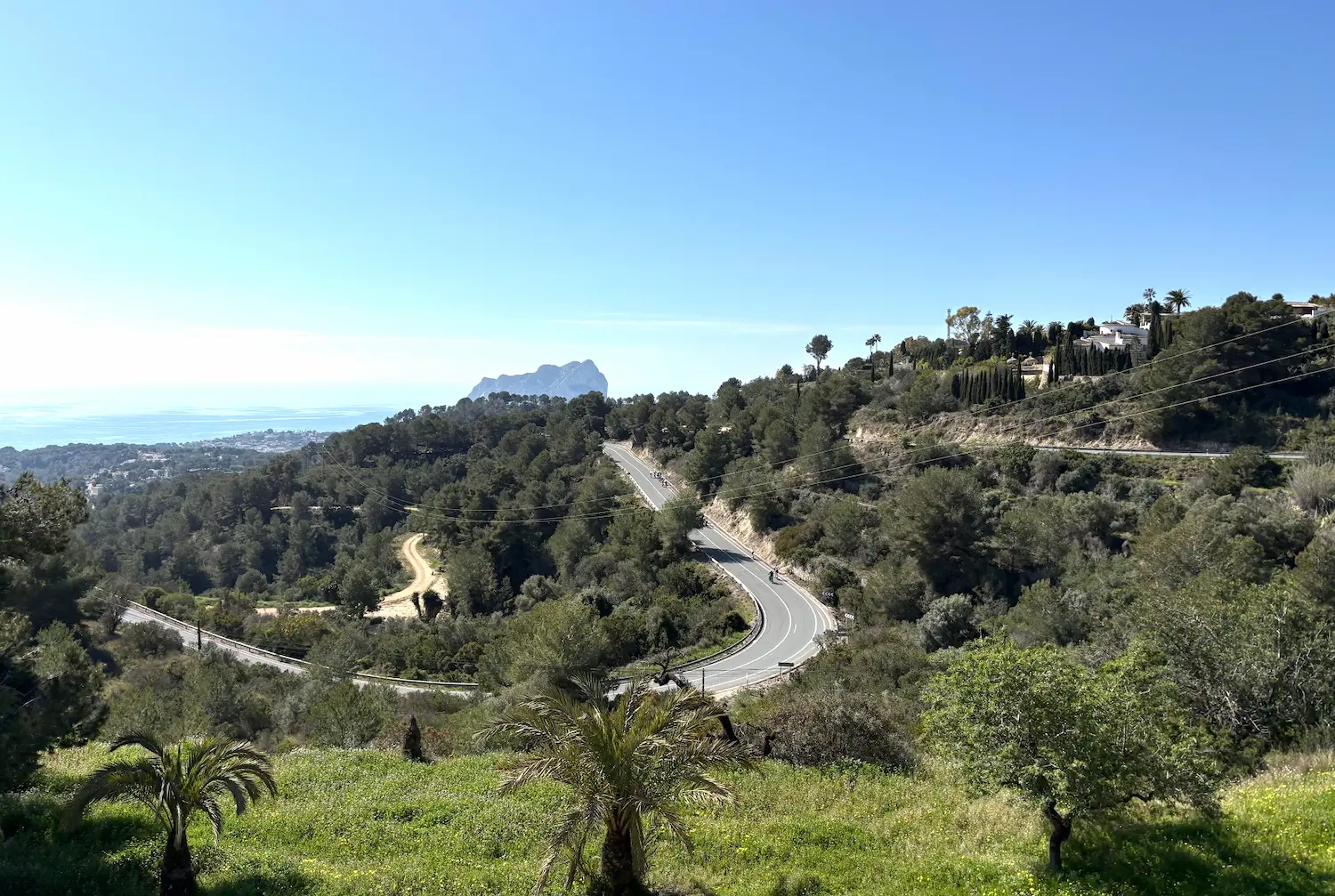
The benchmark ride of Costa Blanca, built around Coll de Rates — one of the most analysed and ridden climbs in professional cycling. 6.43km at 5.5%, Category 2, favoured by WorldTour teams who winter in the area. Tadej Pogačar holds the Strava KOM at 11:57 (19 December 2025). The 117 km route adds three more: La Fustera out of Calpe, Port de Bèrnia before the valley, and Port de Sa Creueta — at 777 m the highest point of the day, and it comes after Rates, not before. The return runs through the vineyards and coastal hills of the Marina Alta.
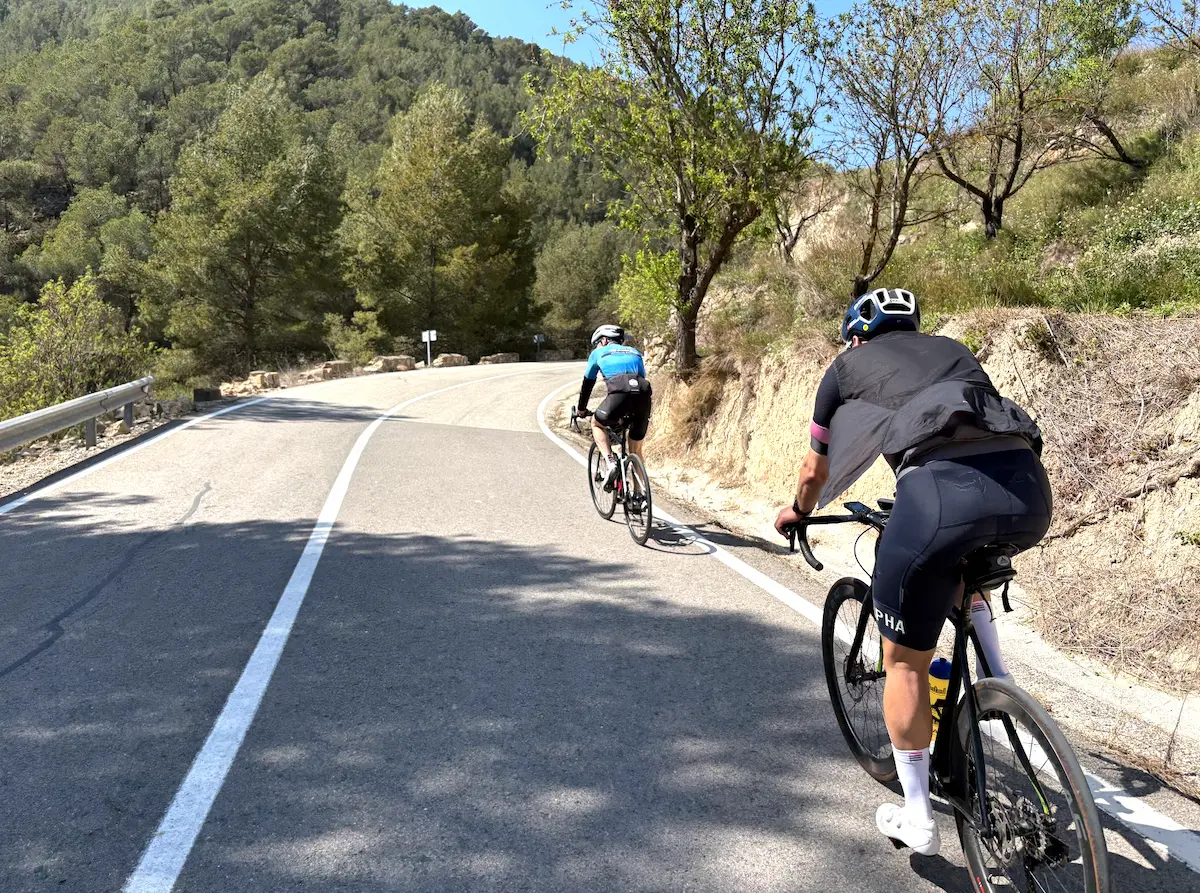
Calpe — Port de Tudons & Puerto de Confrides
The queen stage of the Costa Blanca. From Calpe, the route rolls southwest along the coast before turning inland for Port de Tudons — 15.2km at 5.3%, Category 1, climbing from the Mediterranean to 1,025 metres through wild, empty mountain terrain. Puerto de Confrides follows from the south before the long, flowing descent through Guadalest valley returns you to the coast. 118 kilometres, 2,168 metres of climbing — one of the most demanding days you can ride from Calpe.
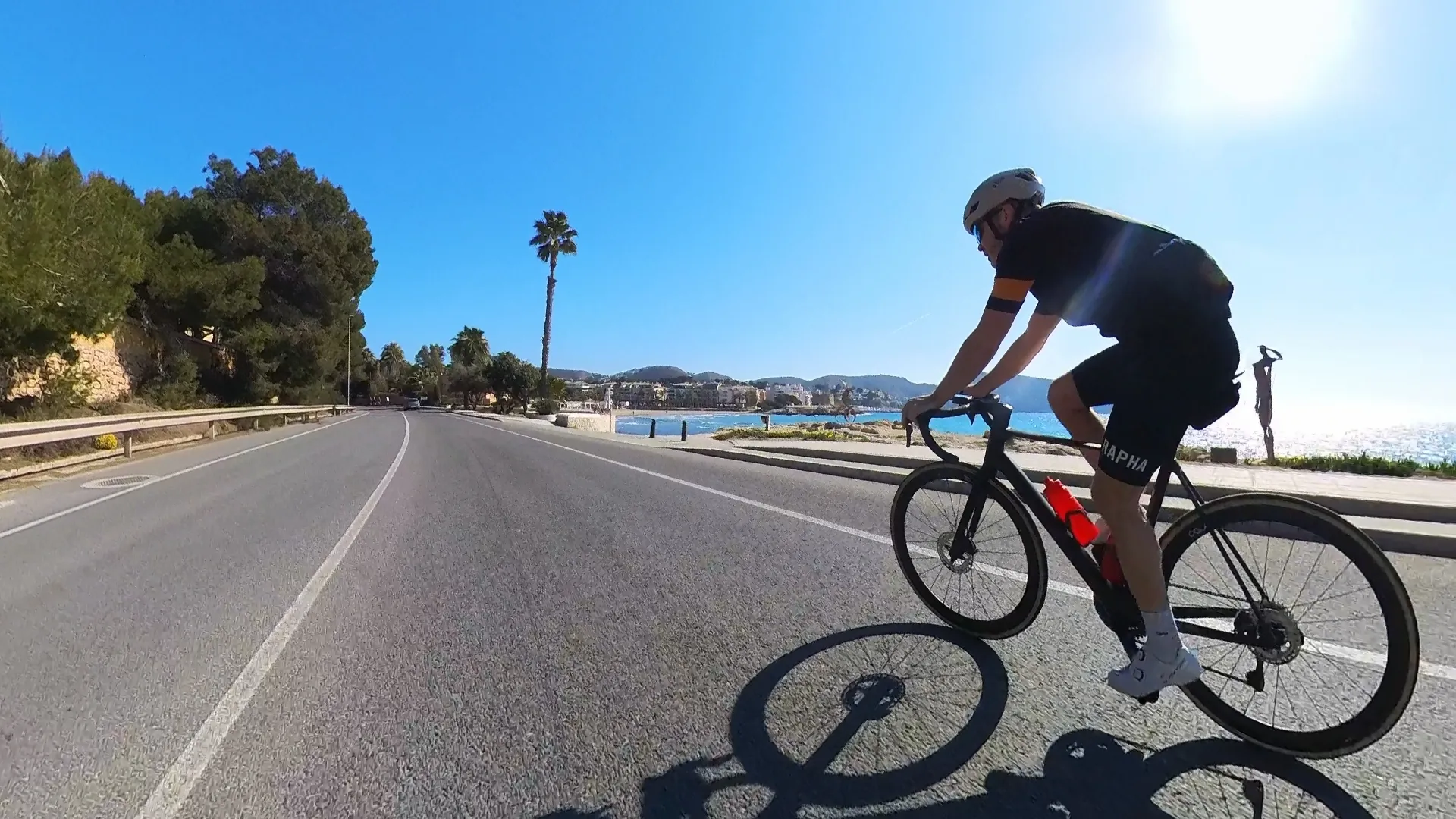
Calpe — Moraira & Dénia
77 kilometres of Mediterranean coastline from Calpe north through Moraira to Dénia, circling the Montgó natural park and returning via the quiet inland roads of the Marina Alta. Rolling coastal terrain, harbour towns, orange grove valleys, and some of the most scenic riding on the Costa Blanca.
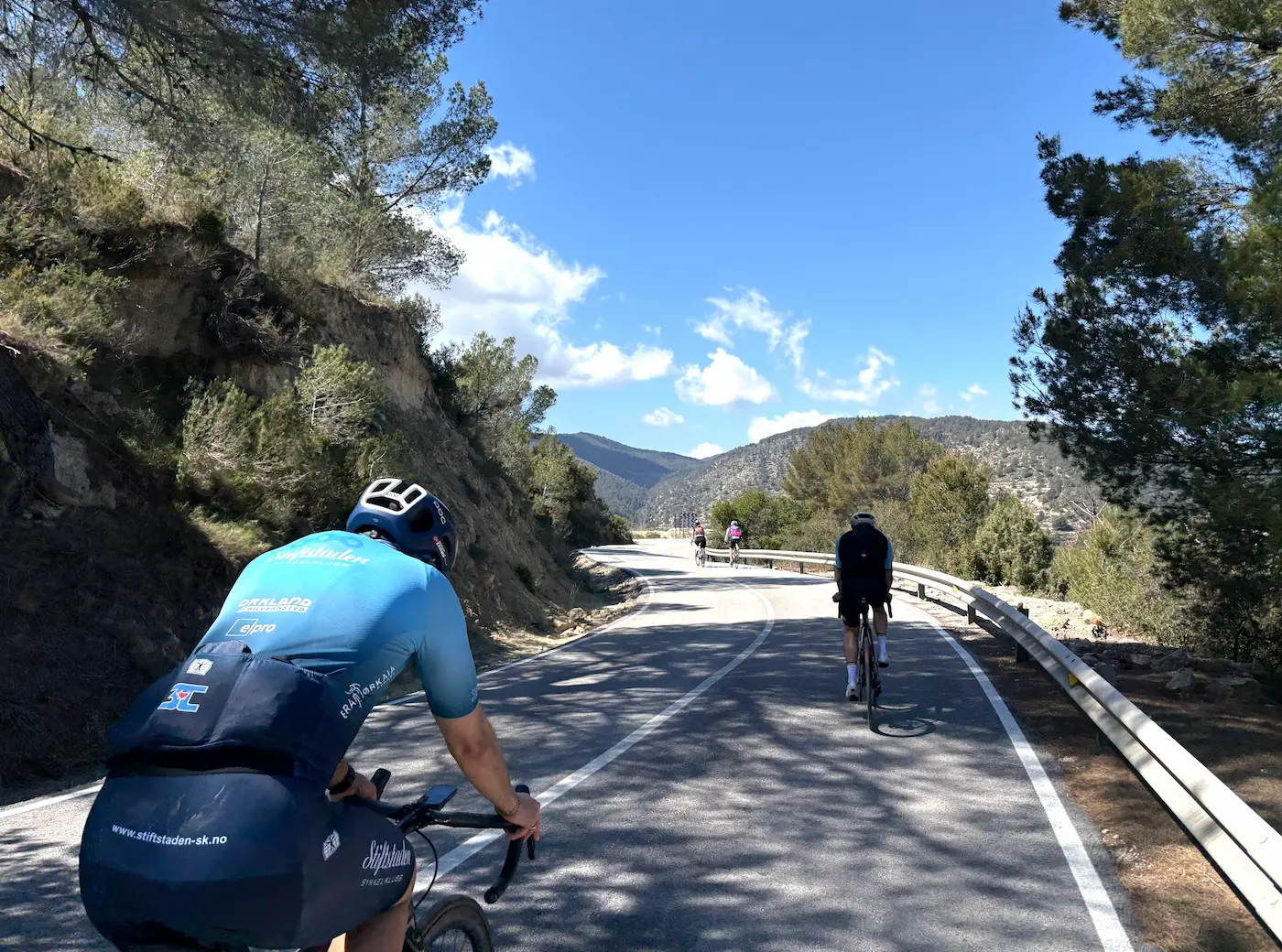
Calpe — Finestrat & Guadalest
Five categorised climbs across 153 kilometres and 3,152 metres of elevation. Alt de Finestrat opens beneath the Puig Campana massif, followed by Port de Tudons, El Collao, Port de Benifallim, and CV-710 to Confrides. Tadej Pogačar set the Strava KOM on CV-710 in December 2025 — 18:01 at 30.2 km/h. A route that rewards patience and consistent nutrition management.
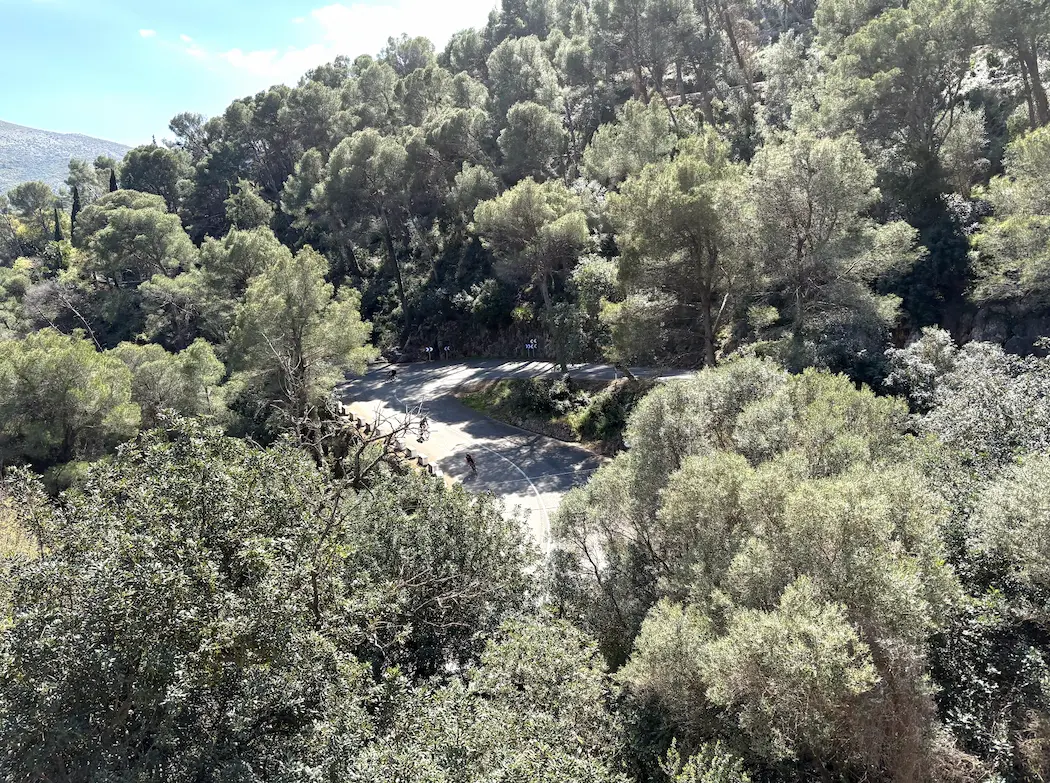
Calpe — Vall d'Ebo & Castell de Castells
116 kilometres from Calpe through the Jalón valley and north to Pego, then inland to Port de la Vall d'Ebo from Pego — 7.88 km at 5.6%, Category 2, widely considered the most scenic climb in the area. El Pla de Petracos and Port de Sa Creueta follow before the descent back to Calpe. Three categorised climbs plus La Fustera as a warm-up, 2,202 metres of elevation.
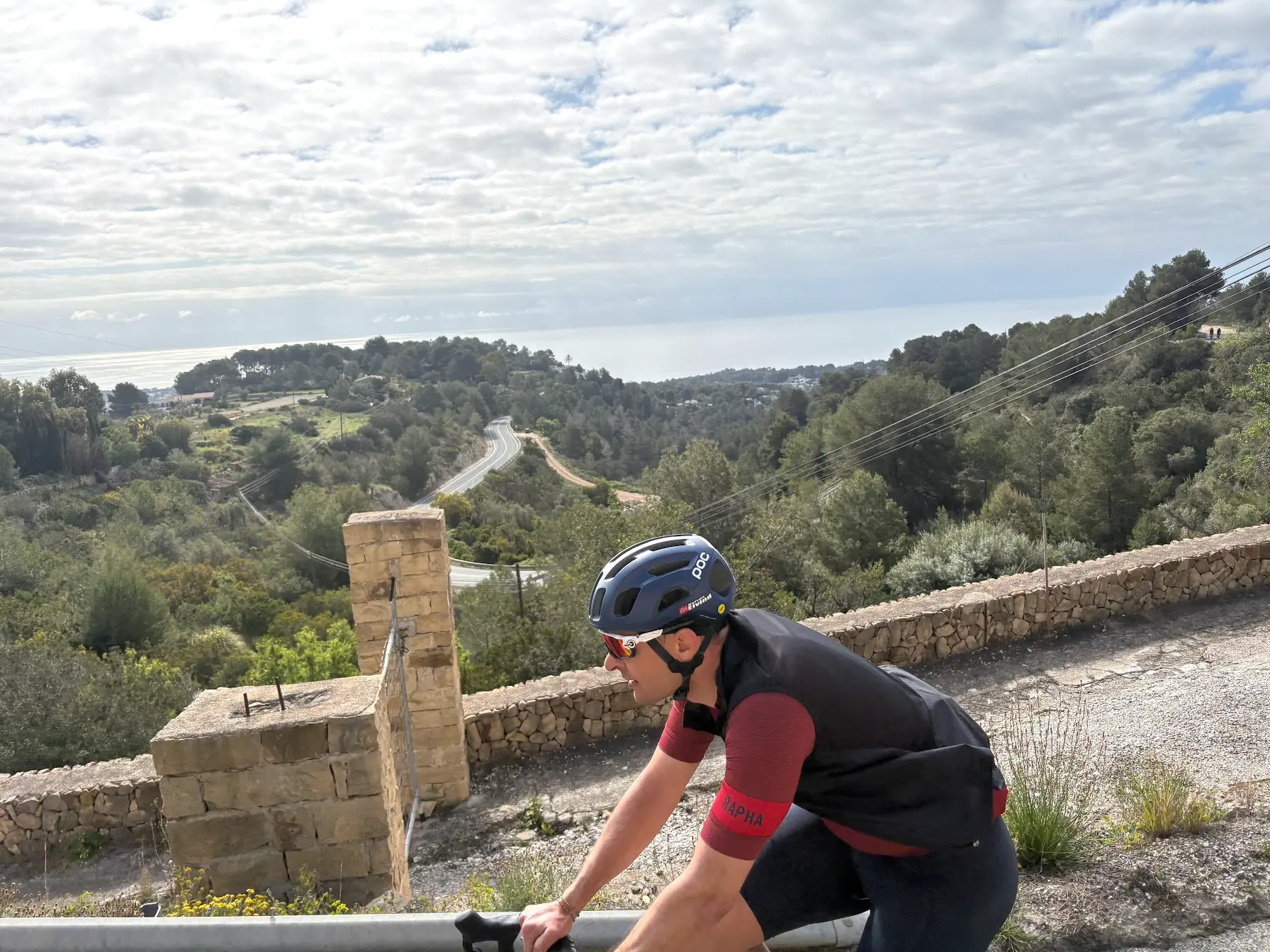
Calpe Cycling — Xaló Valley & Velosol Loop
The social ride of the Costa Blanca — a 41-kilometre loop from Calpe through the beautiful Xaló valley to Velosol Cycling Bar, the legendary café-stop that every cyclist in the region passes through eventually. This is the route where you ride alongside cyclists from across Europe, share a cortado at a table covered in pro cycling memorabilia, and feel what it means to be at the heart of a true cycling mecca. The Xaló valley is one of the finest cycling environments on the Costa Blanca — vineyard and almond-tree roads with exceptional tarmac quality, rolling terrain and virtually no traffic. In February, the almond blossom transforms the valley into something extraordinary. The roads are wide, smooth and fast — ideal for riding in a group and maintaining a good tempo. With 613 metres of climbing on rolling hills, this is an accessible route that rewards with big scenery and an unmissable café stop.