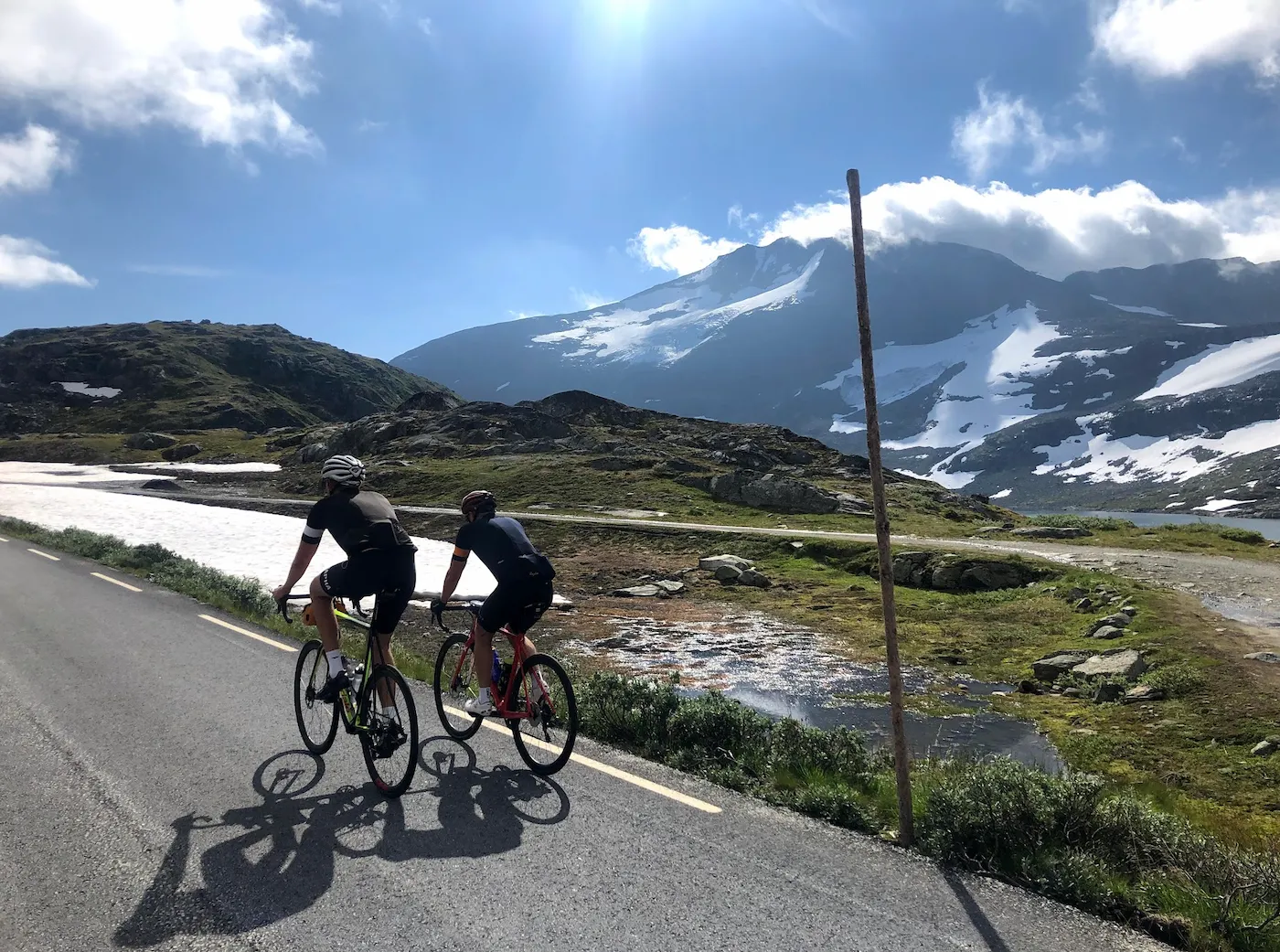
Norway isn't one cycling country but several. The Western Fjords have the long climbs up from sea level, Oslo & Oslofjord the loops you can start in the city itself, and Northern Norway the light. The season runs April to October, though the mountain passes have a shorter window. Pick the region first, then the route.
Read more ↓Show less ↑
What sets cycling in Norway apart from most of Europe is how fast the terrain changes. You start beside a fjord at sea level and you're above the treeline an hour or so later. Surfaces are mostly good, and traffic thins out as soon as you leave the main roads. In return you plan around weather, tunnels and ferry times in a way you don't further south.
When to go
The coast and the east of the country ride from April to October. The mountain passes open through the spring, but several stay closed overnight until conditions allow full service — count on a proper cycling season from mid-May to early October. Sognefjellet and Trollstigen have their own pages with current status. June and July give the longest light; north of the Arctic Circle the sun doesn't set at all. August has the warmest water and the calmest weather, though snow in the mountains is possible at any time.
Where to ride
The western fjords hold the long climbs from sea level — ascents that start at the water's edge and finish above the treeline, with waterfalls beside the road and views that stop you more often than you planned. The high mountain behind them crosses plateaus and passes with little to shelter you from the wind. Around the Oslofjord sit the loops that start at a railway station, with a café stop on the way and a short ride home, and south along the fjord the terrain flattens and softens — that's where you begin if you're building form. Further north the distances grow and the weather hardens, and above the Arctic Circle you ride in light all night. The regions below show where we have routes today.
Tunnels, ferries and weather
Three practical things shape a Norwegian ride more than the climbs do. Many tunnels on the main roads are closed to bikes, and the detour is often both longer and better — find it before you travel, not on the road. Ferries are part of the road network on the west coast rather than an exception: they take bikes, they run often, and a missed sailing costs you half an hour. And mountain weather turns quickly. Sun in the valley and sleet at the top on the same afternoon is normal, so carry a windproof and something dry to change into, even when the forecast looks settled.
Practical notes
Helmets aren't compulsory in Norway, though most riders wear one. You can drink from most mountain streams. The right to roam lets you camp on open land as long as you keep your distance from houses and leave nothing behind. Most shops close on Sundays, and in many places there's a long way between them — stock up when you get the chance. Mountain lodges and cafés sit on the passes, but they open seasonally.
Choose a region below and you'll find the routes that belong to it.
All Routes in Norway
Sognefjellet & Tindevegen
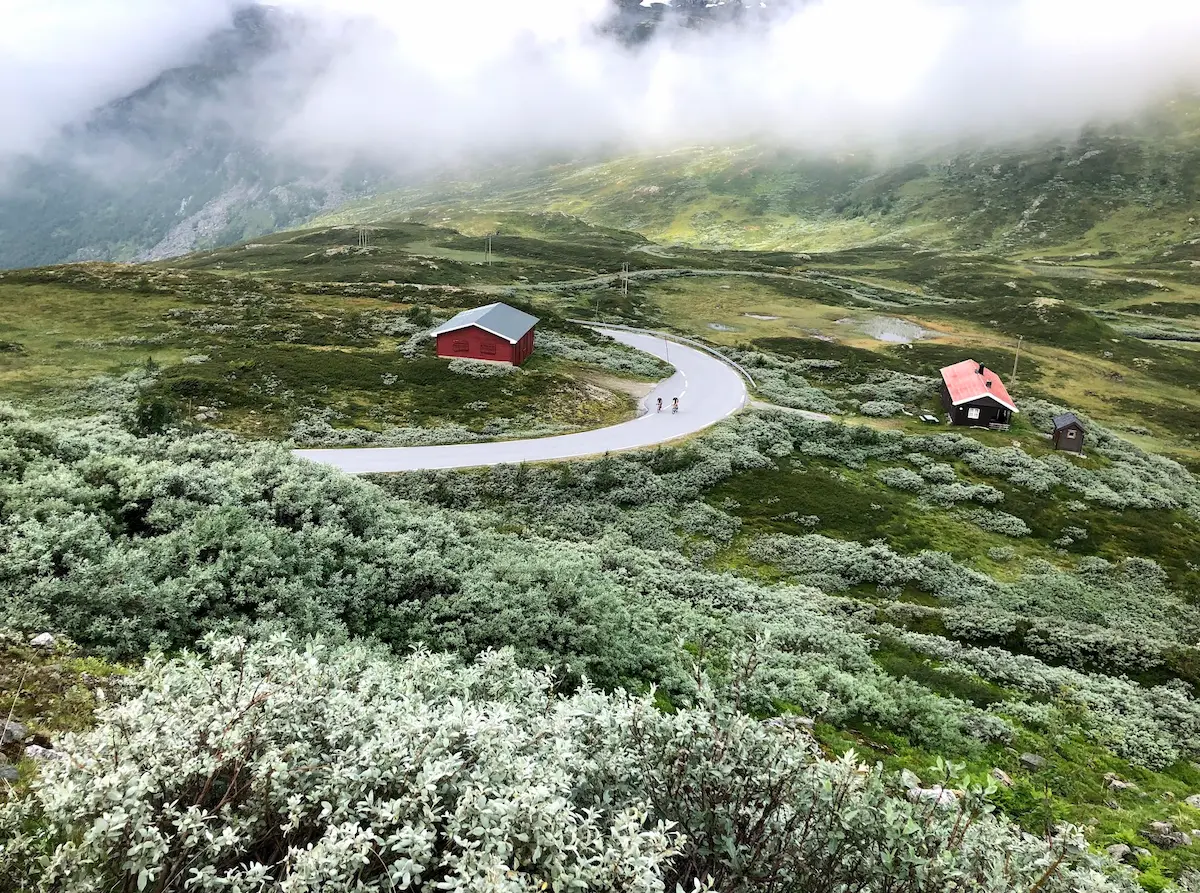
Two of Norway's greatest mountain roads in a single out-and-back. From Skjolden at sea level, you climb to Sognefjellshytta at 1,434m, descend to Turtagrø, then plunge down the savage Tindevegen to Øvre Årdal — before climbing back out. The Western Fjords queen stage: Sognefjellsvegen from Skjolden over Northern Europe's highest mountain pass at 1 434m, then Tindevegen from Øvre Årdal back up to Turtagrø — two HC climbs and 4 134m of climbing in a single day. 129 kilometres, 4,134 metres of climbing, all earned twice.
Sognefjord Cycling — Urnes Stave Church & Nigardsbreen Glacier
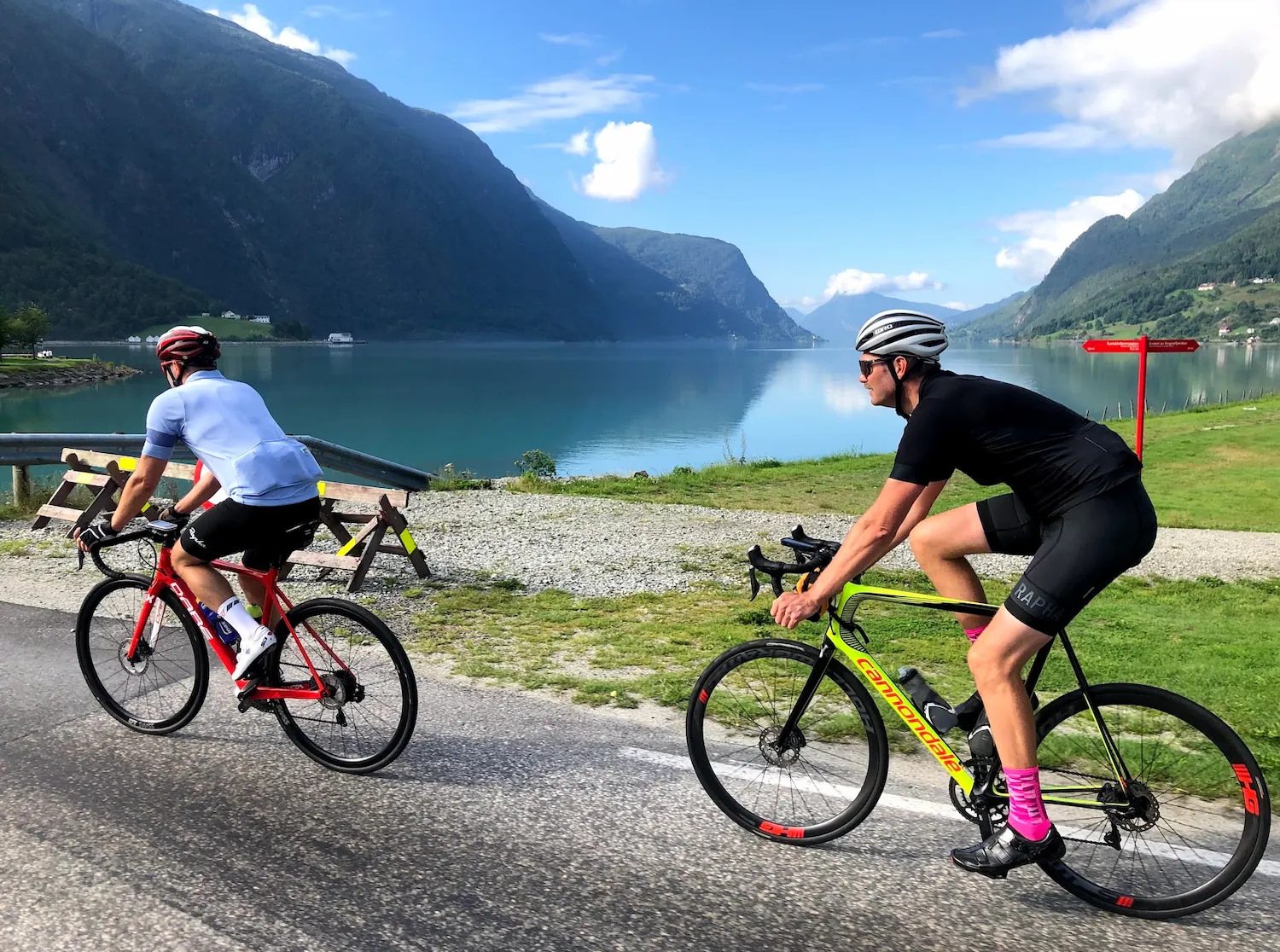
A magnificent fjord loop from Skjolden combining two UNESCO-listed highlights in a single day. Cycle along the inner Sognefjord to Urnes — home to Norway's oldest stave church — crossing by ferry to Solvorn, then heading deep into Jostedalen to Nigardsbreen, one of Europe's most accessible glaciers. 143 kilometres of fjordside roads, mountain valleys and extraordinary scenery.
Aurlandsfjellet — Snøvegen
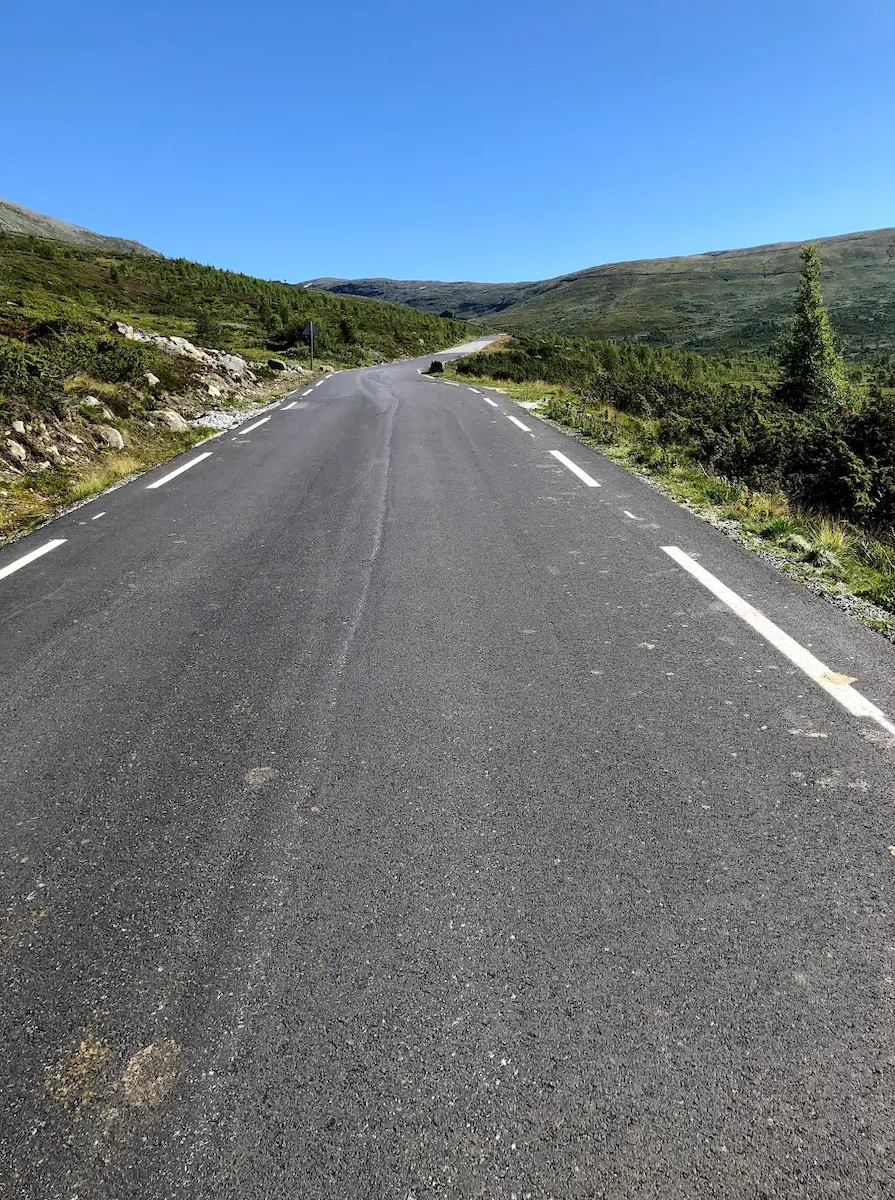
One of the most dramatic climbs in Norway. From Aurland at sea level, the Snow Road climbs 1,286 metres in just 17 kilometres — an average of 7.5% with no respite. The climb starts from Aurlandsvangen at sea level and reaches the Stegastein viewpoint by bike at km 7.5 — a cycling perspective on Norway's most photographed cantilever platform. Pass the iconic Stegastein viewpoint, suspended 650 metres above the Aurlandsfjord, before the open high-mountain plateau. A Norwegian Scenic Route and a bucket-list climb for any serious cyclist.
Geiranger — Dalsnibba HC
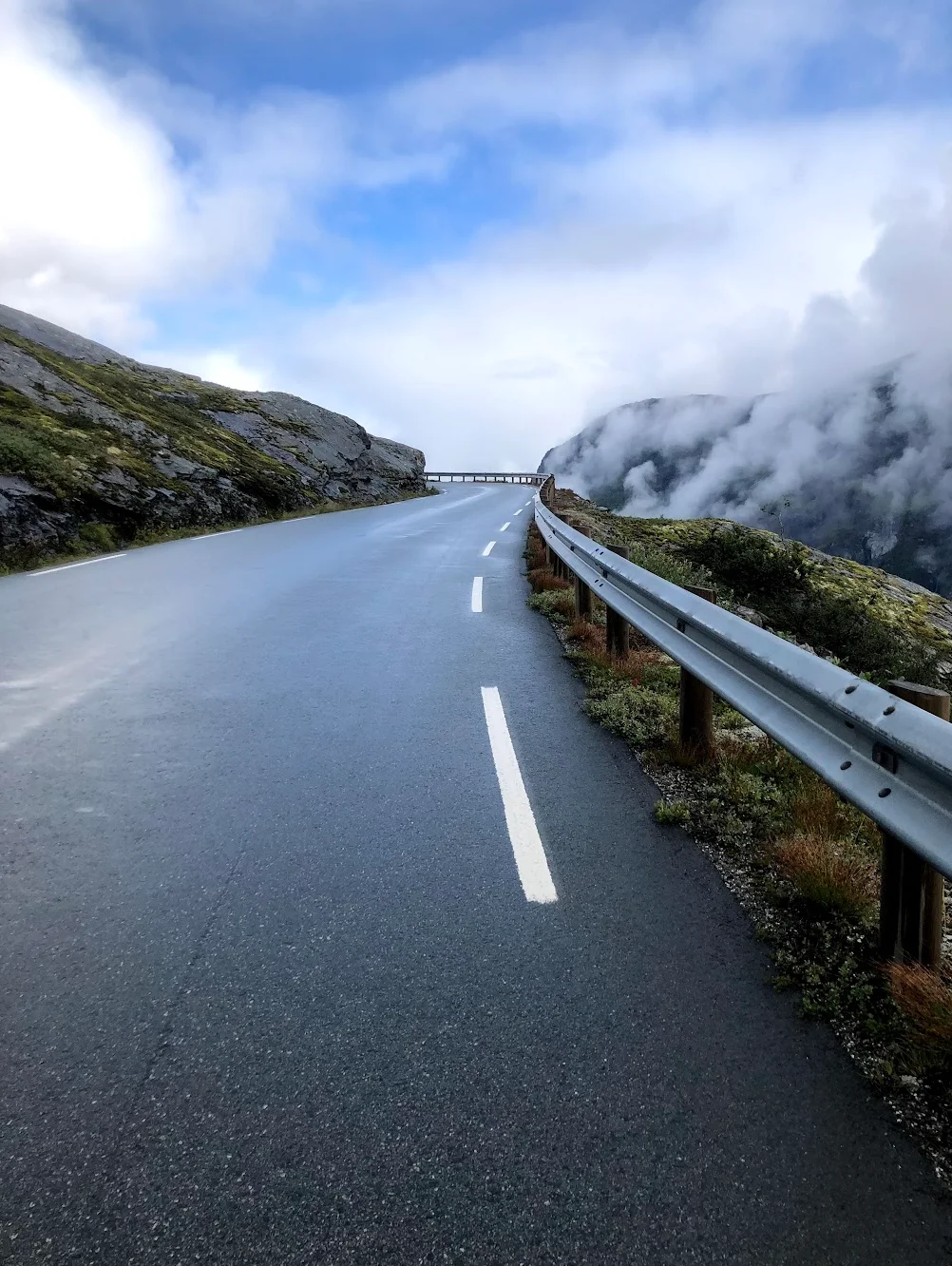
From the UNESCO-listed Geirangerfjord at sea level, climb 1,500 metres to Dalsnibba — one of Norway's longest and most spectacular HC climbs, with 35 hairpin bends — 11 of them on the Nibbevegen toll road up to the Geiranger Skywalk — and Europe's highest fjord view from a road. The route continues through Stryn before finishing at the ferry quay in Hellesylt, where the boat returns to Geiranger across the fjord.
Trollstigen — 11 Hairpins
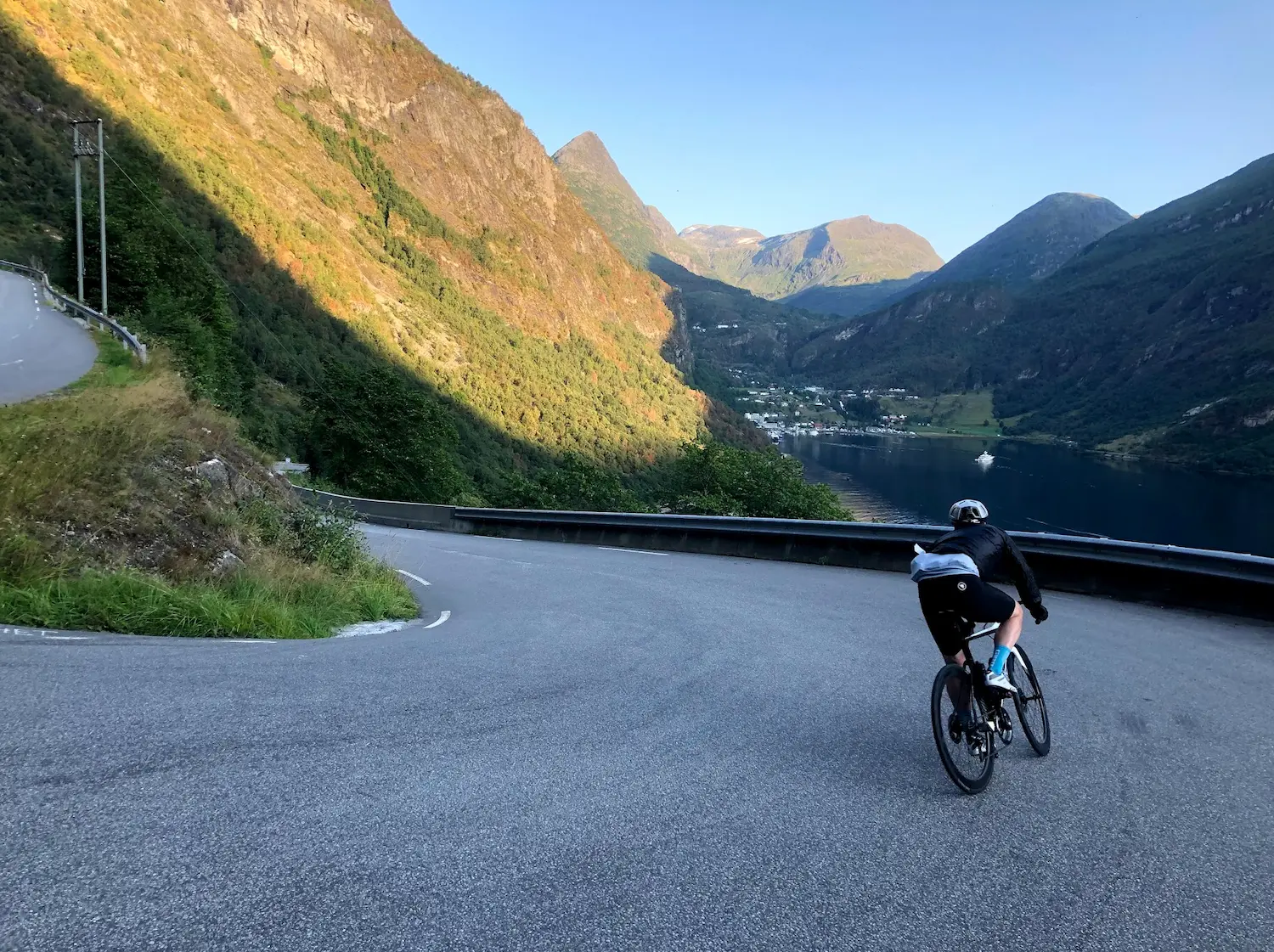
Trollstigen and Ørnevegen in a single loop from Geiranger — two of Norway's 18 Norwegian Scenic Roads in one day. You climb Ørnevegen out of town, take the Eidsdal ferry, work your way up the Valldøla valley to Stigrøra, descend the eleven hairpins of Trollstigen before turning and climbing them back up. 159 km, 3,556 m of climbing, two ferry crossings.
Western Fjords Cycling — Dale & Hyllestad Loop
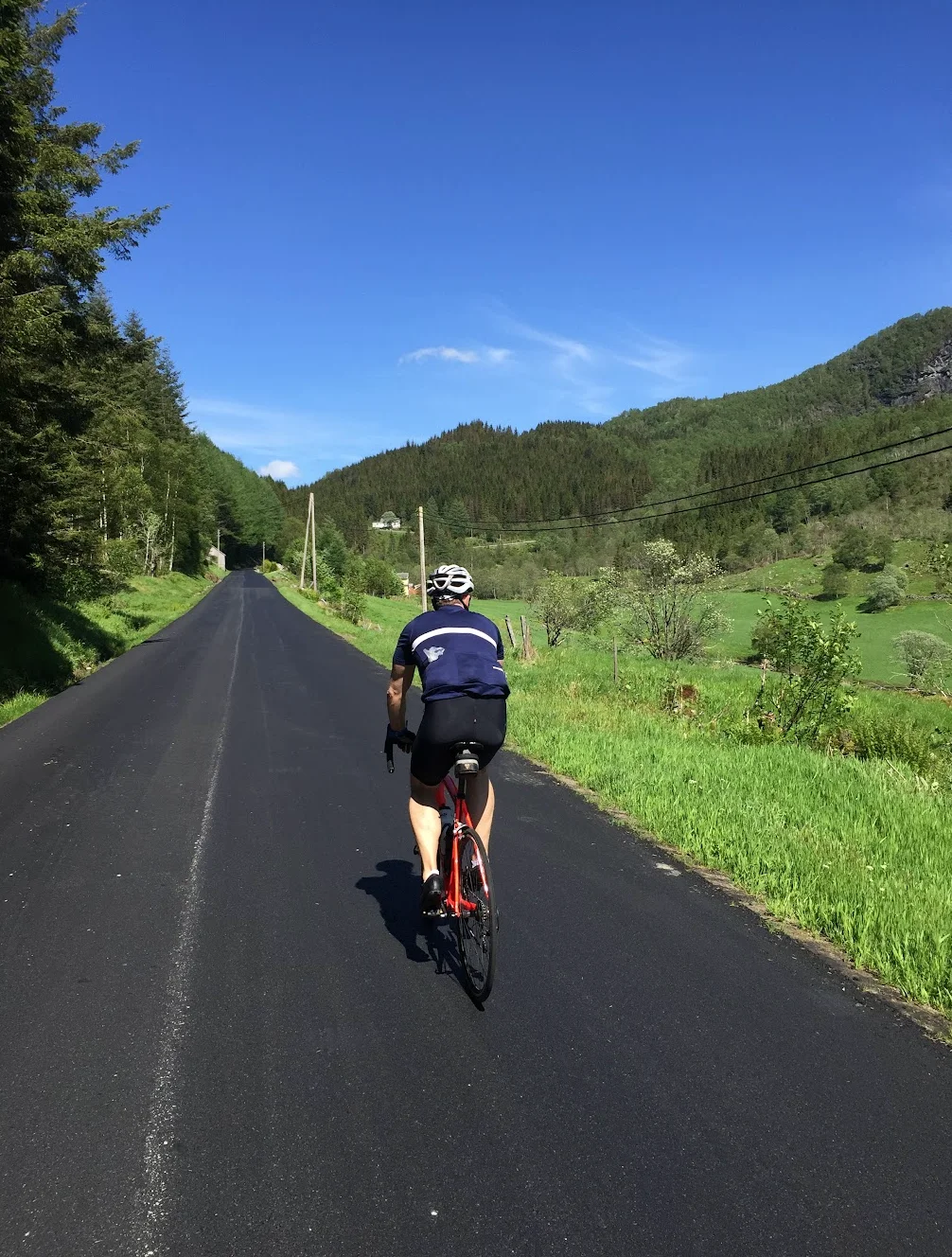
A stunning loop through the Western Fjords of Norway, starting in Dale — a charming small town at the inner reaches of Dalsfjorden. This 108-kilometre route takes you through some of the finest fjordside roads in Sogn og Fjordane, past the iconic landmark of Lihesten mountain and into the village of Hyllestad at the halfway point. The route combines three distinct climbs with long stretches of quiet fjordside roads and spectacular views throughout. Hyllestad is dominated by the towering presence of Lihesten — one of the most recognisable peaks in the region — and offers shops and food stops before the return leg along the outer fjord. With 1,687 metres of climbing across 108 kilometres, this is a proper hard day in the saddle through some of Norway's most beautiful landscapes.
Lom - Sognefjellshytta
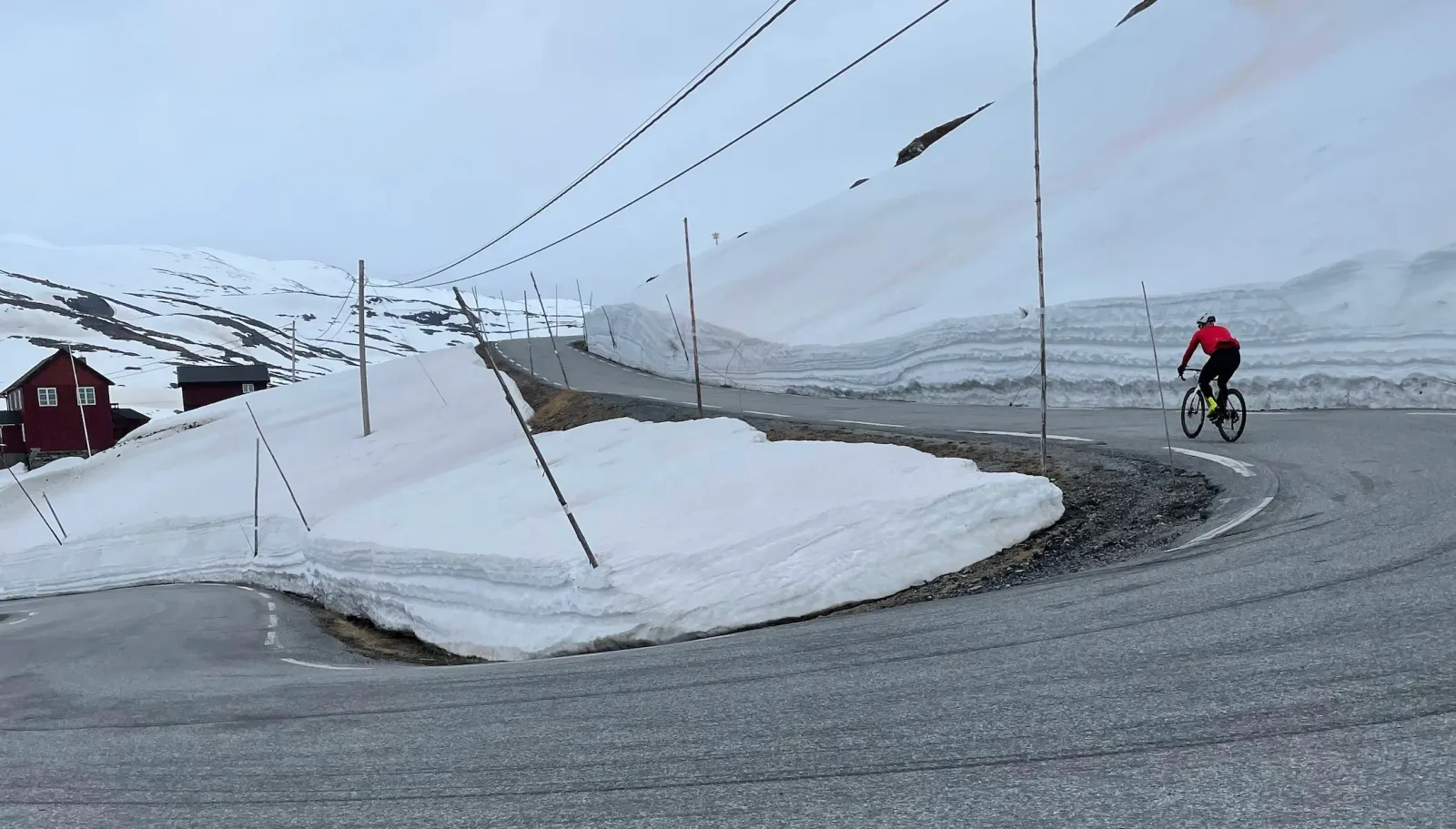
A 99.1 km out-and-back from Lom with 1,477 m of climbing up the Sognefjellsvegen (RV55), Northern Europe's highest mountain pass road. Green valley floor to two-metre snow walls at the summit, then a long, cold descent back through Bøverdalen.
Gamle Strynefjellsveg
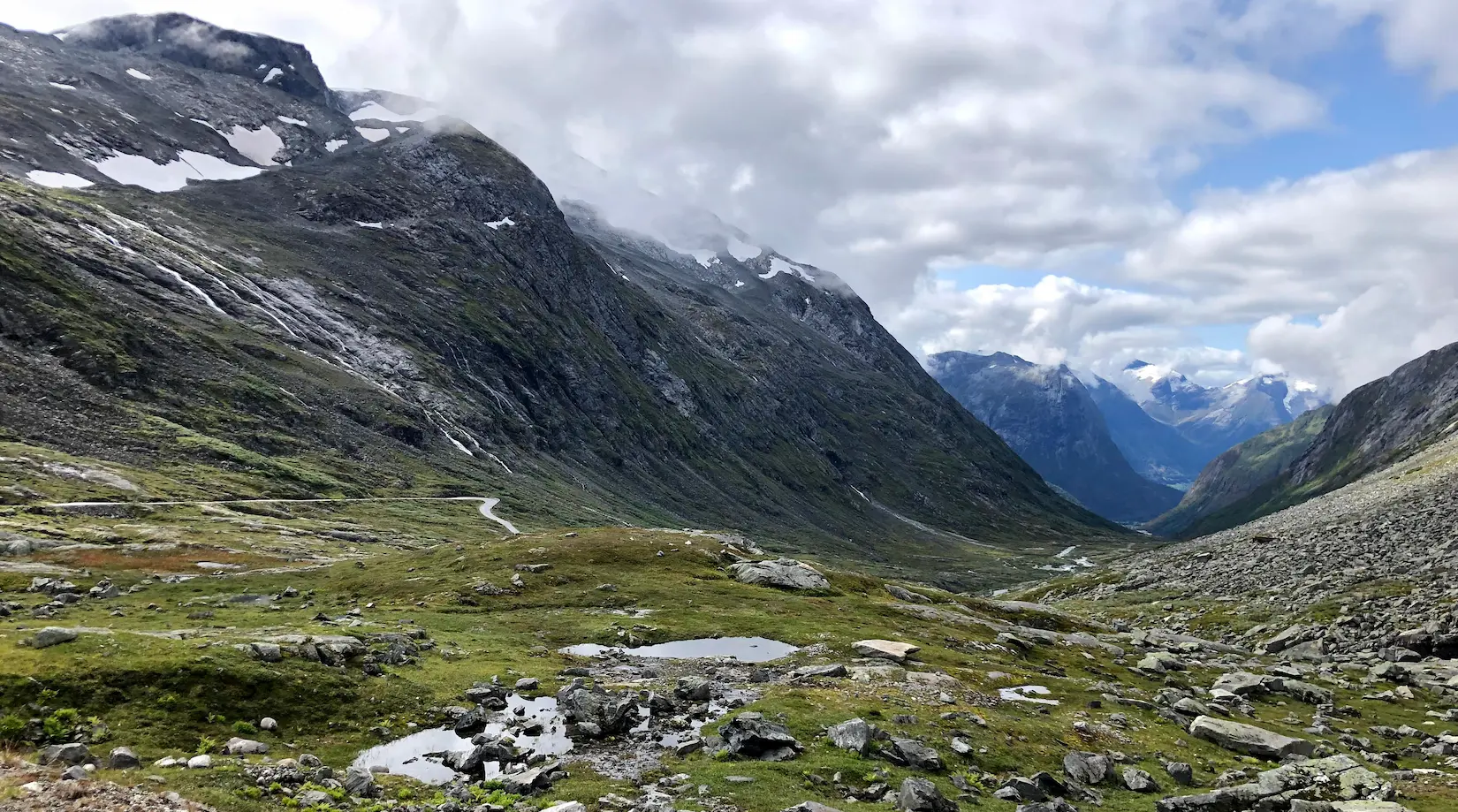
A 41.9 km out-and-back from Hjelle on Oppstrynsvatnet up Norway's most beautiful historic mountain road. The Gamle Strynefjellsveg, built between 1889 and 1894, climbs 1,062 metres in 18 kilometres on rough asphalt all the way to the 1,098-metre summit. No cafés, no respite — just sustained 7-8% gradient and snow-flecked peaks above turquoise glacial water.
Rondane National Park Cycling Loop — Grimsdalen & Venabygdsfjellet
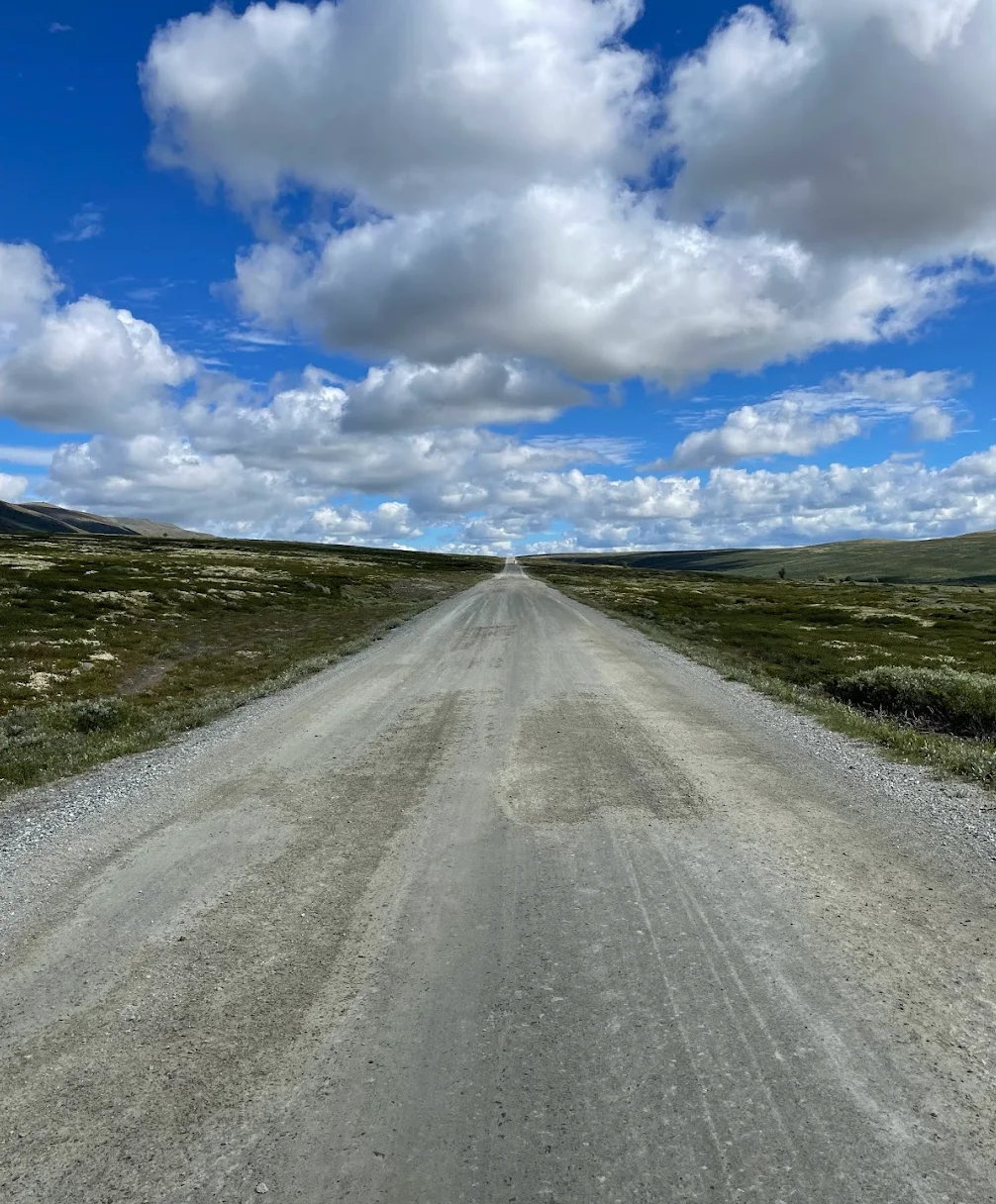
A grand loop around Norway's first national park. From Vinstra in Gudbrandsdalen, the route climbs into the wild Grimsdalen valley — one of Norway's most beautiful mountain valleys, running between Rondane and Dovrefjell national parks — before crossing the high plateau of Venabygdsfjellet on the Norwegian Scenic Route Rondane. 218 kilometres, 2,928 metres of climbing, wild reindeer and ancient mountain landscapes.
Jotunheimen Cycling — Jotunheimvegen & Valdresflye Loop
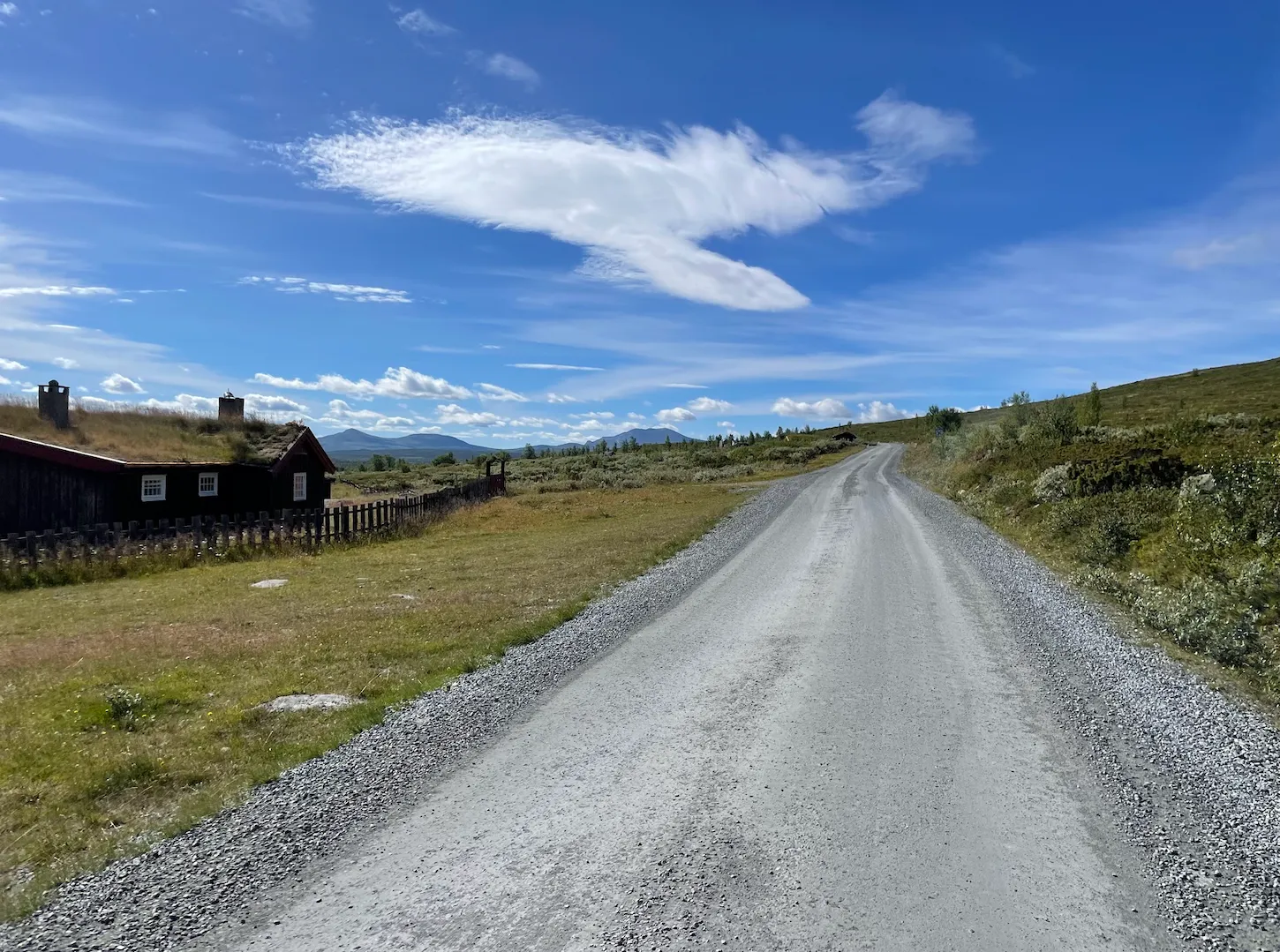
A spectacular loop from Vinstra combining two of Norway's most celebrated mountain roads. Jotunheimvegen — a 45km gravel toll road through Jotunheimen National Park — climbs to the high plateau with views of Norway's highest peaks. Valdresflye, the Norwegian Scenic Route crossing Norway's second-highest mountain road at 1,389m, returns through open alpine terrain with Jotunheimen's peaks on the horizon. 181 kilometres, 2,676 metres of climbing.
Oslo Cycling — Mørkrunden Follo Loop
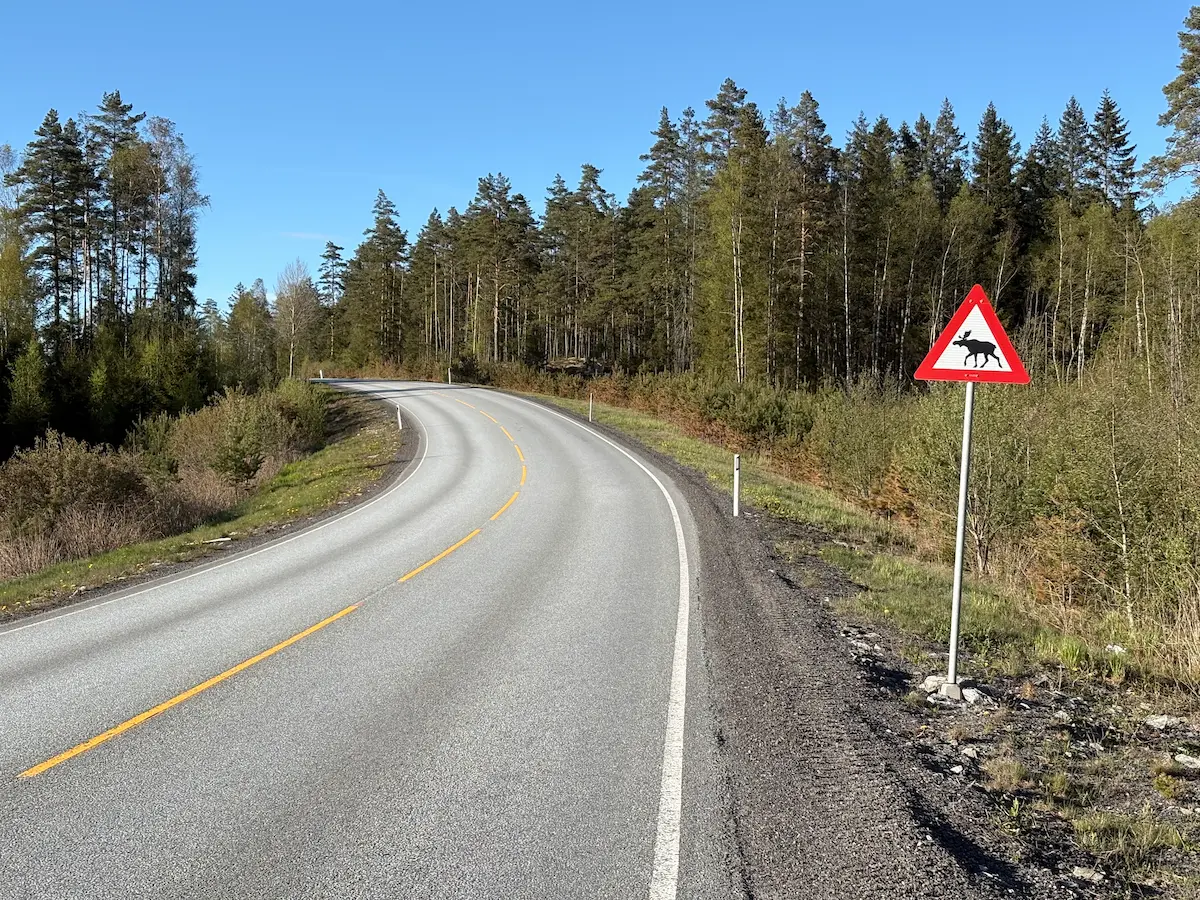
Mørkrunden takes you south from Oslo, through Follo and into Østfold. You start at the Opera House, ride out of the city along Enebakkveien and continue past Ytre Enebakk and south to Spydeberg. That's where the loop earns its name: eighteen kilometres without a break on Mørkveien, past Mørk farm and the golf course. 142 kilometres and 1,662 metres of climbing, but no ascent above 196 metres. The difficulty is in the distance, not the terrain. The way home runs through Garder, Kroer and Kråkstad, on narrow roads without a centre line between farms and fields, with two station cafés along the way.
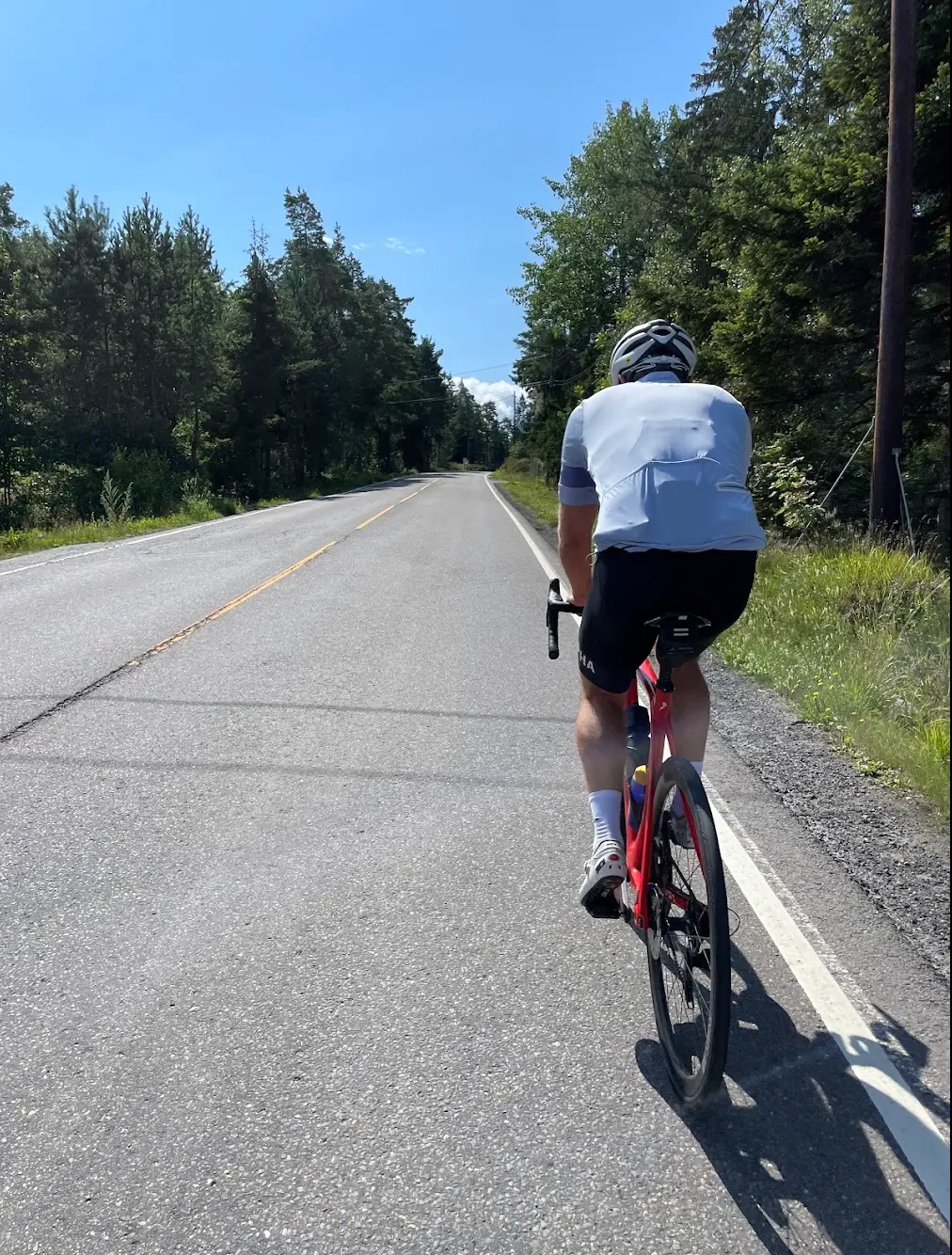
Oslo Cycling — Nesodden Loop
A classic Oslo loop taking you south along the old Mosseveien to Hvervenbukta, past Tusenfryd and Vinterbro, before turning onto the Nesodden peninsula. The climb up Rundvollbakken is the first real test — steep and sustained — before the road opens up and carries you all the way to the tip of Nesodden at 46 km. At the end of the peninsula you will find a kiosk serving food and drinks — and the ferry to Aker Brygge leaves from here if you would rather not ride the full loop. The return follows the west side of the peninsula through Fjellstrand and Fagerstrand, with one last climb up off Nesodden before the flat miles back to Oslo. 101 kilometres with 1,335 metres of climbing — a proper day out from the capital with two café stops and an optional ferry escape.
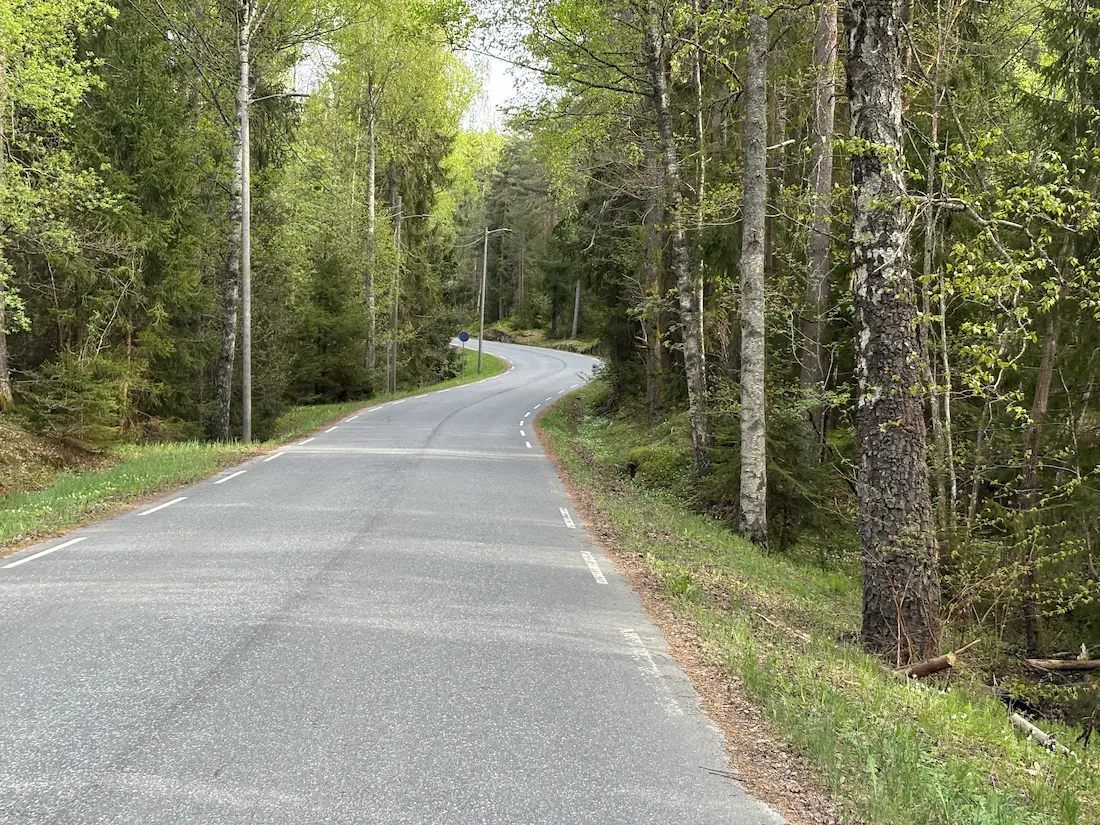
Oslo Cycling — Svartskog Loop
A classic shorter loop from the Oslo Opera House — perfect for a morning ride or when the legs need a gentler day. The route climbs Kongsveien with panoramic views over Oslo and past the old Sjømannsskolen, before rolling south through Nordstrand and down to Ljabru, then along the fjord past Hvervenbukta. Turning inland on the old Mosseveien, the roads become quiet and rural as you enter Svartskog. Rolling countryside with virtually no traffic leads to the main challenge of the day — Svartskogbakken, a sharp Cat 4 climb of 1.7 km at 6.3%. At Svartskog you can detour down to the shore to see the house where polar explorer Roald Amundsen once lived — a worthwhile stop with a tough climb back up as a bonus. Svartskog Kolonial is the perfect café stop for food and drinks before the return along the old Mosseveien back to the Opera House.
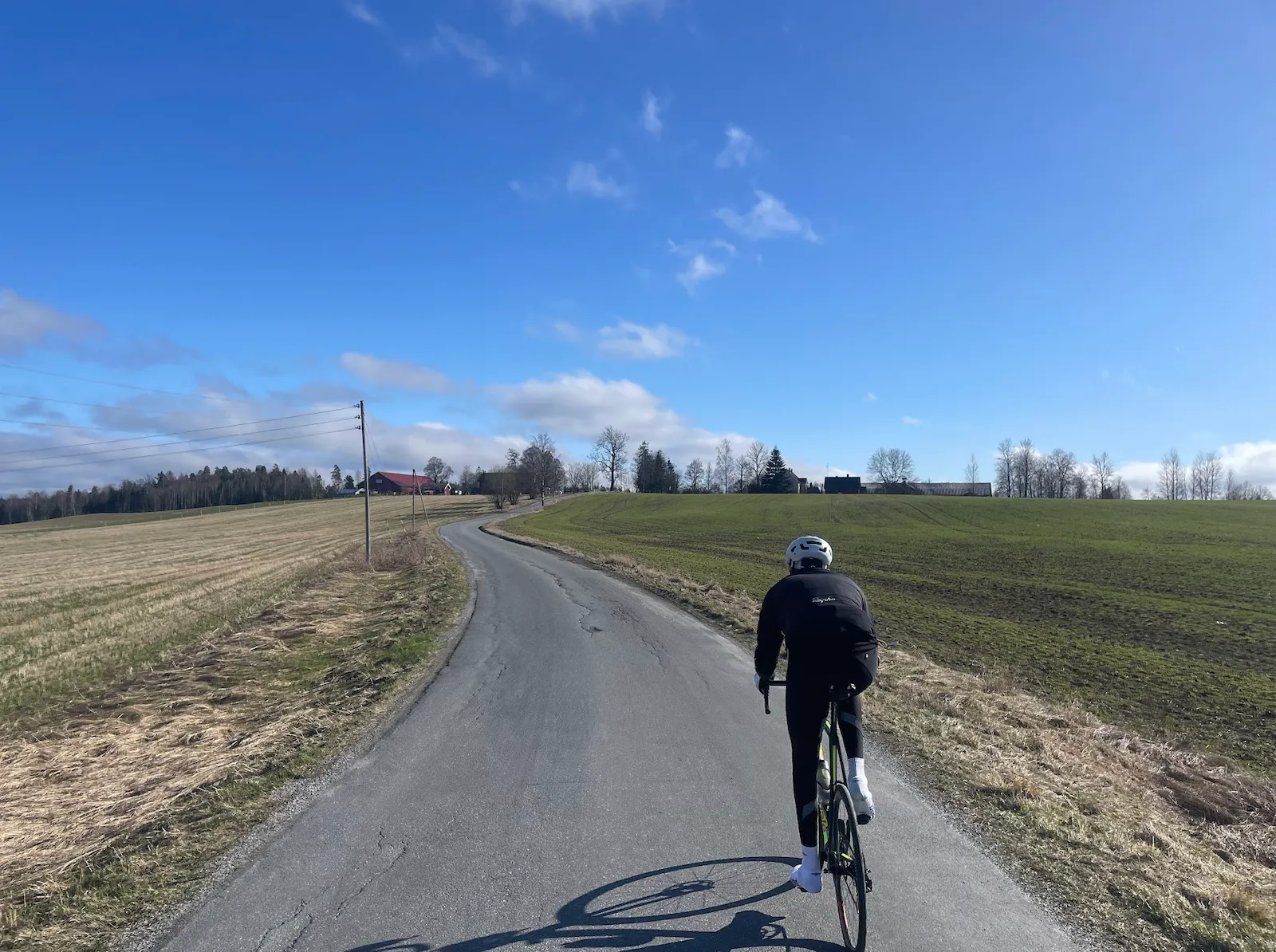
Oslo Cycling — Vestby Loop
A classic 78-kilometre loop from the Oslo Opera House through the rolling countryside of Follo and Vestby. The route follows the old Mosseveien south past Tusenfryd before climbing onto Kongeveien — a quiet local road on rolling terrain with virtually no traffic. West of Ås the route turns onto Drøbakveien — another beautifully quiet road through woods and fields. Klommesteinveien carries you past open farmland before the familiar landmarks of Kiosken på Nesset (soft ice cream stop), Vinterbro and Tusenfryd signal the final run back to Oslo. 78 kilometres with 743 metres of climbing — a perfect mid-distance loop for a weekend morning ride from the city.
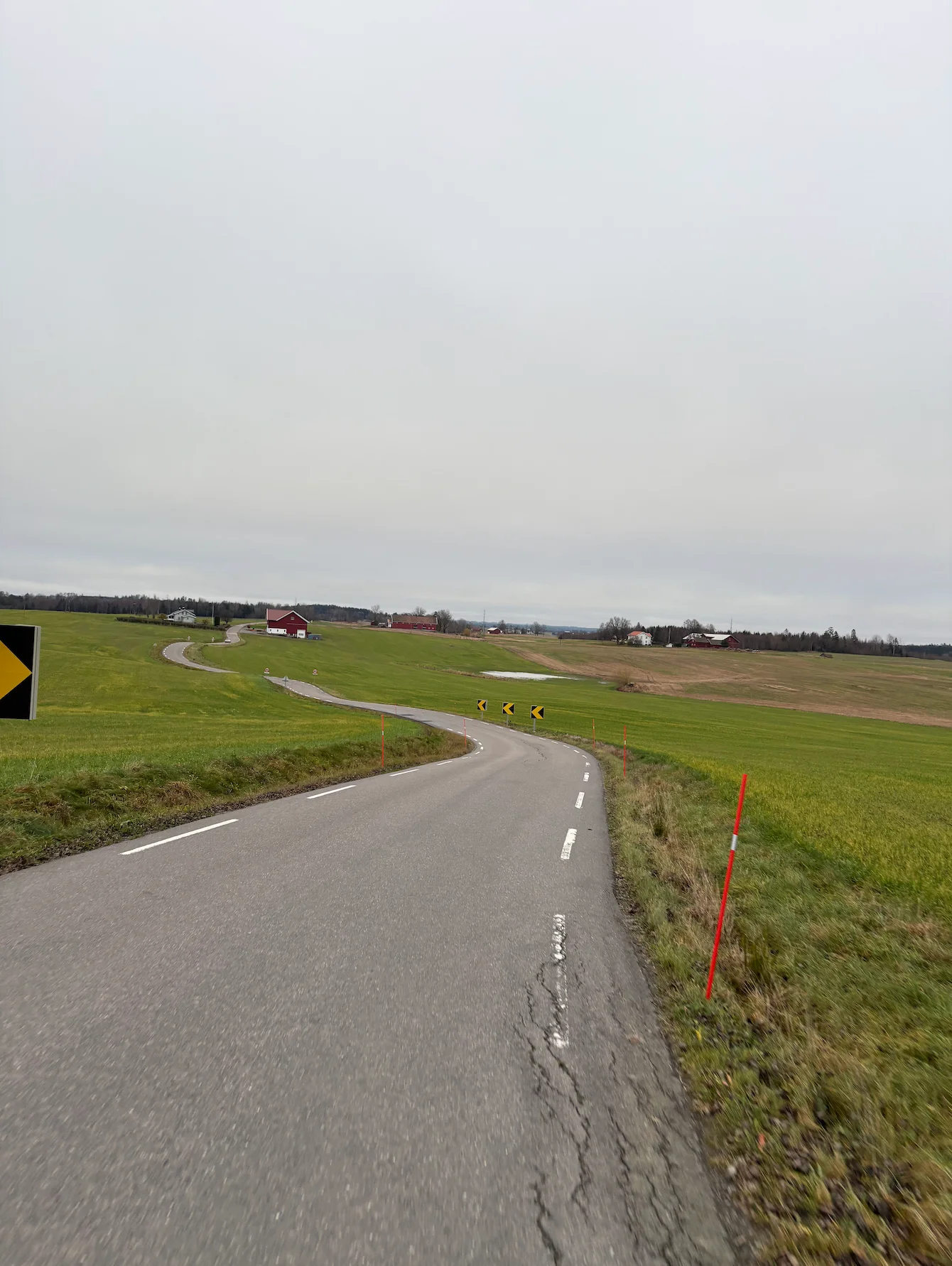
Oslo Cycling — Son Loop
The favourite route of many Follo cyclists — and for good reason. From the Oslo Opera House, this 118-kilometre loop takes you through the very best of Follo's quiet countryside roads, passing the charming villages of Kråkstad, Kroer and Garder on virtually traffic-free lanes before arriving at the idyllic coastal town of Son. Son is the highlight of the route and deserves a proper stop. Hagestua serves excellent food and drinks right by the waterfront, while Håndverksbakeriet is the place for outstanding baked goods — grab something and find a spot along the harbour. With 1,307 metres of climbing on rolling Follo terrain, this is a proper hard day out that rewards with some of the finest cycling roads in the Oslo region.
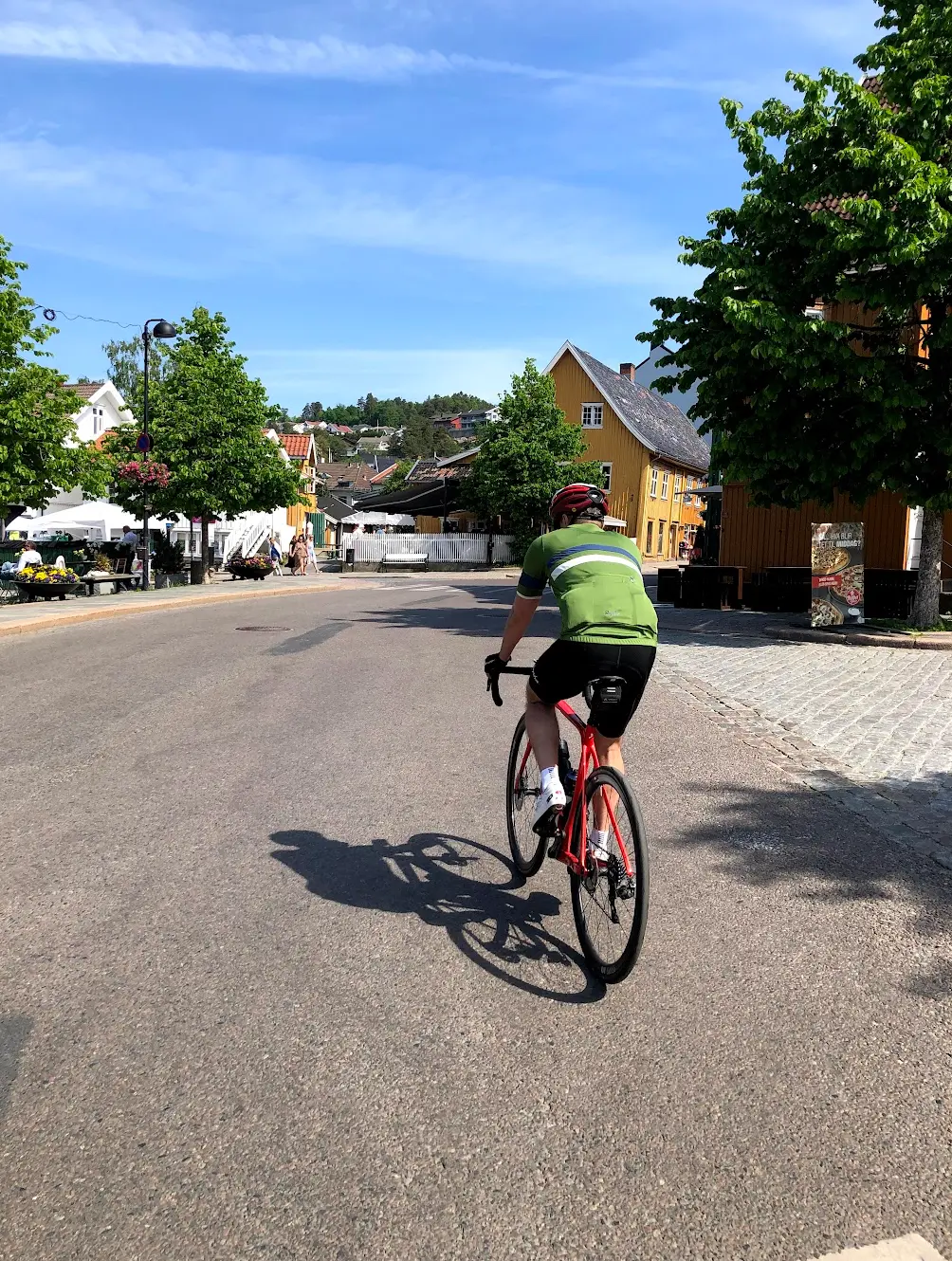
Oslo Cycling — Drøbak
A classic 76-kilometre out-and-back from the Oslo Opera House to one of the Oslofjord's most beloved towns — Drøbak. Following Gamle Mossevei south past Hvervenbukta, Tusenfryd and Vinterbro, the route winds along quiet roads to the idyllic seaside town of Drøbak. Drøbak is a true gem of the Oslofjord — a historic summer town with wooden houses, a beautiful harbour and excellent cafés. Just outside the town, Oscarsborg Fortress is visible from the harbour — the site where Norwegian forces sank the German warship Blücher on 9 April 1940. With 642 metres of climbing on mostly quiet roads, this is an accessible and rewarding ride — perfect for a summer day out from the capital.
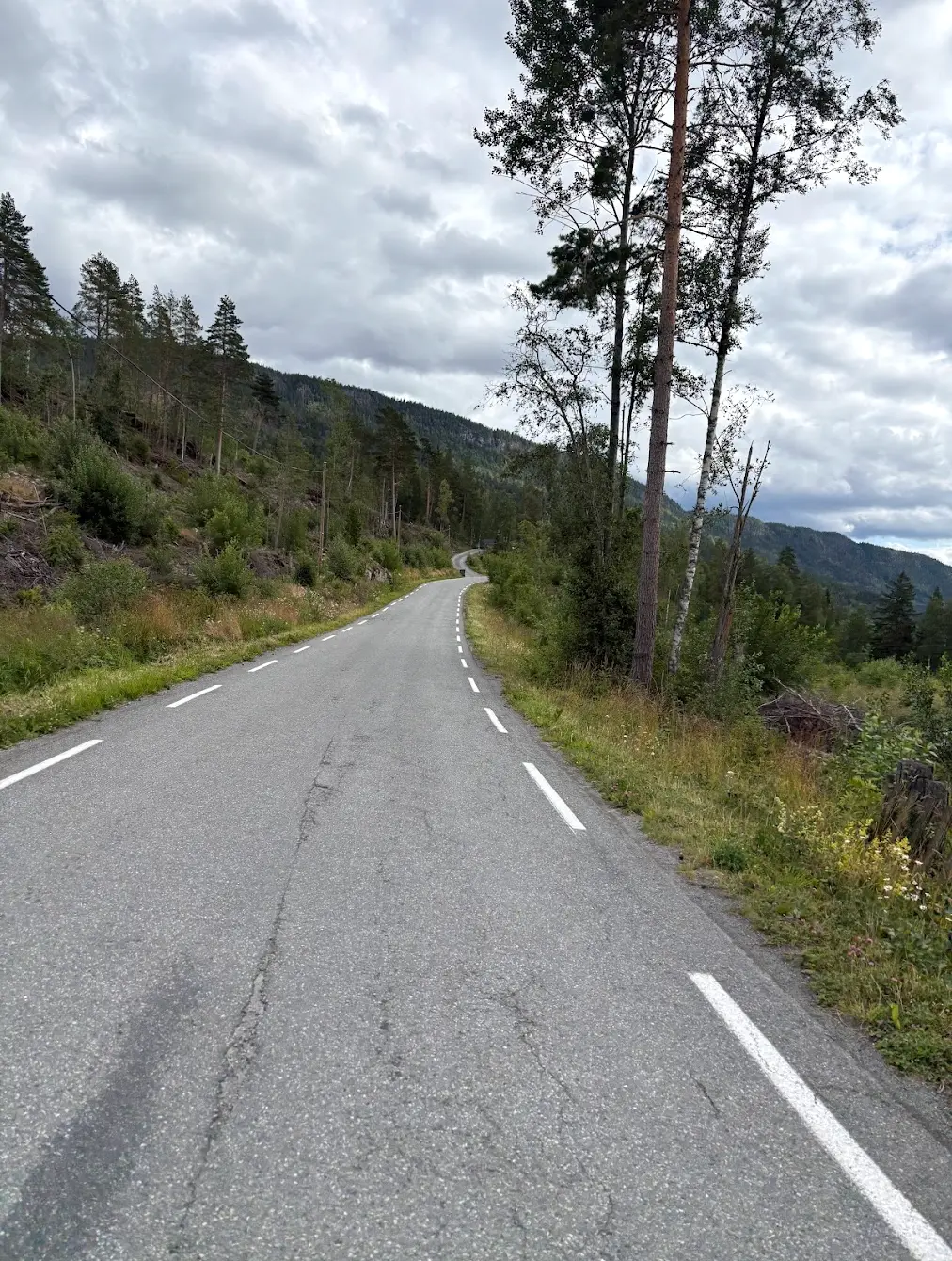
Oslo Cycling — Nordmarka Royal Loop
The ultimate Oslo epic — a 152-kilometre loop around the entire Nordmarka forest, starting and finishing at the Oslo Opera House. Anti-clockwise, this route takes you over Gjelleråsen, north along quiet country roads through Rotnes, Harestua and Grua, west to the shores of Steinsfjorden, and up the climb to Kleivstua before returning through the gravel roads of Krokskogen. This is one of the finest endurance rides in the Oslo region. The roads through inner Akershus are virtually traffic-free with rolling terrain and beautiful rural scenery. After 85 kilometres, Hadeland Glassverk is a highly recommended stop — fresh-baked goods and pizza in a stunning setting. The day's defining challenge arrives at Sundvollen — the climb to Kleivstua, a Category 3 climb of 4.3 km at 6.9% with spectacular views over Tyrifjorden and, on a clear day, Gaustatoppen in the far distance. At the top, Kleivstua has a kiosk, the last resupply before Kongeveien over Krokskogen — eleven kilometres of hardpacked gravel, perfectly rideable on 25mm tyres. A fitting end to one of Oslo's great cycling adventures.
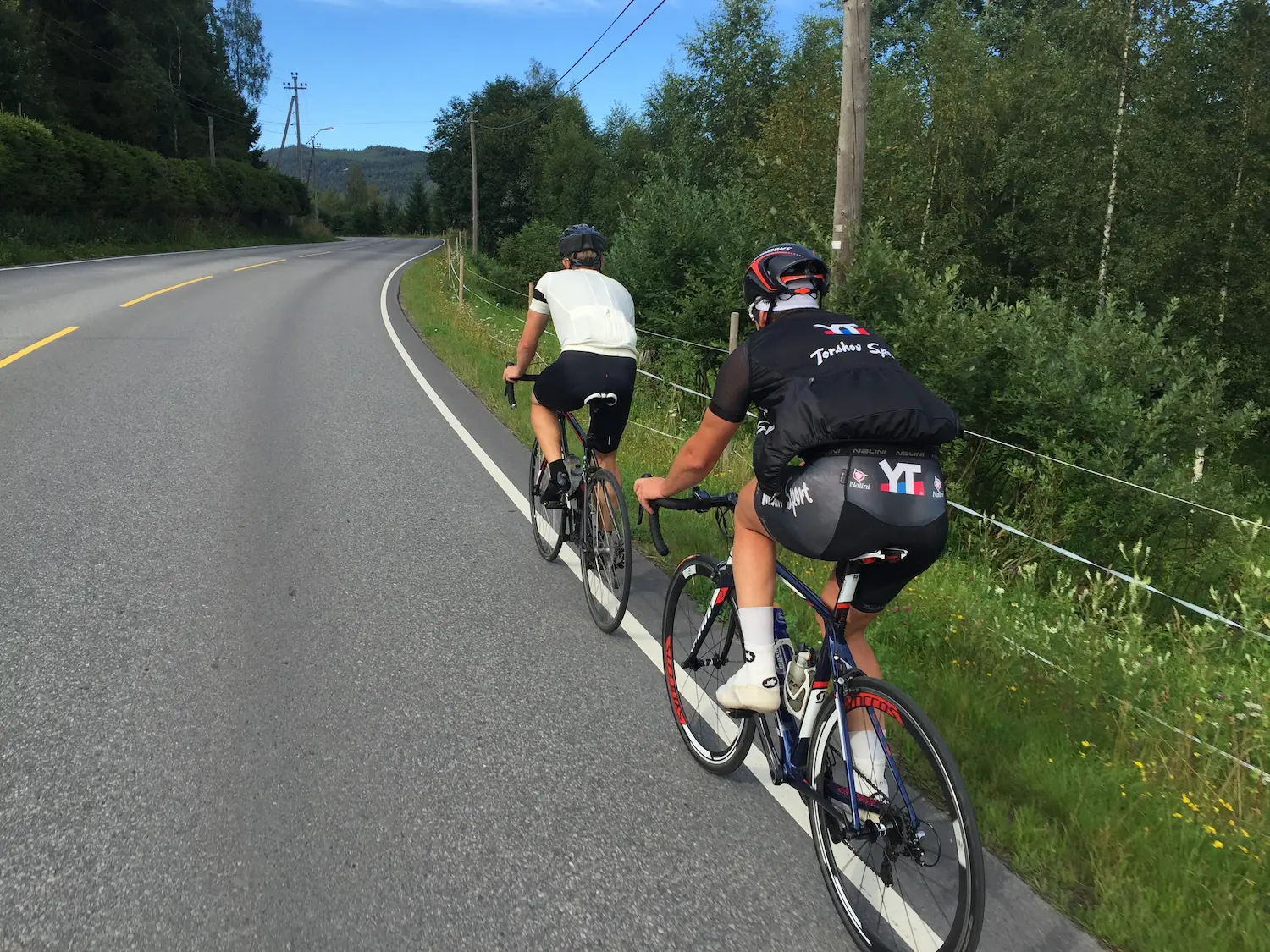
Oslo Cycling — Sørkedalen Loop
One of the most popular cycling routes on Oslo's west side — and for good reason. Starting from Røa, you are in the countryside within minutes, riding through the beautiful Sørkedalen valley on quiet, virtually traffic-free roads. The route passes Bogstad Gård, a historic estate dating back to the 1700s, and Oslo Golf Club — one of the finest in Norway — before continuing into the valley. At Sørkedalen Landhandel og Kafe, a charming country store and café awaits with excellent food and drinks. Check opening hours before you go. At just 21 kilometres, this is an ideal route for a quick spin, a first ride of the season, or a relaxed coffee-stop loop. The scenery is so beautiful that many riders do multiple laps — and the valley never gets old.
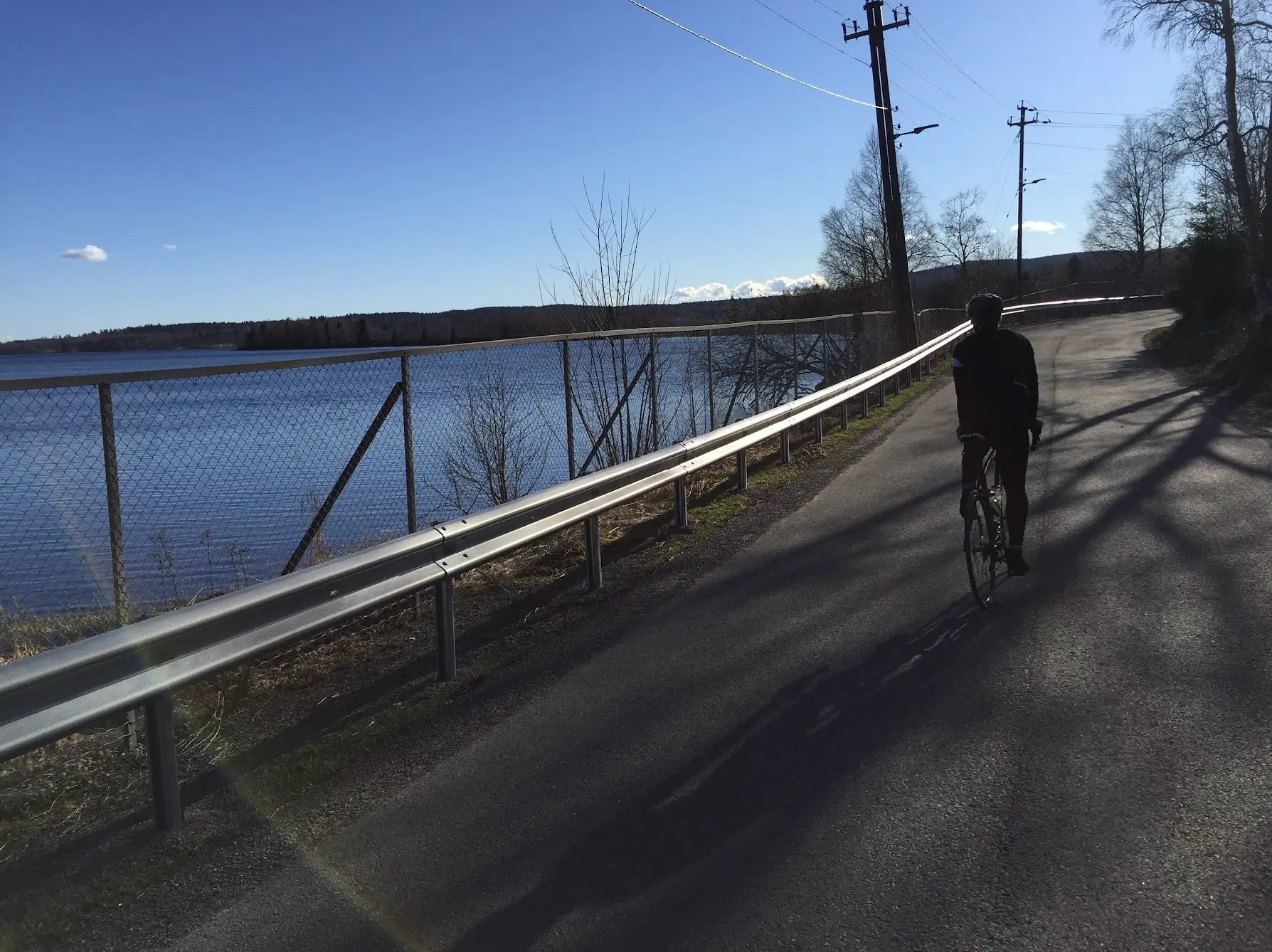
Oslo Cycling — Maridalen Loop
The most popular training loop in Oslo — Maridalen is where the city's cyclists, runners and roller skiers come to train. A 20-kilometre loop through the beautiful Maridalen valley north of the city, on smooth asphalt with virtually no traffic. Maridalen is a natural oasis just minutes from the city centre — a protected agricultural valley surrounded by forest, and the source of the Akerselva river that flows down through the city. The roads are well-maintained and the scenery is stunning in every season. At 20 kilometres with 270 metres of climbing, this is the perfect route for a quick training spin, a recovery ride, or simply enjoying one of Oslo's finest natural areas. Many riders do multiple laps to build distance — the valley never gets old.
Gjøvik — Oslo Gravel
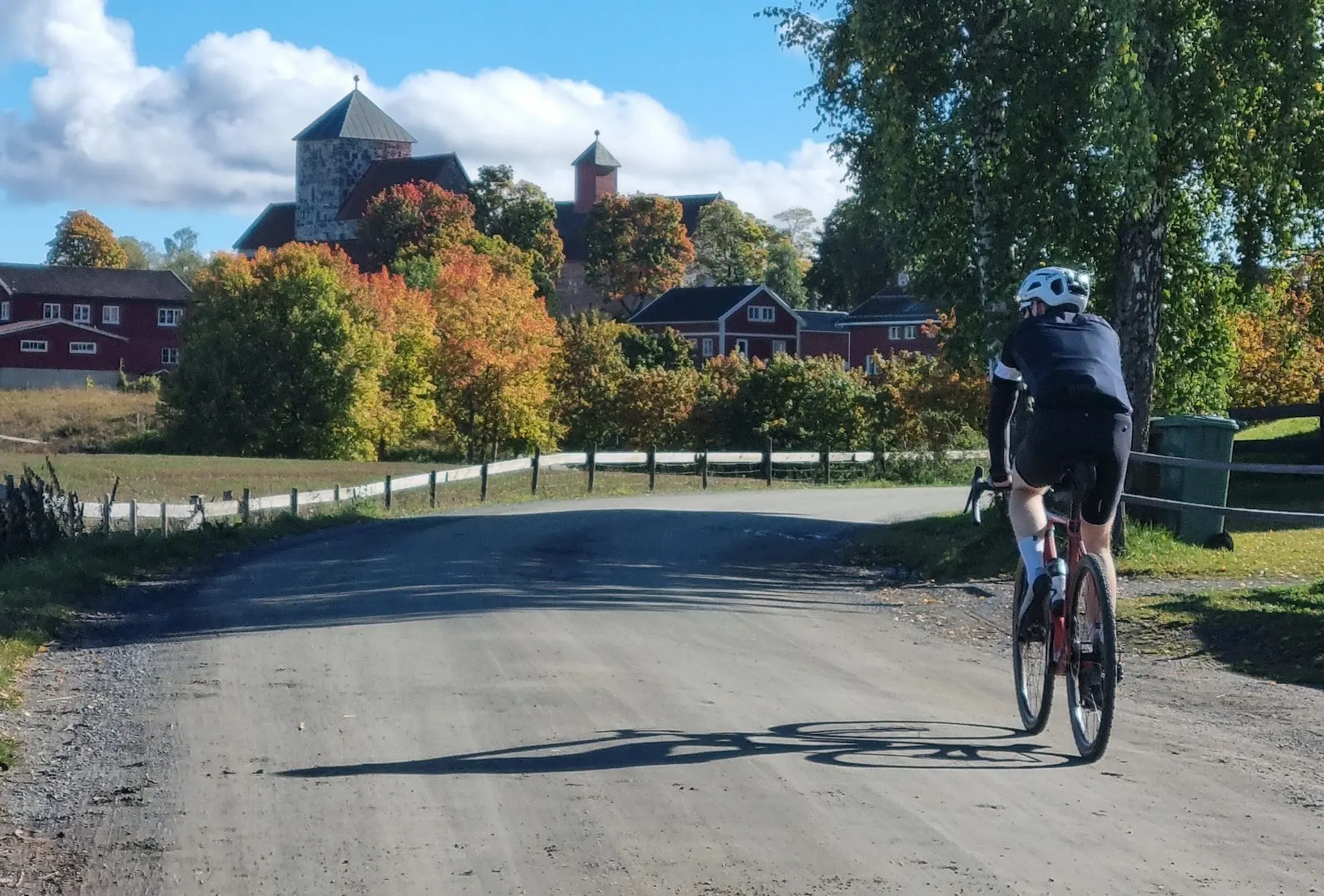
One of the great gravel classics of Eastern Norway — 149 kilometres from the shores of Lake Mjøsa to the Oslo waterfront, through deep forests, quiet farm tracks and some of the finest gravel roads on the continent. With 80% of the route on unpaved roads, this is a ride best suited to gravel and mountain bikes — or a road bike with clearance for wide gravel tyres. The classic way to ride this route is to take the Gjøvikbanen train from Oslo to Gjøvik — about two hours — and spend the day riding home. The train leaves early, the forest roads are quiet in the morning, and arriving at Sørenga by the Oslo fjord after a long day in the woods is one of those cycling experiences you do not forget. From Gjøvik station the route climbs immediately into Totenåsen — the first big test, rewarded with panoramic views over Mjøsa and the wide farming valleys of Toten. Then south through Hadeland's open cultural landscape, past Brandbu, and into the deep quiet of the Hadeland forests where gravel roads thread between forest lakes and dense spruce forest. The final act is Nordmarka from north to south — past Gjerdingen, Sandungen and Kikut, the heart of Oslo's outdoor playground — before the long descent to Maridalsvannet and the city below.
Oslofjord Short Loop
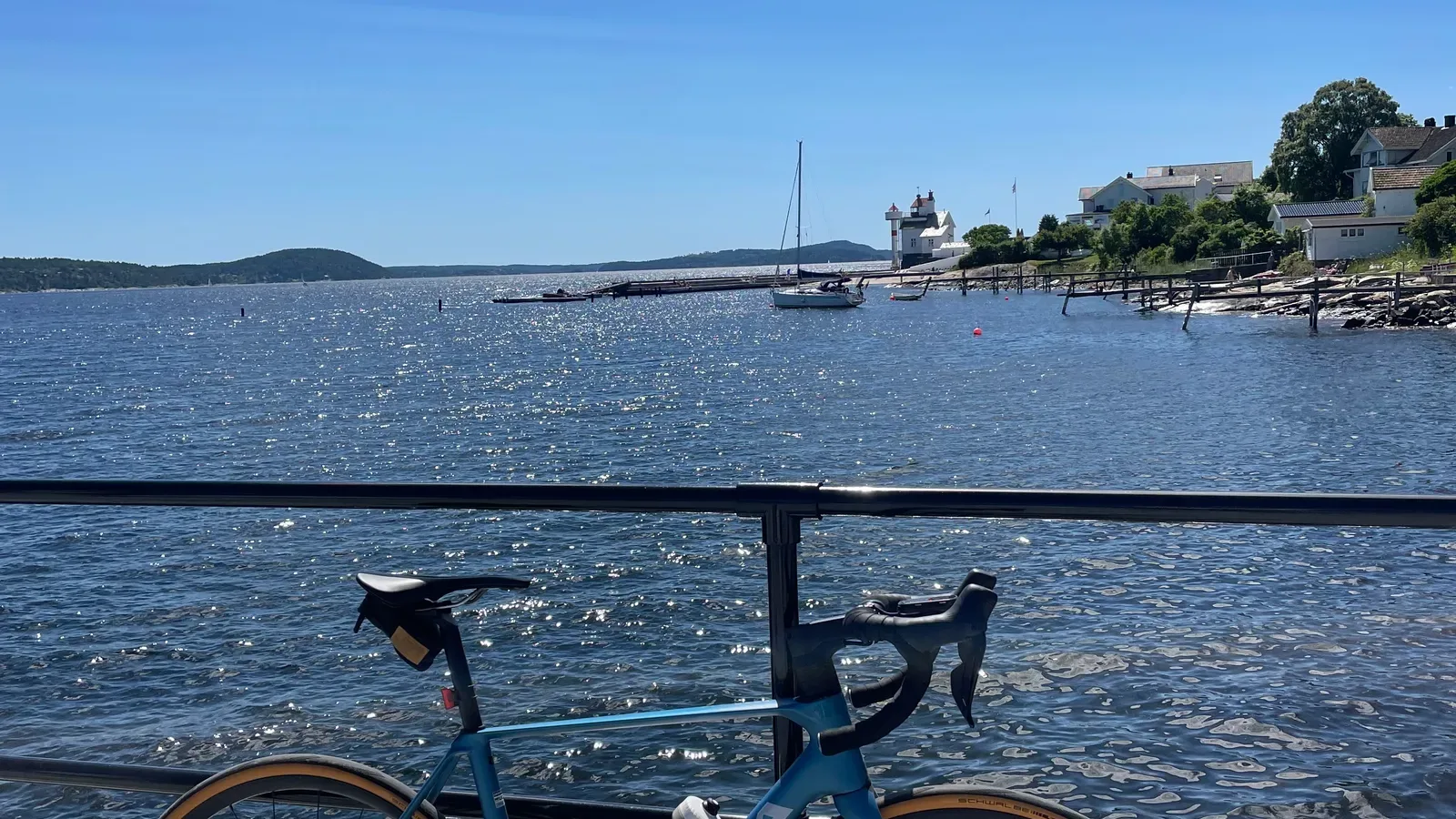
A point-to-point tour of the inner Oslofjord: smooth cycle path south from Oslo to Son, a 15-minute ferry hop across to Filtvet, and a rolling road return along the Hurum peninsula via Vollen. Bakeries, harbours, and saltwater the whole way.
Oslofjorden Rundt
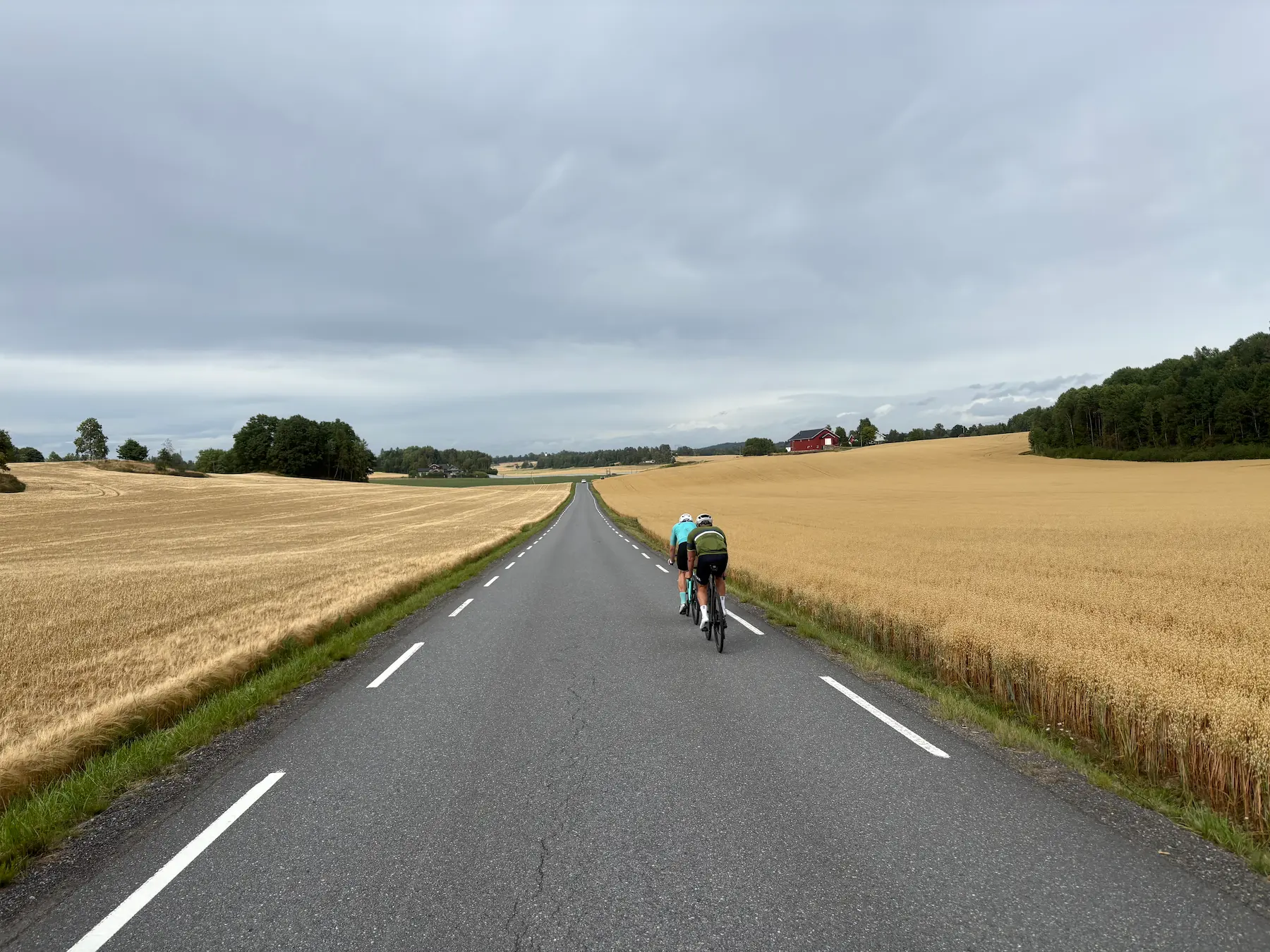
A full lap of the Oslofjord: 199 km of riding plus a free ferry from Horten to Moss. Most of the climbing is on the west side — 1,775 of the day's 2,455 metres are done before you board. It's flatter after Moss.
Oslo Cycling — Slitu & Askim Loop
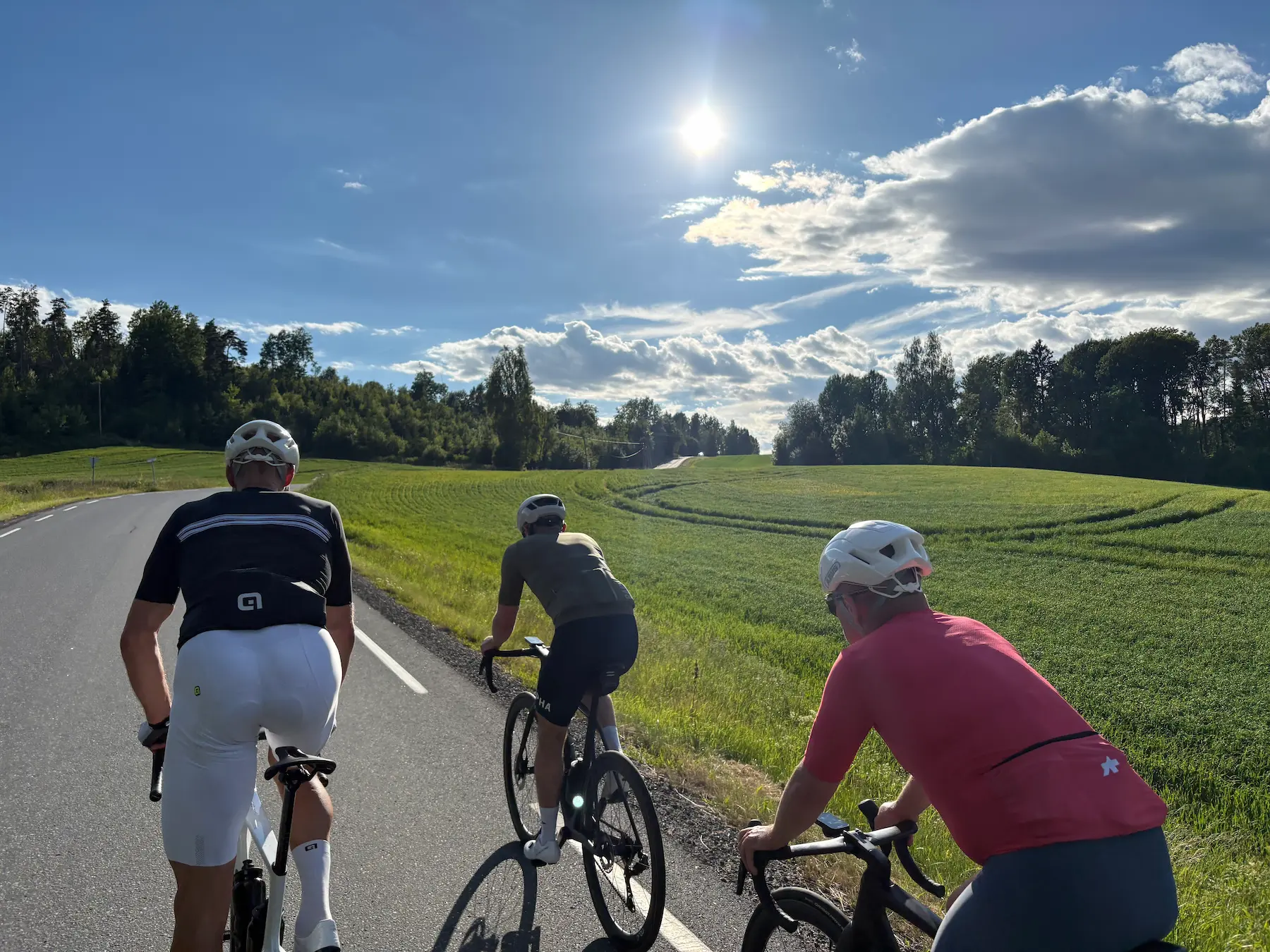
Slitu and Askim is 144 kilometres east from Oslo, with 1,938 metres of climbing and no categorised climbs at all. It's the distance that makes it hard, not the hills. The middle of the route runs through the grain country east of the Glomma, around Askim and Slitu — small rural roads with little traffic, a long fast descent towards Slitu, and 3.7 kilometres of gravel on Revaugveien and Skjoldenveien. The way home crosses Tomterbakken and cuts through Follo on roads the Follorittet uses every May, and the last stretch into Oslo runs with the fjord in view.
Oslo Cycling — Skotbu & Drøbak Loop
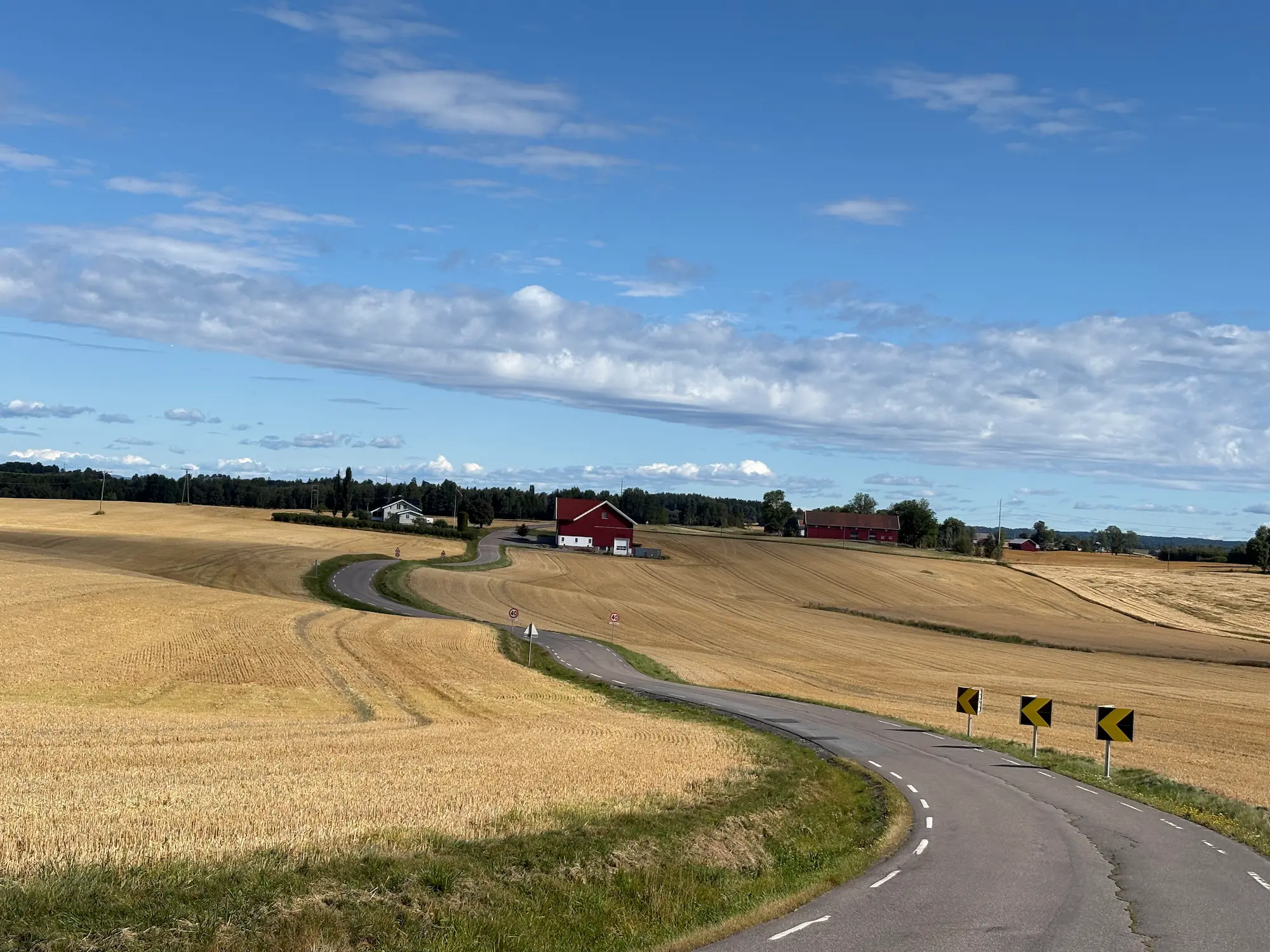
Skotbu and Drøbak are 114.8 kilometres from the Opera House: you cross Follo end to end and come back to where you started. East first to Skotbu and the high point of the route at 173 metres, then west to the fjord and Drøbak. No categorised climbs, but Vestbyveien into Drøbak has half a kilometre at 9.6 per cent. The middle section runs on small roads through the grain country of Follo — Løkenveien, Audenbølveien and Skotbuveien, narrow and with next to no traffic. Coffee stops in the old station building at Kråkstad and at Pavels Bakeri in Drøbak. The way home follows Osloveien along Årungen and comes into Oslo on cycle path with the fjord alongside.
Tromsø Cycling — South Kvaløya Loop
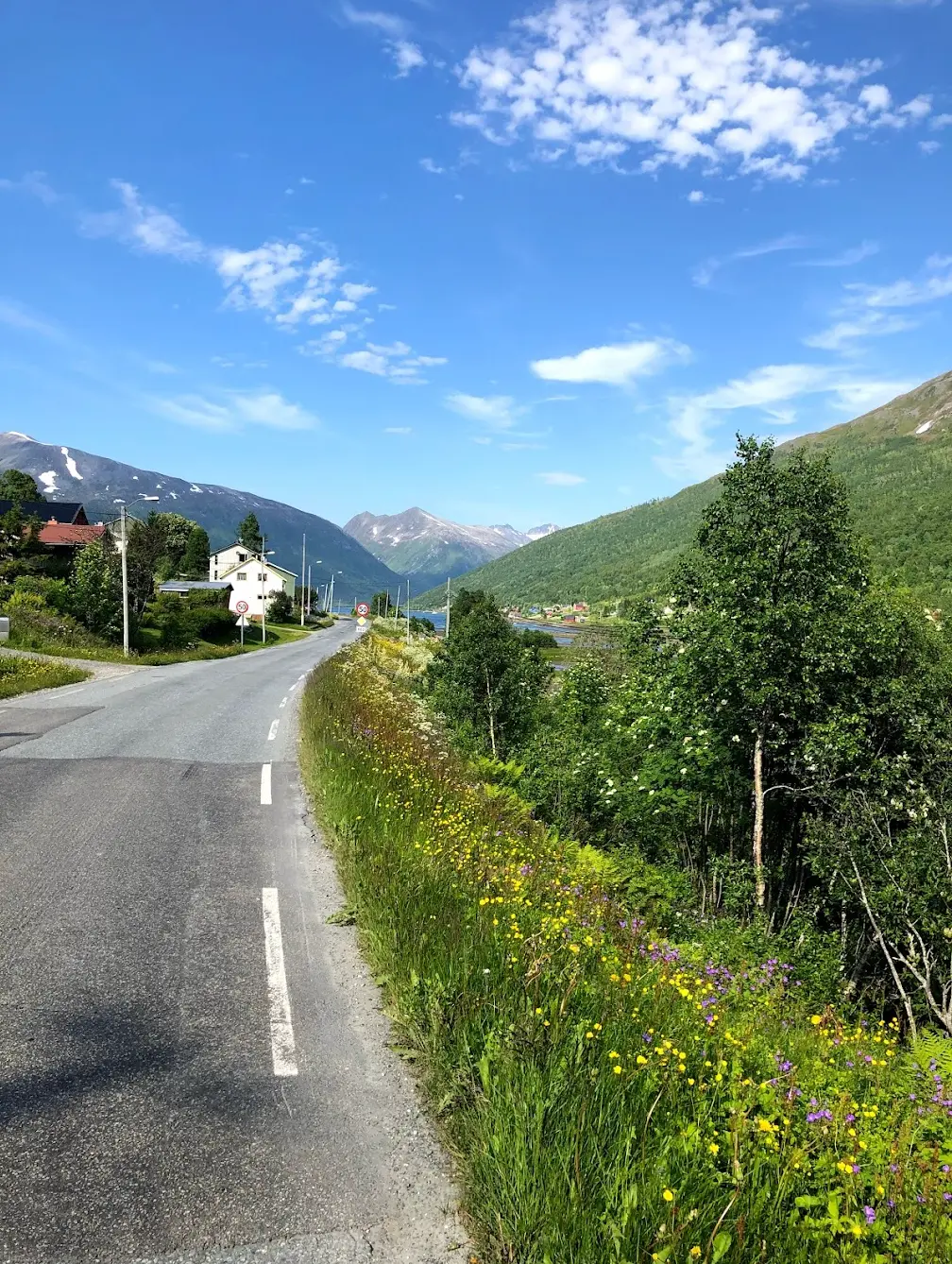
One of the finest cycling routes in Arctic Norway — 114 kilometres around southern Kvaløya from Tromsø. Dramatic mountain scenery, deep fjords and virtually no traffic make this a truly special ride above the Arctic Circle. The route crosses the iconic Sandnessund Bridge out of Tromsø and follows the island roads around Kvaløya, with sweeping views of snow-capped peaks and turquoise fjords throughout. Reindeer and moose are both signposted along the road, and either can be standing in your lane without warning — slow down. For supplies along the way, Joker Austein is the place to stop. And if you have the opportunity, a detour to Sommarøy is strongly recommended — one of the most beautiful spots in all of Norway, with white sand beaches and crystal clear Arctic water.
Sandefjord — Larvik & Stavern Loop
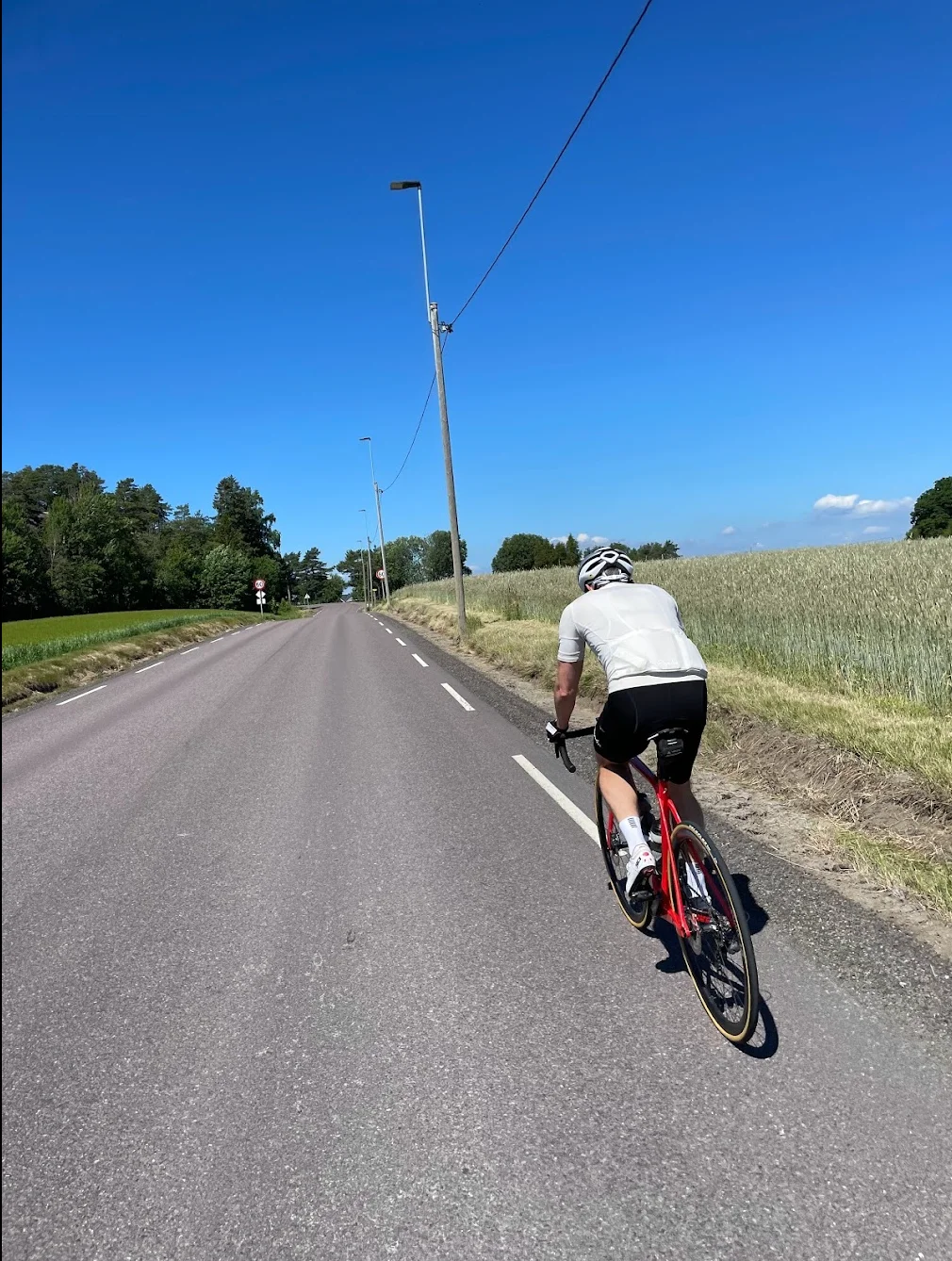
A road loop through Vestfold linking three coastal towns: Sandefjord, Larvik and Stavern. The first 29 kilometres follow Kystruta, national cycle route 1, south past Kaupang and through Larvik. From Larvik the route continues to Stavern at km 29 and out to Helgeroa at km 41 — the finest stretch of coast on the whole ride. Here the route turns inland. The return is a completely different ride: inland over Tveidalen and Siljan, twelve kilometres of gravel from Oklungen, and the high point of the day at 179 m. 131 kilometres with 1,896 metres of climbing, and 64 kilometres without anywhere to resupply.
Sandefjord — Hvittingfoss & Steinsholt Loop
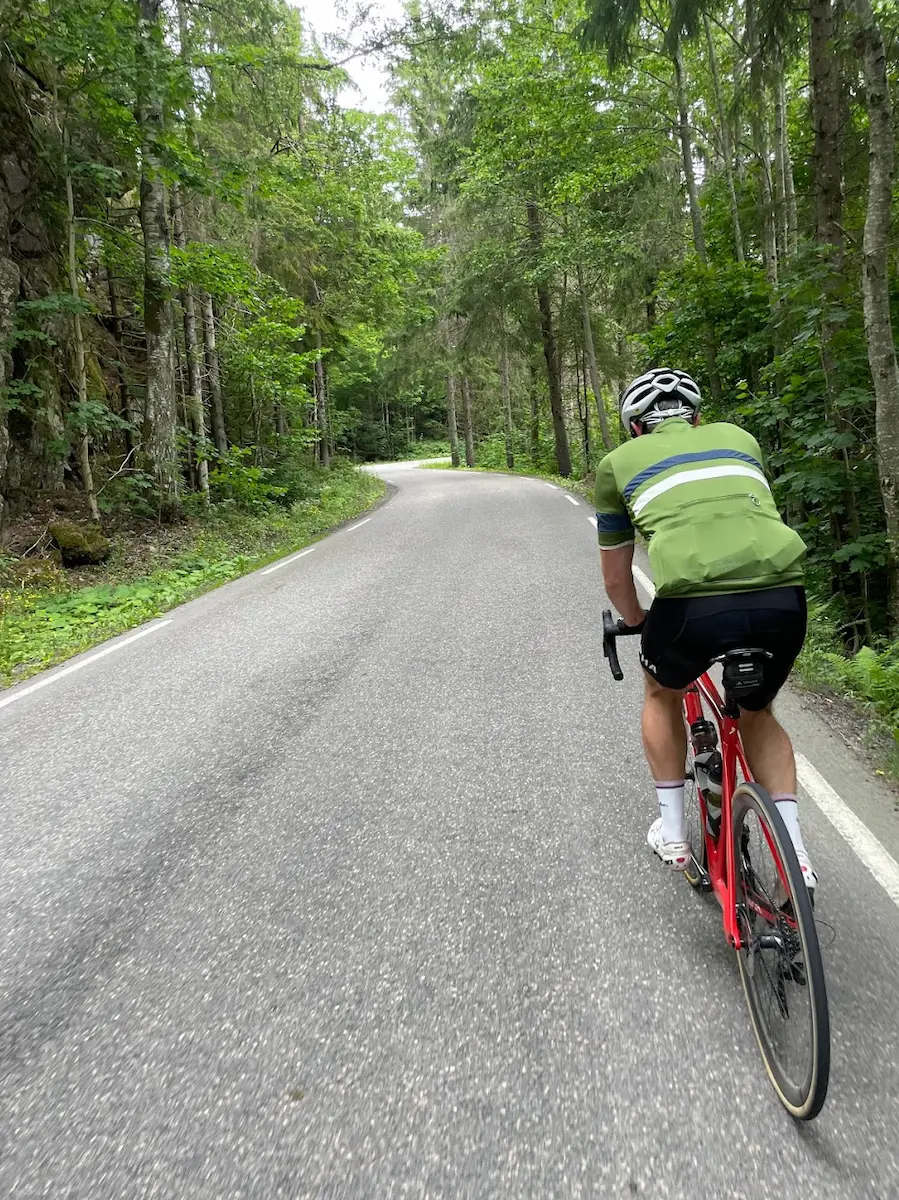
One of the most complete long-distance rides available from Sandefjord — a 182-kilometre epic that takes you from the coast deep into the Lågen valley, north to Hvittingfoss and back through the beautiful agricultural heartland of Vestfold. This is a route for riders who love mile after mile of good rhythm, varied terrain and authentic Norwegian inland scenery. Leaving Sandefjord behind, the route heads north through Lågendalen along the Numedalslågen — one of Norway's longest rivers. The valley road follows the river as far as Hvarnes, where the route climbs out of the valley and continues north via Revetal to Hvittingfoss, the natural turning point of the route and site of the powerful waterfalls that give it its name. A stop here before the long return is strongly recommended. The southern leg winds back through Steinsholt and Svarstad, through some of the finest agricultural land in Norway, before the familiar Vestfold roads bring you home to the coast. Long, steady gradients, well-maintained roads with minimal heavy traffic, and a route profile that rewards consistent effort over explosiveness.
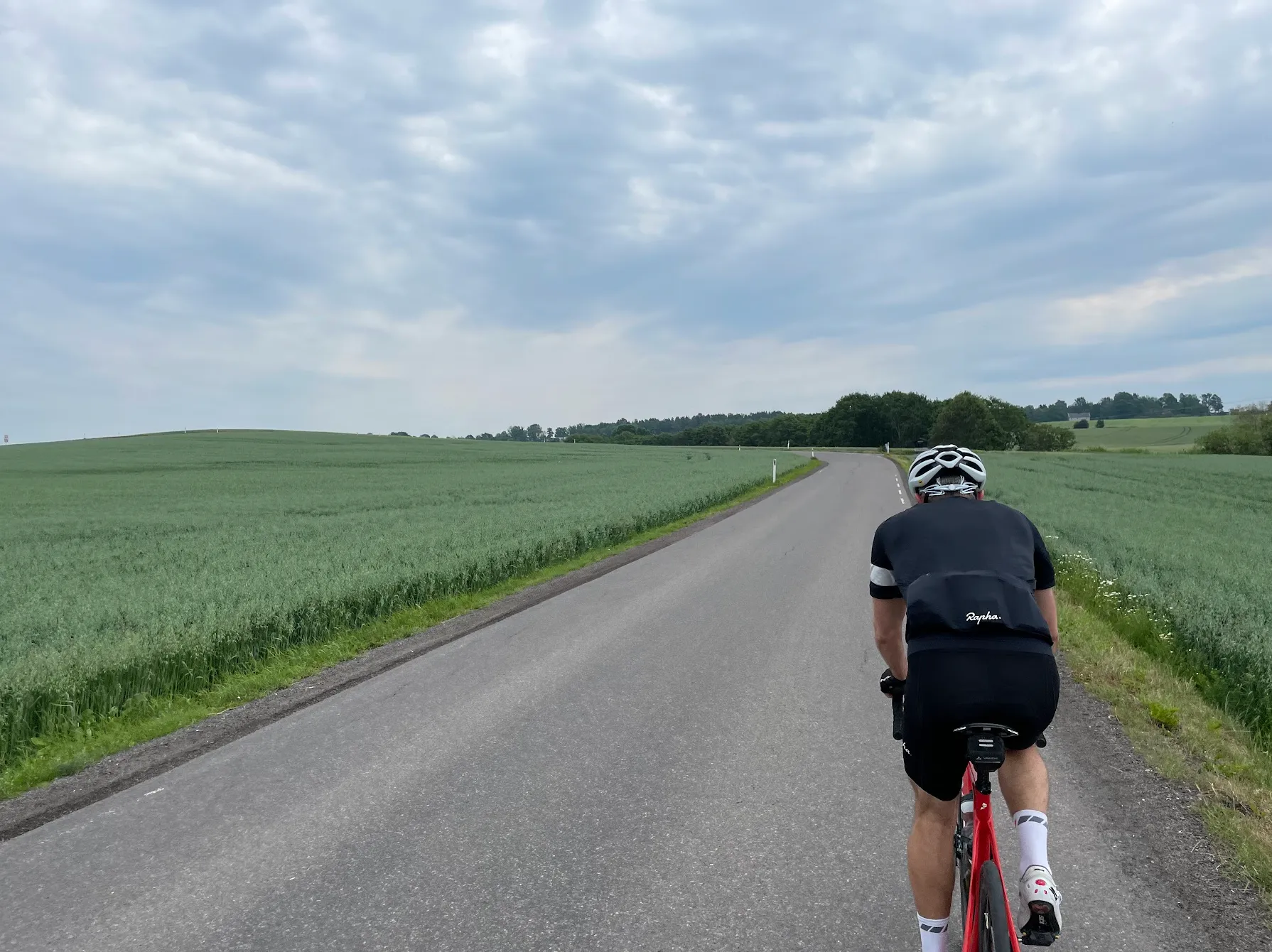
Sandefjord — Tønsberg & Hvittingfoss Loop
The ultimate Vestfold loop — 151 kilometres that connects the coast with the deep inland, taking in Norway's oldest city, a charming fjord village and the powerful waterfalls of Hvittingfoss in a single day. This is a route for riders who want contrast: urban coastal charm in the morning, forested inland solitude by midday and the long valley roll home in the afternoon. From Sandefjord the route heads east through rolling farmland to Tønsberg — Norway's oldest city, where Slottsfjellet castle hill rises above the harbour. The route then turns north through the inner Vestfold countryside, the terrain gradually becoming more forested and hilly as you push towards Hvittingfoss. The powerful rapids of Numedalslågen mark the halfway point — a natural stop for food before the long return. The return follows Lågendalen southward through Svarstad and Steinsholt, with the river as a constant companion through some of the finest cycling roads in the region. A stop in Åsgårdstrand on the way is highly recommended — one of the most charming small towns on the Oslofjord, with the legendary Munchs Café serving shrimp sandwiches, pizza and local food right on the waterfront.
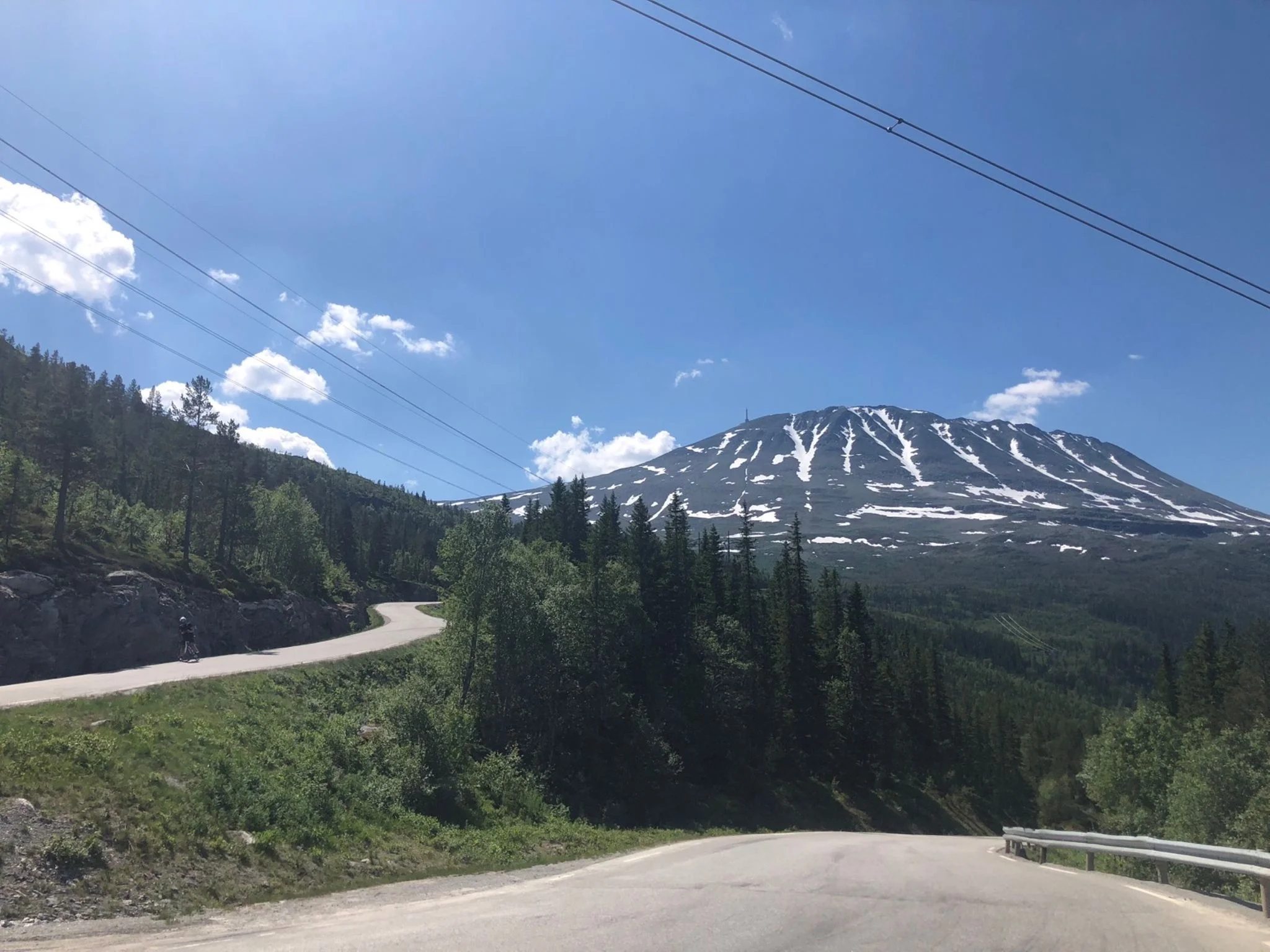
Gaustatoppen Rundt — 172 km Loop
A 172 km loop that circles the Gaustatoppen massif rather than taking it on directly. The day starts by throwing away every metre of altitude down Zombie Hill into Rjukan, spends 50-odd kilometres on a high rolling plateau, then drops for the better part of 70 km to Sauland — before the sting: a 33 km climb back to the roof of the route that is far harder than its 3.6% average lets on. Zombie Hill is the climb out of Rjukan that ends Norseman athletes' bike leg — but this route descends it from Gaustablikk as the warm-up, then comes back to Gaustatoppen from the south side instead.
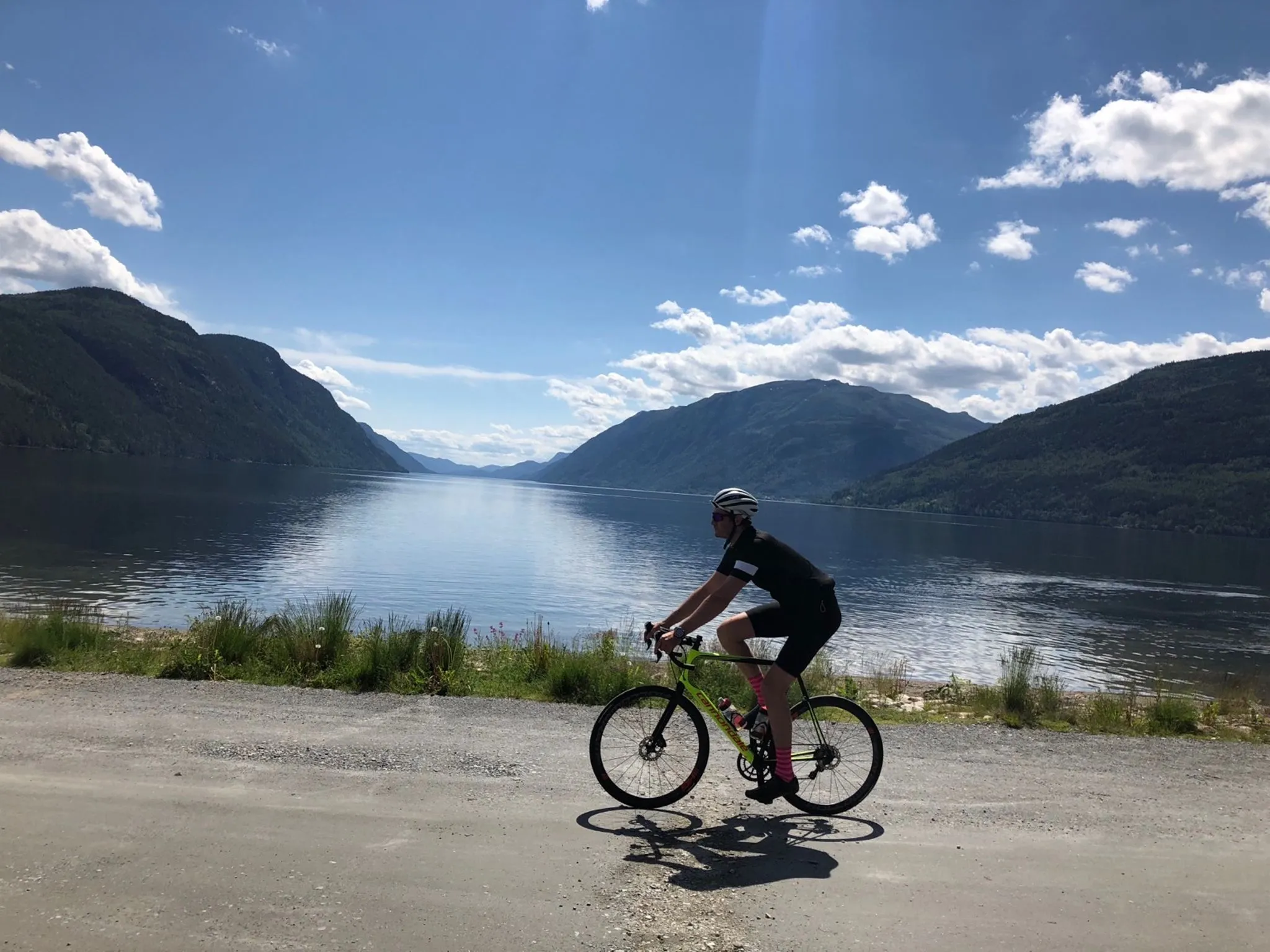
Tinnsjøen Rundt — The 145km Loop Around the Tinnsjø Basin from Gaustablikk
A 145 km loop from Gaustablikk that goes around the Tinnsjøen basin and finishes by climbing back up Zombie Hill — the climb that gave the Norseman triathlon finale its name. The day opens with a 7 km warm-up climb out of the start, drops 30 km to Sauland, builds 50 km of patient gradient past Tinnsjøen and up to the plateau, and earns a lakeside refuel at Sandviken Kafé i Tinn — then 6.8 km at 9.6% on Zombie Hill stands between you and the finish.
Frequently asked questions
- When is the cycling season in Norway?
- The coast and the east ride from April to October. Mountain passes open in spring, some still closed overnight. Full cycling season runs mid-May to early October.
- Where should I cycle in Norway?
- The western fjords for sea-level climbs, the high mountain for long passes, the Oslofjord for loops from the city and the north for the light. The region list shows where we have routes.
- Can you cycle through tunnels in Norway?
- Not all of them. Many tunnels on main roads are closed to bikes and have a signed detour. Check your route before you travel.
- Do I need a helmet in Norway?
- No, it isn't compulsory. Most riders wear one anyway, and it's advisable on the passes where descents get fast.