The Complete Guide to Cycling in Norway's Western Fjords
Everything you need to plan a road cycling trip to Fjord Norway — the best climbs, where to base yourself, when to go, and how to get there.
Terrain
High mountain passes, rolling fjord roads
Best for
Experienced road cyclists
Highlight
Sognefjellet — Northern Europe's highest pass at 1,434m
Season
Jun–Sep (mountain roads)
Base
Skjolden, Geiranger or Åndalsnes
Bike rental
Limited — bring your own bike
Norway's Western Fjords are, for me, the most extraordinary road cycling destination in Europe. Not the easiest, not the warmest, and definitely not the most convenient — but the scenery is unlike anywhere else I have ridden. Sea-level fjord roads lead directly to 1,400-metre mountain passes. Glaciers sit within a day's ride of the Atlantic. The climbs are long, the descents are cinematic, and for most of the summer the sun barely sets. If you are willing to work for it, this is as good as cycling gets.
When to go
The mountain season is short. Sognefjellet, Tindevegen, Dalsnibba and the upper reaches of Aurlandsfjellet and Trollstigen typically open in late May or early June and close again in September or October — exact dates depend entirely on the winter snowpack. If a mountain pass is central to your trip, check nasjonaleturistveger.no and vegvesen.no within a week of travel.
The sweet spot is late June through early September. Long daylight hours, milder weather, and all the mountain roads are open. Around midsummer in late June you get close to 24 hours of daylight — I have ridden Sognefjellet at 10pm with the sun still high over the plateau.
July and August bring more settled weather but also more traffic on the famous roads. If you can travel in June or early September you will find quieter tarmac and the best conditions of the year.
Rain is a constant possibility regardless of month. Pack proper waterproofs — the difference between a spectacular day and a miserable one is your rain jacket.
Where to base yourself
The Western Fjords cover a large area — bigger than some countries. Trying to ride everything from a single base means long drives between rides. I would recommend splitting the trip across two or three locations.
Skjolden & inner Sognefjord
Skjolden sits at the innermost tip of Sognefjorden, directly beneath Sognefjellet. This is the best base for Norway's highest mountain pass, the UNESCO-listed Urnes Stave Church, and the Nigardsbreen glacier arm of Jostedalsbreen. Accommodation is limited — book early. The small shop in the village is your last resupply before the mountains, so stock up before every ride.
Geiranger
The natural base for Dalsnibba and the Eagle Road (Ørnevegen). Geiranger village is small, seasonal, and gets busy with cruise ships in the middle of the day — start your rides early and you will have the climbs largely to yourself. The ferry from Hellesylt makes it possible to build loops that include sections of the fjord you cannot reach by road.
Åndalsnes
The best base for Trollstigen. Åndalsnes sits at the head of Romsdalsfjord, ringed by dramatic peaks on three sides. From here you can ride Trollstigen directly, or build longer loops over Valldal and the Eagle Road. The town has better infrastructure than Geiranger — more accommodation, proper restaurants, and a train station on the Raumabanen line from Oslo.
Getting there
There is no airport in the heart of the Western Fjords. The practical options are Bergen (BGO), Ålesund (AES) or Oslo (OSL). Bergen and Ålesund put you close to the fjords immediately; Oslo means a longer drive but gives you more flight options from outside Europe.
From Bergen it is a five-to-six hour drive to Skjolden via the Lærdal tunnel. From Ålesund, both Geiranger and Åndalsnes are within two hours. If you are flying in with a bike, rental cars that take a bike box are not always easy to find — book early and confirm the vehicle will actually fit.
Bike rental is limited in the Western Fjords compared to Mallorca or the Costa Blanca. A handful of shops in Bergen and Geiranger rent road bikes seasonally, but the selection is narrow. Bringing your own bike is the sensible choice.
Key stops along the way
Sognefjellshytta
The mountain lodge near the top of Sognefjellet at 1,413 metres. Simple food, hot drinks, and one of the highest cafés in Europe. If you are climbing from Skjolden, this is the reward. When I rode this in August, the lodge had only just opened after the winter — snow banks several metres high still lined the road.
Geiranger Skywalk café
The Geiranger Skywalk café at 1,500 metres above Geirangerfjord. On a clear day the view down the fjord is extraordinary — Geiranger village looks like a toy below you. There is a toll gate at the bottom of the road, but cyclists pass for free.
Valldal strawberry country
The valley between Trollstigen and Geiranger is famous for strawberries. Roadside stands sell them through July and August. Fresh Valldal strawberries after a long climb are one of the ride-day highlights I will never forget.
Stegastein viewpoint
The cantilevered viewing platform 650 metres above Aurlandsfjord. Not a café, but a mandatory stop. Save it for the descent — on the way up you are too deep in the effort to appreciate it. On the way down you can stand there and take in the full panorama of the fjord and Aurland far below.
Sognefjellet — Northern Europe's highest mountain pass
Sognefjellet is the signature climb of the Western Fjords and one of the great road cycling experiences in Europe. From Fortun at near-sea level, the road climbs 1,434 metres over 25 kilometres to the summit of Norway's highest public mountain road. The lower hairpins are the steepest part. Above them the landscape opens into a vast high-mountain plateau of lakes, bare rock and lingering snow.
The road typically opens in late May or early June depending on snow, and closes in October. Check the status at vegvesen.no before you travel. In July and August you will share the tarmac with motorhomes — not heavy traffic by most standards, but present.
I would encourage you to ride it late in the day. Norwegian mountain passes in midsummer are extraordinary in the evening light, the traffic disappears, and with close to 24 hours of daylight you can start a climb at 6pm without worrying about getting caught out. Some of my best memories of riding in Norway come from high passes at 10pm, with the sun still on the peaks.
The routes
Six routes covering the Western Fjords' defining climbs — Sognefjellet, Trollstigen, Dalsnibba, Aurlandsfjellet and the Eagle Road — alongside the quiet inner-fjord roads to Urnes Stave Church and the Nigardsbreen glacier.
Sognefjellet & Tindevegen
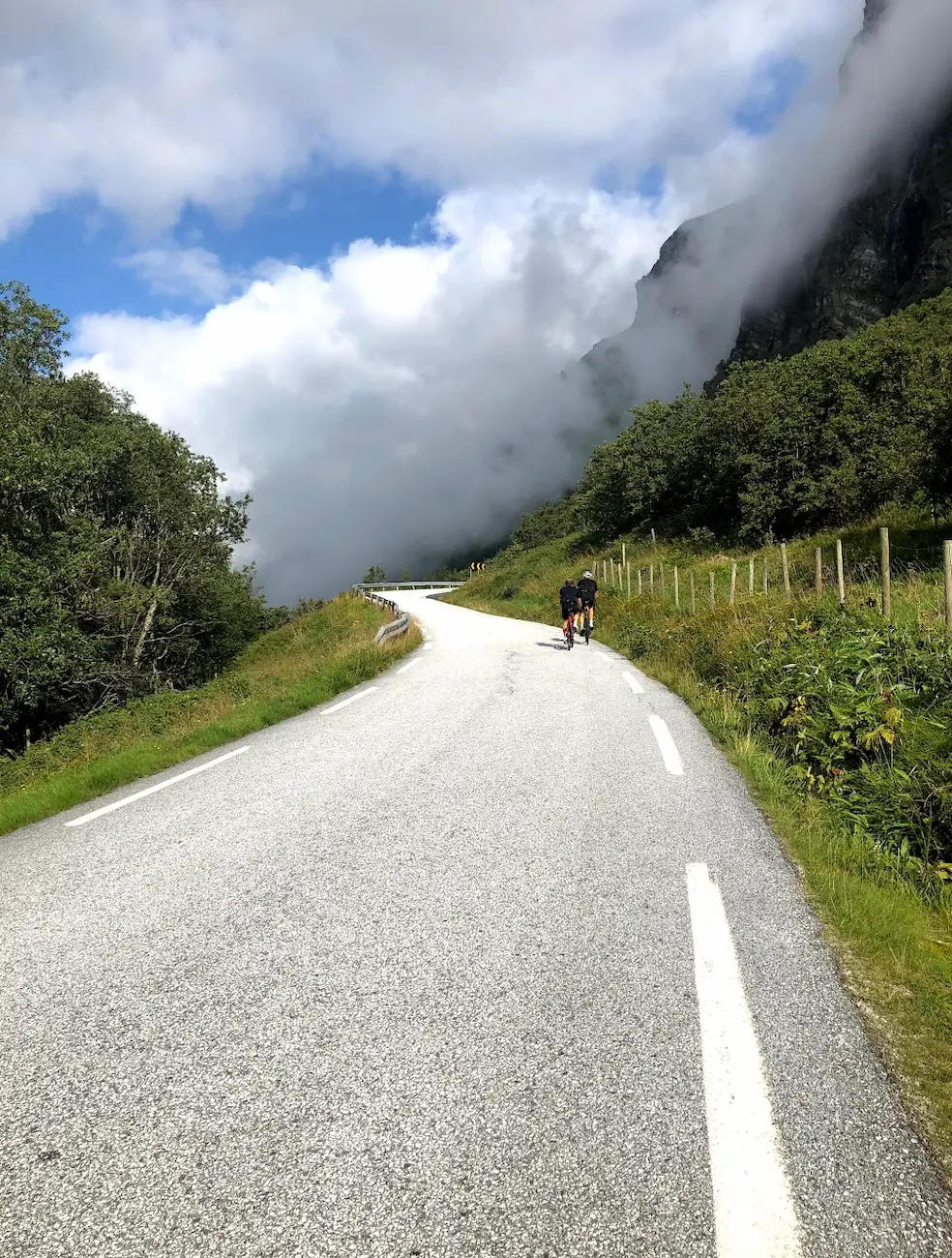
Two of Norway's greatest mountain roads in a single out-and-back. From Skjolden at sea level, you climb to Sognefjellshytta at 1,434m, descend to Turtagrø, then plunge down the savage Tindevegen to Øvre Årdal — before climbing back out. The Western Fjords queen stage: Sognefjellsvegen from Skjolden over Northern Europe's highest mountain pass at 1 434m, then Tindevegen from Øvre Årdal back up to Turtagrø — two HC climbs and 4 134m of climbing in a single day. 129 kilometres, 4,134 metres of climbing, all earned twice.
Sognefjord Cycling — Urnes Stave Church & Nigardsbreen Glacier
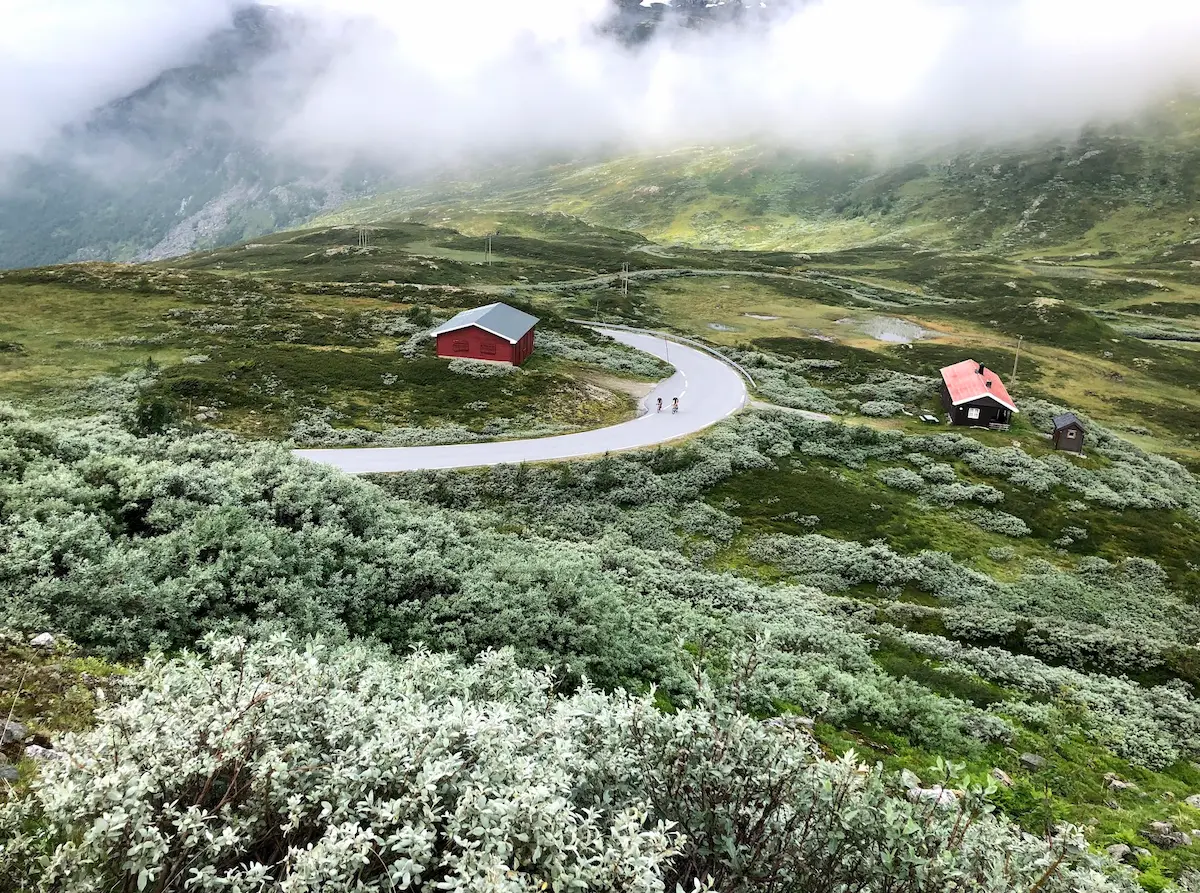
A magnificent fjord loop from Skjolden combining two UNESCO-listed highlights in a single day. Cycle along the inner Sognefjord to Urnes — home to Norway's oldest stave church — crossing by ferry to Solvorn, then heading deep into Jostedalen to Nigardsbreen, one of Europe's most accessible glaciers. 143 kilometres of fjordside roads, mountain valleys and extraordinary scenery.
Aurlandsfjellet — Snøvegen
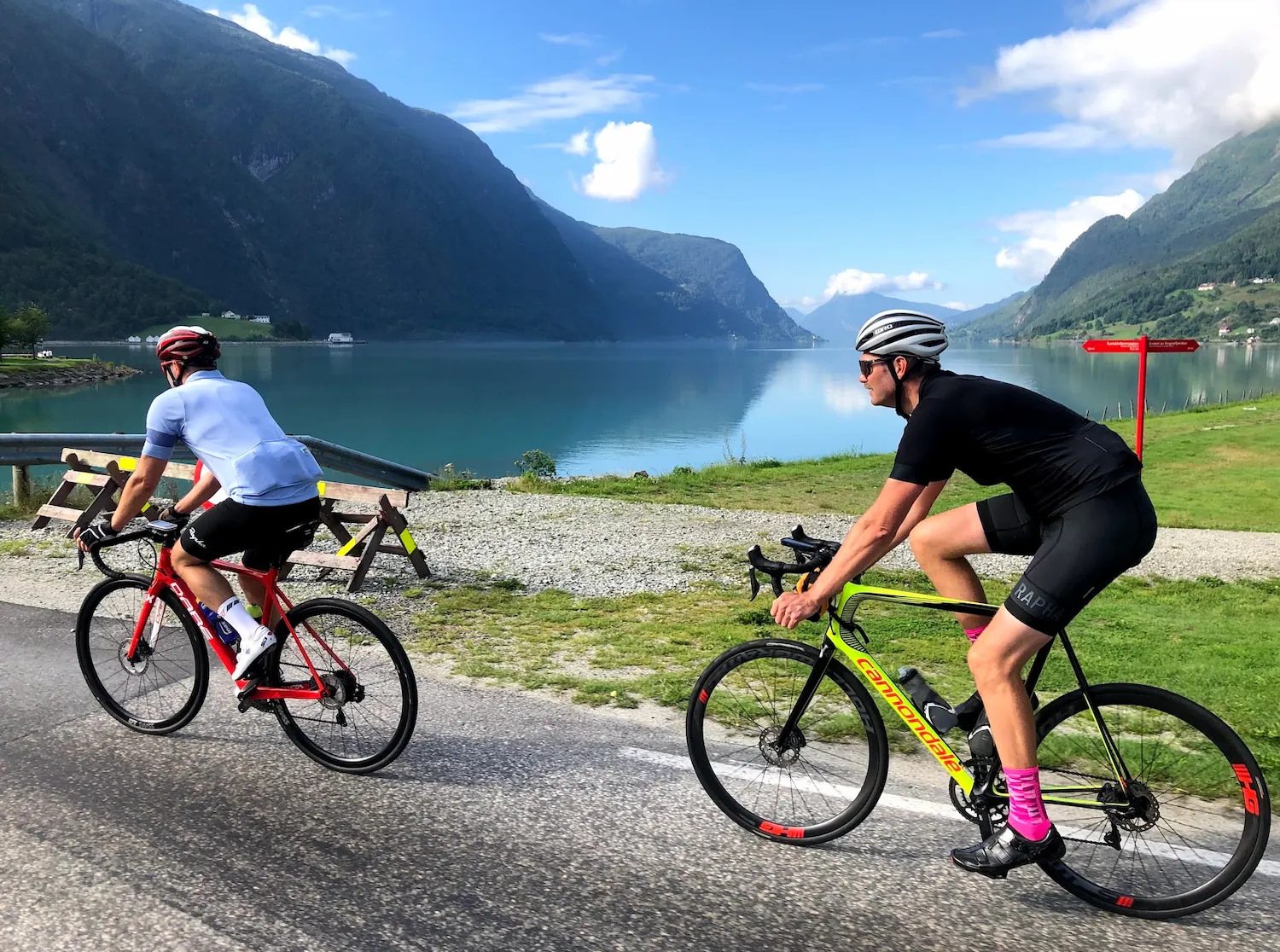
One of the most dramatic climbs in Norway. From Aurland at sea level, the Snow Road climbs 1,286 metres in just 17 kilometres — an average of 7.5% with no respite. The climb starts from Aurlandsvangen at sea level and reaches the Stegastein viewpoint by bike at km 7.5 — a cycling perspective on Norway's most photographed cantilever platform. Pass the iconic Stegastein viewpoint, suspended 650 metres above the Aurlandsfjord, before the open high-mountain plateau. A Norwegian Scenic Route and a bucket-list climb for any serious cyclist.
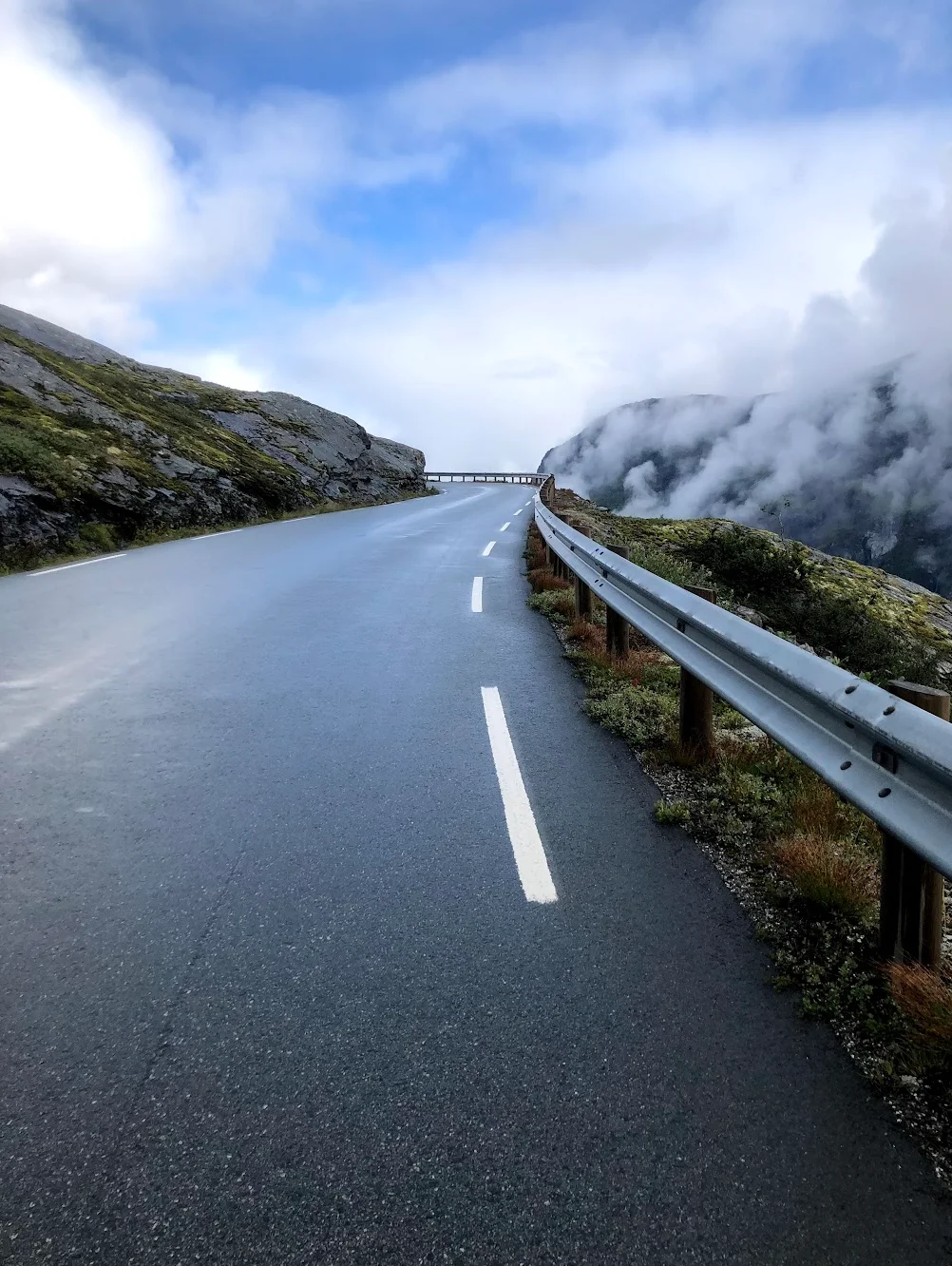
Geiranger — Dalsnibba HC
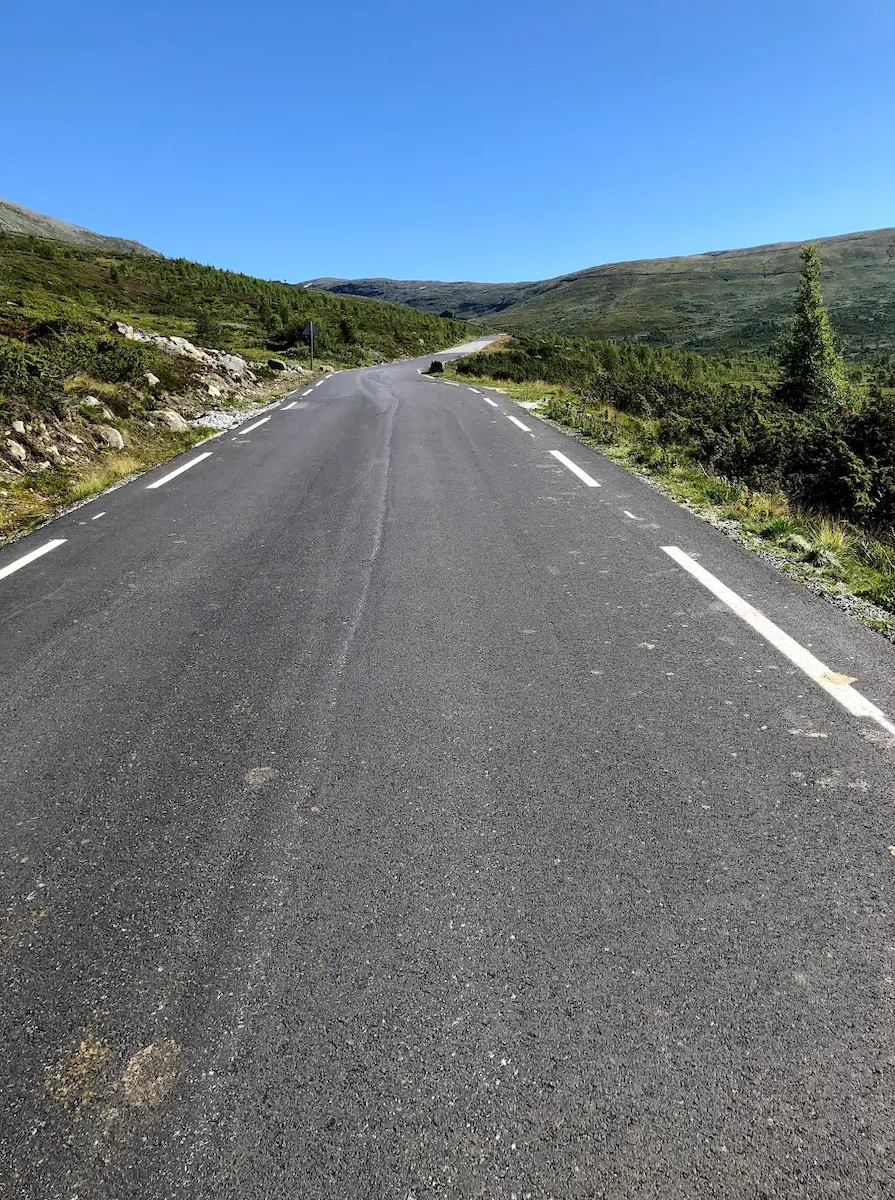
From the UNESCO-listed Geirangerfjord at sea level, climb 1,500 metres to Dalsnibba — one of Norway's longest and most spectacular HC climbs, with 35 hairpin bends — 11 of them on the Nibbevegen toll road up to the Geiranger Skywalk — and Europe's highest fjord view from a road. The route continues through Stryn before finishing at the ferry quay in Hellesylt, where the boat returns to Geiranger across the fjord.
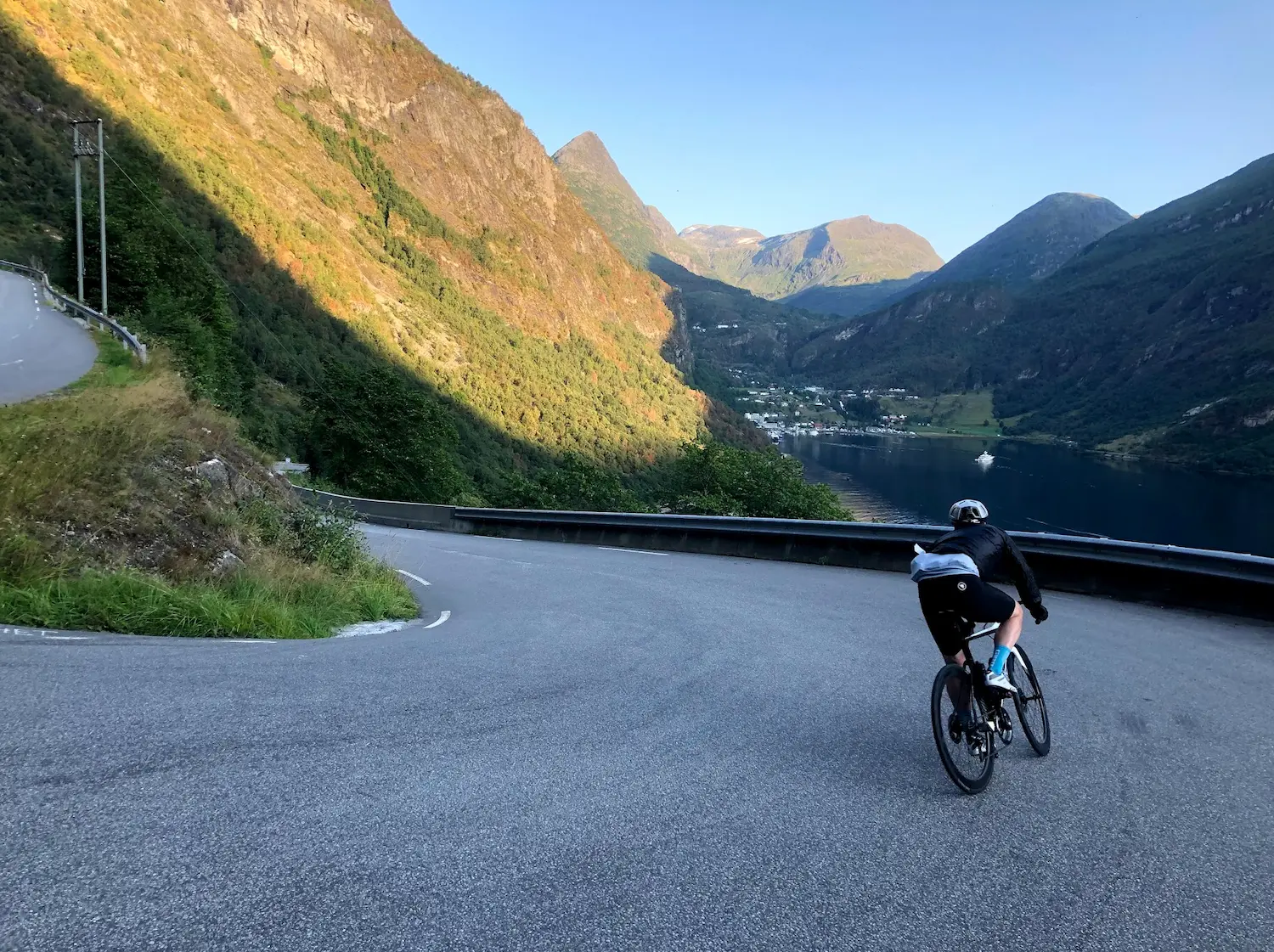
Trollstigen — 11 Hairpins
Trollstigen and Ørnevegen in a single loop from Geiranger — two of Norway's 18 Norwegian Scenic Roads in one day. You climb Ørnevegen out of town, take the Eidsdal ferry, work your way up the Valldøla valley to Stigrøra, descend the eleven hairpins of Trollstigen before turning and climbing them back up. 159 km, 3,556 m of climbing, two ferry crossings.
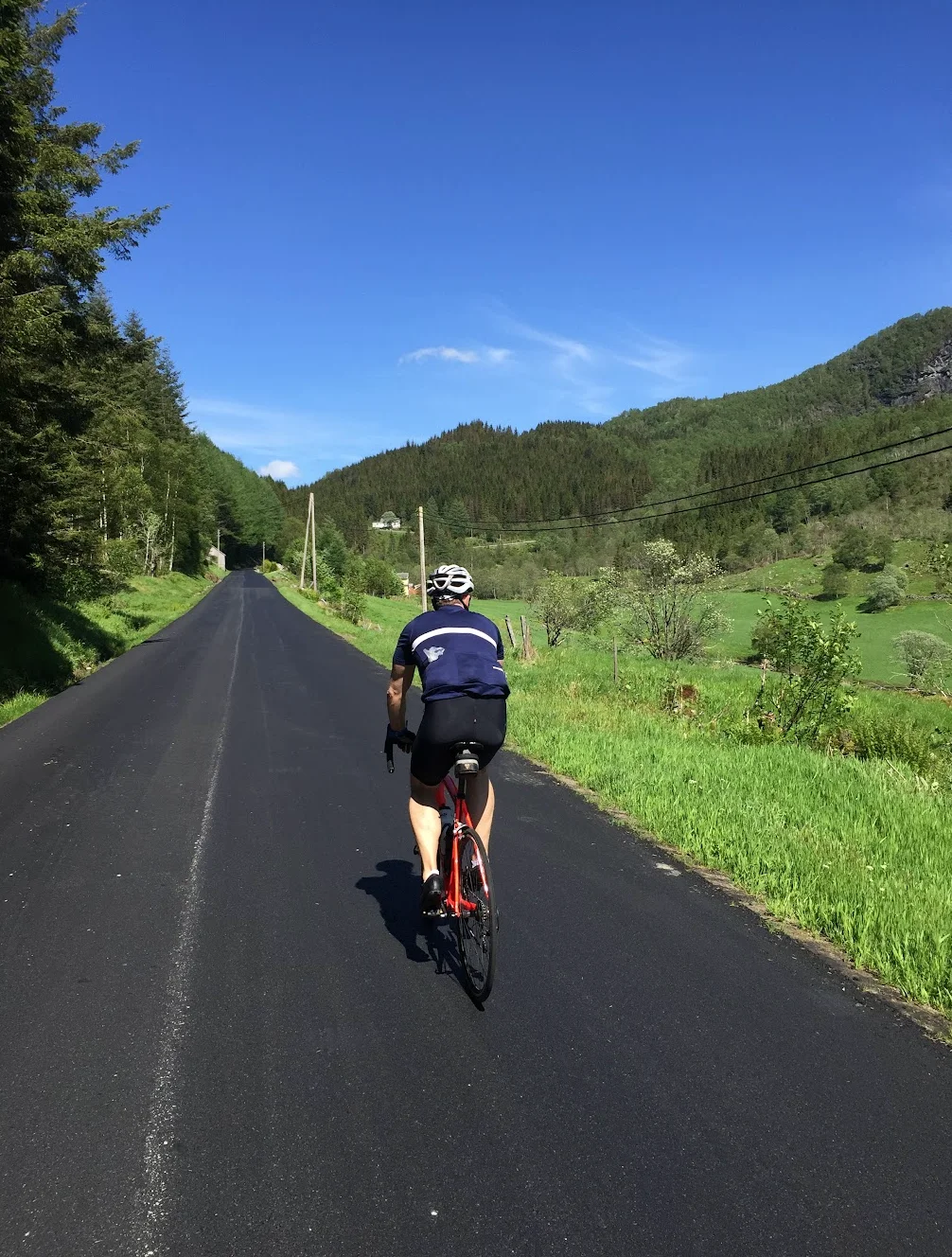
Western Fjords Cycling — Dale & Hyllestad Loop
A stunning loop through the Western Fjords of Norway, starting in Dale — a charming small town at the inner reaches of Dalsfjorden. This 108-kilometre route takes you through some of the finest fjordside roads in Sogn og Fjordane, past the iconic landmark of Lihesten mountain and into the village of Hyllestad at the halfway point. The route combines three distinct climbs with long stretches of quiet fjordside roads and spectacular views throughout. Hyllestad is dominated by the towering presence of Lihesten — one of the most recognisable peaks in the region — and offers shops and food stops before the return leg along the outer fjord. With 1,687 metres of climbing across 108 kilometres, this is a proper hard day in the saddle through some of Norway's most beautiful landscapes.
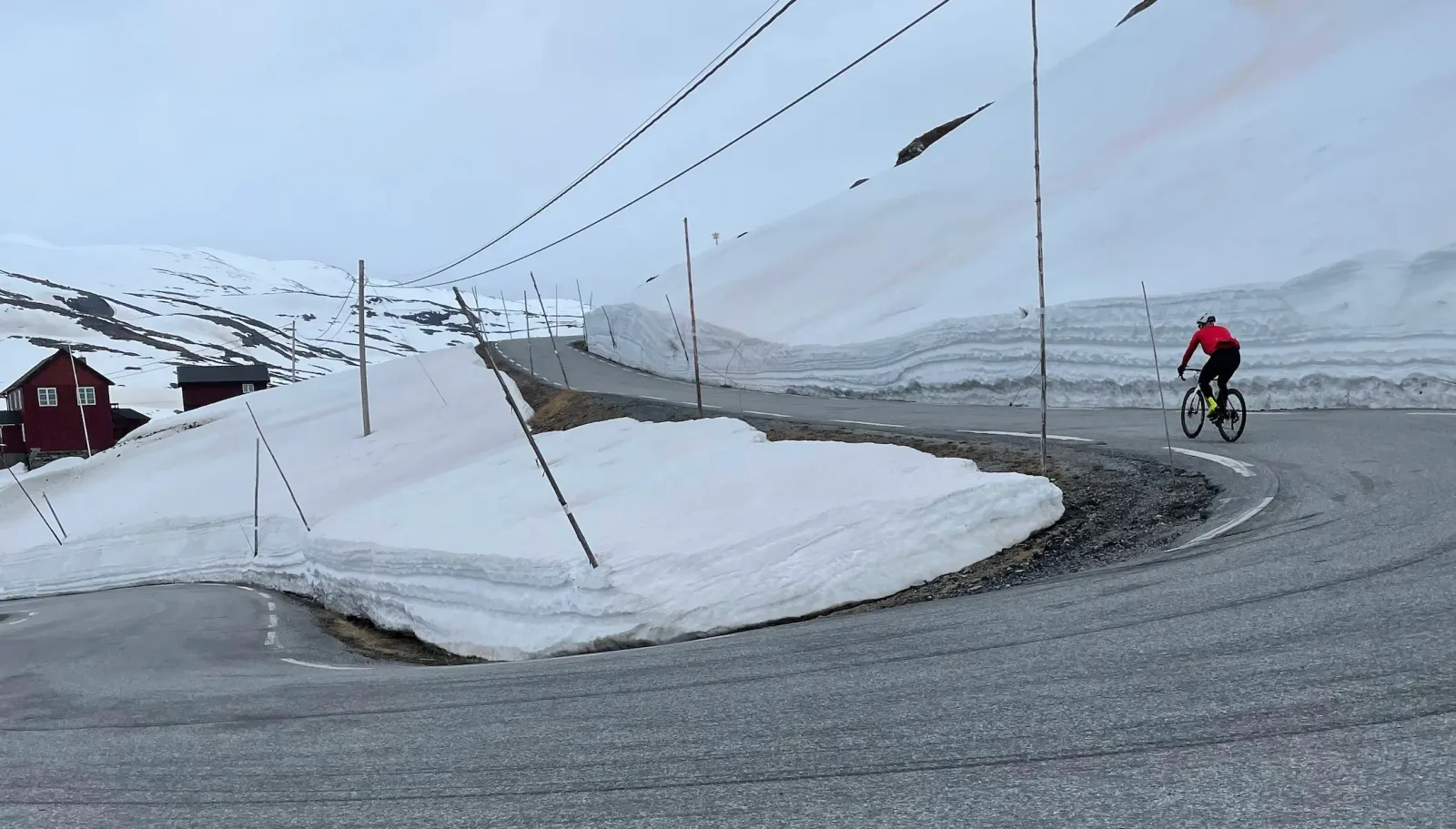
Lom - Sognefjellshytta
A 99.1 km out-and-back from Lom with 1,477 m of climbing up the Sognefjellsvegen (RV55), Northern Europe's highest mountain pass road. Green valley floor to two-metre snow walls at the summit, then a long, cold descent back through Bøverdalen.
Gamle Strynefjellsveg
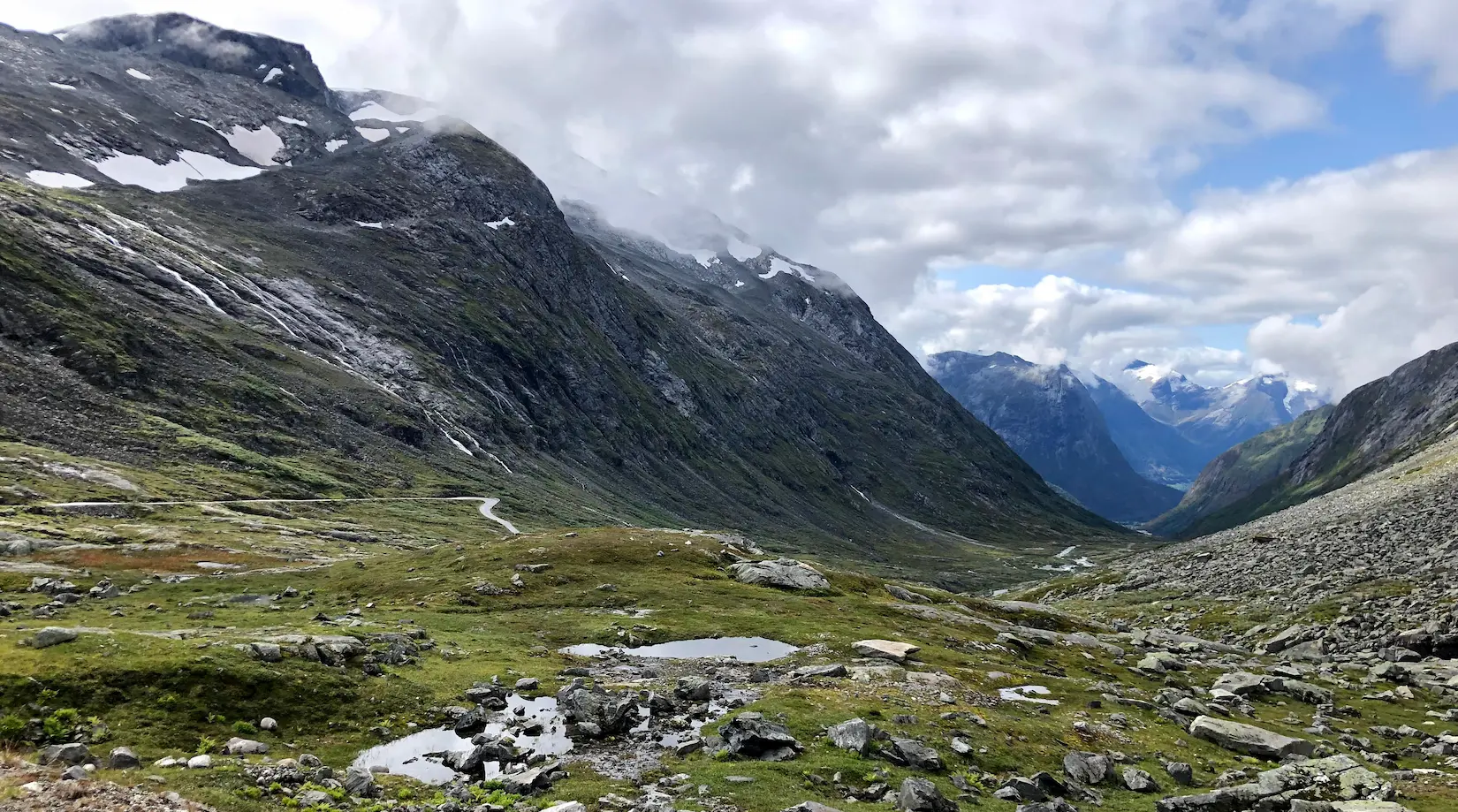
A 41.9 km out-and-back from Hjelle on Oppstrynsvatnet up Norway's most beautiful historic mountain road. The Gamle Strynefjellsveg, built between 1889 and 1894, climbs 1,062 metres in 18 kilometres on rough asphalt all the way to the 1,098-metre summit. No cafés, no respite — just sustained 7-8% gradient and snow-flecked peaks above turquoise glacial water.