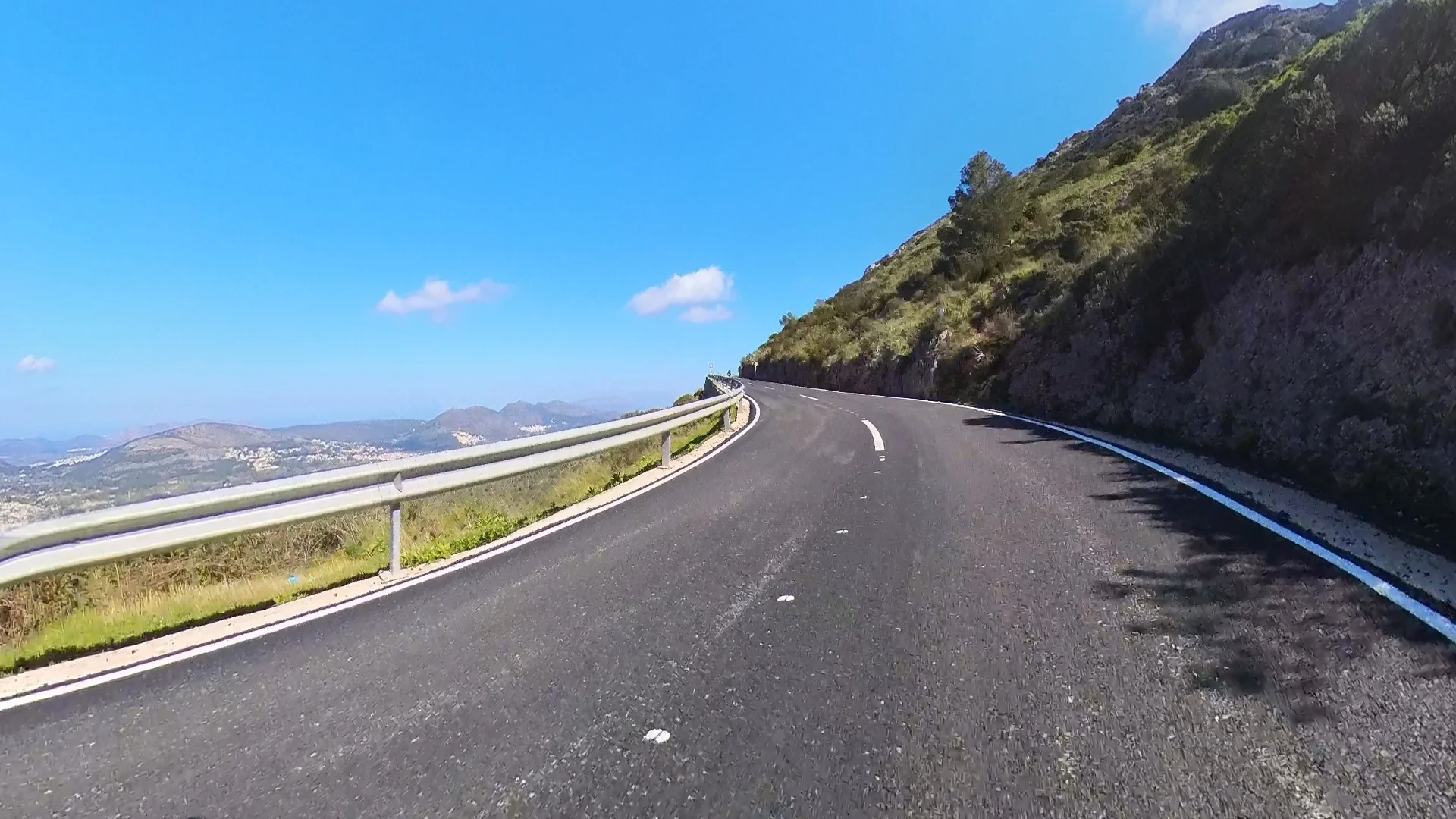
About this Route
← Costa Blanca Cycling GuideThe benchmark ride of Costa Blanca, built around Coll de Rates — one of the most analysed and ridden climbs in professional cycling. 6.43km at 5.5%, Category 2, favoured by WorldTour teams who winter in the area. Tadej Pogačar holds the Strava KOM at 11:57 (19 December 2025). The 117 km route adds three more: La Fustera out of Calpe, Port de Bèrnia before the valley, and Port de Sa Creueta — at 777 m the highest point of the day, and it comes after Rates, not before. The return runs through the vineyards and coastal hills of the Marina Alta.
We rode this in March 2026, and it confirmed what the Costa Blanca cycling community already knows: this is the benchmark route of the area.
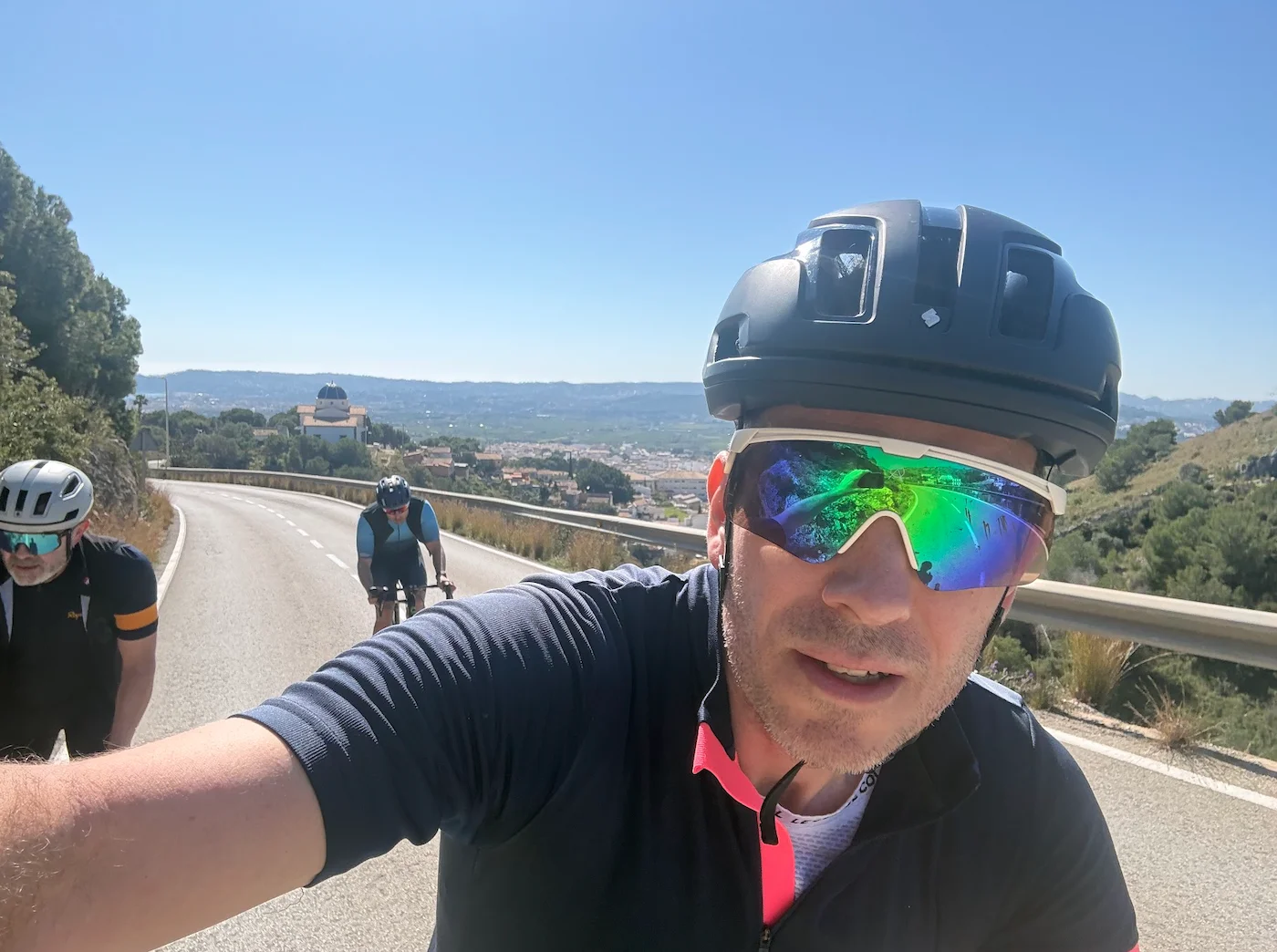
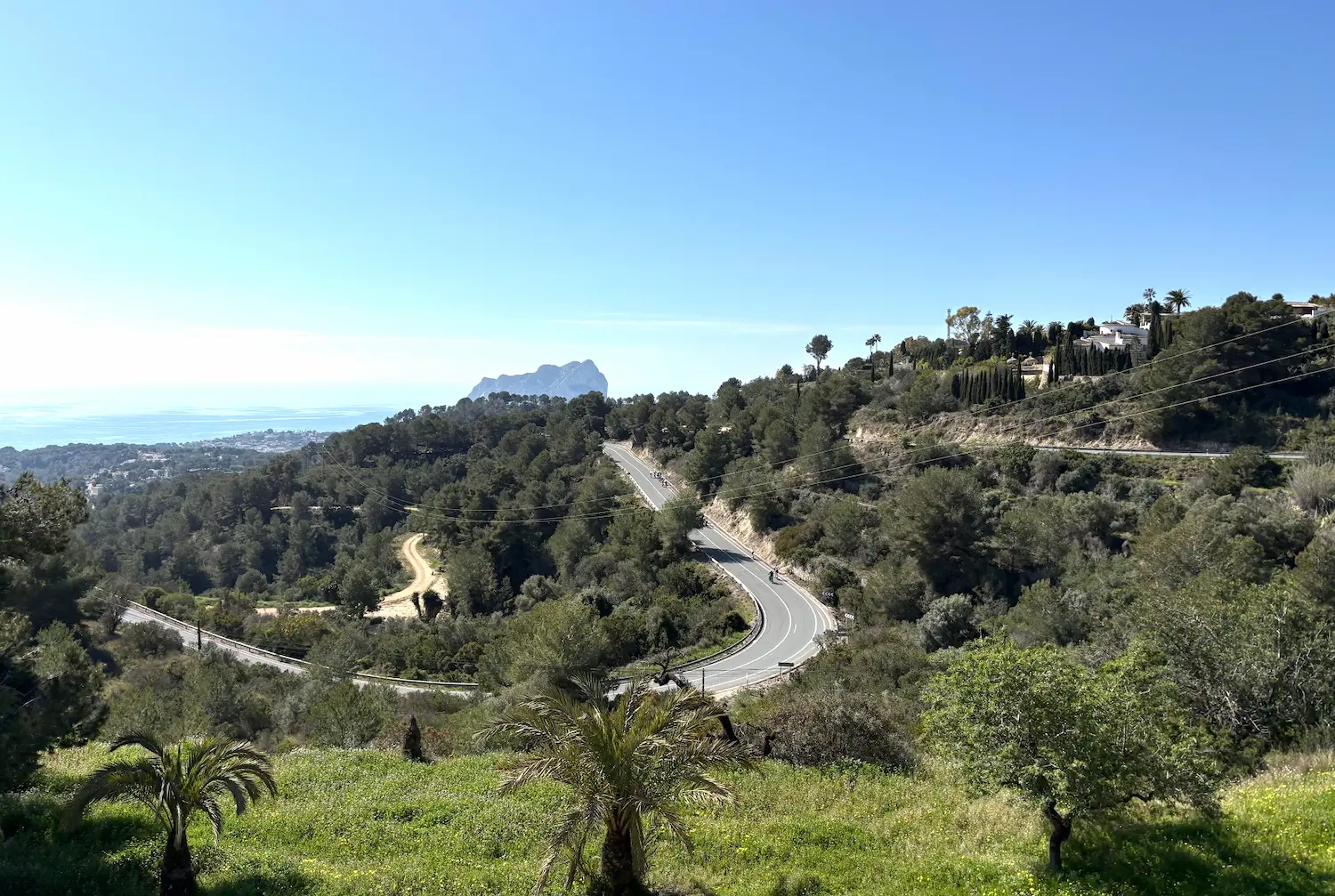
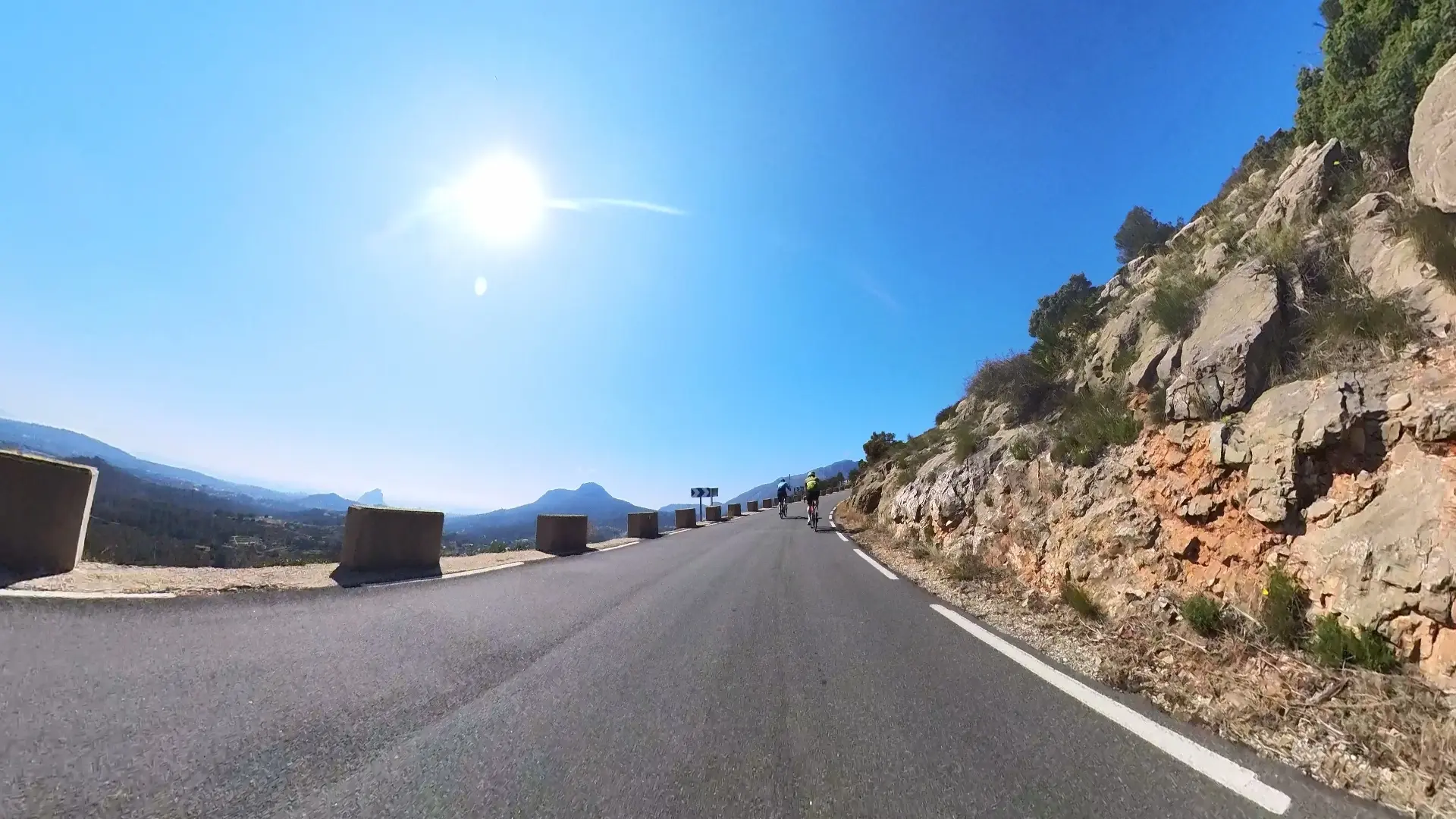
La Fustera catches you almost immediately out of Calpe — a Category 3 climb that feels anything but minor. The gradient is steady and consistent, with a few sweeping bends that carry you upward before the views arrive. Around halfway up, the road opens onto what feels like a balcony: Calpe and the Mediterranean spread out below you, the riders behind you visible on the road beneath your wheels. One of those moments that stops you mid-effort.
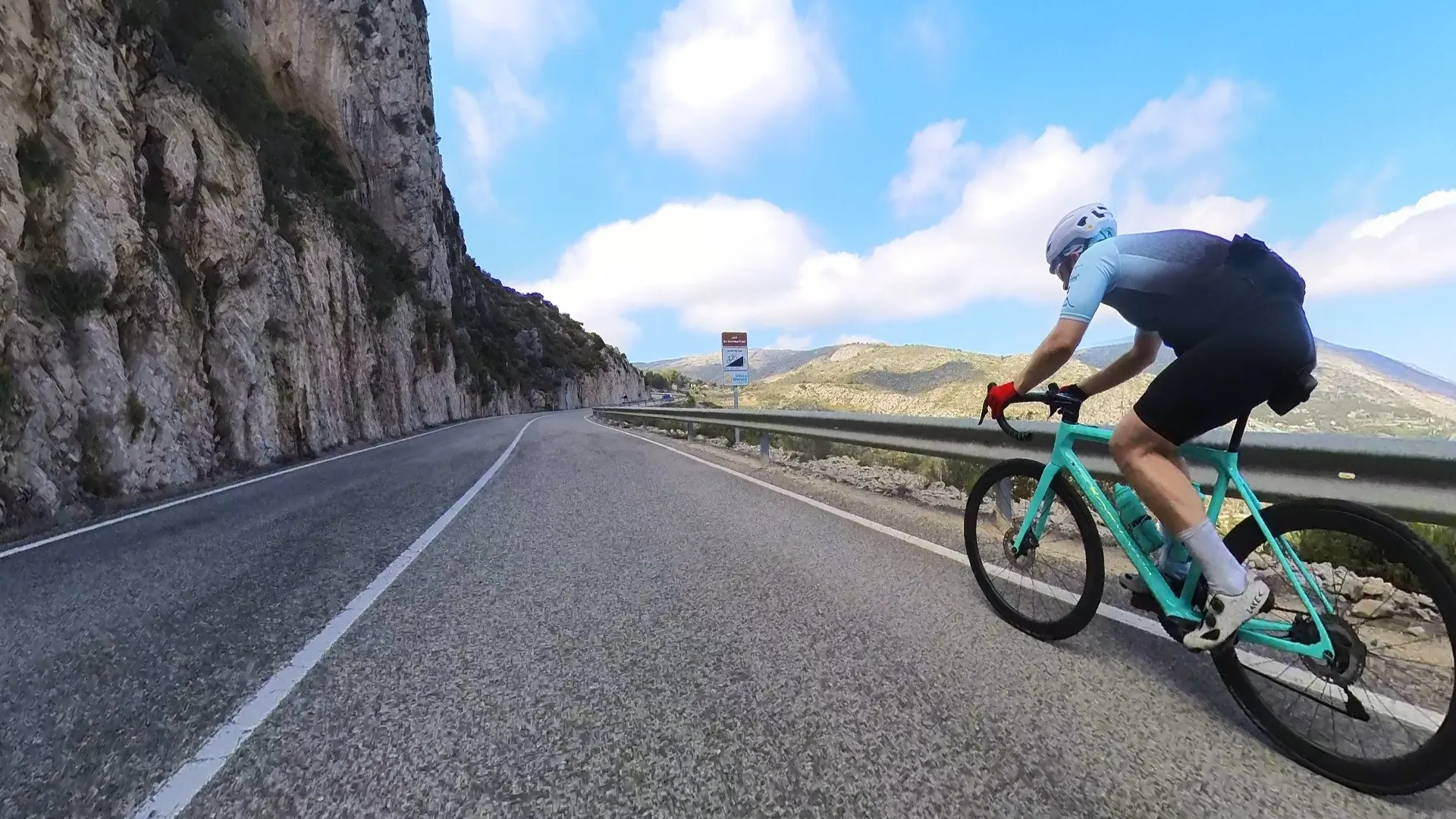
Port de Bèrnia is a climb many underestimate. The average gradient looks manageable on paper — but that number hides a lot of flat and false-flat terrain in the lower section. When the real climbing arrives in the final kilometres, it arrives hard. The steep part is kilometres 31 to 33, which average close to 9% with a ramp touching 14%. I rarely see this, but I passed a cyclist walking his bike up that section. The views from the pass more than compensate — the entire Costa Blanca coastline laid out below, dramatic limestone cliffs on both sides.
The descent into the Jalón valley and the ride through wine country toward Parcent is one of the pleasures of this route — almond trees, olive groves, almost no traffic. Parcent sits at the foot of Coll de Rates and is the natural stop before it.
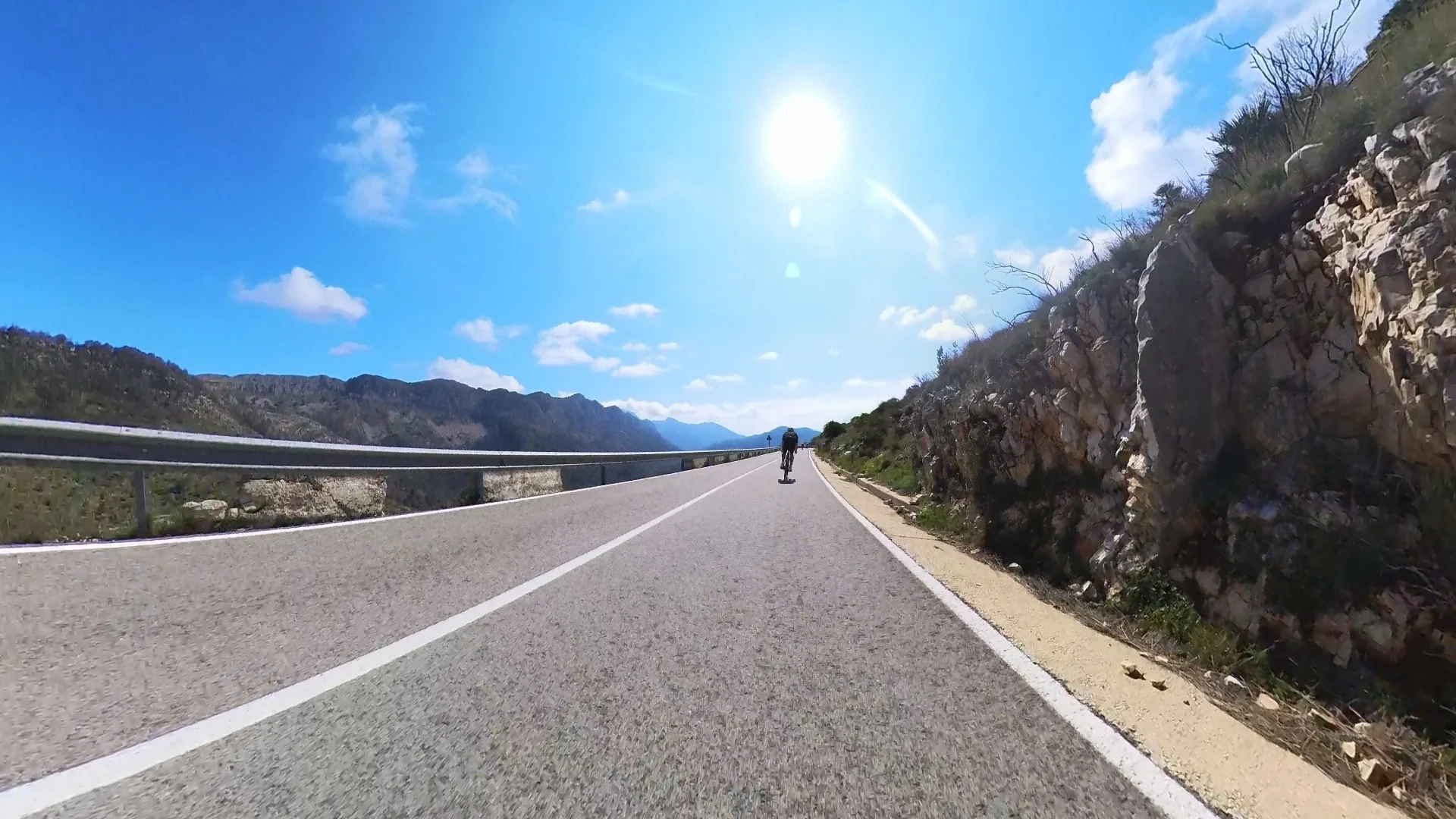
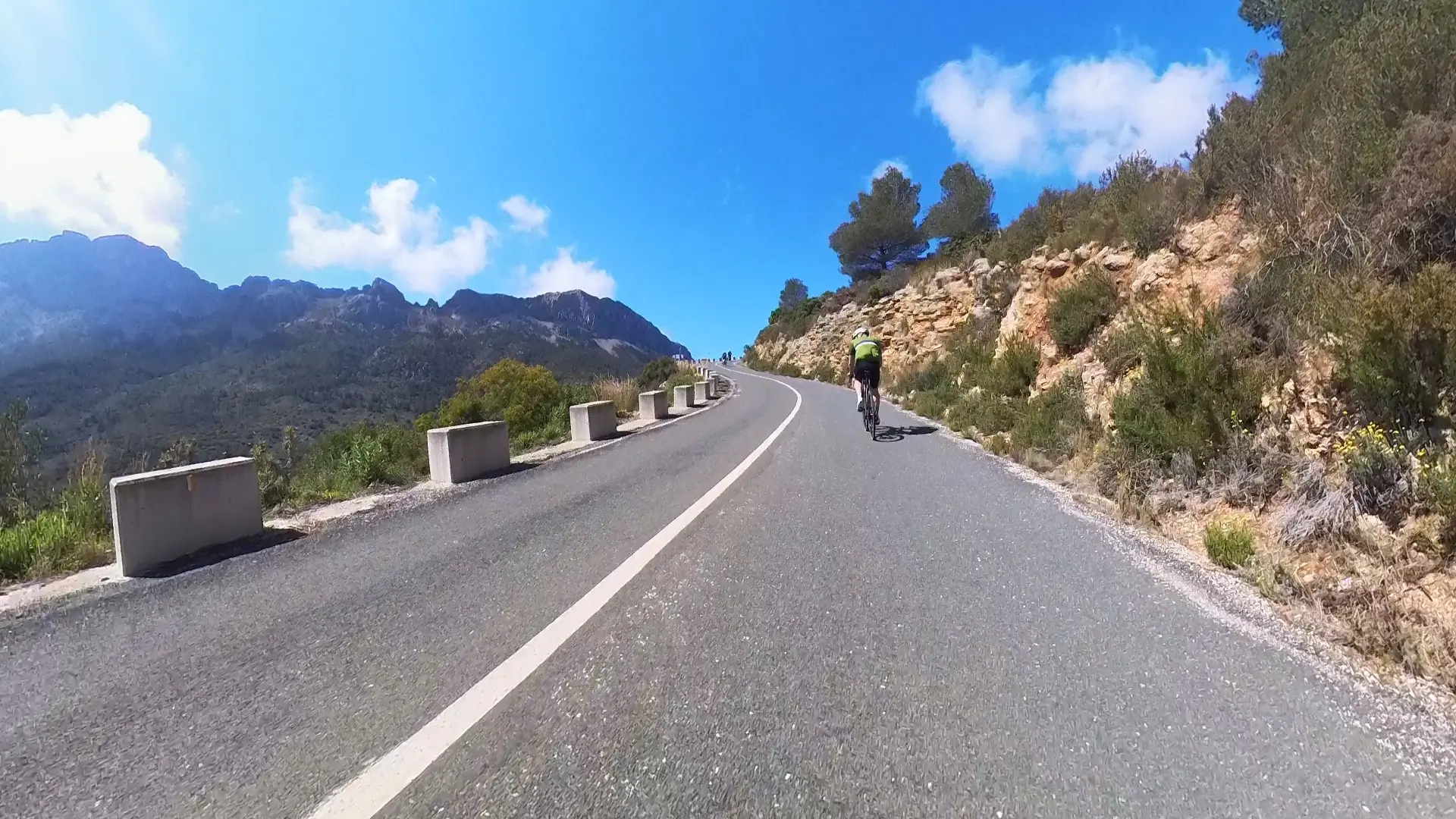
Coll de Rates itself I rode at a controlled, steady pace. There are always other cyclists on the road here, which makes it easy to find a wheel and settle into a rhythm. The views open up as you gain height, and the upper section is one of the finest stretches of road on the Costa Blanca. A tip: in the last week of March 2026, brand new asphalt was laid on Coll de Rates. It is immaculate.
The day is not over at the top. The hairpin descent back down to Parcent is the famous one, but our route crosses the summit and drops the other way instead, towards Tàrbena, through tighter and more technical corners.
Then it climbs again. Port de Sa Creueta rises out of the Tàrbena valley — 7.5 km at 3.5%, steepest over the first three kilometres and easing after that. At 777 m it is the highest point of the whole route, higher than Coll de Rates. Arriving there with Rates already in the legs is what makes this loop sit heavier than its profile suggests.
The reward is a descent that runs, with interruptions, for more than twenty kilometres: down past Castell de Castells, then along the valley through Benigembla and back into Parcent. We stopped in Xaló on the way home, at a café with outdoor seating. Velosol was closed that day — worth trying on another visit.
Kilometre by Kilometre
Coastal roads north out of Calpe, then straight onto the first climb. La Fustera is 3.97 km at 4.9%, Category 3 — the warm-up and the transition from coast to mountains. It tops out at 265 m around km 12.5, and the Sierra de Bèrnia already fills the view ahead.
Down to 190 m, through Benissa, and then the long approach to Port de Bèrnia: 14.4 km at 2.4% average, which is deceptive on paper. Twelve kilometres are flat or gently rising. The real climbing is km 31 to 33 — two kilometres at around 9% with a ramp touching 14% — and then it eases again before the pass at 621 m. The descent toward Pinos is narrow and technical.
Rolling inland roads through the Jalón valley wine country — almond trees, vineyards and quiet villages. Velosol in Xaló comes around km 45. Parcent sits at the foot of Coll de Rates and is the last reliable stop before it.
6.43 km at 5.5%, 347 m of elevation gain, Category 2, topping out at 627 m. Tadej Pogačar holds the KOM at 11:57 (19 December 2025), averaging 32.3 km/h. A consistent, manageable gradient that rewards smooth pacing. Note where you are: km 58 of 117, the midpoint of the day.
Our route crosses the summit and descends the far side toward Tàrbena — tighter and more technical than the famous Parcent hairpins — bottoming out at 507 m. Then it climbs again: Port de Sa Creueta, 7.49 km at 3.5%, steepest over the first three kilometres. The pass at 777 m is the highest point of the entire route.
A long descent off Sa Creueta past Castell de Castells around km 76, then down the valley through Benigembla and back into Parcent — where Blanca Bikes Base Camp Café sits, this time with 21 km left rather than 65.
Through Xaló and the last of the wine country, then over the coastal hills — three short rises of 250 to 270 m — and down into Calpe.
Gallery
On the Road

Route map & elevation profile
Key Climbs
The climbs we single out in Costa BlancaLa Fustera
Cat 3Port de Bèrnia
Cat 2Coll de Rates
Cat 2Highlights
- •Coll de Rates at the midpoint — The classic ascent from Parcent. 6.4 km of steady rhythm on what many call the best asphalt on the Costa Blanca. It crests at km 58 of 117, so treat it as the halfway mark, not the finish. The climb the world's top pros use as their winter benchmark before the Tour season.
- •Port de Bèrnia first — One climb with a split profile: 12 km of flat or gentle gradient, then two kilometres at around 9% with a ramp touching 14%. The steep part is between km 31 and 33. After that it eases, and the last kilometres into the pass are calm.
- •Stamp clock at base and summit — A physical timing post at each end of Coll de Rates lets you check your time without Strava. The card is free and goes home in your bag as proof you were here.
- •Café rhythm you can rely on — Velosol Cycling Bar before Coll de Rates begins; Blanca Bikes Base Camp Café in Parcent, 21 km from the finish. Both are cyclist-specific, no tourist clutter around them.
- •Winter training terrain — Calpe is Europe's winter base — October to April with clear mornings and empty roads. UAE, Visma and half the WorldTour peloton train here, and this is one of the first loops they ride.
Must know
- ⚠Training traffic in winter — November to March, the pros own the roads before 10 a.m. If you're in a small group, expect 20–30 riders to come through fast on intervals. Hold your line and give them room.
- ⚠Tàrbena descent has tight corners — From the Coll de Rates summit you drop towards Tàrbena through technical hairpins. Local cars know the road too well and cut blind corners — keep right.
- ⚠Only about 5 km of the route sits above 6% — You don't need 34×32 to finish, but 34×28 feels comfortable in mid-winter when form is patchy. Compact plus 28 at the rear is standard here.
- ⚠Café Coll de Rates at the summit is open but can be packed — The restaurant on the pass serves coffee, water, soft drinks and hot baguettes. Saturday morning in February you'll meet two thousand cyclists at once — consider filling bottles at Velosol instead.
- ⚠Water stops are sparse on the first half — Between the Calpe start and Velosol Cycling Bar (km 45), there are no reliable fountains. Fill two bottles before you roll out.
- ⚠Winter kit: long sleeves in January–February, gilet through May — Even at 18 °C during the day, mornings sit at 8–10 °C at the Coll de Rates summit. You'll suffer on the descent if you under-dress. Gilet plus arm warmers is the minimum.
Café & Water
- km 45Velosol Cycling Bar
Five kilometres before the Coll de Rates climb begins. An espresso bar built for cyclists — pumps, mechanic's hose and hot baguettes. Grab a cortado before the climb.
- km 96Blanca Bikes — Base Camp Café & Bike Rental
On the return to Calpe, 21 km from the finish. Bike hire, coffee and an informal cyclist meeting point. Run by the same people who publish much of the Coll de Rates content you'll find online.
Frequently asked questions
- How many climbs are on the route?
- Four. La Fustera out of Calpe (3.97 km at 4.9%) warms the legs. Port de Bèrnia is flat for 12 km then kicks to around 9% for two. Coll de Rates comes at the midpoint — 6.4 km of steady rhythm at 5.5%. And Port de Sa Creueta, out of Tàrbena, is 7.5 km at 3.5% to 777 m: the least famous of the four, and the highest.
- Do I climb Coll de Rates from Parcent or Bolulla?
- From Parcent. That's the classic side — 6.4 km at 5.5% average, the asphalt the pros test on in December. The Bolulla approach is longer and gentler, but also less interesting — it's for those who have ridden Parcent five times and want something new.
- What about Tossal dels Diners?
- The optional 2.5 km concrete extension that starts right behind Café Coll de Rates. The average is above 10% with ramps of 15–20%. Our route continues from the summit down towards Tàrbena. If you want Diners, take the out-and-back detour from the summit — roughly 5 km and 300 m of additional climbing.
- Who holds the Strava KOM on Coll de Rates?
- Tadej Pogačar, set on 19 December 2025. He took 24 seconds off his own time from a year earlier and is the first rider to climb it in under twelve minutes. That's why the climb gets more attention in the cycling press than most 6 km ascents — every winter, younger pros come back to chase him.
- When is the best time of year for this route?
- October to April. November through February is the prime window — mild temperatures, clear mornings and very little traffic on the mountain roads. March and April are still good but warmer, and from March northern European teams start arriving in waves you'll share the road with.
- What gearing do I need?
- Compact (50/34) up front and 11/28 at the rear is standard, but 11/30 or 11/32 buys comfort in mid-winter when form is patchy. The steep two kilometres of Port de Bèrnia, km 31 to 33, average close to 9% and touch 14% — that's where you'll be grateful for a 30 or 32. Coll de Rates needs nothing 1:1, but the last 1.5 km hold at 7% and can feel long if you've blown yourself out earlier.
Know a better line?
Submit your local route and get featured with your own author profile, Strava, Instagram and Buy Me a Coffee link.
Share a Route → →Similar routes
Calpe — Guadalest & Vall d'Ebo
Longer day from the same base — Puerto de Confrides over 20 km, then the Vall d'Ebo descent
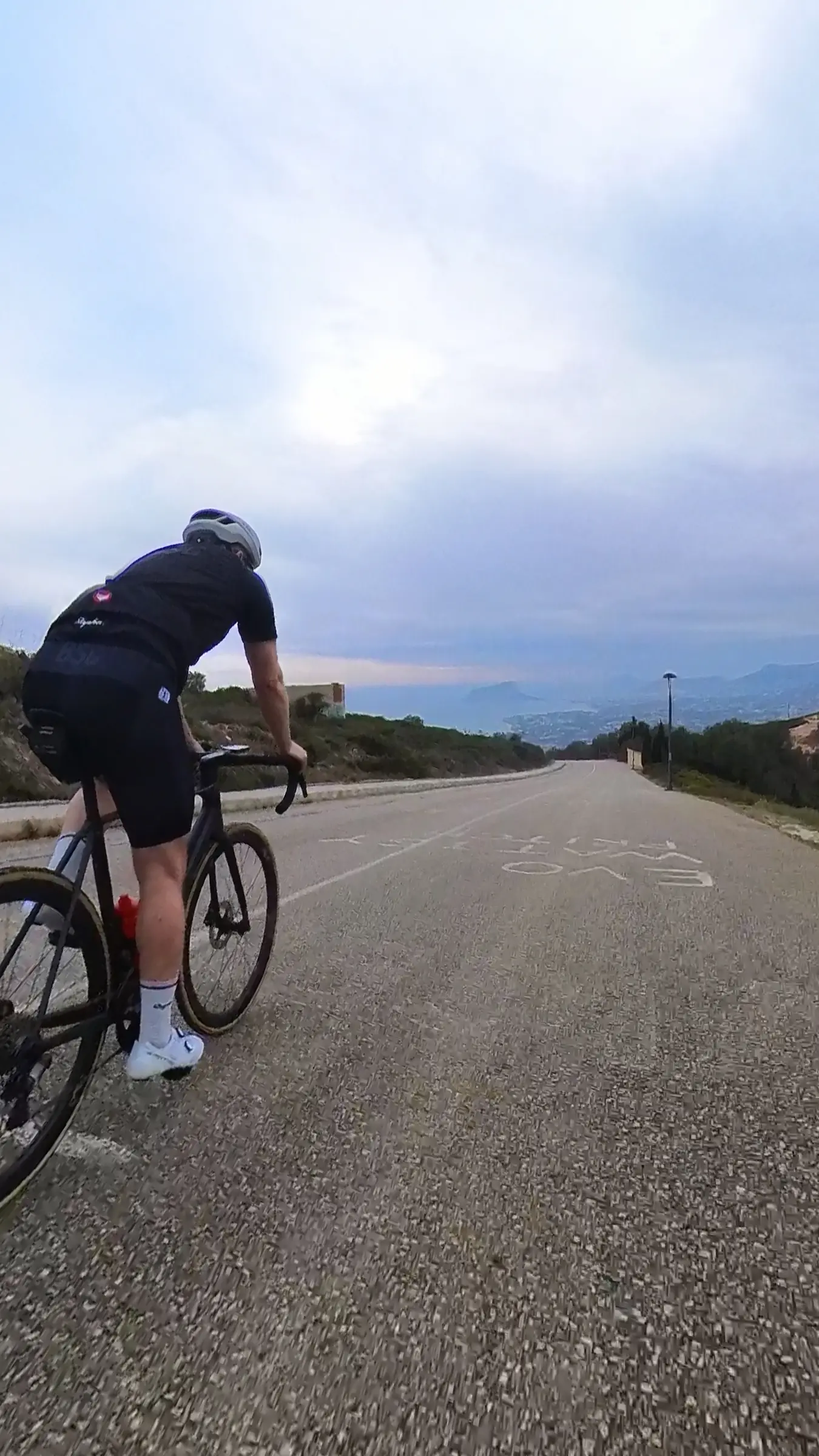
Calpe — Cumbre del Sol
Steeper benchmark when Coll de Rates legs are warmed up
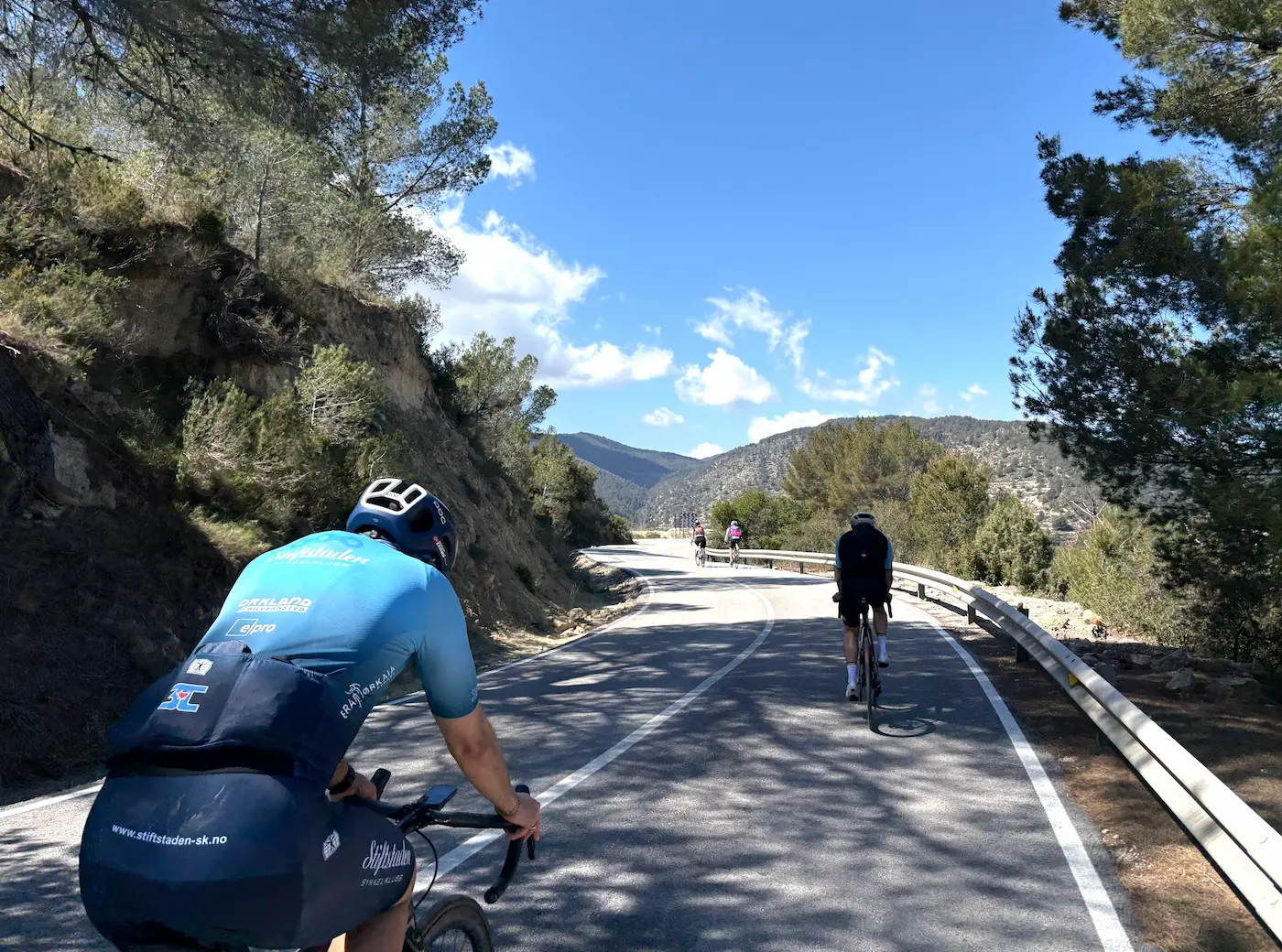
Calpe — Finestrat & Guadalest
Different climb-set from same Calpe base — Finestrat instead of Rates
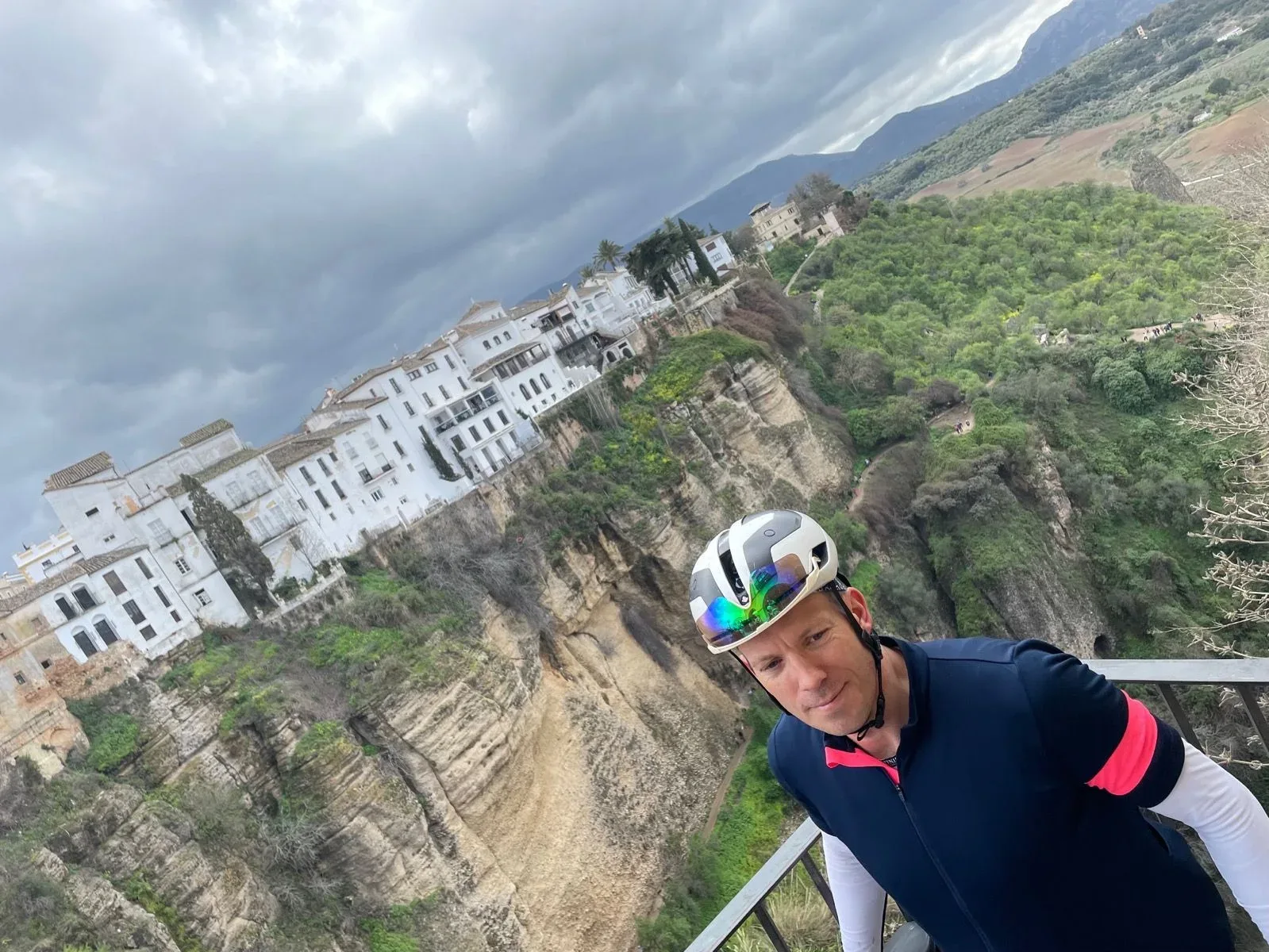
Marbella - Ronda - Marbella
Andalusian classic — 151 km loop from Marbella across the Serranía de Ronda. Same Mediterranean Spain, different mountain character.