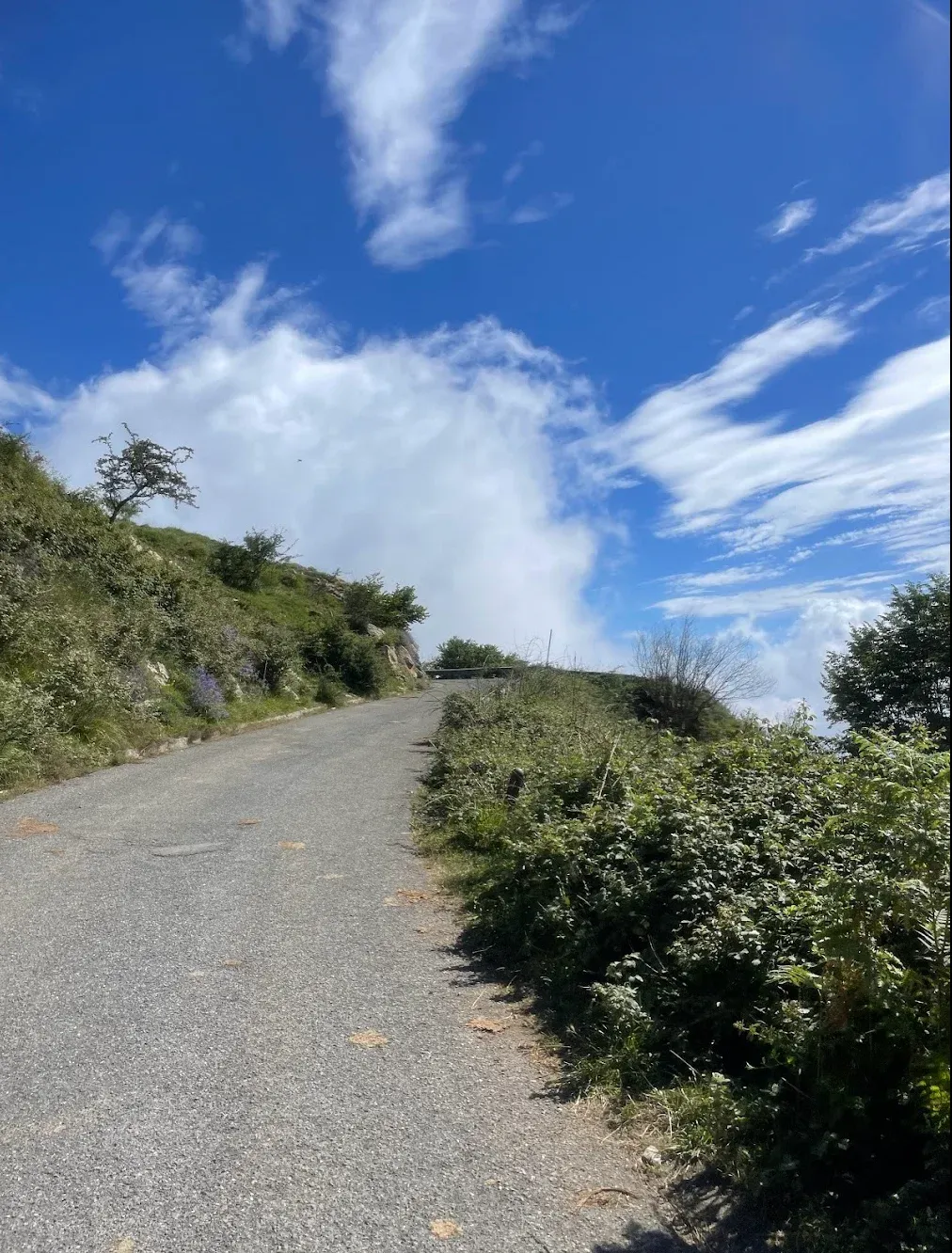
In Italy cycling is part of daily life. The roads are full of people riding, the climbs are signed with their names and gradients, and drivers are used to sharing the road. The Ligurian coast stays mild enough to ride all winter, and this is where the spring classics are decided. Below you'll find the routes we've ridden.
Read more ↓Show less ↑
What sets riding in Italy apart from most places is how short the distance is from the sea to the mountains. You start on the seafront and you're on steep ground within a few kilometres, with the coast in view behind you the whole way up. Cafés are part of the ride rather than a break from it, and most climbs have somewhere to stop at the top.
When to go
The coast rides all year. Winter is mild enough for long days, which is why the professionals base their training here in January and February. March is the month of the spring classics, Milan–San Remo the best known — ride then and you're taking the same climbs that decide the race a few days later. April to June is the finest: green, dry and comfortable. In summer the coast turns warm and fills with beach traffic, so mornings are the time to ride. September and October repeat spring conditions.
Where to ride
The ground rises as soon as you turn your back on the sea. A road runs inland and uphill out of every coastal town, and most of them end in a village with a café and a view. The climbs here are rarely long, but they are steep, and you can build a day out of several in a row. Cipressa and Poggio are the best known — short climbs that would be anonymous if Milan–San Remo hadn't made them famous. Along the coast itself an old railway line has been converted into a cycleway, a quieter alternative when the main road is busy.
The climbs
Italian climbs are often shorter than the French ones, and steeper. Where an Alpine pass gives you a steady 6–7% for an hour, a Ligurian climb gives you 10% for twenty minutes. That asks something different: rhythm alone won't carry you up, and starting too hard costs you all the way to the top. In return you can fit several into one day.
Practical notes
Helmets aren't compulsory for adults in Italy, though most riders wear one. A reflective vest is required outside built-up areas after dark and in tunnels, and it's worth carrying anyway — the coast road has several. Cafés open early and close over the middle of the day. Regional trains take bikes for a supplement, which makes it easy to ride out one way and take the train back.
The routes are below, and the region page goes further into terrain and season.
All Routes in Italy
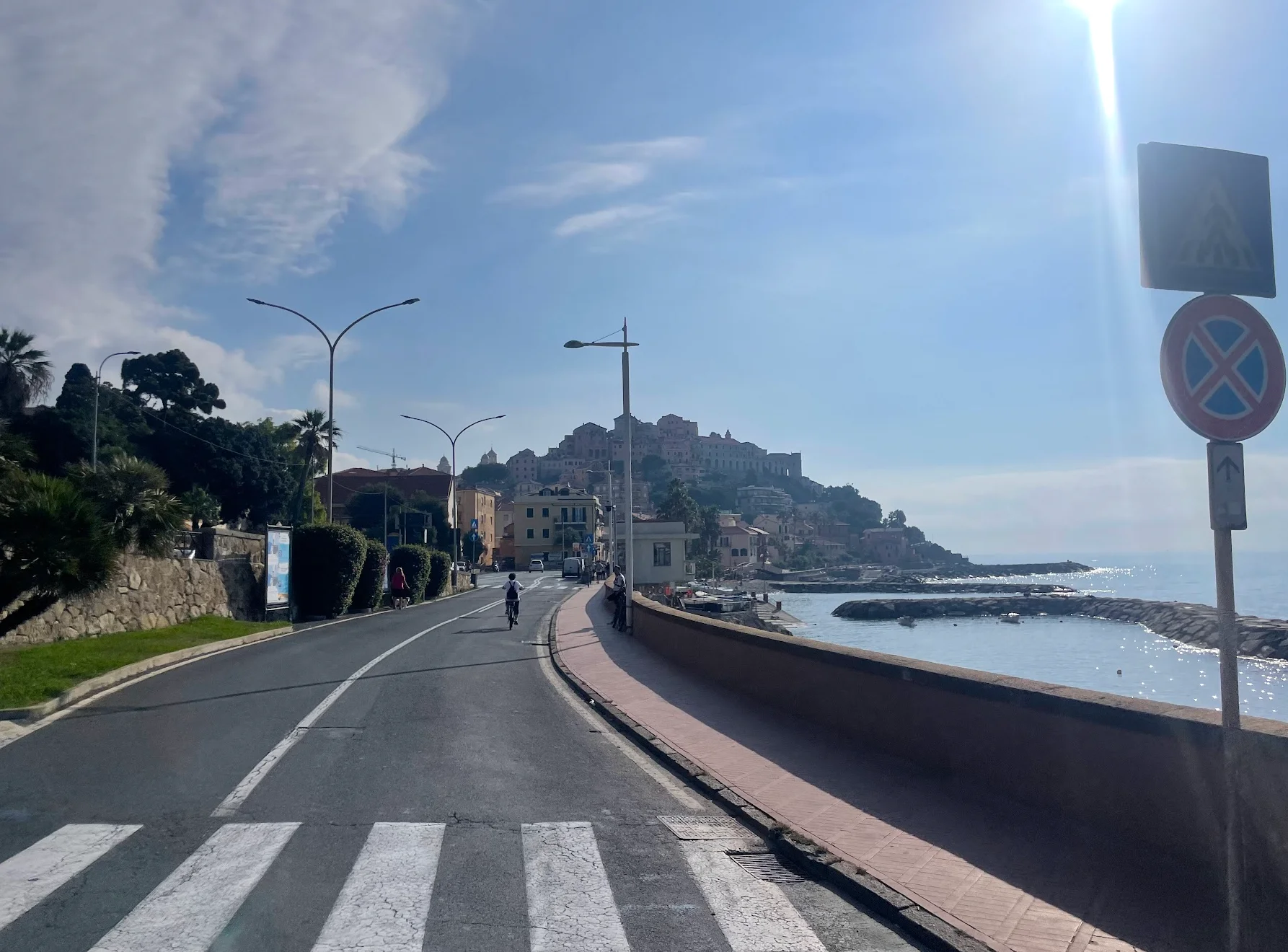
San Remo Cycling — Colle d'Oggia Mountain Loop
A demanding loop from San Remo into the Ligurian hinterland. Colle d'Oggia is a 22.1 km HC climb at 4.8% average — rising from the coastal palms to 1,118 metres through olive groves and remote medieval stone villages. WorldTour teams base their winter training on these roads. 82 kilometres, 1,365 metres of climbing.
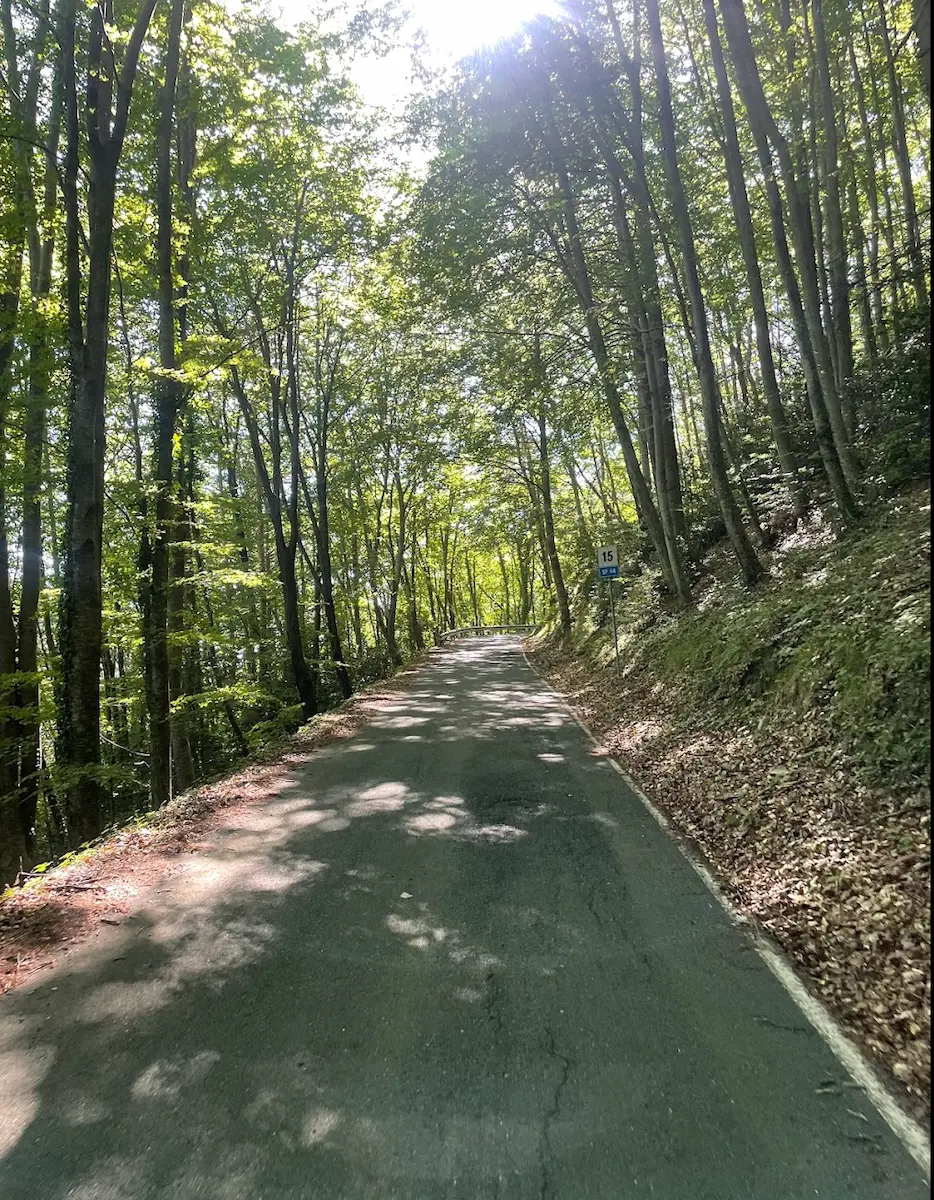
San Remo Cycling — Salita dei Vignai Loop
A classic loop from San Remo through the vineyard-covered hills of the Ligurian hinterland. The Salita dei Vignai — Climb of the Vineyards — rises to 1,025 metres through some of the most scenic roads in western Liguria. 63 kilometres, 1,302 metres of climbing.
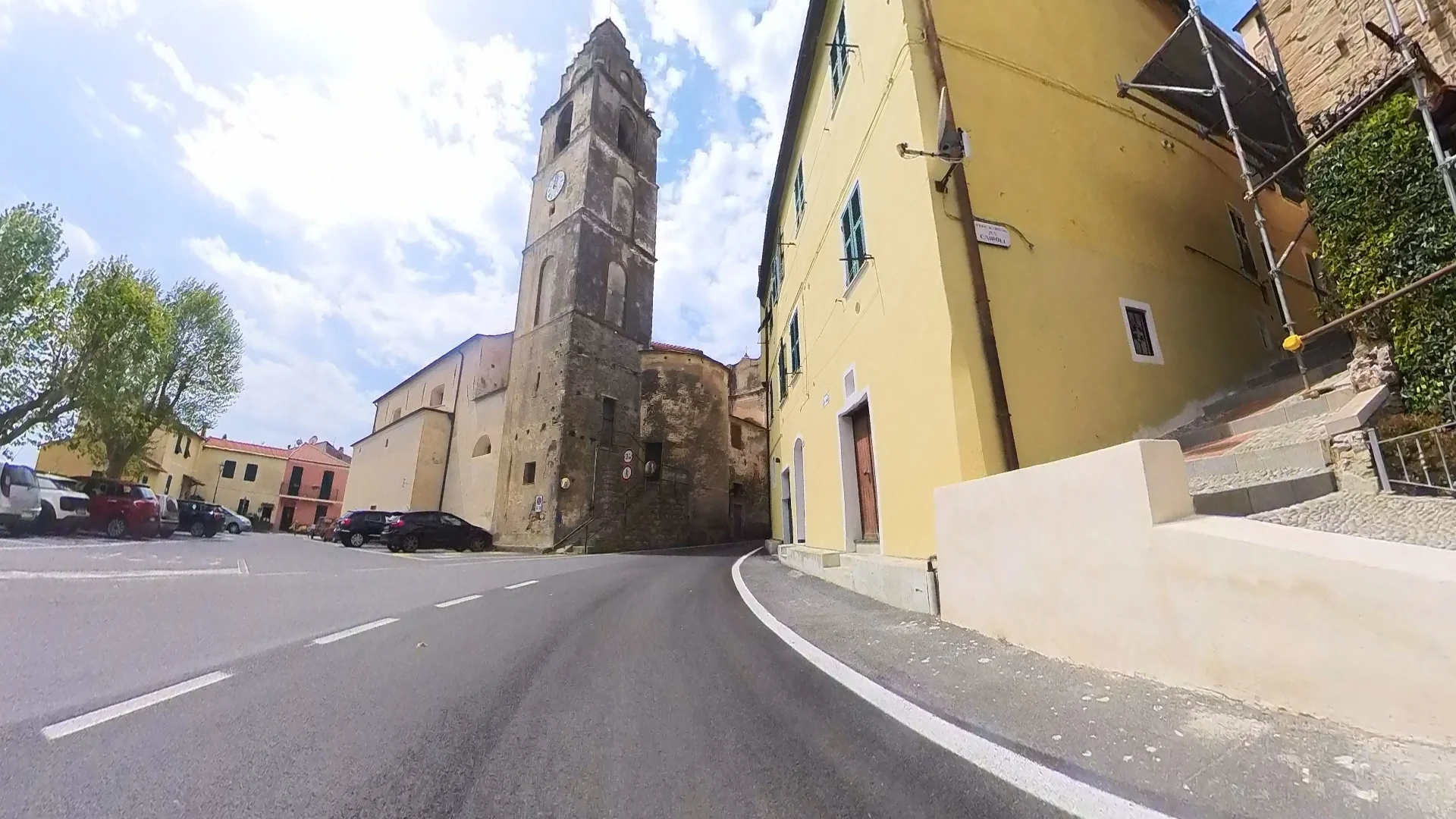
San Remo Cycling — Cipressa & Poggio Loop
Ride the two climbs that decide Milan–San Remo — from San Remo itself. The route follows the Ligurian coast west to San Lorenzo al Mare, then turns inland to tackle the Cipressa (5.6 km at 4.2%) before descending and climbing the legendary Poggio di San Remo (3.6 km at 3.7%) back into town. At 44 kilometres with 459 metres of climbing, this is a shorter but punchy route — perfect for a focused half-day ride or a warm-up day on the Riviera. Both climbs are famous worldwide from the spring classic, yet accessible to any fit road cyclist. The descent from the Poggio back into San Remo is fast and technical — the same road where Sean Kelly and Fabian Cancellara launched their winning attacks.
Frequently asked questions
- When is the cycling season in Liguria?
- The coast rides all year. January and February are mild enough for long days, and April to June is the best of it. In summer, mornings are the time to ride.
- How steep is it?
- The climbs are short and steep. 10% for twenty minutes is typical, against a steady 6–7% for an hour in the Alps.
- Can you ride Cipressa and Poggio?
- Yes. Both are ordinary roads with no closures outside race day, both are short, and you can take them on the same ride.
- Do I need a helmet in Italy?
- Not as an adult. A reflective vest is required outside built-up areas after dark and in tunnels, and the coast road has several.