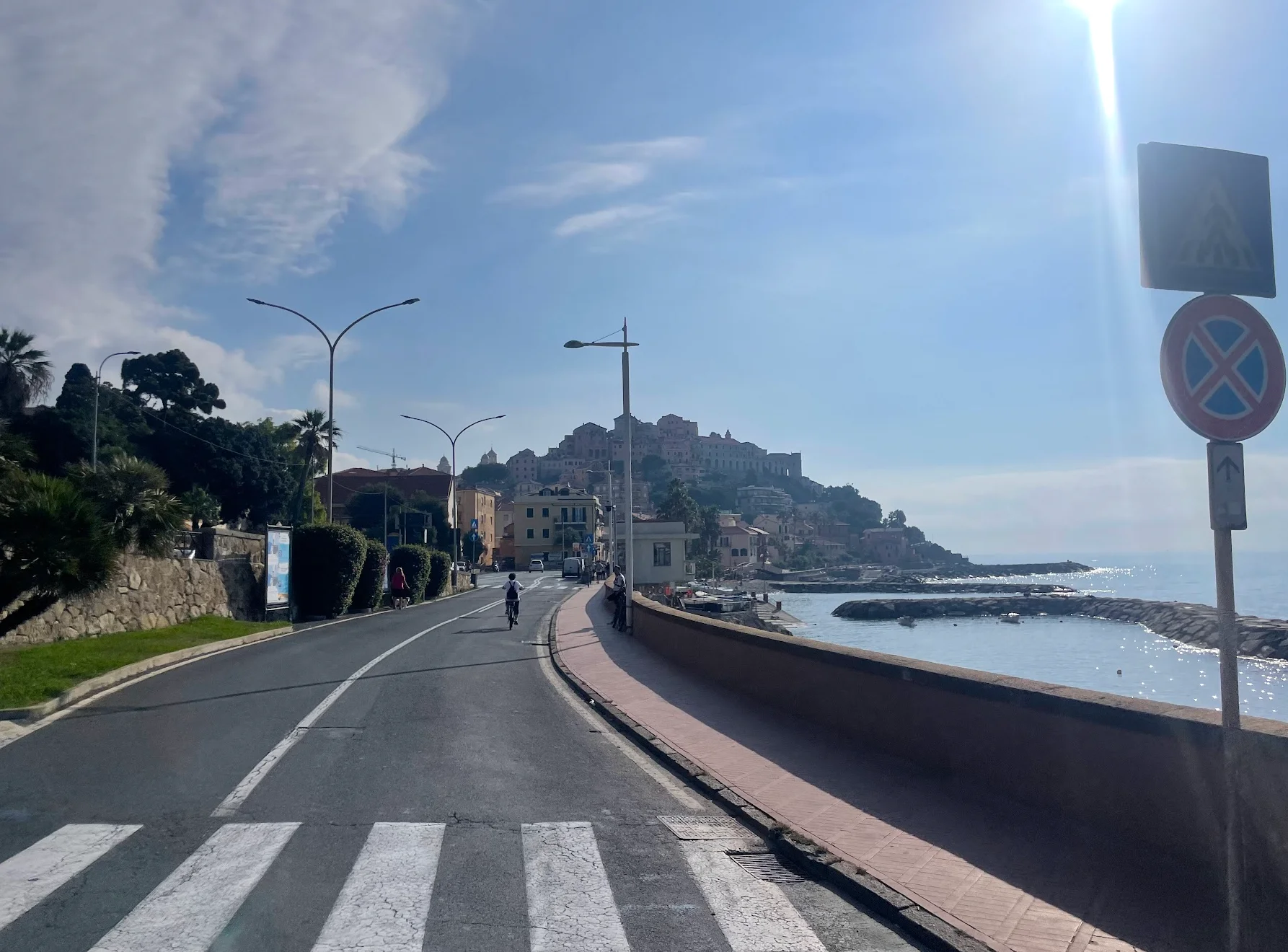
San Remo is known for the finish of Milano–San Remo: Cipressa and Poggio both come in the closing kilometres. Inland the Ligurian hills rise steeply, and along the sea a car-free cycleway runs on the old railway line. Mild all winter.
Region at a glance
All Routes in Italian Riviera — Liguria
3 handpicked road-cycling routes in Italian Riviera — Liguria.
San Remo Cycling — Colle d'Oggia Mountain Loop
A demanding loop from San Remo into the Ligurian hinterland. Colle d'Oggia is a 22.1 km HC climb at 4.8% average — rising from the coastal palms to 1,118 metres through olive groves and remote medieval stone villages. WorldTour teams base their winter training on these roads. 82 kilometres, 1,365 metres of climbing.
San Remo Cycling — Salita dei Vignai Loop
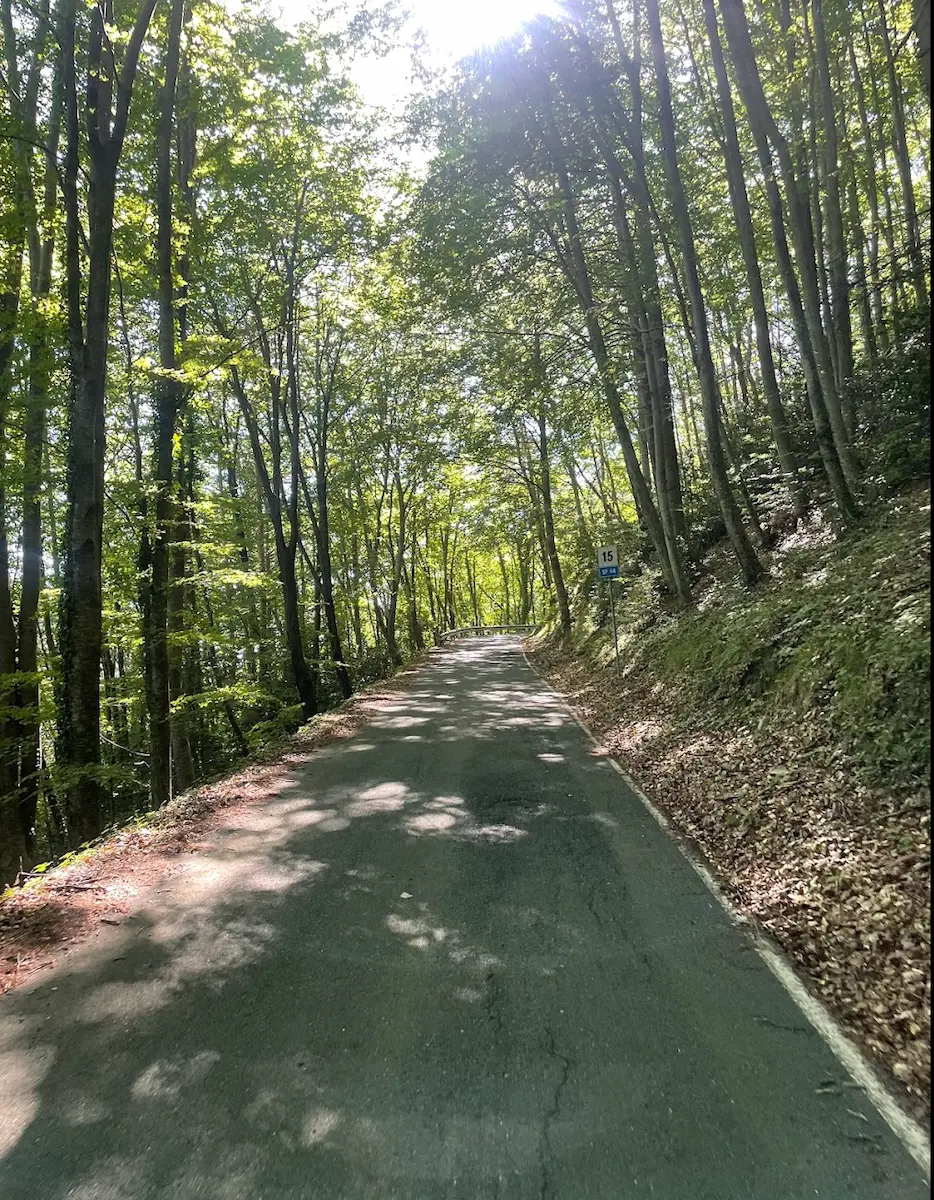
A classic loop from San Remo through the vineyard-covered hills of the Ligurian hinterland. The Salita dei Vignai — Climb of the Vineyards — rises to 1,025 metres through some of the most scenic roads in western Liguria. 63 kilometres, 1,302 metres of climbing.
San Remo Cycling — Cipressa & Poggio Loop
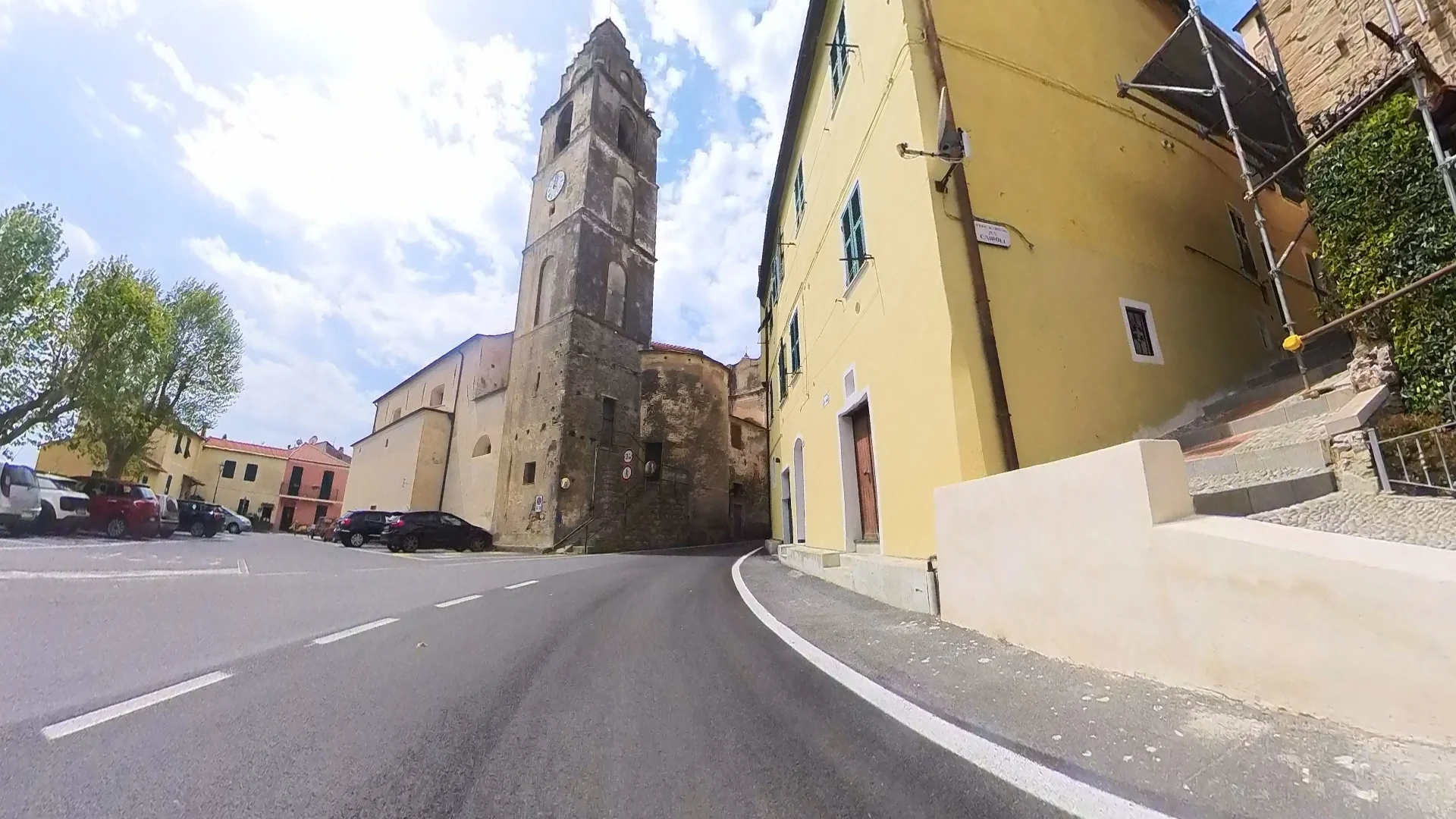
Ride the two climbs that decide Milan–San Remo — from San Remo itself. The route follows the Ligurian coast west to San Lorenzo al Mare, then turns inland to tackle the Cipressa (5.6 km at 4.2%) before descending and climbing the legendary Poggio di San Remo (3.6 km at 3.7%) back into town. At 44 kilometres with 459 metres of climbing, this is a shorter but punchy route — perfect for a focused half-day ride or a warm-up day on the Riviera. Both climbs are famous worldwide from the spring classic, yet accessible to any fit road cyclist. The descent from the Poggio back into San Remo is fast and technical — the same road where Sean Kelly and Fabian Cancellara launched their winning attacks.
San Remo is the finish line of Milan–San Remo, the oldest and longest of cycling's five Monuments — and riding the climbs that decide La Primavera is the reason most cyclists come here. The Cipressa and the Poggio are short and explosive rather than long and grinding, but arrive at the end of a hard day in the saddle they are everything. In March, the names of the stars are still painted on the road surface from race day.
Read the full guide ↓Show less ↑
The Ligurian coast has a character entirely its own. The towns are tighter and more colourful than their French neighbours — terracotta, ochre and deep red facades stacked above narrow harbours, the hills rising sharply behind. The roads inland are technical and winding, the espresso is excellent and cheap, and the focaccia here is among the finest in Italy. This is cycling with soul.
Where to stay
San Remo is the natural base — the Cipressa and Poggio start from the town itself, and the roads into the Ligurian hills are accessible without any urban transfer. The city has a beautiful old town, a good range of accommodation and all the facilities you need for a cycling trip. The microclimate here is exceptionally mild thanks to the Ligurian Alps blocking the cold northern winds — even in winter it rarely drops below 10–12°C at the coast.
When to go
March to May is the magic season. Milan–San Remo runs in mid-March, and the atmosphere in San Remo in the weeks around race day is electric — the riders' names are painted on the road, the cycling community is everywhere, and the climbs feel charged with history. Temperatures sit between 15–20°C, the Ligurian hillsides are green and the famous flower fields are in bloom.
September and October are equally excellent — warm air (20–25°C), a calm Mediterranean perfect for swimming after your ride, and significantly less traffic on Via Aurelia than the summer months. The coastal road between the small tunnels and villages is much safer and more enjoyable when the tourist season has passed.
November to February is mild by northern European standards. San Remo's microclimate keeps coastal temperatures above 10–12°C even in January. Stick to the coastal routes and lower hills in winter — heading inland to higher elevations brings cold, damp conditions that are best avoided until spring.
Italian Riviera vs French Riviera
The differences are real and worth knowing. French roads are generally wider with higher-quality tarmac — the three Corniches offer sweeping, well-maintained routes with excellent flow. Italian roads are narrower and more technical, the climbs shorter and more explosive. Via Aurelia can be chaotic and busy, but the Pista Ciclabile makes up for it — a 24-kilometre traffic-free cycle path along the coast built on a disused railway line between Ospedaletti and San Lorenzo al Mare, flat and entirely car-free.
The culture is different too. France feels more polished and expensive. Italy is more relaxed — a quick espresso at a local bar costs almost nothing, the food is less formal, and the whole atmosphere is easier. For a family trip, Italy tends to feel more welcoming.
Practical tips
Always carry cash — many cafés and bars in the smaller villages do not accept card. Bring more food than you expect to need on the inland routes, as it can be a long way between stops. Village fountains are your best source of water on the climbs. The Pista Ciclabile between Ospedaletti and San Lorenzo al Mare is a brilliant warm-up or recovery ride — flat, traffic-free and right on the sea.
Frequently asked questions
- What are the key climbs around San Remo?
- The Cipressa and the Poggio are the two famous Milano–San Remo climbs. Colle Doggia and Salita dei Vignai are local favourites used for training.
- When is the best time to cycle in Liguria?
- March to May and September to November. Spring coincides with the classic races — you may share roads with professional teams training.