The best base on Mallorca for cyclists
Port de Pollença is the classic choice — straight into the Serra de Tramuntana with Cap de Formentor on your doorstep. Alcúdia is the quieter, slightly cheaper alternative with nearly identical access. Palma (especially west-side) works if you want a city base with restaurants and more variety — transfer to the hills is short. Cala Millor is the east-coast option for cyclists who care more about Cala Millor–Sant Salvador riding than daily Tramuntana access. There is no single best answer; there is a best answer for how you ride.
Last verified: 22 April 2026.
Port de Pollença — the classic
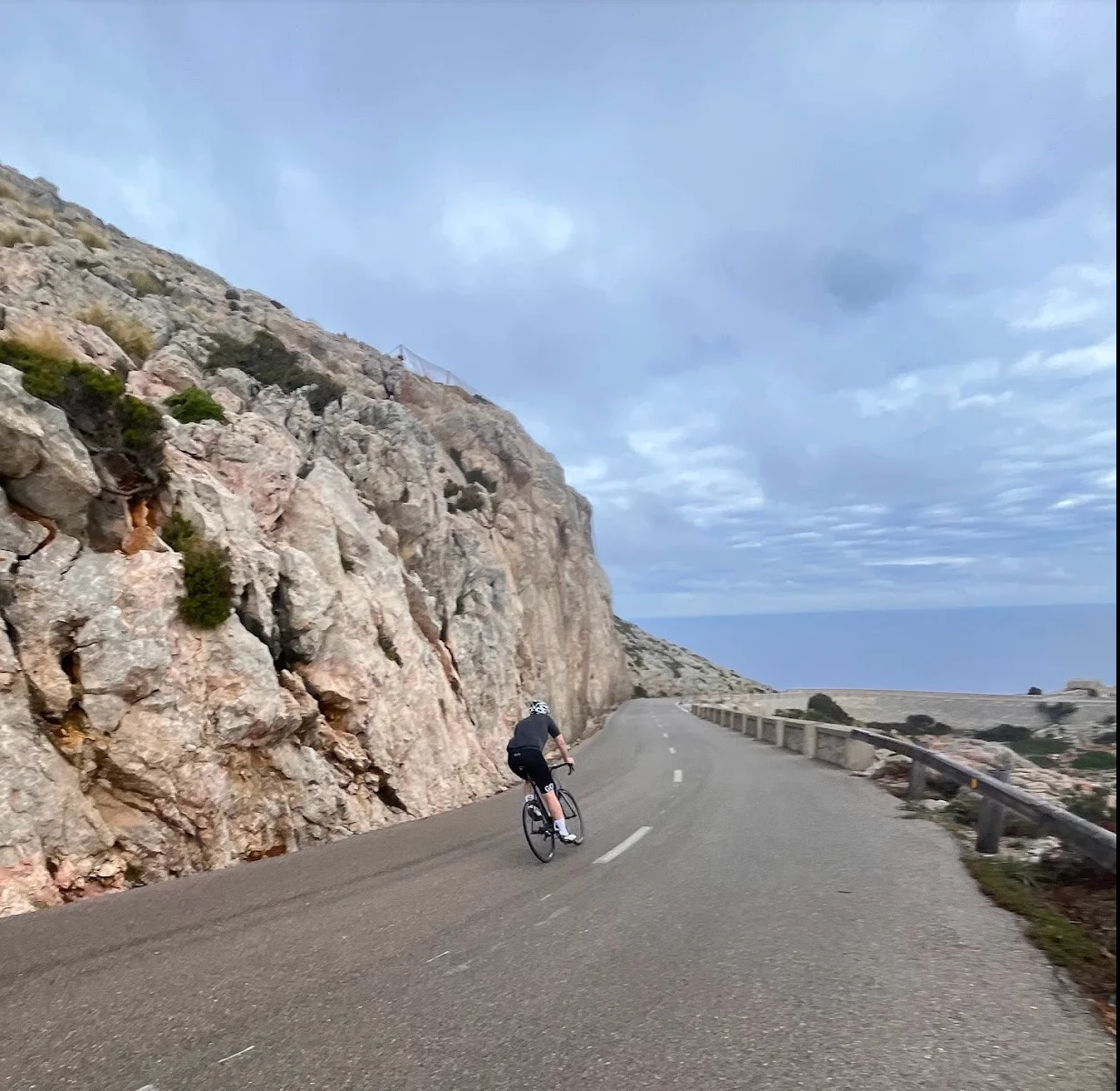
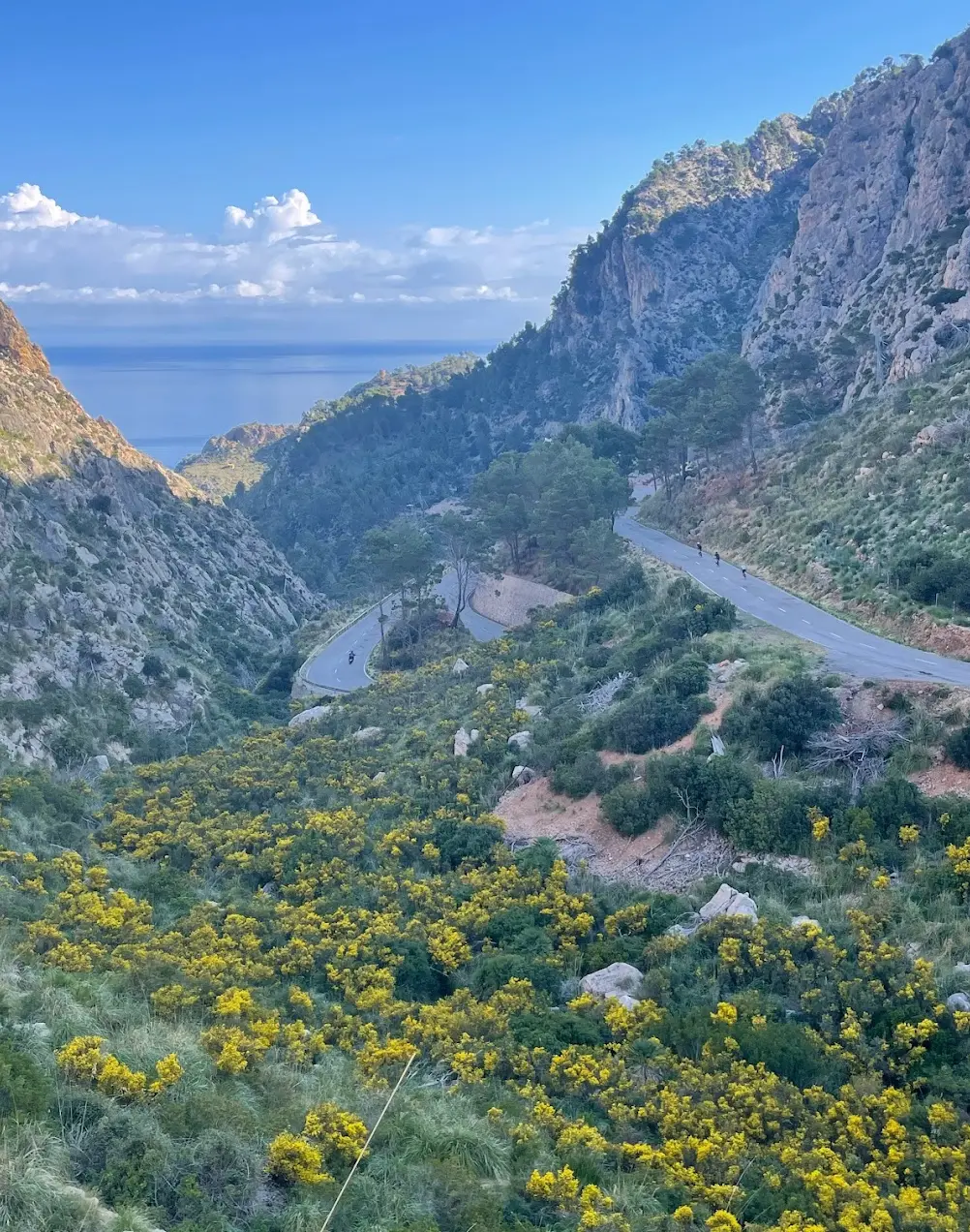
Port de Pollença is the cycling capital of Mallorca and has been for twenty years. The reason is simple: the Serra de Tramuntana starts at the edge of town, Cap de Formentor is a single climb away, and the MA-10 coastal road takes you to Sa Calobra and Puig Major with no transfer stage. You roll out of the hotel and you're in the hills within ten minutes.
The cycling infrastructure is serious — multiple dedicated cycling hotels, bike shops, cafés that open at 07:00 for cyclists, local drivers who are used to sharing the road. Group rides form naturally from most hotels. In March and April it can feel like every second person is in lycra.
From Tommy: Port de Pollença is where I keep going back to. The proximity to Cap de Formentor is the real argument — it's a 20-minute ride from town to the start of the climb. Service is good (restaurants, shops, bike hire), the seafront is pleasant for evening recovery walks, and every ride starts and ends without a transfer stage. If you want one base that gives you everything, this is it.
Pros
- Walk out of the hotel and you're on the climbs within 10–15 minutes.
- Cap de Formentor and Coll de Femenia on the doorstep.
- Every cycling-specific service you could want — shops, repairs, group rides.
- Easy day trips to Sa Calobra, Puig Major, Coll de Sóller.
Cons
- Busy. In March–April it's visibly a cycling town, which some people love and some find too much.
- Accommodation skews cycling-focused; less good if your non-cycling companions want variety.
- Hotel prices in peak cycling season (March, April, October) are 30–40% higher than Alcúdia.
Alcúdia — quieter, nearly identical access
Alcúdia sits 8 km south of Port de Pollença along the Bay of Pollença coastline. The cycling access is nearly identical — you ride the same roads into the Tramuntana, just with a slightly longer (and flatter) approach to Cap de Formentor. The town is quieter, the hotel prices lower, and the beach strip is longer. It's Port de Pollença without the peak cycling-tourism intensity.
Pros
- Same riding access as Port de Pollença, slightly cheaper and quieter.
- Longer beach strip for non-cycling family members.
- Easier to find accommodation that isn't a "cycling hotel" if you prefer that.
Cons
- 10–15 minutes extra on approach to Cap de Formentor and Serra de Tramuntana climbs.
- Fewer cyclist-specific services (bike shops, early breakfast, group rides) than Port de Pollença.
- Old-town Alcúdia is lovely but further from the cycling roads than the port area.
Palma — city base with short transfers
Palma, especially the west side of the city, is an underrated cycling base. The climbs start earlier than people expect — Coll de Sóller is a 25 km ride out; Valldemossa, Banyalbufar and the western Tramuntana coast are genuinely accessible from Palma without a car transfer. You lose the Pollença-side flat approach to Cap de Formentor (that side of the island is a serious transfer from Palma), but you gain the west-coast climbs, Palma's restaurant scene, and everything a real city offers.
From Tommy: I've also stayed in Palma (west side) and it worked fine. No long transfer stages to get to the hills — you're into the climbs inside an hour of riding. The trade-off is that you're based in a city, so the rhythm is different from Port de Pollença. If you like ending the day with proper restaurants and a bit of culture, Palma is the easy winner.
Pros
- Real city — restaurants, culture, variety for non-cycling days and non-cycling companions.
- Direct access to the western Tramuntana (Valldemossa, Banyalbufar, Estellencs).
- Airport transfer is 15 minutes instead of 60+.
- Short rides to Coll de Sóller, Puig Major (via Sóller), Orient valley.
Cons
- Cap de Formentor and Pollença-side climbs need a car transfer — a real disadvantage if you want daily variety.
- Urban traffic getting out of the city — worst on weekday mornings.
- Higher prices year-round (not just in cycling season).
Cala Millor — east coast, different riding
Cala Millor on the east coast is the base to consider if your riding priorities are different from the mainstream. From Cala Millor you're well-placed for Sant Salvador (the Felanitx climb), the Artà peninsula, and the coastal roads of the east side. You can still reach the Tramuntana and Cap de Formentor, but it's a car transfer each way — not the daily roll-out you get from the north.
For a cyclist who has ridden Port de Pollença repeatedly and wants something different, or for a couple where one person wants beach and the other wants riding, Cala Millor is a reasonable compromise. For a first Mallorca cycling trip, it's probably not the first choice.
Pros
- Good access to Sant Salvador, Artà, east-coast climbs.
- Quieter beach resort than Pollença / Alcúdia in peak season.
- Often cheaper than the north coast in spring.
Cons
- Tramuntana and Cap de Formentor need a car transfer.
- Fewer cycling-specific services than the north.
- East-coast climbs are good but less varied than the Tramuntana.
How to choose
The decision tree is simple:
- First trip to Mallorca, main goal is classic Tramuntana and Cap de Formentor riding → Port de Pollença.
- Same goal but you want it a bit cheaper and quieter → Alcúdia.
- You want a city with restaurants and culture, and are okay with car transfers for Pollença-side riding → Palma (west side).
- You've ridden the north coast before and want something different → Cala Millor.
- Non-cycling partner who wants full-resort beach holiday → Alcúdia or Cala Millor.
If you're planning a two-week trip and can split, consider one week in Port de Pollença and one in Palma. You get the classic rides and the west-coast Tramuntana and the city culture without compromise.
Frequently asked questions
What is the best base on Mallorca for cyclists?
For most first-time cycling visitors: Port de Pollença. It has the closest access to the Tramuntana and Cap de Formentor, the most cycling-specific services, and no car-transfer stages. If you want a quieter and slightly cheaper version: Alcúdia. If you want a city base: Palma (west side). If you want the east coast: Cala Millor.
Is Port de Pollença or Alcúdia better?
Port de Pollença if you want the shortest possible roll-out to Cap de Formentor, the full cycling-town atmosphere, and every possible service. Alcúdia if you want 15% less cost, 10% longer approach, and a less intense cycling-tourism feel. The riding itself is nearly identical.
Can I base my cycling trip in Palma?
Yes. Palma's west side gives you direct access to Coll de Sóller, Valldemossa, Banyalbufar and the western Tramuntana with no transfer. You will need a car transfer for Cap de Formentor and Pollença-side riding, which is the one real drawback. Palma wins on city life and restaurants; Pollença wins on daily riding access.
Which base is quietest?
In cycling season (March, April, October), Alcúdia is quieter than Port de Pollença. Cala Millor is quieter than any of the north-coast options. Off-season (November to February), all four bases are quiet — but the weather and opening hours become the concern.
Is one week in Mallorca enough to ride the Tramuntana?
Yes — one week is the standard cycling week and covers the main climbs (Sa Calobra, Puig Major, Coll de Sóller, Cap de Formentor, Coll de Femenia) from any north-coast base. Two weeks lets you add the west coast, the east coast, and a rest day or two.
Where do local Mallorca cyclists recommend?
Locals consistently recommend the Pollença / Alcúdia corridor for visiting cyclists — it's where they'd send a friend. Palma is the local city-cyclist answer. Cala Millor gets recommended for someone who has done the north coast and wants something different. Ask in any Mallorca cycling shop and you'll get one of these four answers.