Cycling in Mallorca
HomeSpainMallorca

Mallorca

9 cycling routes · Spain

Mallorca is the undisputed capital of European road cycling — the island where WorldTour professionals spend their winters and serious amateurs plan their dream cycling holidays. The reason is simple: nowhere else in Europe combines smooth tarmac, dramatic mountain roads, reliable winter sun and world-class cycling infrastructure in such a compact setting.

The Serra de Tramuntana mountain range runs along the northwest coast and is the heart of Mallorca cycling. A UNESCO World Heritage site, it delivers iconic climbs — Sa Calobra, Puig Major, Sa Batalla, Cap Formentor — on roads that wind through terraced olive groves, limestone gorges and clifftop villages. In the east and south, the terrain opens up into flatter rolling roads, perfect for recovery rides or building base kilometres.

When to go

March to May is peak season for cyclists — temperatures are ideal (17–27°C), hotels and restaurants are fully open, and the almond blossom makes the island spectacular in February and March. Be aware that Sa Calobra and Cap Formentor get busy with tourist traffic from May onwards — aim to be away by 11am. November and December are quieter, cooler (15–19°C) and genuinely beautiful, with professional teams arriving for winter training. July and August are hot (29–30°C) — still rideable if you start at sunrise, but not ideal.

Where to stay

For riders who want quick access to the mountain climbs, Palma is an excellent base — you are on the roads to the Tramuntana within minutes, avoiding the daily transfer through the city. Port de Pollença in the north is equally well positioned: close to Sa Batalla, Cap Formentor and the mountain roads, with flat coastal routes available when you want them. If you prefer flatter terrain and a quieter pace, the east side of the island around Alcúdia or Artà suits you better.

The Tramuntana wind — plan your rides around it

The wind on Mallorca has a name: Tramuntana. A cool, dry northwesterly that blows in from the Pyrenees and Alps, it is strongest in winter and spring — exactly when most cyclists visit. The Serra de Tramuntana mountain range acts as a partial barrier, but the wind pushes around Cap de Formentor and across the central plains with force. Use it to your advantage: head into the wind while your legs are fresh in the morning, and enjoy the tailwind home in the afternoon. On the open plains between Santa Maria and Sineu, a strong Tramuntana can be relentless — this is where riding in a group echelon makes all the difference. A word of warning: Cap de Formentor is the most exposed point on the island. Even on calm days in Palma, it can be gusting out at the cape — deep carbon wheels are a handful in those conditions.

What makes Mallorca different

The road quality is exceptional — smooth, well-maintained tarmac even on the mountain passes. Cycling infrastructure is built into the island's DNA: bike-friendly hotels, dedicated repair shops, GPX-marked routes. Village fountains are your best friend for water top-ups — most Mallorcan villages have a public fountain in the main square, and cafés and petrol stations are almost always happy to fill your bottles too. Do not miss a coffee stop in Petra — a classic Mallorcan village square that every cyclist on the island seems to pass through eventually, and a natural stop on the Sant Salvador Monastery Loop. The variety is unmatched: on the same trip you can tackle a 2,900-metre queen stage through the mountains and the next day roll along flat coastal roads in the sunshine. Few destinations in the world offer this.

Below you'll find our curated selection of the finest routes on the island — from accessible valley loops to multi-day mountain epics.

#Road Cycling#Mountain Passes#Island#UNESCO Heritage

All Routes in Mallorca

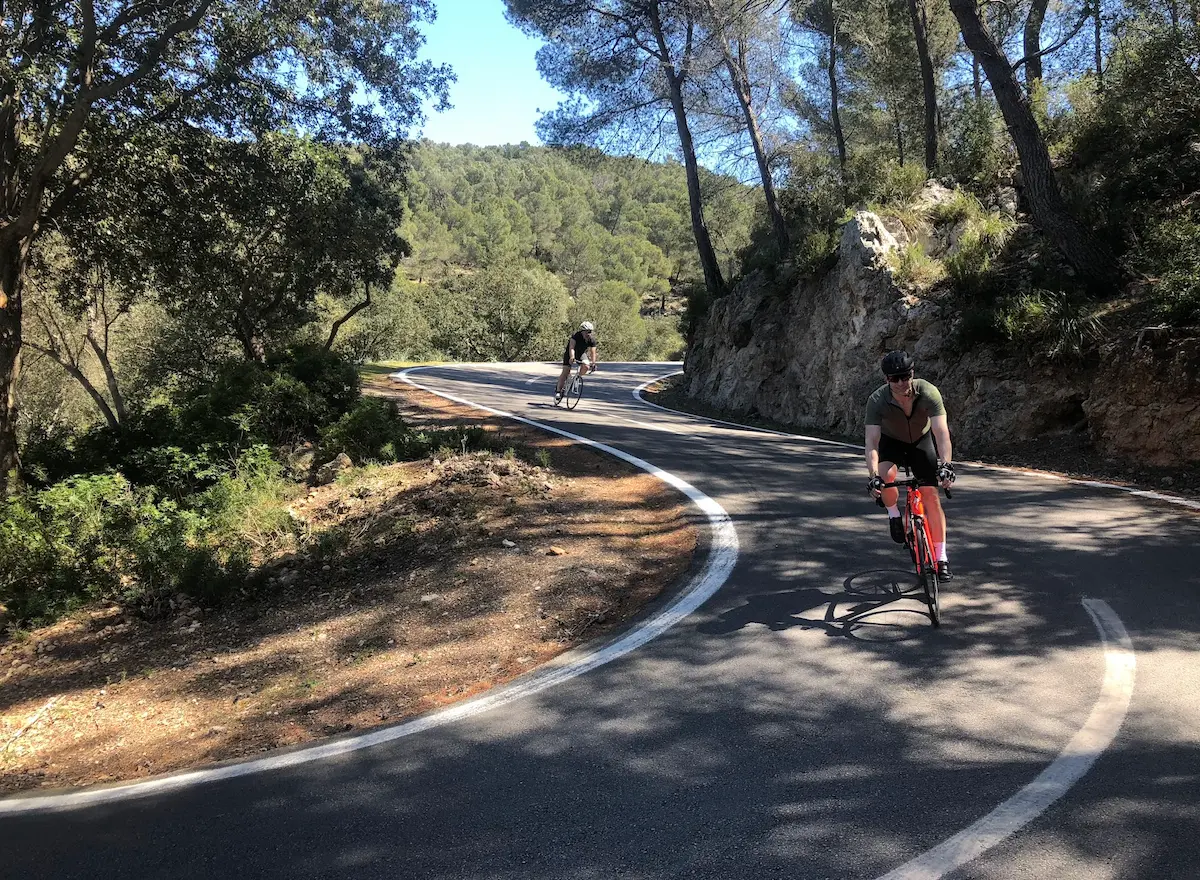
Cycling on Col de Femenia road, Mallorca — stunning mountain views towards Sa Batalla

Col de Femenia & Sa Batalla Loop

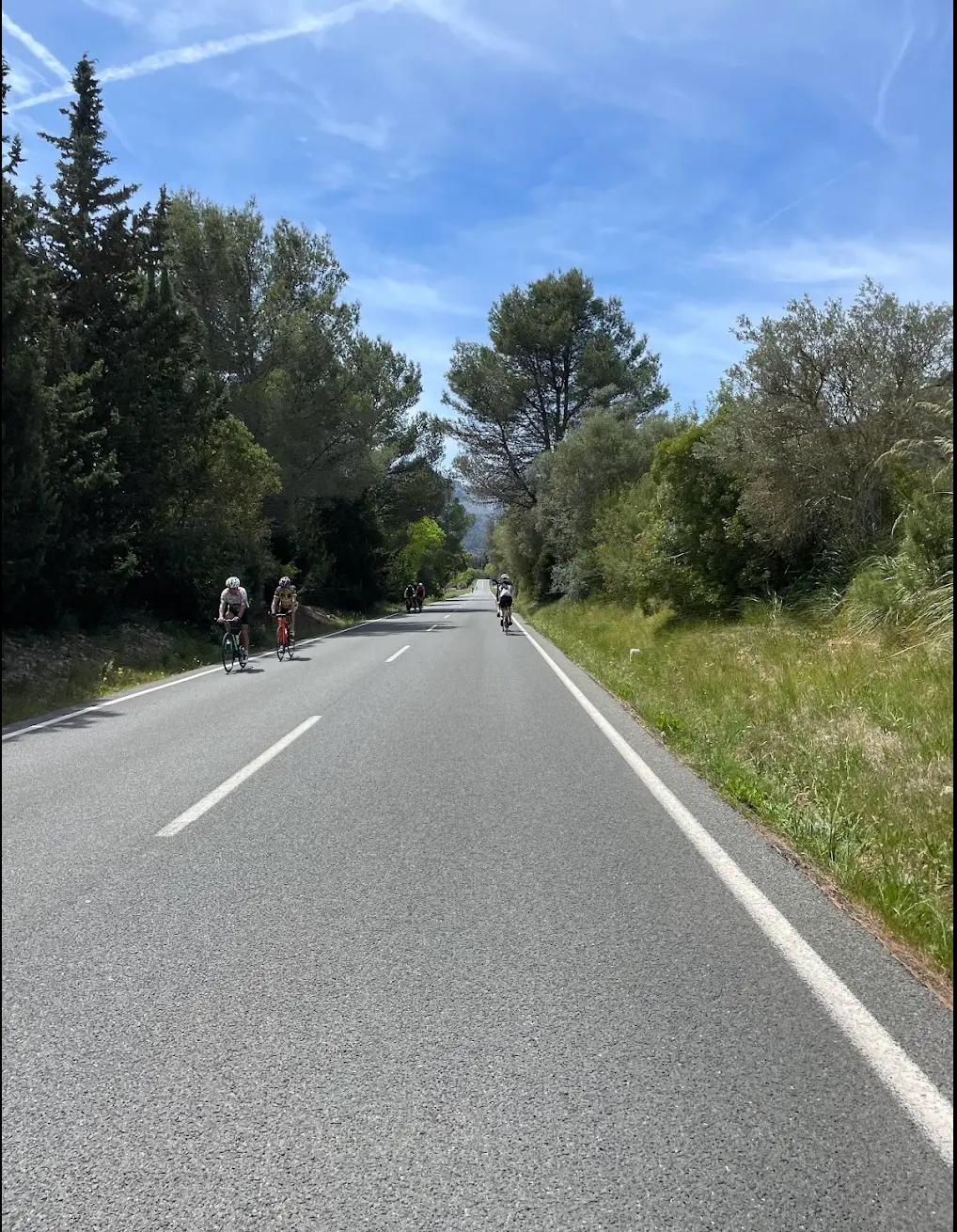
One of the most popular and accessible mountain loops in Mallorca — taking you straight into the heart of the Serra de Tramuntana from the north, combining two of the island's most classic climbs in a single compact day. From Port de Pollença the route rolls west across the agricultural plain towards the historic town of Pollença before the mountains begin. Col de Femenia is the first major challenge — a steady, beautiful 7.6 km climb at 5.5% average where the views open up progressively as you gain height, revealing Pollença Bay, Cap de Formentor and the Alcúdia peninsula stretching into the distance. At the top, the route crosses an almost alpine plateau of grey limestone formations and deep valleys, passing the junction down to the famous monastery at Lluc. Then comes the reward: the descent via Coll de Sa Batalla — a technical, exhilarating drop through tight hairpins in dense pine forest with dramatic cliff faces on all sides. The well-known cycling café at the top of Sa Batalla is a classic meeting point before the long swooping descent. The return through Caimari and the quiet inland roads via Pollença rounds off one of the finest half-day rides on the island.

86 km871 mmoderate
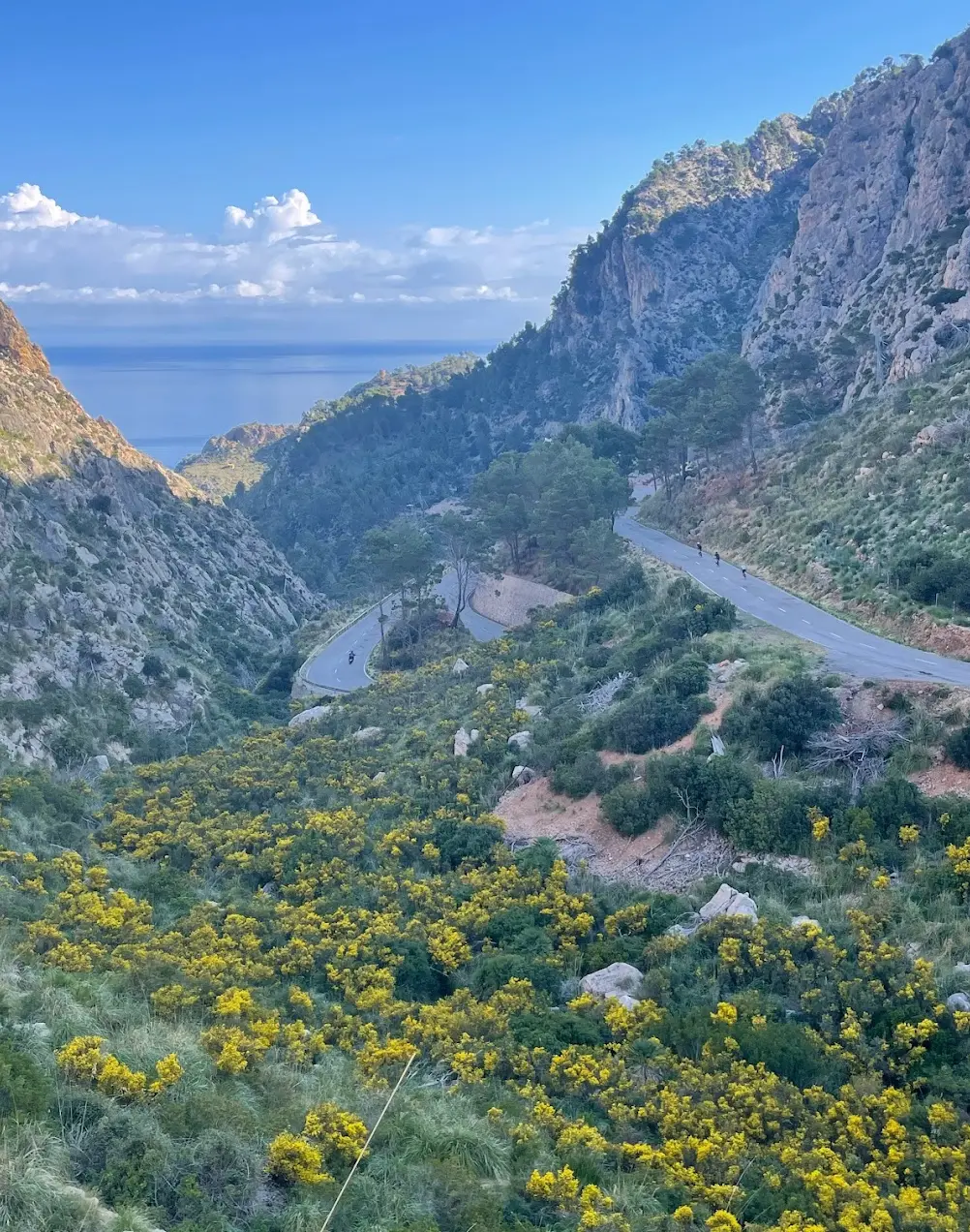
Cycling up Col de Soller, Mallorca — serpentine mountain road with dramatic valley views

Col de Soller & Puig Major

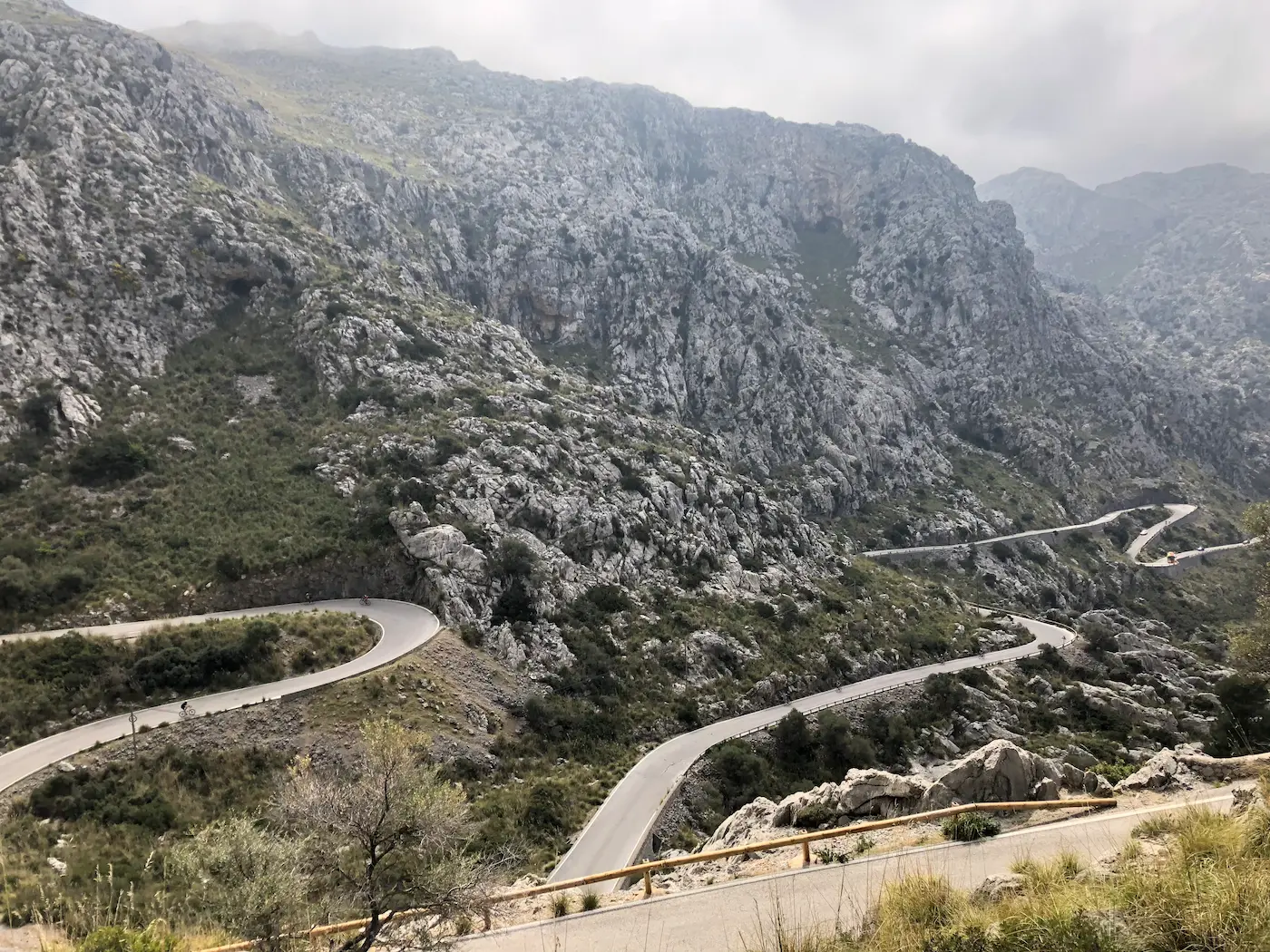
The definitive epic mountain stage on Mallorca — four of the island's most celebrated climbs in a single day, deep into the heart of the Serra de Tramuntana. This is a route for riders who love altitude, hairpin bends and true alpine scenery. From Port de Pollença the route heads south towards the hidden Orient valley — one of the most beautiful and least-visited corners of Mallorca. The winding road through olive groves to the postcard village of Orient sets the tone before the climbing begins in earnest. From Bunyola, the south side of Coll de Sóller rises ahead: a masterpiece of road engineering with over 20 hairpin bends and almost no cars, since all traffic uses the tunnel. The views from the top south towards Palma are extraordinary. The technical descent into Sóller — the island's famous orange valley — is the natural lunch stop. Eat well on the square, because the biggest challenge of the day comes next: the 14-kilometre climb to Puig Major, Mallorca's highest accessible point by bike. The landscape transforms from lush garden to bare alpine rock as you gain height. At the top, the road passes through a tunnel before the dramatic Gorg Blau and Cúber reservoirs appear — turquoise water cradled between the island's highest peaks, some of the most dramatic scenery in all of Mallorca. The long return descends past the Sa Calobra junction and through Lluc before Col de Femenia drops you back to the Pollença plain and home.

135 km2400 mhard
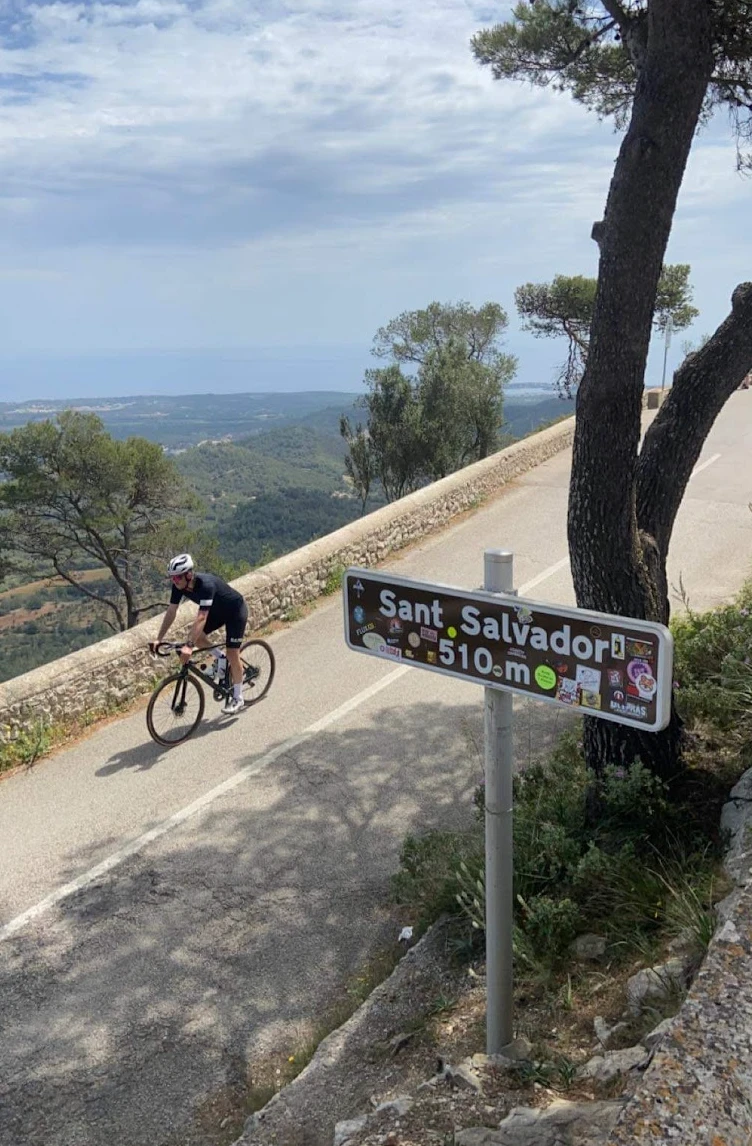
Cycling up to Sant Salvador monastery, Mallorca — medieval hilltop sanctuary with panoramic island views

Sant Salvador Monastery Loop

The pilgrimage climb of Mallorca — Sant Salvador monastery sits alone on a 510-metre summit in the southeast of the island, far from the Tramuntana mountains, giving a 360-degree panorama over the entire island that no other climb can match. From Alcúdia Bay in the north to the Cabrera islands in the south, the view from the top is unlike anywhere else on Mallorca. From Port de Pollença the route heads south across the flat central plain — the Pla de Mallorca — on fast, open roads perfect for riding in a group and maintaining good tempo. The real Mallorca reveals itself here: fields, windmills and dry stone walls stretching to the horizon. Through Santa Margalida and into Petra, the island's unofficial cycling capital, where the town square is almost always packed with riders from across Europe. A coffee and a slice of almond cake at Can Tomeu is close to obligatory. Porreres is the natural lunch stop before the climbing begins — Cafeteria Es Poltre in the village centre is cyclist-friendly, portions are generous and service is fast. From Felanitx the road rises immediately towards Sant Salvador. Five kilometres at 7% average with several hairpin bends, passing the giant stone cross of Es Picot on a neighbouring summit before the monastery appears above. Inside, world championship jerseys donated by professional riders line the corridors — a reminder of how deeply cycling is woven into this place. The long return north across the plain is where wind awareness matters most. A headwind on the way home can be relentless on the open flatlands — save something for the final stretch back to Pollença.

143 km1000 mmoderate
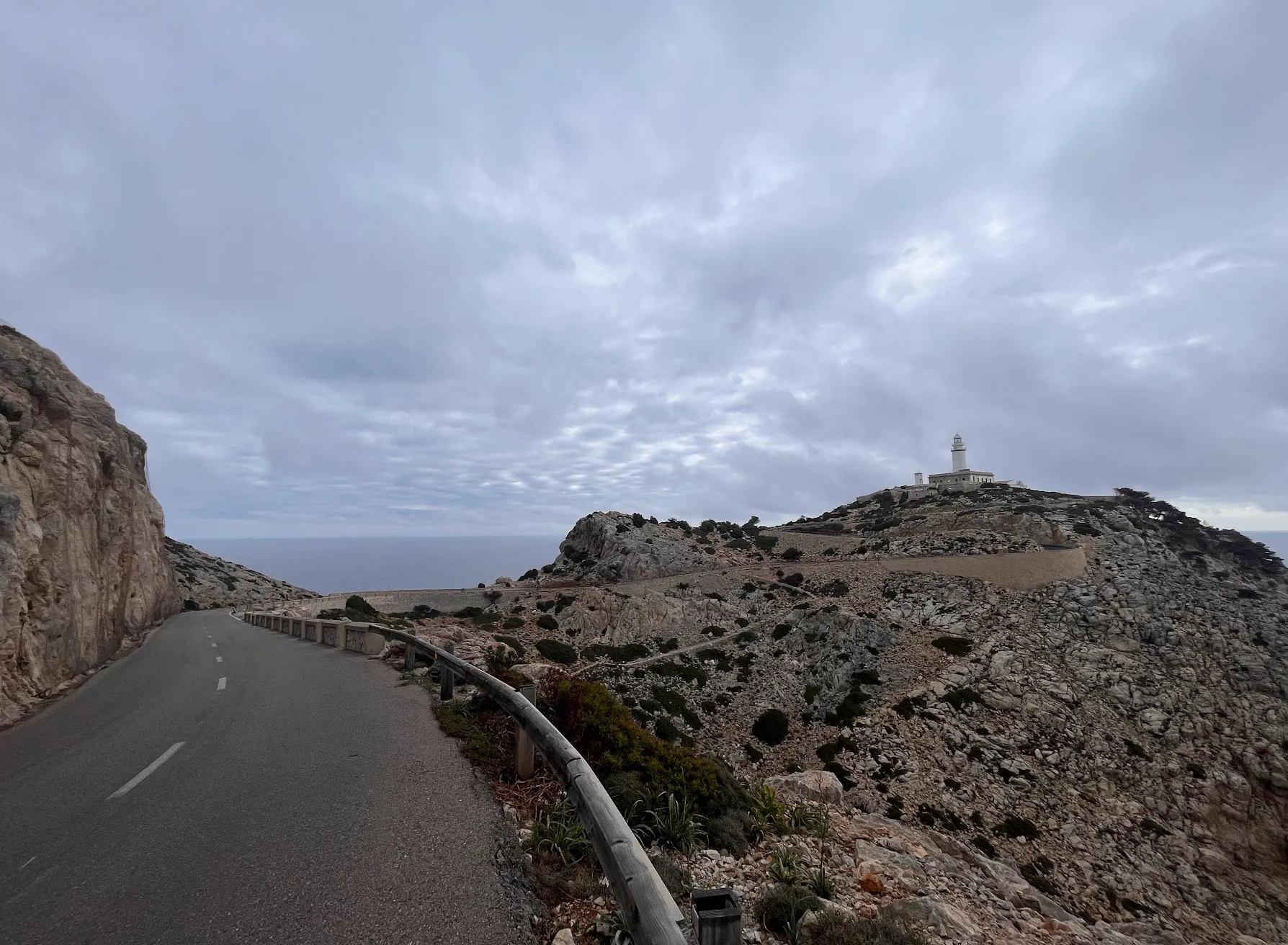
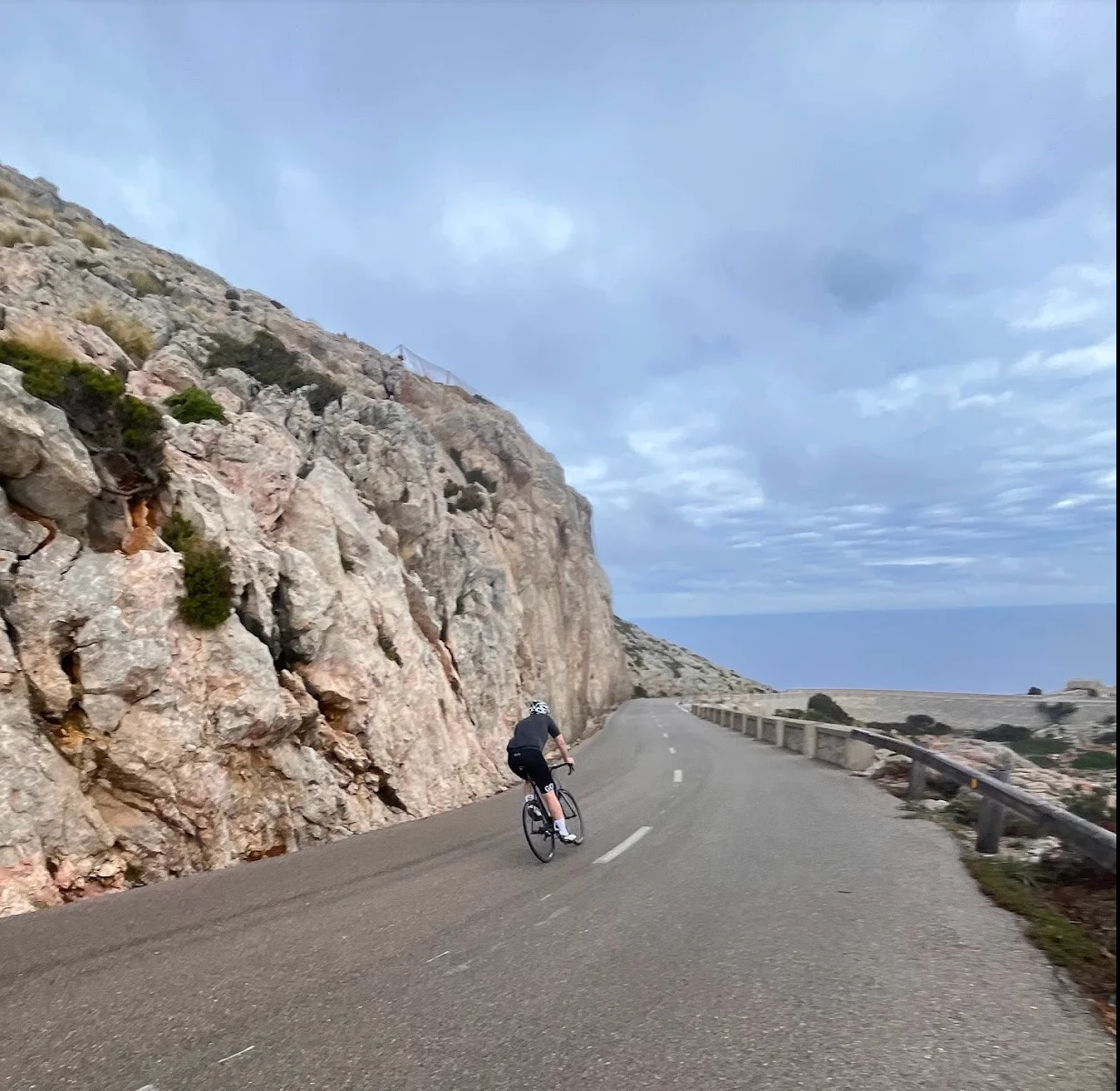
Epic cycling route on Cap Formentor peninsula at dawn, Mallorca Spain — 145km with 2900m elevation

Cap Formentor, Sa Batalla & Sa Calobra

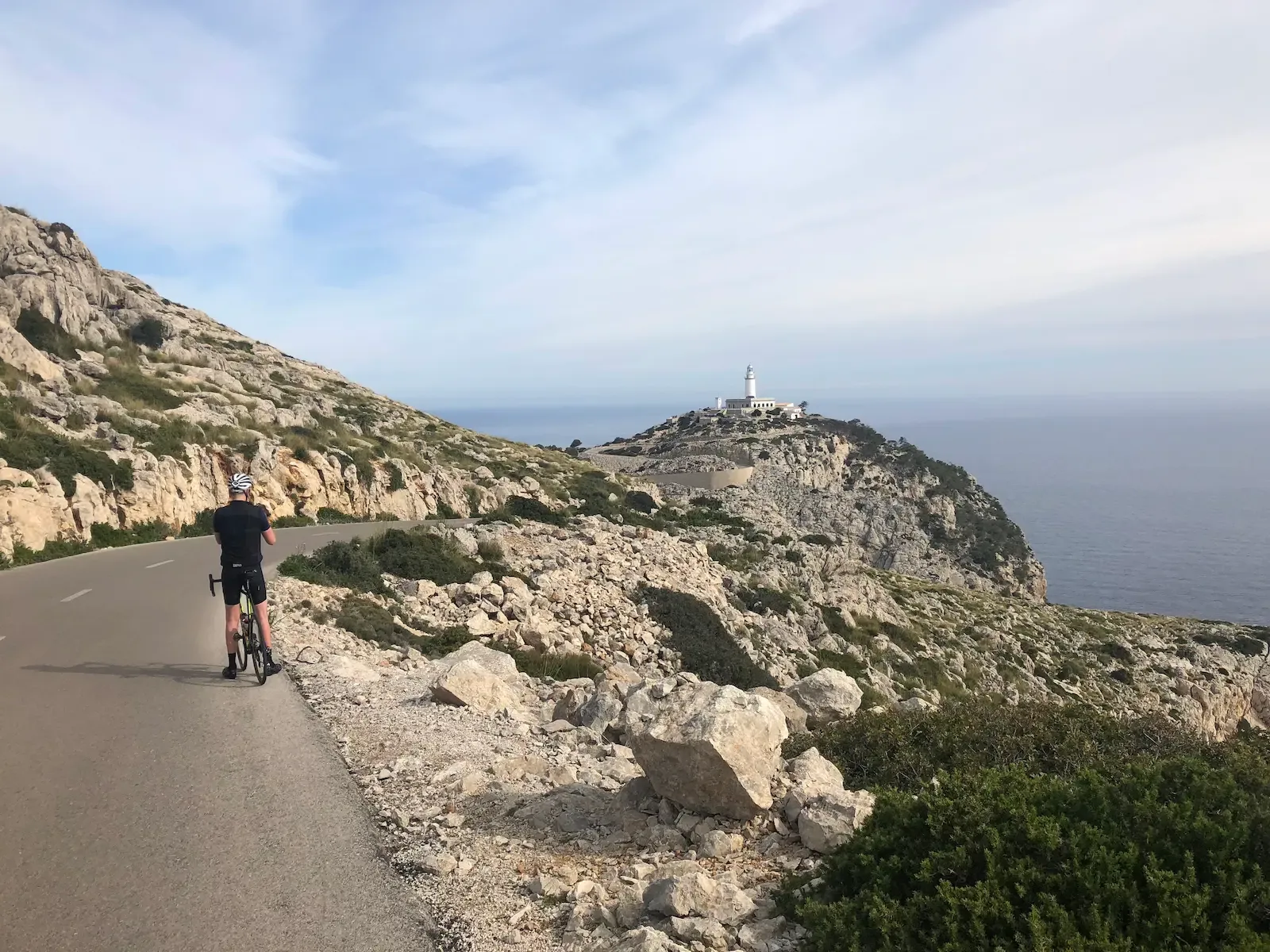
The queen stage of Mallorca cycling. Cap Formentor, Sa Batalla and Sa Calobra back to back — three of the island's most iconic climbs in a single day, with the Mediterranean as a backdrop throughout.

145 km2900 mepic
Cycling the Andratx to Pollença grand traverse, Mallorca — epic coast-to-coast route across the Serra de Tramuntana

Andratx to Pollença — The Grand Traverse

The ultimate Mallorcan diagonal — a 146-kilometre point-to-point epic from Andratx in the southwest to Port de Pollença in the north, crossing the full breadth of the island through its most celebrated landscapes. The route opens with one of the finest stretches of road on the island: the Ma-10 coastal road, hugging the cliffs above the Mediterranean with views that rival anything in European cycling. Through the famous villages of Estellencs and Banyalbufar — their ancient terraces dropping to the sea — and on through Valldemossa and Deià, where the roads wind through olive groves past some of the most coveted real estate on the island. From Sóller the route tackles Coll de Sóller — fifty-plus hairpin bends climbing above the valley, with virtually no traffic since all heavy vehicles use the tunnel. The views from the top stretch south across the Palma plain and north back into the Tramuntana. After the descent into Bunyola, the terrain flattens and the route crosses the heart of the island through lush agricultural land towards Inca — perfect for settling into the aero position and making time. The final stretch follows the Camí Vell de Campanet: quiet, narrow lanes flanked by dry stone walls, almond trees and grazing sheep — the hidden Mallorca that most cyclists never find. Port de Pollença and the seafront promenade await at the finish.

146 km2900 mepic
Cycling the coastal road to Andratx, Mallorca — dramatic limestone cliffs above the Mediterranean

Palma to Andratx — Mallorca Coastal Cycling Loop

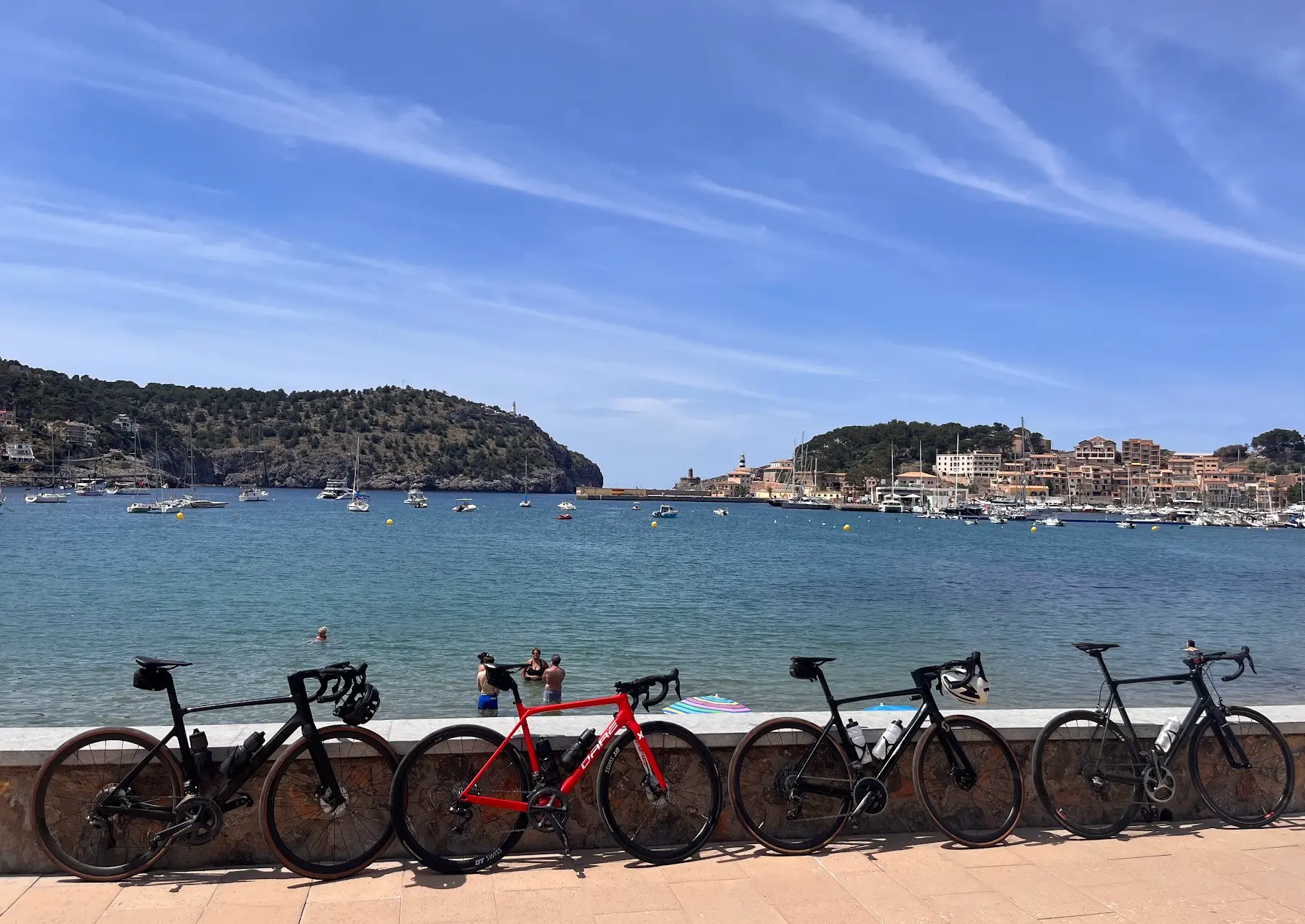
One of the most beautiful coastal routes on Mallorca — a 77-kilometre loop from Palma along the spectacular southwest coastline, through glamorous harbour towns and back through authentic Mallorcan countryside. Leaving from Paseo Marítimo in Palma, the route immediately tackles Coll de Sa Creu — a 5.8 km Cat 3 climb that gets the legs working from the very first kilometre. The reward is a fast descent down to the coast, where the route then follows the stunning southwest shoreline westward through Cala Major — where the Spanish royal family have their summer residence — past the fashionable enclaves of Illetes and Portals Nous, through Palmanova and Santa Ponça. Port d'Andratx is the jewel of the route: one of Mallorca's most beautiful harbour towns, perfect for a coffee stop watching the superyachts. From Andratx the route turns inland through Es Capdellà — authentic Mallorcan villages surrounded by olive groves and almond trees — before the descent back to Palma with the city's iconic cathedral visible in the distance.

77 km1356 mhard
Cycling the Palma epic — Sa Batalla, Sa Calobra and Puig Major in a single day from Paseo Marítimo

Palma — Sa Batalla, Sa Calobra & Puig Major Epic

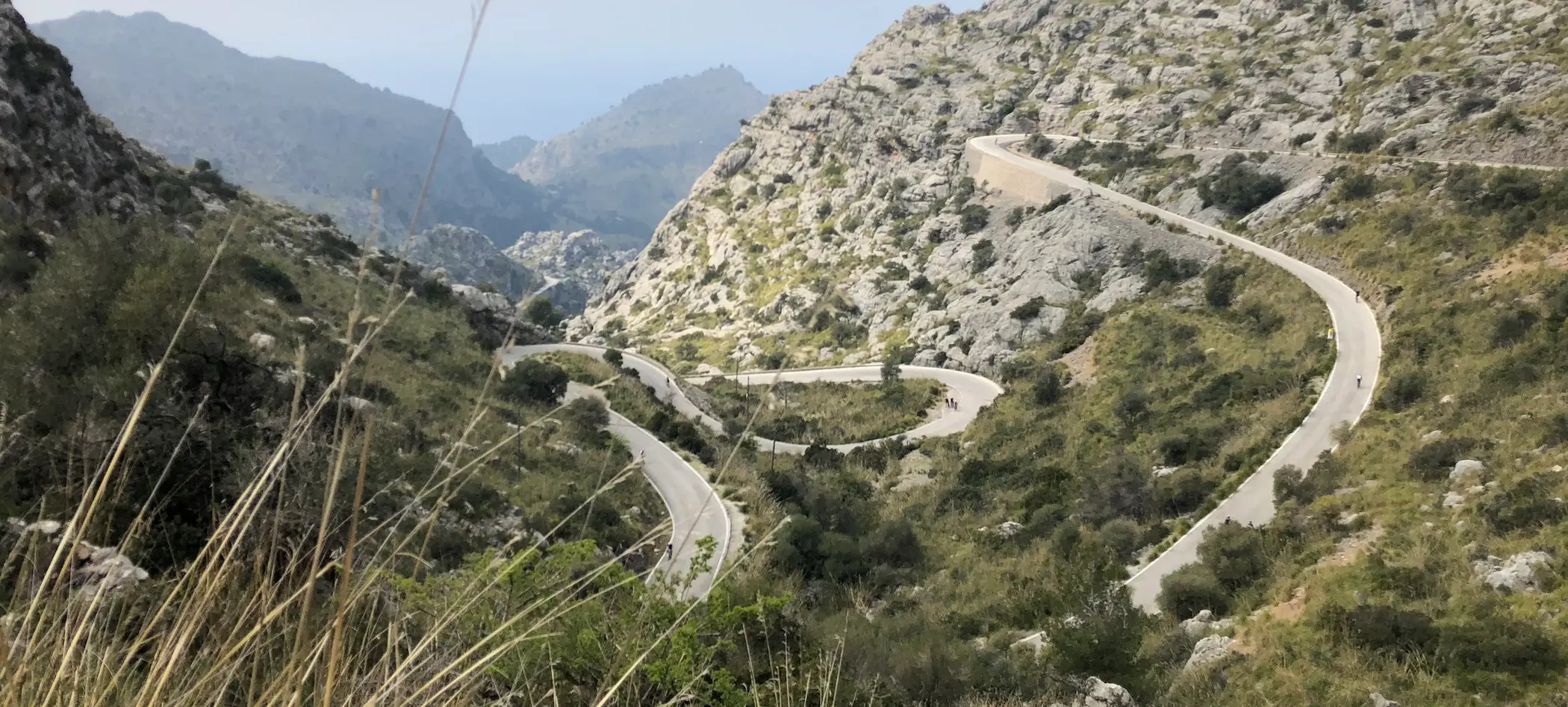
The ultimate challenge for riders based in or near Palma — conquering Mallorca's highest peaks in a single day from sea level at the harbour. Coll de Sóller, Puig Major, Sa Calobra and Sa Batalla: four of the island's most celebrated climbs, all in one epic loop. From Paseo Marítimo the route heads out across the flat plain before Col de Sóller arrives — five kilometres of switchbacks with light traffic. Down into the Sóller valley for lunch before the biggest climb of the day: Puig Major, Mallorca's highest accessible point by bike, finishing inside the Monnàber tunnel at 872 metres. Then comes Sa Calobra — descended first on the famous corkscrew road to Torrent de Pareis at sea level, then climbed back out. 10 kilometres at 7% average, 26 hairpins. Everything you descend, you climb. The Repsol station at the top of Sa Batalla marks the final summit. From there a long descent through pine forest and flat roads carry you back to Palma. A day that earns its difficulty rating.

150 km2637 mepic
Cycling from Palma through southeast Mallorca — quiet rural roads towards Santanyí

Palma — Southeast Mallorca & Santanyí Cycling Route

A beautiful journey through the southeastern corner of Mallorca — a part of the island that operates at a completely different rhythm to the mountain roads of the Tramuntana. Open plains, authentic villages, dry stone walls and the golden sandstone town of Santanyí: this is the real Mallorca, away from the tourist crowds. From Palma the route heads southeast across the agricultural heartland of the island — the Pla de Mallorca. Wide open skies, ancient windmills that once pumped water to the fields, and the characteristic dry stone walls known as marges lining every road. Through Llucmajor — a well-known cycling hub with a good town square for a coffee stop — and on across the southern plains where almond and apricot trees mark the seasons. Santanyí is the jewel of the route. Built almost entirely from the golden local sandstone that was also used to construct Palma's famous cathedral, the old town is a beautiful maze of narrow streets, art galleries and excellent cafés. The main square is especially lively on market days — Wednesday and Saturday. A pamboli of local bread with oil, tomato and cured ham is the correct lunch order. The return passes through Ses Salines, where salt has been harvested for centuries, before the flat roads carry you back to Palma. A route where the pleasure is in the rhythm, the culture and the landscape rather than the climbing.

115 km995 mmoderate
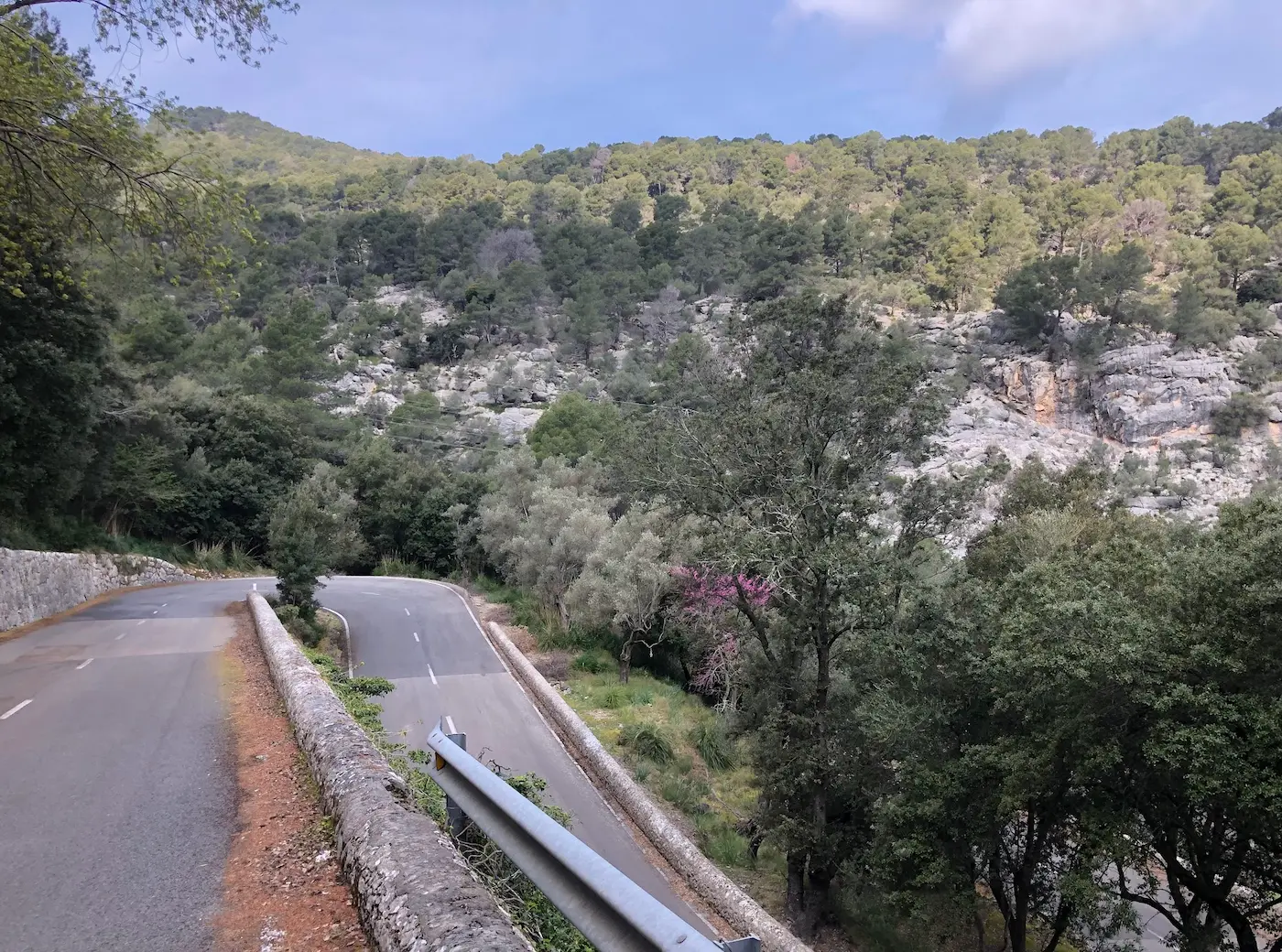
Cycling from Palma to Port de Valldemossa and Port des Canonge — hidden Tramuntana coast climbs

Palma — Port de Valldemossa & Port des Canonge

Two of Mallorca's most dramatic and least-discovered coastal descents in a single route from Palma — Port de Valldemossa and Port des Canonge. This is the route for riders who want to go beyond the famous climbs and find the roads that most tourists never reach. From Paseo Marítimo the route heads northwest over the first ridge via Coll des Vent before entering the western Tramuntana. Port de Valldemossa comes first — often called Sa Calobra's little sister, and rightly so. The descent is one of the most technically demanding and spectacular roads on the island: narrow, winding, with cliff faces and vertical drop-offs at every bend. At the bottom, Es Port restaurant overlooks the small harbour and is the perfect stop for a coffee or a quick espresso before the climb back up. The 4.86 km ascent at 7.5% average is no joke — this is a proper Cat 2 effort. The historic village of Valldemossa, with its famous monastery and cobbled streets, is the natural café stop before continuing to Port des Canonge — a labyrinth of hairpin bends through pine forest descending to a tiny, completely authentic fishing village where red cliffs meet turquoise water. The silence here is extraordinary. Everything you descend must be climbed back up before the return to Palma. Coca de Patata — the local potato pastry at Pastisseria Can Molinas in Valldemossa — is close to obligatory.

73 km1550 mhard