About this Route
← Mallorca Cycling GuideThis is the day every Mallorca week is built around. Sa Batalla and Sa Calobra in a single ride from Port de Pollença — 105 kilometres, 2,108 metres of climbing, and the two most-photographed roads in European cycling on the same day. You don't ride this loop because it's the most efficient route to those climbs. You ride it because doing them back-to-back, from a Pollença base, is the queen stage that defines the Mallorca cycling trip.
The morning starts in Port de Pollença with the kind of nerves that come with knowing the day. Wheels out around 9, normal breakfast, two bottles, gels and bars in the back pockets. The early start matters here for two reasons: heat later in the day if you're riding in spring or autumn, and traffic on Sa Calobra. The longer you wait, the more cars and rental scooters between you and a clean descent.
The first 12 kilometres roll south on the same quiet inland roads you might take on a flat day, until you reach Caimari and the start of Sa Batalla. The climb is 7.8 kilometres and 381 metres at a steady 5–6% gradient. Olive groves either side of the road for the first kilometre, then the road begins to switchback. There's a moment early on where the serpentines stack tightly enough that you can look down and see other cyclists below you, like terraces. The first four kilometres are honest, regular climbing. Then a short flat stretch lets you catch your breath. Around 5.5 km you get a longer flat section — useful if you've been pushing too hard. From kilometre 6 it pitches up again to the Repsol station that marks the top of the segment. Bring some change. The petrol station and the restaurant next to it are where most groups stop to fill bottles and regroup.
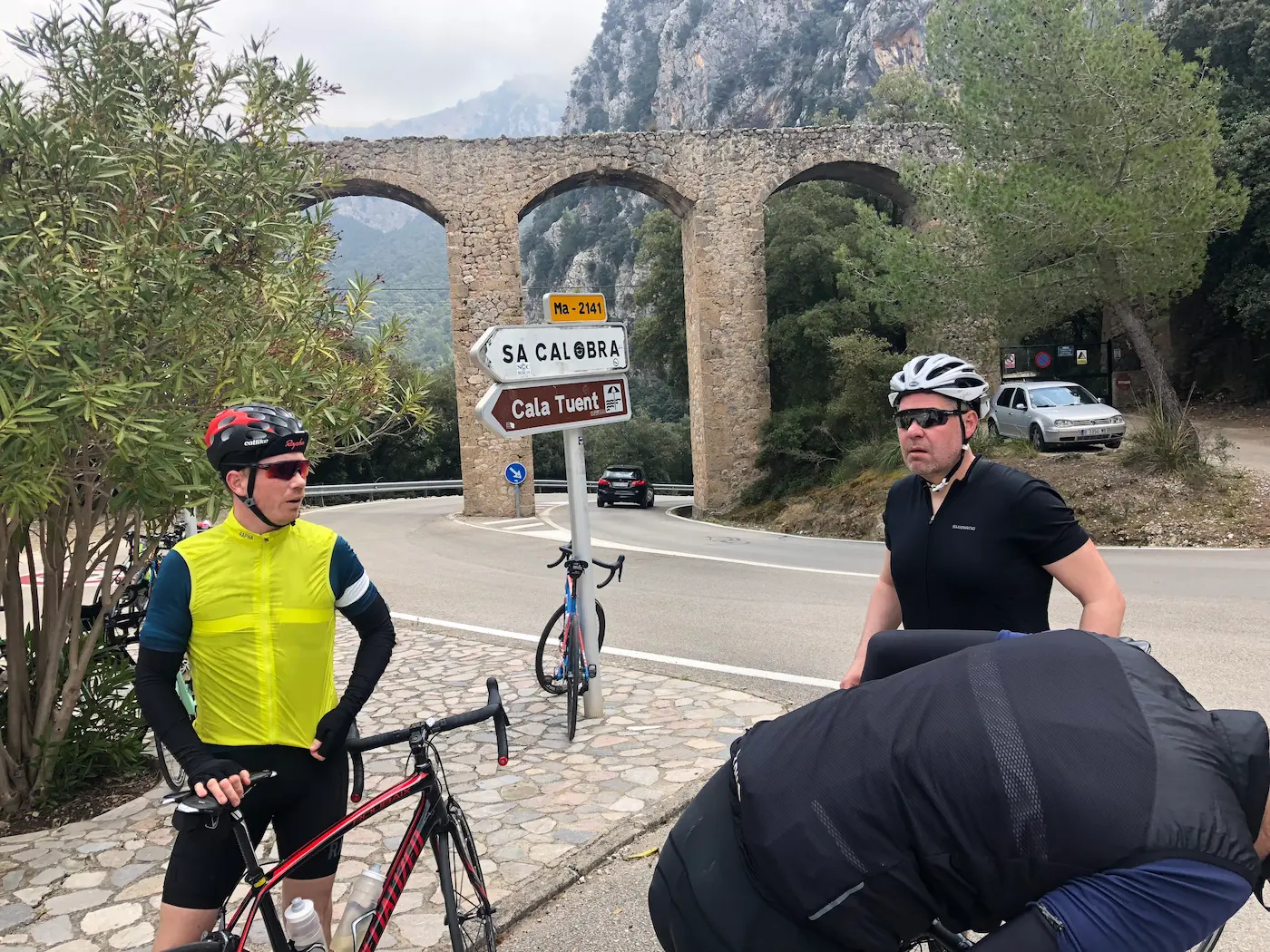
From Repsol the route climbs another 100 metres or so before dropping toward the famous bridge — a road junction marked by a small kiosk-café that's a useful refill point both before and after Sa Calobra. At the junction, you turn off toward Coll dels Reis. Don't underestimate this one: 2.66 kilometres at 5.9% averaging is its own climb, 160 metres of elevation, and it sits between you and the Sa Calobra descent. From the top of Coll dels Reis you roll down to the Sa Calobra cove on the same road you'll come back up.
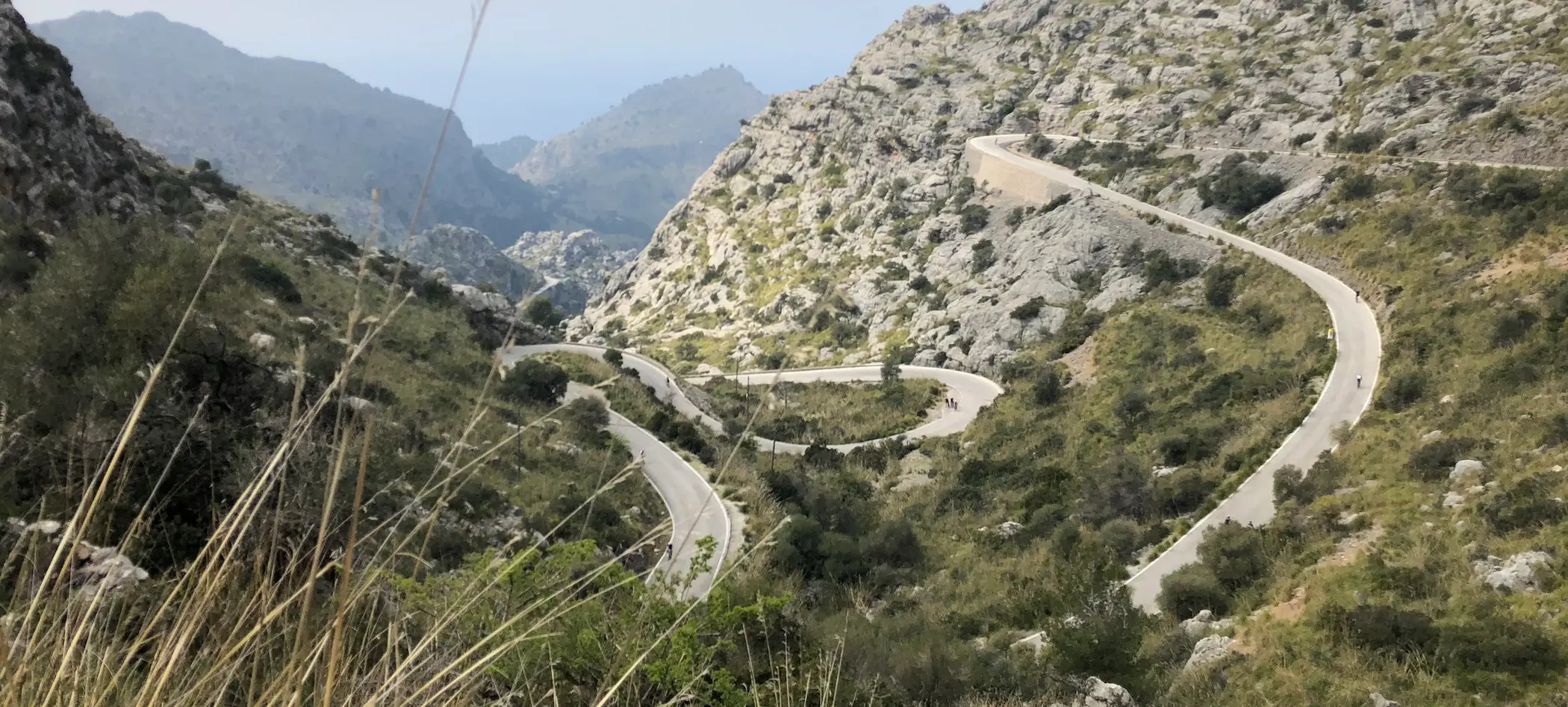
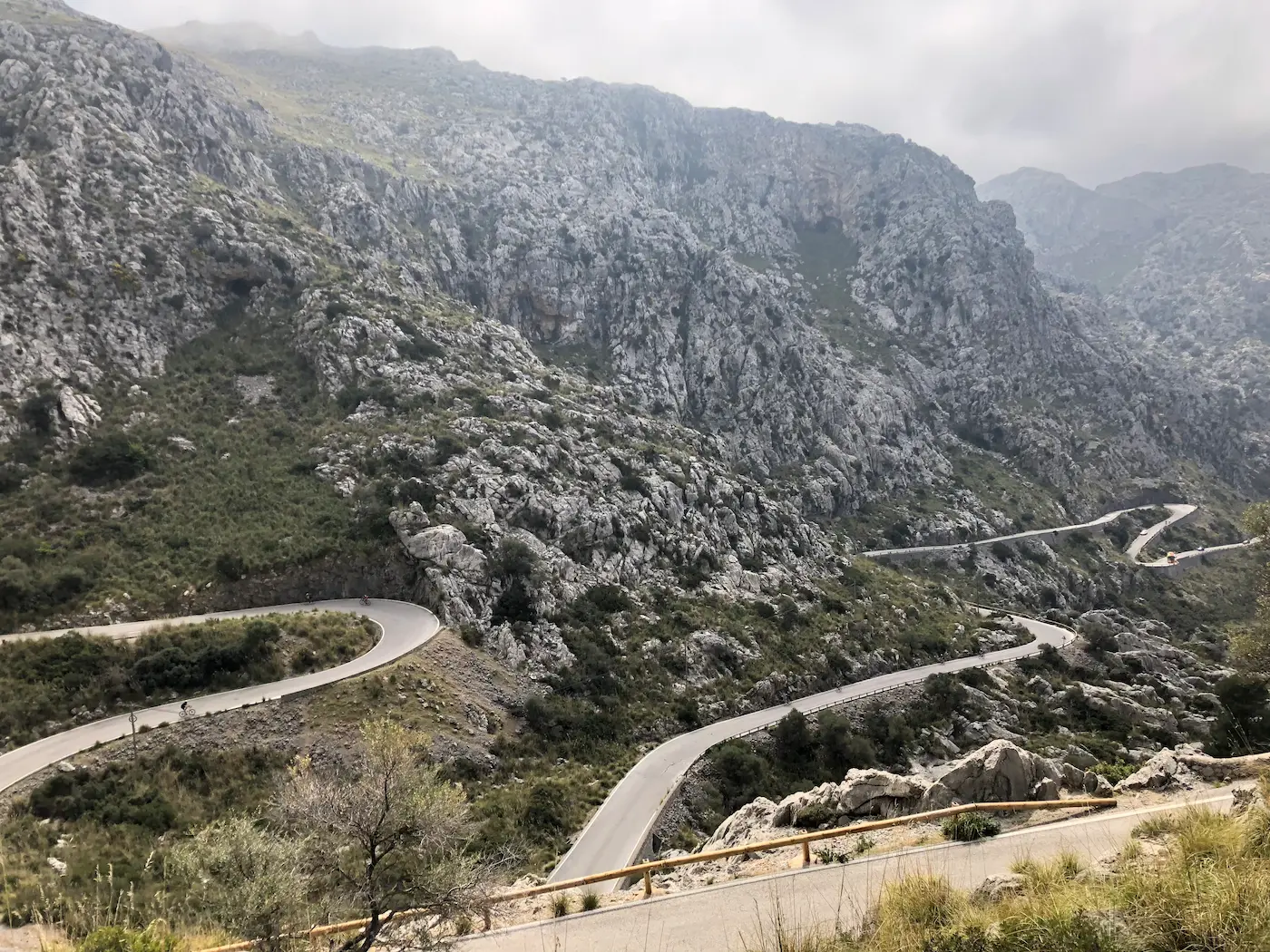
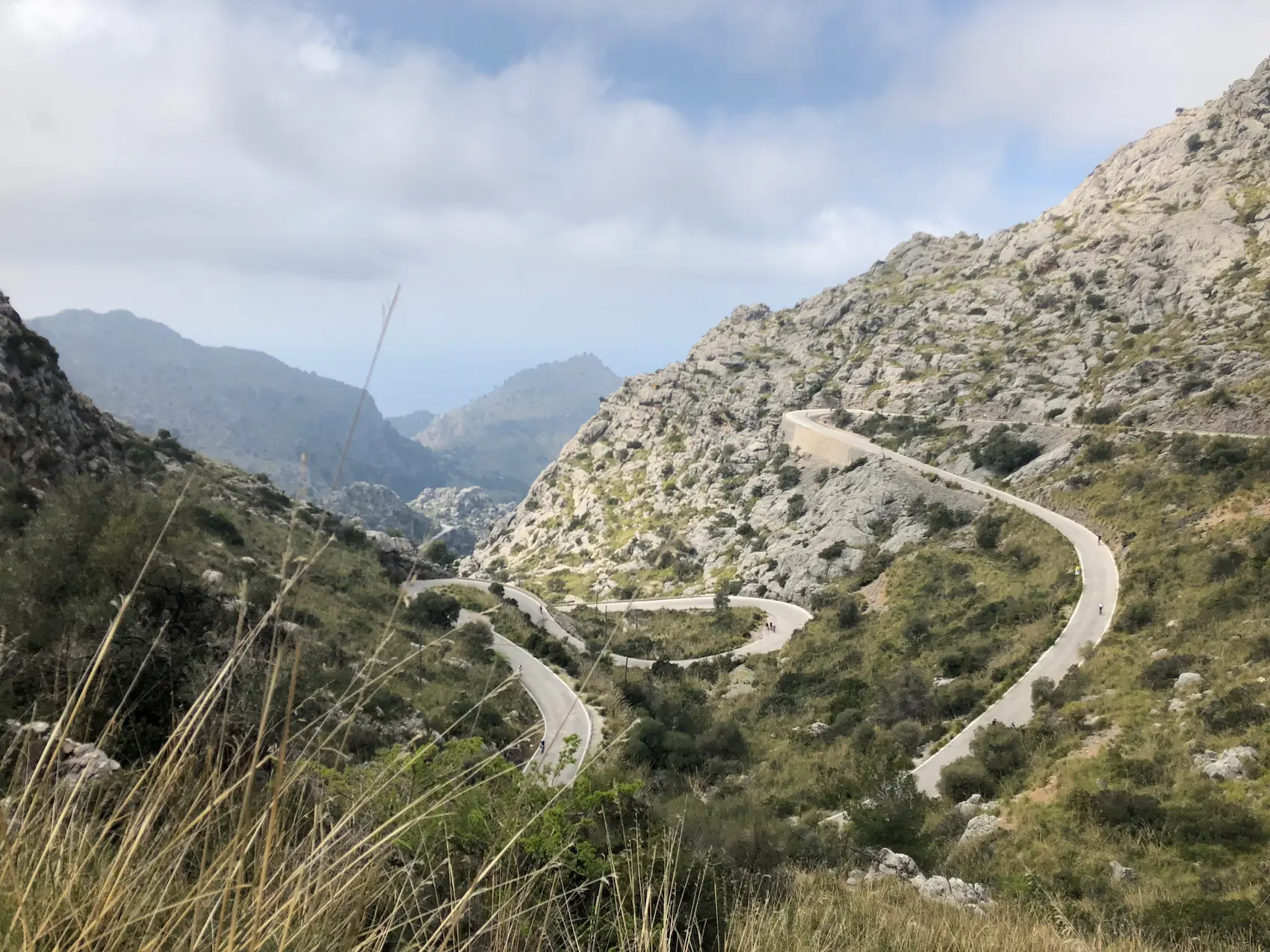
Sa Calobra is the climb that needs no introduction. 9.44 kilometres, 659 metres of climbing at 7.0% average. The top of the climb is Coll dels Reis at 682 metres. The Sa Calobra road opened in 1933, designed by the Italian-Spanish engineer Antonio Parietti — the same man who designed the road out to Cap de Formentor. Nus de sa Corbata — the famous 270-degree turn where the road loops over itself — sits near the end of the climb, with only 300–400 metres remaining to the top once you've passed it. Bradley Wiggins won the 2012 Vuelta a Mallorca here. The Strava-segment KOM is Tom Pidcock's 22:46 from December 2022. The descent down is technically demanding, particularly in the upper half, where blind hairpins meet narrow road. Be cautious: it's not unusual for buses and oncoming traffic to bring everything to a complete stop around a corner you can't see through. Plan for it.
At the bottom there's a restaurant and a café that serve hot food. Some groups linger; others, like me, fill bottles and head back up. Water needs vary wildly with temperature — bring more than you think on a warm day.
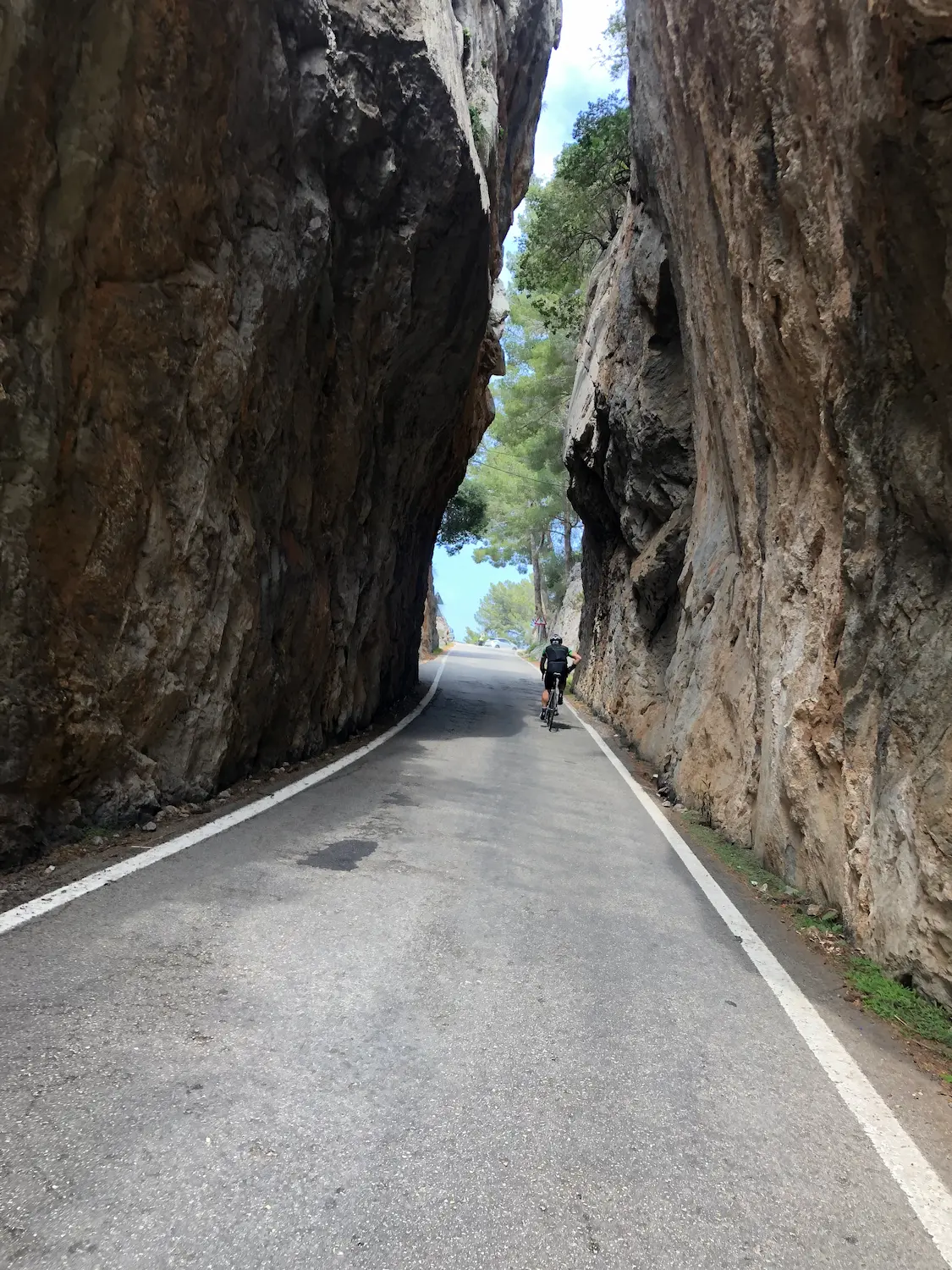
The climb back up rewards a controlled start. The first section runs through vegetation and lower forest with some shelter from wind. You'll pass the famous narrow section between two rock walls. Then the landscape opens up and the wind picks up across the exposed middle stretch — and from here you can look up and see the serpentines you're about to ride, stacked above you on the cliff face. Find your rhythm on watts and pulse. The climb gives you back what you spend on it if you stay patient through the middle.
Once you've come back down from Coll dels Reis to the bridge junction, the cafe fills up with cyclists. Coffee, Coke, ice cream when the weather earns it. 15 to 30 minutes of pause depending on the day.
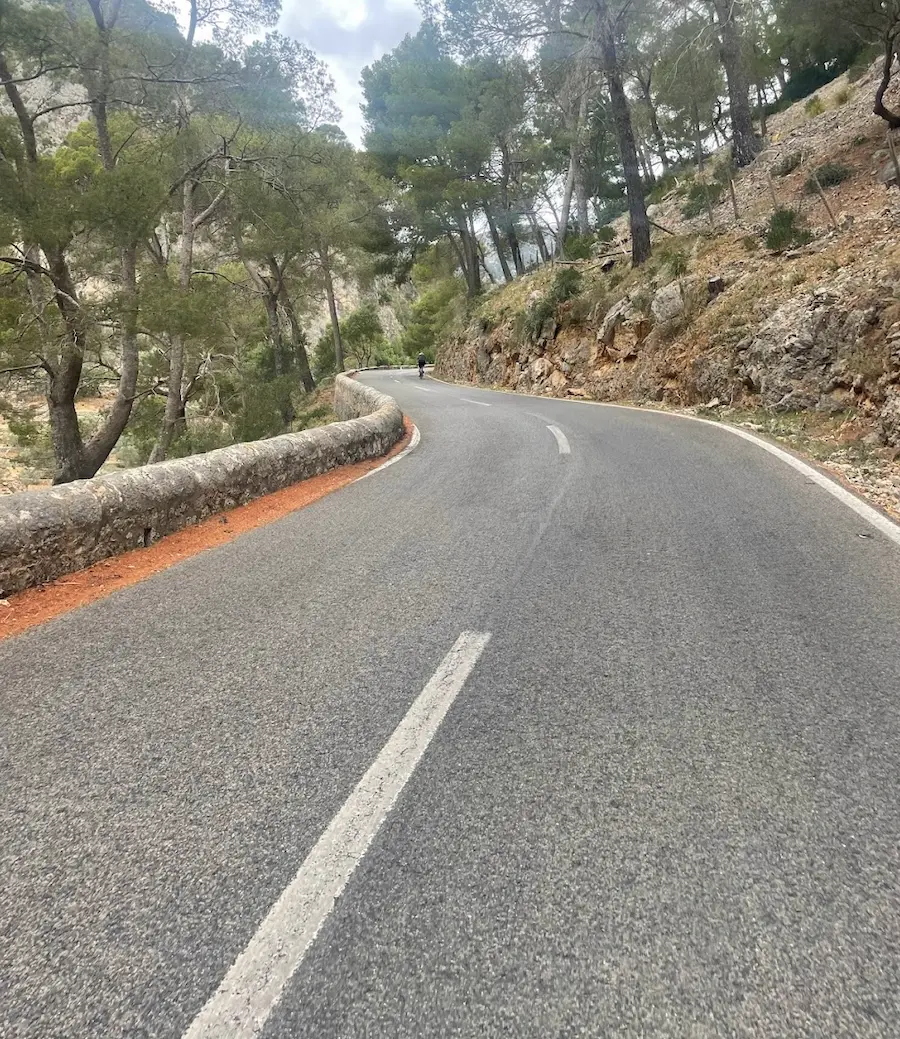
The route home is a quieter pleasure. Back toward Repsol with 170 metres of climbing left in the legs, then a left turn just before the petrol station onto Coll de Femenia. From there it's a long, descending road back to Port de Pollença — sweeping bends, good asphalt, the bay coming into view through the trees. The ride finishes naturally at Stay Restaurant or one of the others by the water in Port de Pollença, with a cold drink and the satisfaction of having done the day.
This is the queen stage. Ride it once, properly, and you understand why people come back to Mallorca year after year.
This is the loop that anchors any serious week on Mallorca. I've ridden it more than once, and the thing I notice every time is how the day breaks into chapters. Sa Batalla is the warm-up — long enough to count, regular enough that you find your rhythm without thinking. The terrace section early on, where the road switches back tightly enough that you can look down and see riders below you, gets me every time.
The middle stretch from Repsol to the Coll dels Reis bridge is where I keep the watts honest. It's tempting to push through this section because Sa Calobra is what you came for, but spending too much here costs you on the climb back up. Cafe by the bridge, fill the bottles, turn off toward Coll dels Reis.
Sa Calobra itself is everything you've heard. The descent demands respect — there's a stretch in the upper half where I once came around a hairpin to find a tour bus halted by oncoming traffic, the road completely stopped. I made the brake. Others have not. Take it slower than you think you need to.
The climb back up is where the day gets honest. I start controlled, find my rhythm in the lower forested section, then settle into the pulse number I want to hold through the open middle stretch. Looking up at the switchbacks above you while you're grinding through the middle is one of cycling's better moments — partly fear, partly anticipation.
The ride home down Coll de Femenia, with the bay opening up below you and the day's work behind you, is the quiet payoff. By the time you're at Stay Restaurant in Port de Pollença, you understand why this is the day every Mallorca week is built around.
Kilometre by Kilometre
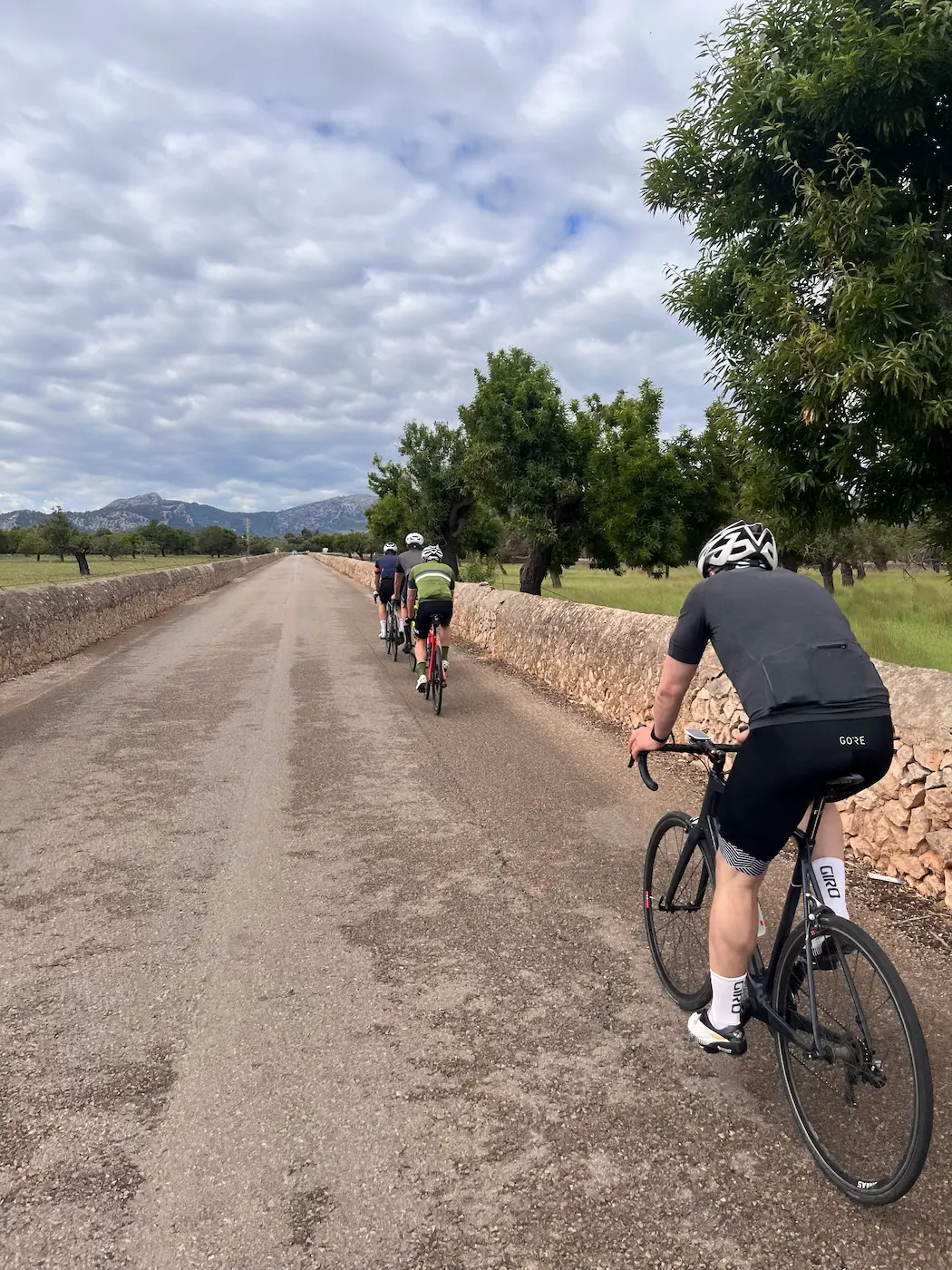
Roll south from Port de Pollença on the same quiet inland roads you'd take on a flat day. Aim to be on the bike by 9am — the early start beats both heat and Sa Calobra traffic. Caimari sits at the foot of Sa Batalla.
Olive groves either side of the road as the climb begins, then the serpentines stack tightly enough that you can look down and see riders below you. First four km are honest, regular climbing. A short flat around km 16 lets you breathe; a longer flat at km 17.5 is useful if you've overcooked it. From km 18 it pitches up to the Repsol petrol station at the top.
From Repsol the road climbs another 100 m before descending toward the famous bridge junction. Small kiosk-café for water — useful both before and after Sa Calobra. Turn off here toward Coll dels Reis.
Don't underestimate this one. 2.66 km at 5.9% averaging, 160 m of elevation. Spending too much here costs you on the climb back from Sa Calobra. From the top, roll down to the cove on the same road you'll come back up.
Technically demanding, particularly in the upper half. Blind hairpins meet narrow road; buses and oncoming traffic can bring everything to a complete halt around a corner you can't see through. Take it slower than you think you need to. Pass Nus de sa Corbata — the famous 270-degree turn where the road loops over itself.
Restaurant and café serve hot food. Some groups linger; others fill bottles and head back up. Water needs vary wildly with temperature — bring more than you think on a warm day.
9.44 km, 659 m, 7.0% average. Sheltered start through vegetation and lower forest. Pass the famous narrow section between two rock walls. Then the landscape opens up and the wind picks up across the exposed middle stretch — look up and you can see the serpentines you're about to ride, stacked above you on the cliff face. Find rhythm on watts and pulse.
The top of the Sa Calobra climb is the same Coll dels Reis you came up from the bridge. Descend the 2 km back to the bridge junction, where the café fills up with cyclists. Coffee, Coke, ice cream when the weather earns it. 15 to 30 minutes of pause depending on the day.
From the café, the road undulates back toward the Repsol petrol station. There's still around 170 m of climbing in the legs before you reach it.
Just before reaching Repsol, turn left onto Coll de Femenia. From here it's a long, descending road back to Port de Pollença — sweeping bends, good asphalt, the bay coming into view through the trees. Finish at Stay Restaurant or one of the others by the water.
Gallery
Route map & elevation profile
Key Climbs
The climbs we single out in MallorcaColl de sa Batalla
Cat 2Coll dels Reis (Gorg Blau)
Cat 3Sa Calobra
Cat 1Highlights
- •Sa Calobra's hairpin bends seen from below — nothing in European cycling looks like this
- •The terrace section on Sa Batalla early in the climb, where the road switches back so tightly you can look down and see riders below you
- •The view from Coll de Femenia on the way home: Pollença Bay opening up below you, the day's work behind you
- •The café stop at the bridge kiosk by Coll dels Reis — where everyone meets between the climbs
- •Nus de sa Corbata: the 270-degree bend where the road crosses over itself, 300–400 metres from the top
Must know
- ⚠Roll out by 9am. Two reasons: heat later in the day, and traffic on Sa Calobra. Both get worse the longer you wait.
- ⚠The Sa Calobra descent is technically demanding, especially in the upper half. Narrow road with corners where you can't see through — buses and oncoming traffic can bring everything to a stop. Take it steadier than instinct says.
- ⚠Bring more water than you think you need. What feels like enough at the top of Coll dels Reis can run short climbing back up from sea level in the heat.
- ⚠Coll dels Reis (2.66 km / 5.9%) comes right before the Sa Calobra descent — and you ride the same road back up afterwards. Keep something in reserve here.
Café & Water
- km 20Restaurant Coll de sa Bataia
Drinks and snacks. The classic meeting point for groups before the descent to the bridge.
- km 26Bar Els Arcs
Kiosk café at the junction towards Sa Calobra. Fill bottles here — both on the way down and after climbing back up.
- km 38Restaurant Sa Calobra
Hot food and drinks at the foot of the climb. Fill everything you have before starting the ascent.
Frequently asked questions
- How long and hard is the Sa Calobra climb?
- Sa Calobra is 9.44 km long with 659 metres of climbing at a 7.0% average gradient. It finishes with Nus de sa Corbata — the 270-degree turn where the road crosses over itself, 300–400 metres from the top. The Strava segment KOM is Tom Pidcock's 22:46 from December 2022.
- Can I ride Sa Calobra and Sa Batalla in the same day?
- Yes — that's exactly what this route is. Sa Batalla (7.83 km / 4.9%) comes first as the warm-up, then Coll dels Reis and Sa Calobra. 2,108 metres of climbing over 105 km in total. A hard day, but one of the most iconic in European cycling.
- What is the KOM on Sa Calobra?
- The Strava segment KOM is Tom Pidcock's 22:46 from December 2022. Bradley Wiggins won the Vuelta a Mallorca here in 2012.
- What makes the Sa Calobra descent technically demanding?
- The upper half has corners where you can't see through, on a narrow road. Buses and oncoming traffic can bring everything to a stop. Take it steadier than instinct says — and remember you're riding the same road back up afterwards.
Know a better line?
Submit your local route and get featured with your own author profile, Strava, Instagram and Buy Me a Coffee link.
Share a Route → →Similar routes
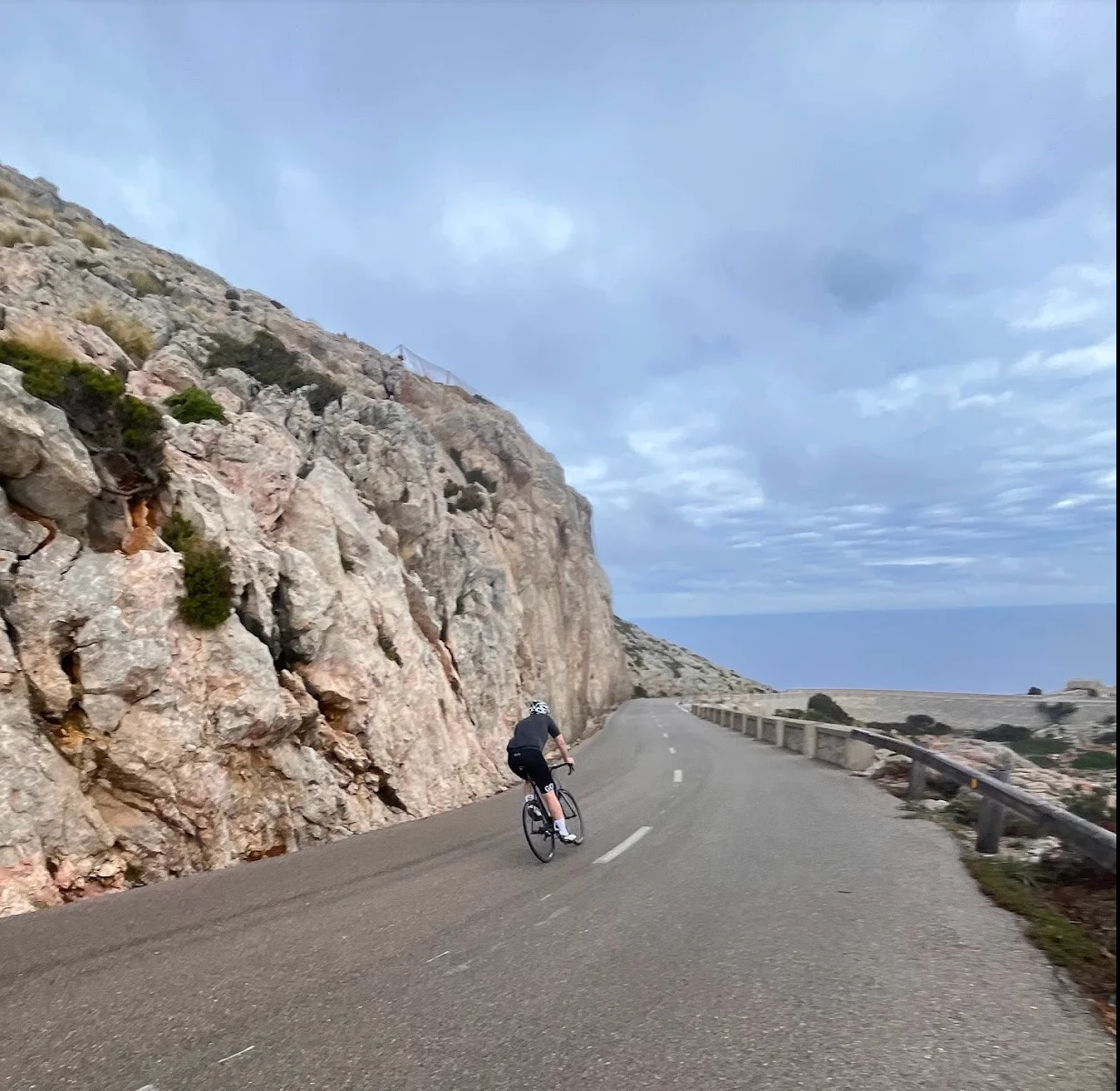
Cap de Formentor, Sa Batalla & Sa Calobra
Same Sa Calobra queen-stage core, with Cap de Formentor added at the start
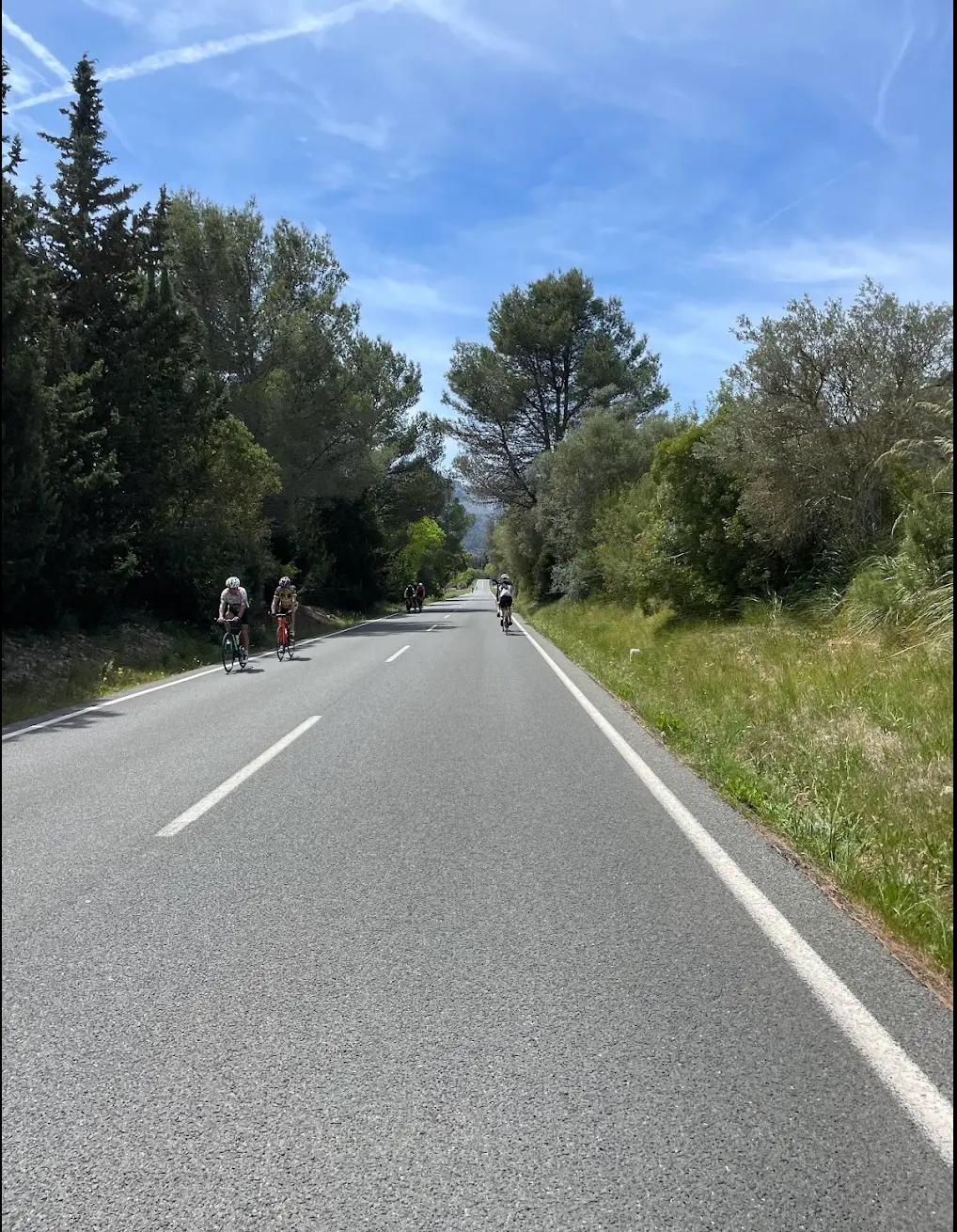
Coll de Femenia & Sa Batalla Loop
Same Coll de Sa Batalla, shorter return without Sa Calobra detour
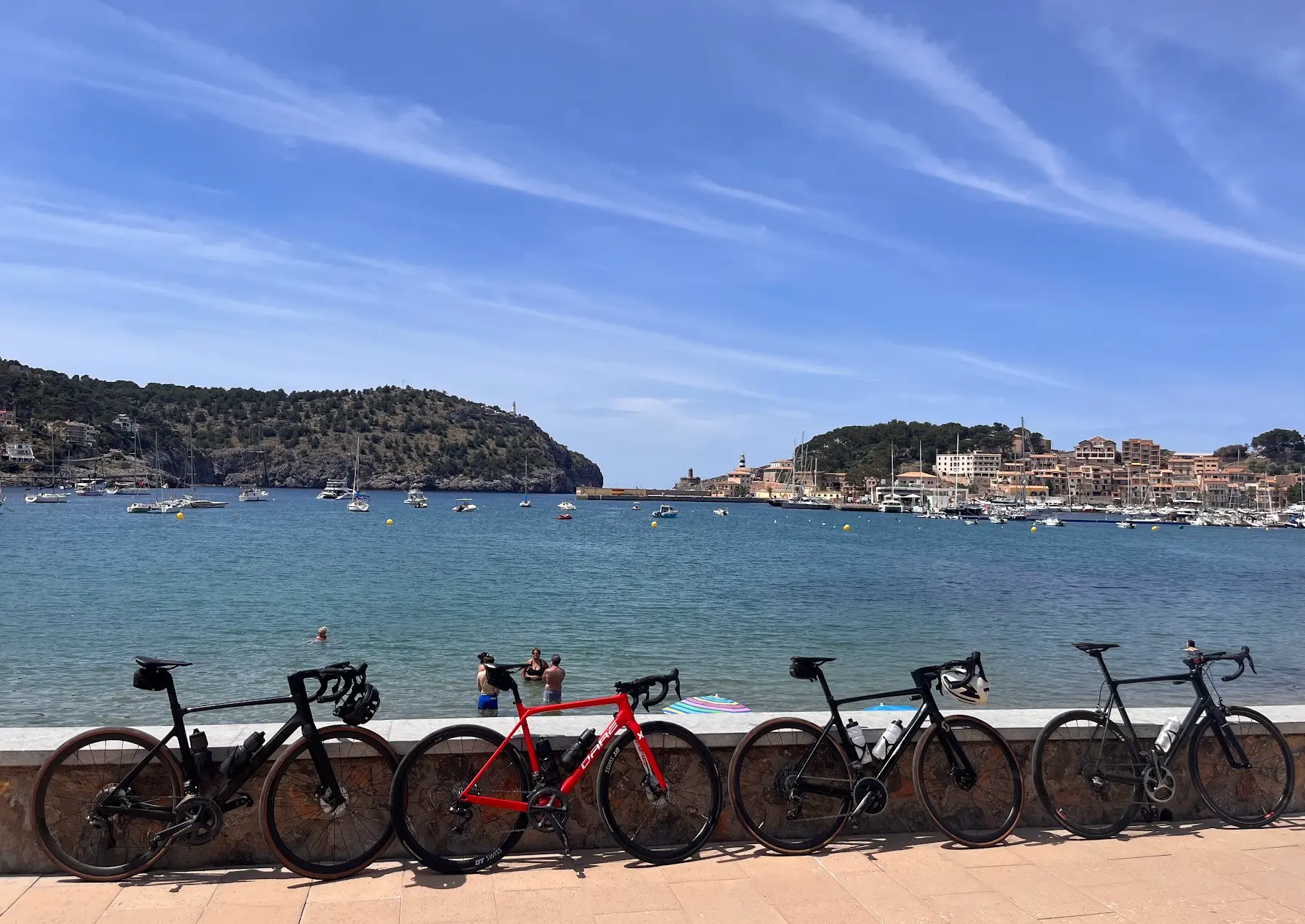
Coll de Sóller & Puig Major
Different queen-stage challenge — Coll de Sóller and Puig Major instead of Sa Calobra