Sognefjellet vs Trollstigen: which should you cycle?
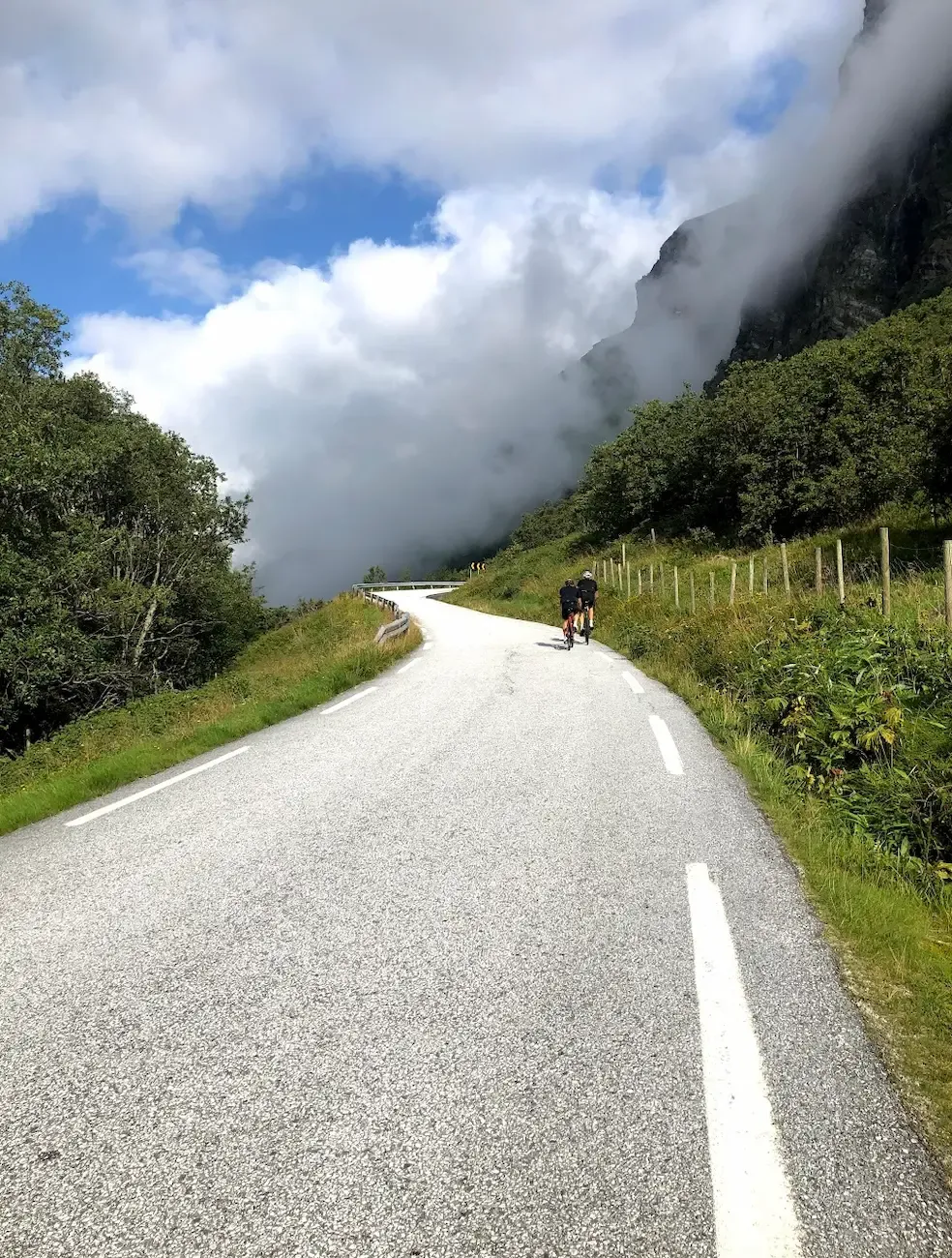
Sognefjellet is longer, higher and more remote — a 45 km climb to 1,434 metres with sustained exposure to the high mountains. Trollstigen is shorter and more theatrical — an 11 km climb with 11 named hairpins stacked beneath Stigfossen waterfall. Both are fantastic. If you have one day and want the most scenery per kilometre, ride Trollstigen. If you want a full high-mountain day out, ride Sognefjellet.
Last verified: 22 April 2026.
At a glance
The quick comparison for anyone choosing between the two:
| Sognefjellet | Trollstigen | |
|---|---|---|
| Road number | FV55 | Fv63 |
| Highest point | 1,434 m (Mefjellet) | 858 m (Stigrøra) |
| Climb from easy side | 45 km at 2.7% from Lom | — |
| Climb from hard side | 21 km at 6.5% from Fortun | 11 km at 7.6% from Isterdalen |
| Total elevation gain | 1,238–1,464 m | ~838 m |
| Signature feature | Snow walls and high fjell | 11 hairpins, Stigfossen |
| Typical season | Mid-May to early October | Mid-May to October/November |
| Night closure in opening period | Yes (20:00–08:00) | No |
| Coach/tourist traffic in July–August | Moderate | High |
| Time to ride each side | 3–5 hours | 1–2 hours |
Choose Sognefjellet if…
- You want a full, immersive high-mountain day out — not a single climb but a sustained traverse at altitude.
- You want snow walls that last well into the summer. Sognefjellet is Norway's highest mountain road crossing; snow banks are visible along the road through June and often into July.
- You want to avoid coach traffic. Sognefjellet has far fewer tour buses than Trollstigen, even in peak season.
- You want a climb you can pace yourself into. The 45 km from Lom at 2.7% is a long, steady rhythm — no savage ramps.
- You want the sense of crossing a season. You start in green valley and end among skiers. It's a rare feeling.
Choose Trollstigen if…
- You have a single afternoon and want maximum drama per kilometre. Trollstigen delivers its full effect in under two hours of riding.
- You want to climb into a spectacle, not through one. The eleven hairpins stacked below Stigfossen are unlike anything else in Norway — and you spend the entire climb looking up into them.
- You prefer a shorter, steeper effort. The 11 km at 7.6% is a sustained climb rather than a long grind — a different kind of hard.
- You want a climb you can combine with other Western Fjords riding in the same day — Geiranger, Eagle Road, the Eidsdal ferry.
- You like coffee and waffles at the top. The café at the plateau is a proper Norwegian stop, right above the last hairpin.
From Tommy, who has ridden both
Two completely different climbs. Sognefjellet is much longer and much harder — you feel the altitude, the wind, the scale of the landscape. Trollstigen is shorter, but the concentration of switchbacks and the theatre of the rock walls around you make it unforgettable in a different way.
Both climbs have genuinely fantastic scenery — the kind that makes you forget how hard the effort is while you're in it. That's the common thread. The difference is in character: Sognefjellet is remote and elemental, Trollstigen is dramatic and compressed.
If you have time for both
Many Norwegian cycling itineraries link both within the same week — they sit in different regions (Sognefjellet on the Lom–Skjolden axis in Jotunheimen, Trollstigen on the Åndalsnes–Geiranger axis in Romsdalen) but can be connected via one of the scenic ferries across the Storfjord. Plan Sognefjellet as a full day, Trollstigen as a half. Keep one rest day between — the legs will notice.
If you have a week in Western Norway and can only pick one, pick the one that matches how you like your riding: long and remote, or short and theatrical. Neither is the wrong answer.
Opening dates: which opens earlier?
Sognefjellet usually opens slightly earlier because the clearing crews can work from both Lom and Fortun simultaneously, and the Lom side is lower in altitude at its approach. Trollstigen depends on avalanche assessment above the hairpins, which can delay opening even when the road itself is clear. Typical pattern: Sognefjellet mid-May, Trollstigen late-May to early-June. In 2026 Sognefjellet opened on 2 April (unusually early) and Trollstigen opened on 27 April — both record-early.
If you're planning a trip in the first half of May, check both opening dates before you commit. Both articles on the Playbook are updated each season.
Frequently asked questions
Is Sognefjellet or Trollstigen harder to cycle?
It depends on how you measure it. Sognefjellet is harder in total effort — 1,238 metres of climbing over 45 km from Lom, or 1,464 metres over 21 km from Fortun. Trollstigen is harder per kilometre — 838 metres over 11 km averaging 7.6%. Sognefjellet punishes endurance; Trollstigen punishes power.
Which pass has better views?
Different kinds of "better". Sognefjellet gives you a sustained high-mountain landscape — snow walls, alpine lakes, and Norway's highest road crossing for an hour or more of riding. Trollstigen concentrates its view into the eleven hairpins with Stigfossen thundering alongside. Most cyclists who've ridden both can't pick one.
Can I ride both in the same trip?
Yes — they sit in different regions (Sognefjellet in Jotunheimen, Trollstigen in Romsdalen) but both are within a week-long Western Norway itinerary. Common routing: base in Lom for Sognefjellet, move to Åndalsnes for Trollstigen via one of the Storfjord ferries. Leave a rest day in between.
Which one has more traffic?
Trollstigen, by a clear margin. It's closer to the cruise-ship tourism centre at Geiranger and the road is narrower, so coach traffic and motorhomes make more of an impression. Sognefjellet has less of both and feels quieter, especially above Sognefjellshytta.
Which opens earlier in the year?
Usually Sognefjellet, though the gap is small — typically 1–2 weeks. In 2026 Sognefjellet opened on 2 April (unusually early, Maundy Thursday) and Trollstigen opened on 27 April — both record-early. Check both article pages for the current season's confirmed dates.
Do cyclists pay tolls on either pass?
No. All Norwegian mountain roads are free for cyclists — no tolls for bicycles on either Sognefjellet or Trollstigen.
Sources
- Statens Vegvesen — road status
- Nasjonale Turistveger — Sognefjellet
- Nasjonale Turistveger — Geiranger–Trollstigen