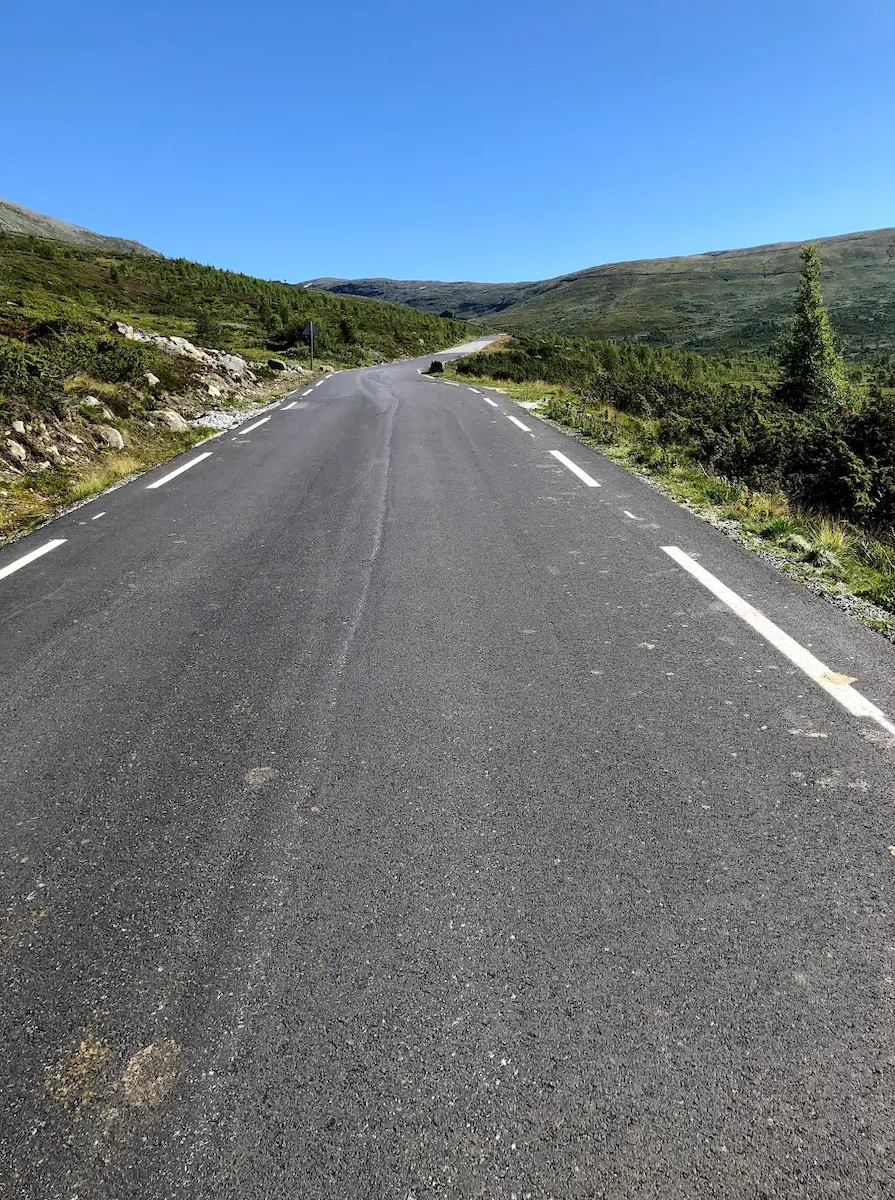
When does Aurlandsfjellet open? 2026
Aurlandsfjellet (FV243), the Snow Road between Aurland and Lærdal, typically opens around 1 June and closes in mid-October. The exact date depends on snow clearance. The Aurland side to Stegastein viewpoint is open year-round; the full pass over the plateau is the seasonal section. Full cycling season runs from early June to mid-October.
Last verified: 19 October 2026.
Opening pattern year by year
Aurlandsfjellet is a National Tourist Route and a seasonal road — not a winter-maintained one. The pass across the plateau (roughly the middle 25 km) is closed every winter once the first serious snowfall lands, and reopened the following spring when conditions allow. The Aurland side up to Stegastein stays open all year, which is why the viewpoint itself is a year-round attraction even when the pass is snowed in.
| Year | Opening | Note |
|---|---|---|
| 2026 | Around 1 June (expected) | Weather-dependent; confirm with Statens Vegvesen |
| 2025 | Around 1 June | Normal winter |
| 2024 | Late May | Light snowpack |
| 2023 | Early June | Typical pattern |
Sources: Nasjonale Turistveger, Statens Vegvesen. Year-by-year data is verified where an official announcement exists; earlier years are typical-range estimates and will be replaced with sourced figures as they become available.
Why does the opening date vary?
The plateau section sits at 1,306 metres and catches hard winters head-on. Clearing starts in May from both sides — Aurland and Lærdal — but fresh snow and wind can close work down for days. The road itself is narrow, with long single-lane stretches, and until the plateau is safe for regular traffic the gates stay shut. In warm springs the road has opened in late May; in heavy-snow years it has slipped into mid-June.
Even after the pass opens, snow walls linger along the road well into June and July. That's where the name comes from — Snøvegen, the Snow Road. If you want to ride it with the snow banks still visible from your saddle, aim for the first two weeks of the open season.
From our ride over Aurlandsfjellet
I rode Aurlandsfjellet in August 2020 in almost perfect weather. I started in Aurland, climbed the full 17 km to the plateau, and rode down to Lærdal — then turned around and climbed back over the top before descending to Aurland again. Two passes in one day, from both sides.
The lower part of the Aurland climb is the memorable stretch. Tight serpentines, the fjord dropping away below you, and Stegastein anchored in the landscape long before you reach it. You do see it on the climb, but you can't really stop — there's a climbing rhythm to hold and the parking area is busy with cars. The real Stegastein moment is the descent. Stopping there on the way down is worth the whole day out: the platform cantilevered 650 metres above Aurlandsfjord, and a view that is genuinely unlike anywhere else in Norway.
One thing worth knowing: by August there was no snow left on the road. None. If the "Snow Road" imagery is what drew you in, go earlier — late May or June — when the snow banks are still 2–4 metres high along the plateau. August gives you a cleaner, drier climb but without the visual drama of the name.
Planning your ride
Which side is better to start from?
Aurland. The 17 km climb from sea level averages 7.5% with the Stegastein hairpins in the lower half — by far the more dramatic side. The Lærdal climb is longer and gentler, and the scenery is more subdued. If you're doing it one-way, start in Aurland for the spectacle and descend to Lærdal.
When to go for the Snow Road experience
Early June to mid-July is when the snow banks along the plateau are still high and the name earns itself. From late July onwards the banks melt back and the landscape becomes rocky alpine tundra — still stunning, but different.
Pack for the summit
It can be 20°C in Aurland and 5°C on the plateau. A windproof jacket is essential for the descent; leg warmers and gloves are sensible even in July. The descent into Aurland is long, fast, and cold if you climbed up sweating.
Stegastein on the way down
Don't try to stop at Stegastein on the climb — the parking is busy with tourist buses and you'll be in climbing focus. Stop on the descent instead. The platform is free to walk out on, and it's the defining moment of the whole ride.
Food and water
There is no service on the pass itself. Aurland and Lærdal have cafés and shops; between them, you are alone for 40-plus kilometres. Two full bottles and something to eat in the back pocket is the minimum.
Traffic
The lower Aurland section up to Stegastein sees steady tourist-car traffic in July and August — they're all heading for the viewpoint, not the plateau. Above Stegastein the road empties out dramatically. Early mornings (before 9:00) are the quiet window on the lower climb if that matters to you.
Can I ride the Aurland side before the pass opens?
Yes. The 8 km climb from Aurland to Stegastein is open year-round and is a legitimate ride in its own right — 650 metres of climbing, the full hairpin sequence, and the viewpoint at the top. On a clear April or May day, with snow still visible above Stegastein and the fjord below, it is one of the finest short climbs in Norway.
The road above Stegastein, towards the plateau and Lærdal, is physically closed with gates and is not rideable before the official opening. Do not try to push past the barriers — the plateau is exposed, and weather can turn in an hour.
Frequently asked questions
How high is Aurlandsfjellet?
The highest point on the pass is 1,306 metres above sea level, on the plateau between Aurland and Lærdal.
How long is the climb from Aurland?
Approximately 17 km from Aurland at sea level to the plateau summit, with 1,286 metres of elevation gain — averaging 7.5%. The first 8 km to Stegastein is the steepest and most dramatic section, with tight serpentines above the fjord.
Is Stegastein open all year?
Yes. The 8 km stretch from Aurland up to Stegastein viewpoint is kept open year-round. The section above Stegastein, across the plateau to Lærdal, is the seasonal part of the road.
Do cyclists pay tolls on Aurlandsfjellet?
No. Aurlandsfjellet and all other Norwegian mountain roads are free for cyclists — there are no tolls for bicycles anywhere in Norway.
When does Aurlandsfjellet close in autumn?
Typically around mid-October, though earlier closures happen during early snowfall. Once the first serious snow lands on the plateau, the pass shuts until the following spring. The Aurland side to Stegastein remains open through winter.
Is Aurlandsfjellet hard to cycle?
The climb from Aurland is demanding — 1,286 m in 17 km averages 7.5% with no real flat sections. It's classed as HC / epic in cycling terms. The Lærdal side is longer but gentler. Both sides are fully paved and the road is in good condition.