When does Sognefjellet open? 2026 season
Sognefjellet (FV55) opened to cyclists and motor traffic on 2 April 2026 following the winter closure. During the opening period, the road is closed at night between 20:00 and 08:00 until conditions allow full operation — typically by late May. Full cycling season runs from mid-May to early October.
Last verified: 26 October 2026.
Opening history year by year
Sognefjellet is cleared from both sides — Lom in the east and Fortun in the west. In recent years the eastern side has opened first, up to Sognefjellshytta, before the full pass becomes passable. In extreme winters the snow walls reach up to 14 metres high.
| Year | Opening date | Note |
|---|---|---|
| 2026 | 2 April | Maundy Thursday. Night closure 20:00–08:00 in opening period |
| 2024 | Late April | Normal winter, snow walls up to 5 metres |
| 2022 | Before Easter (from east) | Ten days earlier than the previous year |
| 2021 | 26 April | Full pass opened same day |
Sources: Vestland County Council, Norwegian Public Roads Administration, Fri Flyt. History will be expanded as data is verified.
Why does the opening date vary?
Sognefjellet sits high. Mefjellet, the highest point on the pass, reaches 1,434 metres above sea level — Norway's highest mountain road crossing. Clearing starts early in spring when snow and weather conditions allow, but progress is often interrupted by fresh snowfall and strong winds that quickly make the road impassable again.
Even after official opening, the road can close on short notice during severe weather. The 20:00–08:00 night closure continues for weeks into the opening period, precisely because drifting snow in darkness is unpredictable and dangerous.
From our ride over Sognefjellet
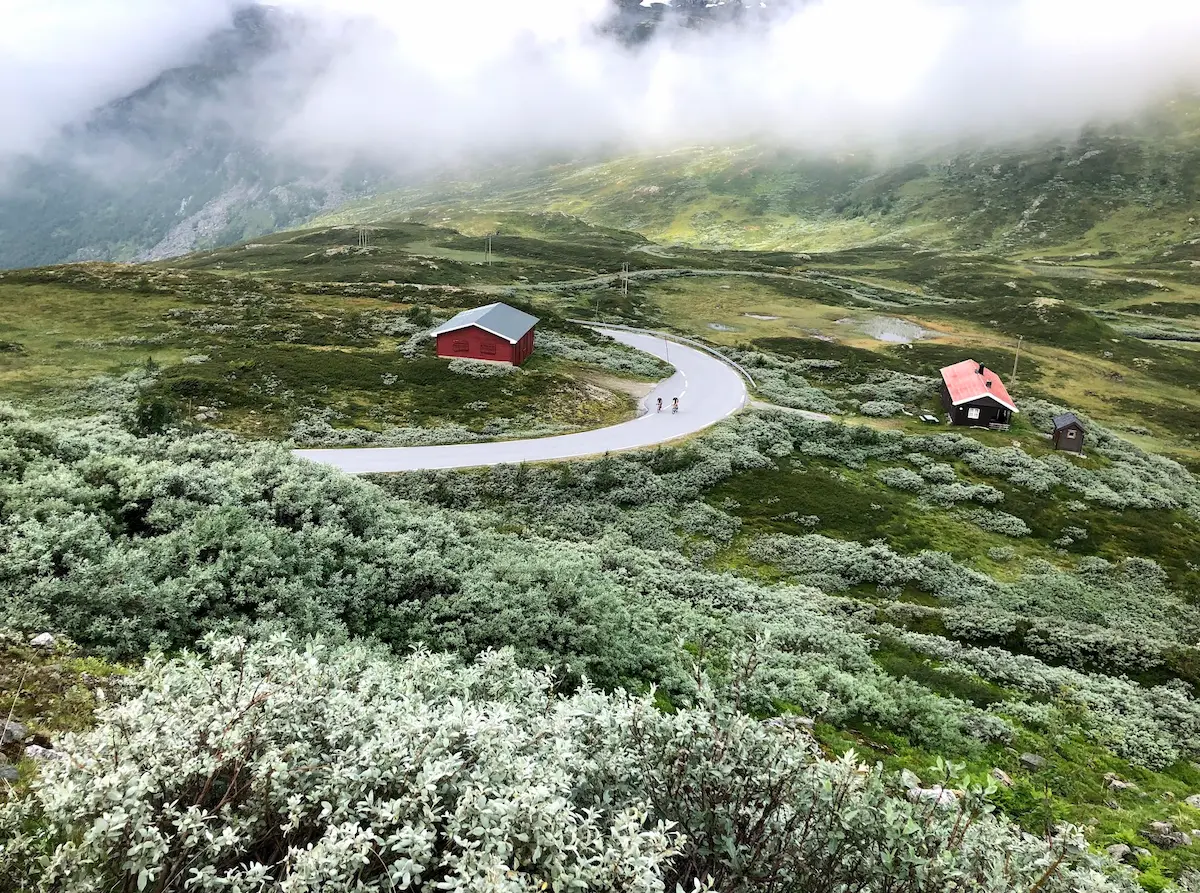
The last time I rode Sognefjellet was 31 May 2022. I climbed from Lom up to Sognefjellshytta. Down in the valley everything was bare and green, and you almost forget where you're headed. But after a few hundred metres of climbing the landscape shifts abruptly: the snow walls rise 2–3 metres, the air gets colder with every kilometre, and suddenly you're surrounded by white.
The tarmac was dry the whole way up, but the cold catches you. I rode in leg warmers and a jacket — just enough.
The most surreal moment was rolling up to Sognefjellshytta and seeing skiers outside. At the summit it's still winter, even when the valley floor at Lom is in full summer. That's the real feeling of having crossed a season in one ride.
We set off from Lom at 14:00, and there was surprisingly little traffic — far less than I'd expected. Afternoons and early evenings are underrated times to ride Sognefjellet, especially during the opening period.
Planning your ride
Pack for the summit, not the valley
It can be 20°C in Lom and 5°C at Sognefjellshytta. You'll be grateful for:
- Leg warmers or long tights
- Windproof jacket — essential for the descent
- Arm warmers and a neck gaiter
- Gloves, even in June
Sweat from the climb combined with wind on the descent is a bad mix. Always keep an extra layer in your back pocket.
Food and water
Sognefjellshytta and Turtagrø hotel both offer service and bottle refills, but these are few stops along a long route. Always carry enough water for the full loop.
Traffic timing
Afternoons and early evenings are low-traffic windows. Early mornings are quiet too, but colder. Avoid midday in July and August if you want the road to yourself.
Night closure
During the opening period, the entry gates close at 20:00 and reopen at 08:00. If you're already on the mountain you can descend, but no one is let in after 20:00. Plan your start so you cover most of the ride in daylight.
The climbs
From Lom, you climb 1,238 metres over 45 km to Sognefjellshytta — a long, moderate ascent averaging 2.7%. From Fortun, where the western climb starts, it's 1,464 metres over 21 km — averaging 6.5% with sections reaching 10%. Considerably harder.
Can I ride Sognefjellet before the official opening?
No. The road is physically blocked by barriers and flanked by snow walls that make passage impossible and dangerous in bad weather.
The one exception is early spring when the eastern side opens before the west. You can ride from Lom up to Sognefjellshytta as an out-and-back — a fine experience, especially combined with lunch at the cabin among the skiers, and 1,238 metres of climbing in guaranteed snowy scenery.
Frequently asked questions
How high is Sognefjellet?
Mefjellet, the highest point, is 1,434 metres above sea level — Norway's highest mountain road crossing.
How long is Sognefjellsvegen?
The pass itself, from Lom to Fortun, is approximately 76 km. The climb from Lom to Sognefjellshytta is 45 km with 1,238 metres of elevation gain.
How steep is Sognefjellet?
From Lom the road rises at 2.7% on average over 45 km to Sognefjellshytta. From Fortun on the western side it's considerably steeper — 6.5% average over 21 km with sections up to 10%.
Do cyclists pay tolls on Sognefjellet?
No. All Norwegian mountain roads are free for cyclists — no tolls, on any route.
When does Sognefjellet close in autumn?
Normally in November, though earlier closures happen during heavy snowfall. In recent years the closure has varied from late October to mid-November.
Ride these routes
Ride these climbs
Explore these regions
Sources
- Vegvesen – road status
- Vestland County Council
- Fri Flyt