Do cyclists pay tolls in Norway?
No. Cyclists do not pay road tolls in Norway. The AutoPASS system that collects tolls from motor vehicles does not apply to bicycles — you ride through every toll gate in the country without paying, without registering, and without any equipment. Ferries are a separate matter: cyclists are treated as foot passengers and pay a small pedestrian fare, typically under 100 NOK on most crossings.
Last verified: 22 April 2026.
The simple answer: cyclists pay nothing at toll gates
Norway has an extensive network of road tolls — on bridges, tunnels, ring roads around major cities, and several mountain roads — all operated through the AutoPASS system. The AutoPASS regulations explicitly exempt non-motorised traffic. Bicycles, pedestrians, and passengers in any vehicle are not subject to toll charges. For cyclists, this is a clean rule: ride through any toll station in the country without stopping, without paying, and without needing any tag or account.
This applies to every toll station in Norway, without exception. City rings like Oslo's and Bergen's, rural bridges, subsea tunnels, mountain roads — none of them charge cyclists. The system is the same whether you're riding a racing bike, a touring bike with panniers, or an e-bike.
What about the AutoPASS gates and sensors?
AutoPASS stations are automated. There's no barrier and no staff to check. As a cyclist you simply ride through — the cameras and sensors are designed to read motor vehicle license plates, not bicycles. Some stations have a separate cycle path or sidewalk that routes you around the main toll gantry; where there isn't one, cycling through the lane for motor traffic is legal and expected.
If a station has a physical barrier (rare on public roads, more common on private roads), there is always a way for cyclists to pass — either a parallel cycle path, a pedestrian gate, or a signed workaround. You should never find yourself paying a toll to ride a bicycle in Norway.
Ferries: cyclist treated as foot passenger
Ferries are different. Most Norwegian fjord crossings require a fare, and cyclists do pay — but only at the pedestrian rate, typically between 50 and 100 NOK depending on the crossing. You don't need to book in advance. Turn up at the quay, wheel your bike on, pay at the purser's desk or the automated machine. On short crossings you may not be charged at all.
The two main operators on the west coast are Fjord1 and Norled. Both treat cyclists the same way: bike boards as foot passenger, small fee, no reservation needed. Express boats (longer-distance passenger boats, not car ferries) charge a small bike surcharge on top of the passenger fare — usually 50–100 NOK.
Practical tips for cyclists at ferries
Board first, pay on the boat
On car ferries, cyclists typically board first or alongside pedestrians — before the vehicle queue. You pay on board, usually to a staff member with a card reader walking through the passenger lounge. Don't queue in the car lane.
Tie the bike, or hold it
Most car ferries have bike racks or a dedicated bike corner on the vehicle deck. On choppy crossings, lash the bike or stay with it. Smaller fjord ferries are usually calm enough that a standing bike will stay upright.
Go outside for the crossing
The fjord scenery is the best part of the journey. Go up on deck. Even on a ten-minute crossing it's worth it.
Express boats need more planning
Hurtigbåt (high-speed passenger boats, e.g. Bergen–Sogndal) have limited bike space and sometimes require booking. Check the operator's website before you plan around one of these, especially on summer weekends. Regular car ferries almost never require booking for a cyclist.
A note on mountain roads
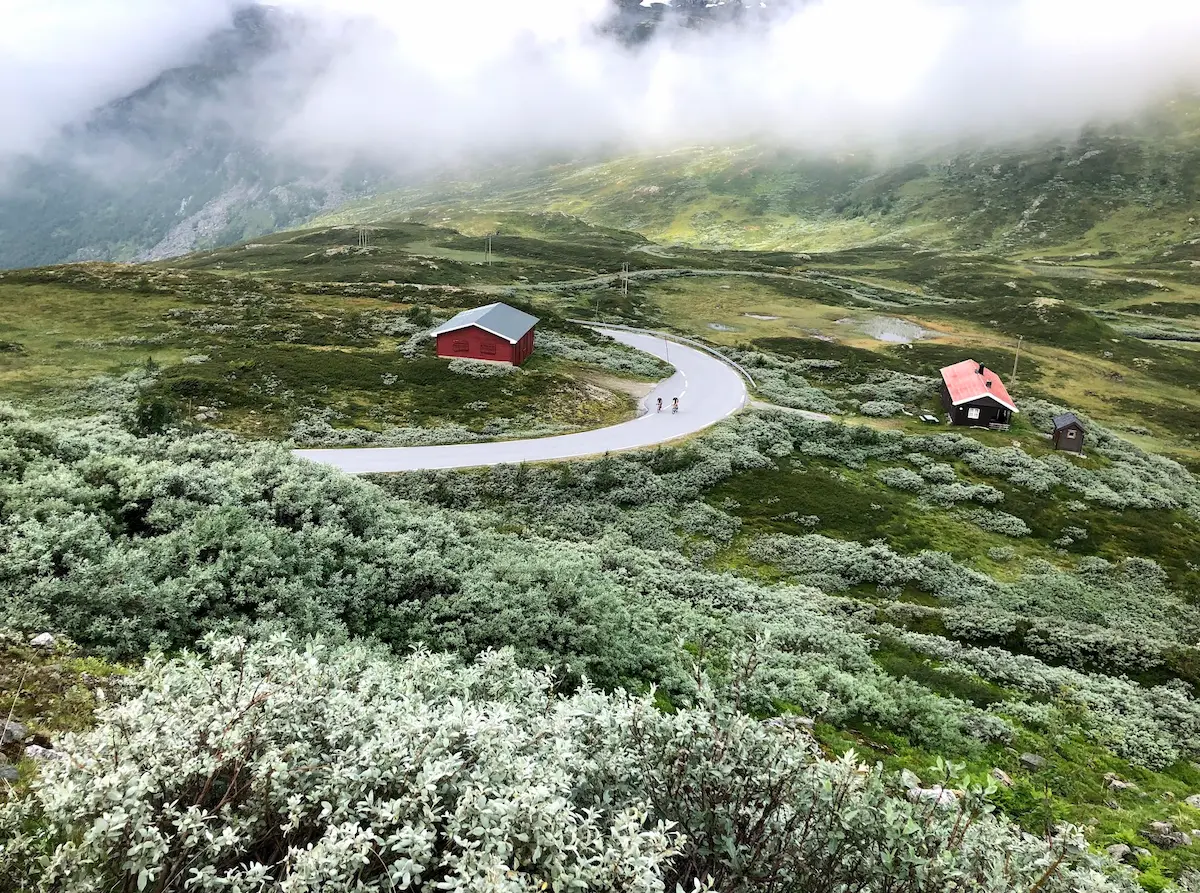
All Norwegian mountain roads — Sognefjellet, Trollstigen, Aurlandsfjellet, Valdresflya, Gaularfjellet, Lysebotn — are free to cyclists. There are no private toll passes on public mountain roads. Some private gravel roads in the mountains charge a small fee, but these are off-tarmac and rarely on any cyclist's itinerary.
Frequently asked questions
Do cyclists pay tolls in Norway?
No. The AutoPASS system that collects road tolls from motor vehicles does not apply to bicycles. Cyclists ride through every toll station in Norway without paying, without registering, and without any equipment.
Do I need an AutoPASS tag to cycle in Norway?
No. AutoPASS tags (called "brikke") are only for motor vehicles. Cyclists are exempt from the entire toll system and do not need a tag, an account, or any registration.
Do cyclists pay on Norwegian ferries?
Yes, but only the pedestrian fare — typically 50 to 100 NOK depending on the crossing. Cyclists are treated as foot passengers. You don't need to book; turn up at the quay and pay on the boat.
Which Norwegian ferries are free for cyclists?
A handful of short public ferry crossings are free for cyclists and pedestrians — mostly small local crossings. On most longer fjord ferries (e.g. on the Sognefjord, Hardangerfjord, Storfjord), there is a pedestrian fare. Specific free-ferry status changes year to year; check the operator's website if cost matters to you.
Can I cycle through Oslo's toll ring for free?
Yes. The Oslo toll ring (Osloringen) and Bergen's equivalent apply only to motor vehicles. Cyclists ride through without paying and without needing any tag or account.
What about subsea tunnels and bridges?
Same rule: free for cyclists. However, many subsea tunnels in Norway ban cyclists entirely on safety grounds — there is usually a ferry alternative or a surface route. Before planning a tunnel in your route, check whether it's open to cyclists at all. If it is, you pay nothing.