Is Trollstigen open? Status and 2026 season
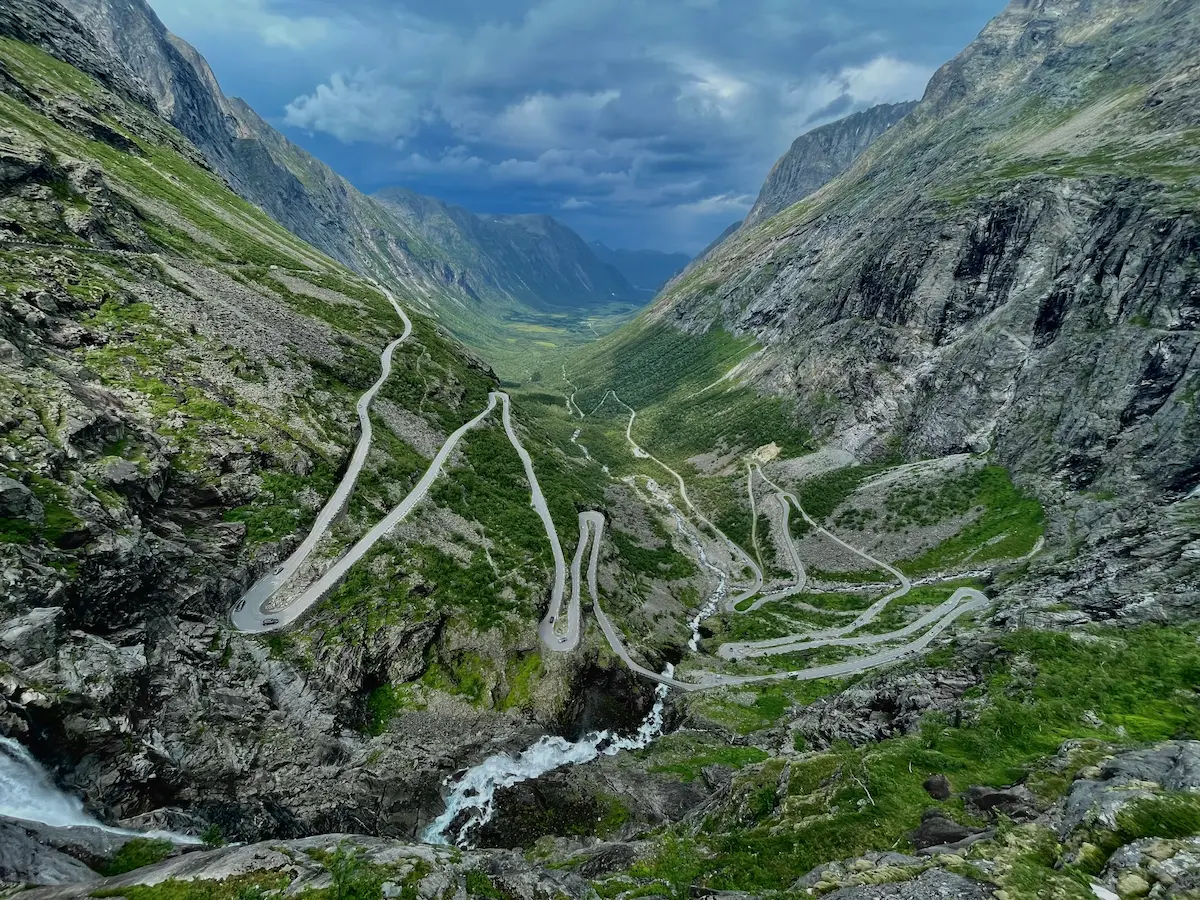
Trollstigen (Fv63) opened on 27 April 2026 — record-early compared to the typical late-May to early-June opening. The road was closed for most of 2024 after a series of rockfalls and reopened on 11 July 2025 after extensive rockfall protection work. The 2026 summer season ran without a planned closure, but the work has resumed for the autumn: from Monday 28 September the hairpin section between Trollstigfoten and Trollstigplatået is shut on weekdays from 07:00 to 18:00 until 30 October. It reopens each evening at 18:00 and stays open around the clock at weekends. Heavy rain can also close the road at short notice — check Statens Vegvesen for live status before riding. Source: NRK Møre og Romsdal (https://www.nrk.no/mr/stenger-delar-av-vegen-til-trollstigen-1.18026405).
Last verified: 26 October 2026.
Opening history year by year
Trollstigen's opening date moves with the weather. Some years the road clears by mid-May; in heavy-snow years it has slipped into June. The 2024–2025 closure for rockfall protection work was an exception, not the pattern.
| Year | Opening | Closing |
|---|---|---|
| 2017 | 24 May | 13 November |
| 2018 | 11 May | 7 December |
| 2019 | 16 May | 30 October |
| 2020 | 12 May | 30 November |
| 2021 | 22 May | 16 November |
| 2022 | 9 June* | 7 December |
| 2023 | 29 May | — |
| 2024 | Early June | Closed mid-June for the season (rockfalls) |
| 2025 | 11 July | Normal autumn closing |
| 2026 | 27 April† | — |
*2022 opened late due to winter avalanche damage to the café and road at the plateau. †2026 is the earliest recorded opening since the route was paved — typical openings sit between 11 May (2018) and 9 June (2022). Source: NRK Møre og Romsdal.
Why does the opening date vary?
Trollstigen sits under steep, avalanche-prone mountains, and clearing operations depend on how the winter snowpack settles. The highest point on the road is 858 metres — cold enough that snow lingers well into June in heavy years. Statens Vegvesen starts clearing operations in April, but it's the avalanche risk on the slopes above the hairpins that controls when the road actually opens. Until geologists and avalanche specialists sign off, the gates stay shut.
Rockfalls and closures: 2024, 2025 and the autumn 2026 works
The mountainside above Trollstigen has been shedding rocks for as long as the road has existed. Through the early 2020s the incidents piled up:
- 2021: A rock hit the bonnet of a car on the hairpins.
- 2022: A winter snow avalanche damaged the café building and parts of the road.
- 2023: A motorcyclist was struck by a rockfall.
- April 2024: A landslide took out a section of the road.
- June 2024: Six rockfalls in ten days, culminating in a rock smashing through a car window.
After the June 2024 incidents, Møre og Romsdal county closed the hairpin section for the rest of the year. Emergency rassikring — rockfall mitigation — work started that autumn. Crews released unstable boulders, installed new barriers, and stabilised the worst slopes. The road reopened on 11 July 2025.
Earlier in 2025, a plan was discussed to close Trollstigen for parts of August in 2025, 2026, and 2027 to complete the work. That plan was revised, and the 2026 summer season ran without a planned closure. The work resumed at the end of the season instead.
From Monday 28 September 2026, Møre og Romsdal county closes Fv63 between Trollstigfoten in Isterdalen and Trollstigplatået on weekdays from 07:00 to 18:00, until 30 October. Crews are bolting, cabling and netting the rock cuttings west of Stigfossbrua — a continuation of the work started in autumn 2025. The road reopens at 18:00 and stays open around the clock at weekends. The rest of Fv63 stays open, so the plateau is still reachable from Valldal on the Sunnmøre side; the eleven hairpins are not.
Riding the hairpins in October 2026: take a weekend, or start after the gates reopen at 18:00 — and confirm the day on Statens Vegvesen before you drive to Åndalsnes. Source: NRK Møre og Romsdal, 16 September 2026 (https://www.nrk.no/mr/stenger-delar-av-vegen-til-trollstigen-1.18026405).
Short closures during heavy rain remain possible on top of the planned works — the county road administration shuts the road temporarily when rainfall raises the risk of fresh rockfall. Fv63 was closed for exactly that reason over the weekend of 19–21 September 2026. These closures are usually measured in hours, occasionally a day or two.
A larger long-term project to secure the entire route is planned for the future but depends on toll funding and is several years away.
From our ride over Trollstigen
I rode Trollstigen on 21 August 2021, from both sides, on a day that was almost too warm. The Åndalsnes side is the spectacular one — there's no real argument. You spend the approach through Isterdalen staring up at the cliff face, trying to work out where the road actually goes, and then you're in it: eleven switchbacks stacked on top of each other, Stigfossen crashing down the rock wall alongside you, and the peaks of Kongen and Bispen bracketing everything above.
The Valldal side is a different animal. It's a long, gradual grind up through the Valldal valley, much less dramatic visually, and on a hot day the climb drags. It's the sensible way up if you're linking Trollstigen into a longer route — but if you're here for the hairpins, start in Åndalsnes.
The café at the top does a proper Norwegian waffle with brown cheese and jam. After 11 kilometres of climbing, it earns its place in the day.
Planning your ride over Trollstigen
Which direction?
From Åndalsnes for the spectacle — you climb into the hairpins and watch Stigfossen and the switchbacks unfold above you. From Valldal for a gentler warm-up if you're linking it into a longer loop.
When to go
July and August are peak tourist traffic. Coaches, motorhomes, and rental cars share the narrow road with you. Early morning (before 9:00) and late afternoon (after 18:00) are quieter. June and early September are the sweet spot for traffic, if the weather holds.
Gearing
The climb sustains around 8% for most of its length with steeper ramps in the hairpins. A compact chainset (50/34) with a 30- or 32-tooth cog is fine for most riders. It's sustained, not savage.
Food and water
There is a café at the plateau but nothing on the climb itself. Carry two bottles in warm weather. Weather changes fast near the top — a rain jacket is worth its weight even on clear days.
Safety
The road is paved, well-maintained, and wider than its reputation suggests. The hairpins have barriers on the outside. The real risks are coach traffic on the descent and loose gravel near the edge — take the descent conservatively, especially on the corners.
Frequently asked questions
Is Trollstigen open right now?
Yes, but with a weekday restriction from 28 September 2026. Trollstigen opened on 27 April 2026, record-early, and ran a full summer season. From Monday 28 September the hairpin section between Trollstigfoten and Trollstigplatået is closed Monday to Friday from 07:00 to 18:00 until 30 October for rockfall protection work — open every evening from 18:00 and all weekend. Heavy rain can close the road at any time on top of that. Check Statens Vegvesen's live traffic information before riding.
When does Trollstigen typically open?
Typically mid-May. In heavy-snow years it has opened as late as mid-June. The highest point sits at 858 metres, so snow clearance and avalanche assessment determine the exact date.
Will Trollstigen close again for rockfall protection work?
It already has, for the autumn. From 28 September 2026 the hairpin section is closed on weekdays from 07:00 to 18:00 until 30 October while crews bolt, cable and net the rock cuttings west of Stigfossbrua. Evenings and weekends stay open, and the plateau is still reachable from the Valldal side. The 2026 summer season itself ran without a planned closure. A larger long-term project to secure the whole route is planned but depends on toll funding and is several years away.
Which side is better to cycle from — Åndalsnes or Valldal?
The Åndalsnes side (north) is the spectacular climb, with the eleven hairpins and Stigfossen waterfall directly alongside. The Valldal side (south) is a longer, more gradual approach through the Valldal valley. For the iconic experience, ride up from Åndalsnes.
How hard is the Trollstigen climb?
The climb from Isterdalen to the plateau is approximately 11 km with ~838 m of elevation gain, averaging around 7.6%. The steepest hairpins touch 10–12%. It's a sustained effort but not savage — most riders manage with a compact chainset and a 30–32t cassette. You may also see Trollstigen cited as 7.9 km at 8.2% — that's the Strava segment covering the hairpins only, from the first bend up to Stigrøra. The from-Isterdalen number above includes the flat valley approach before the first hairpin.
How high is the Trollstigen plateau?
The highest point is Stigrøra, at 858 metres above sea level. The visitor centre and café sit on the plateau just above the top hairpin.
Ride these routes
Ride these climbs
Explore these regions
Read next
Sources
- Vegvesen – road status
- Fjord Norway — Trollstigen status
- Møre og Romsdal fylkeskommune
- NRK, VG — rockfall coverage 2021–2024