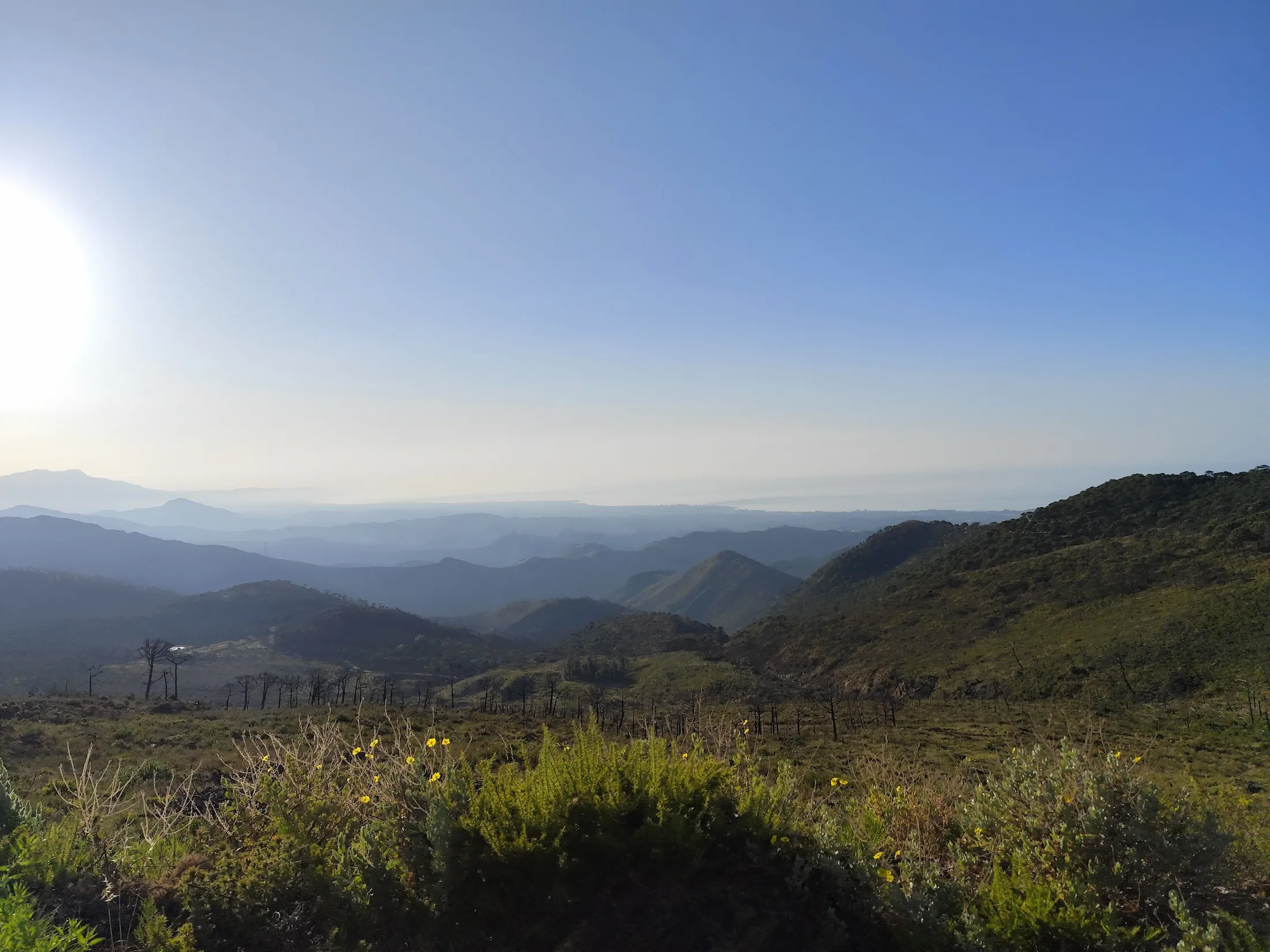
Region at a glance
All Routes in Costa del Sol
2 handpicked road-cycling routes in Costa del Sol.
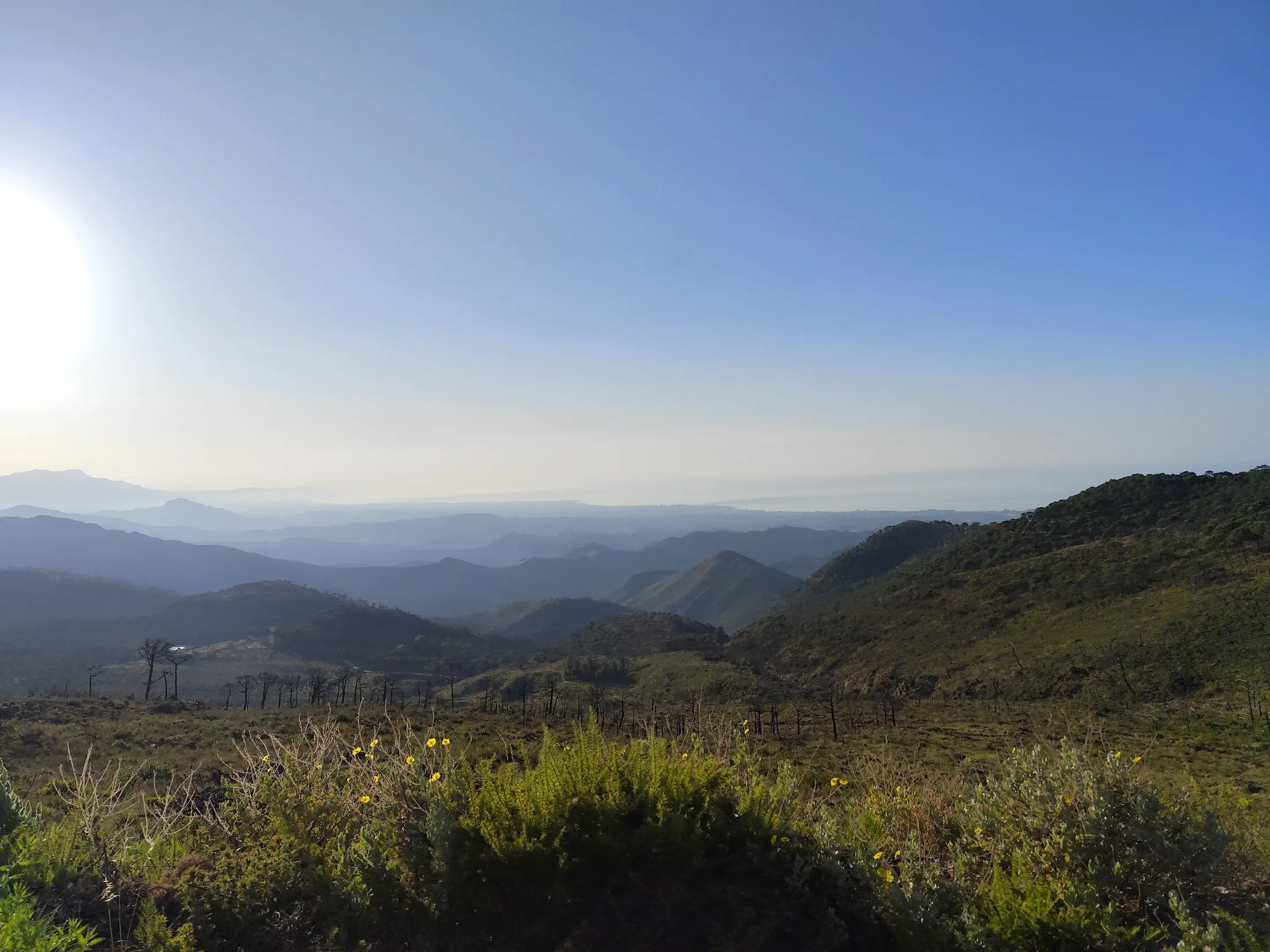
Estepona — Sierra Bermeja Loop
A brutal and beautiful loop from Estepona harbour that climbs Sierra Bermeja's red peridotite flanks to 969 metres — with views of Gibraltar and the African coast — before winding through the white villages of inland Andalusia and descending back to the Mediterranean. One of the most concentrated climbing experiences in southern Spain, compressed into 89 kilometres. The opening sets the tone: the road climbs straight out of Estepona harbour and barely lets up for the first 16 kilometres. This opening climb is Peñas Blancas, the route's Hors Catégorie monster. The MA-8301 is legendary for having virtually no straight sections — an endless succession of hairpins through dense Pinsapo forest, a protected Spanish fir that grows almost nowhere else in the world. By the time the summit area at Los Reales opens up at 969 metres, the better part of a thousand metres of climbing are in the legs and the coast is far below. On clear days the view stretches from Gibraltar to the Moroccan Atlas — two continents visible from the same saddle. What comes next is what makes the route. After the descent into the Andalusian interior, the landscape shifts entirely — from red peridotite rock to the olive groves and whitewashed hilltop villages of the Pueblos Blancos. Gaucín is the natural lunch stop, a quiet square with a couple of good restaurants well suited to cyclists on a long day. From here the return leg is anything but flat: another 500+ metres of climbing through a series of ridges — the A-377 ramp and the climb to Genalguacil among them — as the sting in the tail before the final descent back to the Mediterranean. Sierra Bermeja traps heat in summer — spring and autumn are the ideal seasons, and the winds (Levante from the east, Poniente from the west) can be real on the exposed upper sections. Come when the temperatures are moderate, pace yourself on the lower slopes, and this is one of the finest mountain days in southern Spain.
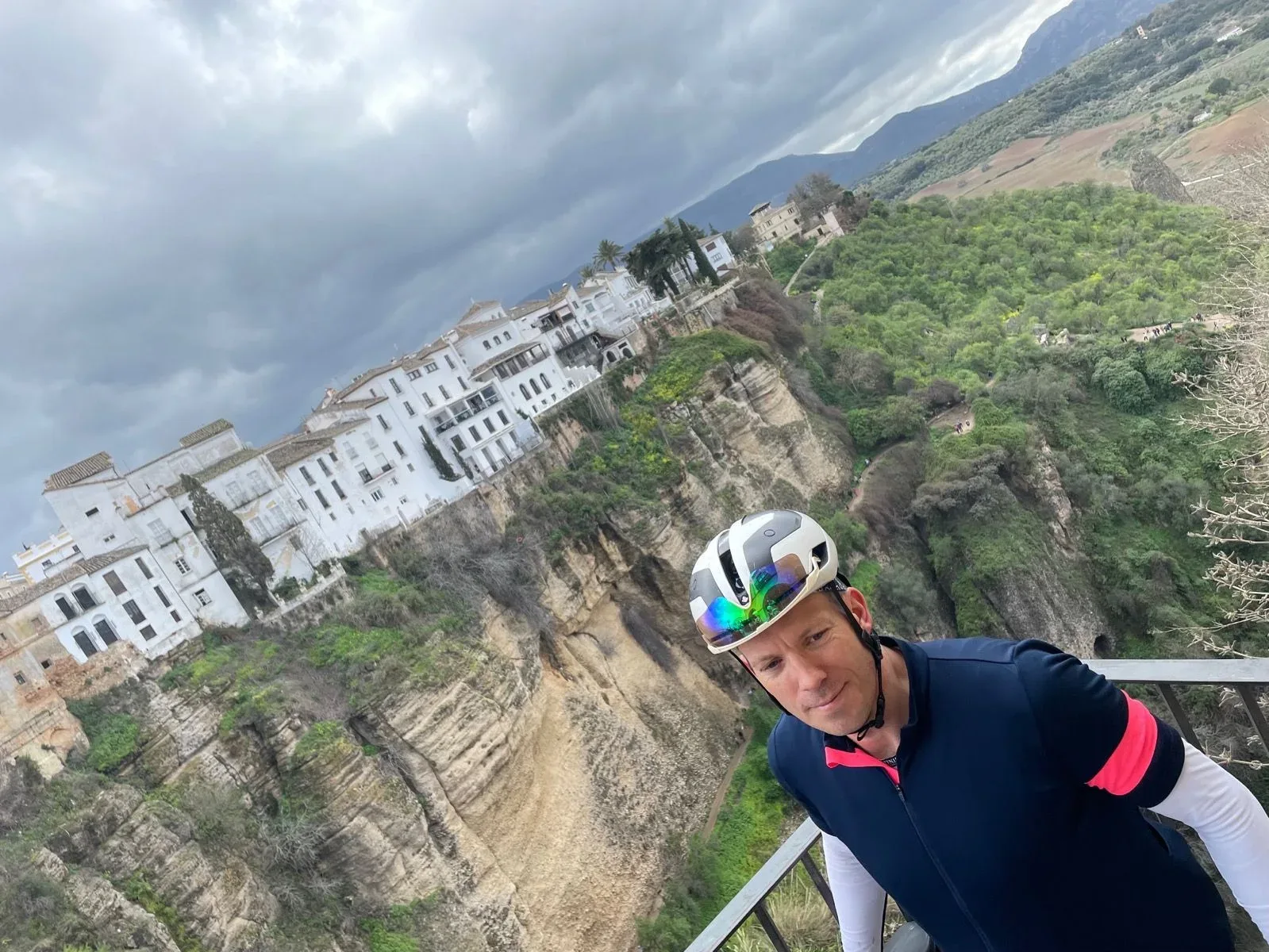
Marbella - Ronda - Marbella
A 151.2 km loop out of Marbella that trades the Costa del Sol for the Serranía de Ronda, climbing steadily to the clifftop town above El Tajo before a windswept return across the plateau. 2985 m of climbing, one regional classic ascent, and smooth tarmac throughout.
Costa del Sol is one of Europe's most distinct cycling regions — a coastal strip of just over 150 km between Gibraltar in the south and Málaga in the northeast, where Sierra Bermeja and Sierra de las Nieves rise directly out of the Mediterranean. The contrast is what makes it special: a single ride can take you from a harbour espresso in Estepona to cold mountain roads at 1000 metres with views over the Sierra Bermeja massif.
Read the full guide ↓Show less ↑
The region is less established as a cycling destination than Costa Blanca and Mallorca, but that is part of the appeal. There are fewer training camps, less traffic on the mountain roads, and a Spanish everyday life that has not yet been shaped around cyclists. The main climb — Peñas Blancas from Estepona — is nonetheless on par with anything in Spain, and has been used as a stage finish in the Vuelta a España. This is a region for cyclists looking for climbing in good weather without the queues.
When to go
The cycling season runs longer than on Costa Blanca — from October to May, climbing conditions are consistently good. The winter months (December to February) are the preferred period for those who want to avoid tourist traffic and still have dry roads. Coastal temperatures sit at 14–18 degrees, while the mountains can be 5–8 degrees cooler. March and April are the prime time for longer rides — warmer, longer days and little rain.
May and June are possible, but the hottest hours of midday should be avoided, especially on the coast. July and August are too hot for serious cycling — wait until October.
Where to stay
Estepona is the natural base for cycling on Costa del Sol. The town sits at the foot of Sierra Bermeja and Peñas Blancas, and most of the classic routes start from here. It is smaller and quieter than Marbella, has good cyclist infrastructure, and you are on the mountain roads within 20 minutes of the harbour. Málaga airport is 70 km away — about an hour's drive.
Marbella is an alternative if you prefer more of the coast and the tourist development. It is a little further to roll out to the Sierra Bermeja climbs (15–20 km), but the Marbella–Ronda loop is more direct from here. Choose Estepona if cycling is the main purpose, Marbella if you are combining cycling with a holiday.
The climbs that define Costa del Sol
*Peñas Blancas from Estepona* is the region's signature climb — 14 km at 6.3% average from sea level to the pass at 950 metres. The climb is long and steady, never brutal, with open views over the Mediterranean and the Sierra Bermeja massif all the way up. The Vuelta a España has used it as a stage finish, most recently in 2022 when Richard Carapaz won the stage, and it is one of the most reliable training climbs in Southern Spain. You barely see a car after the first few kilometres.
*Los Reales* is the extension on from the Peñas Blancas pass — 5.5 km at 7.7% average up to the TV tower at 1450 metres. Shorter, but significantly steeper than the main climb. It is the natural crown-on-top addition to a Peñas Blancas day, and from the summit you can see Gibraltar, the Moroccan coast and Sierra Nevada on clear days.
*Marbella–Ronda via Puerto del Madroño* is the classic inland ride. A 151 km loop with different roads out and back, on quiet mountain roads through the villages of the Serranía de Ronda, with Ronda itself as the turning point — one of Spain's most spectacular towns, built across a gorge. The climbing itself is moderate (4–5% average over 25–30 km), but it is the volume and the scenery that make it a signature ride.
What makes Costa del Sol different
Costa Blanca and Mallorca have a longer tradition as cycling destinations, and it shows — more training camps, more infrastructure, and a cycling culture built around the rider. Costa del Sol is not there yet. There are fewer dedicated cycling hotels, fewer cafés where you are expected to roll in wearing cycling shoes, and generally less congestion on the mountain roads. This is a region for cyclists who appreciate a quieter base.
Geographically, the difference is more pronounced than the climate. Costa del Sol has fewer but longer climbs than Costa Blanca — Peñas Blancas alone gives you nearly 1000 metres of elevation in a single climb. Mallorca has the Tramuntana classics and a more compact cycling topography. Costa del Sol works best for cyclists who want long climbing days in good weather and a little less company on the road.
Practical tips
Fill the bottles before leaving Estepona or Marbella — the Peñas Blancas road has no stopping options until you are back down. On the Marbella–Ronda loop, Casares or Gaucín are the natural stops along the way. Cash is still common in the small inland villages of Andalucía, so have some euros on hand. Stay off the N-340 coast road if you can — the mountain roads are much quieter and better surfaced. The sun can be strong even in March — bring sunscreen and long sleeves for early mornings in the mountains.
Frequently asked questions
- When is the best time to cycle on Costa del Sol?
- October to May. The winter months (December to February) give 14–18 degrees on the coast, dry roads, and quiet mountains. March and April are the prime time for longer rides. May and June can be hot in the middle of the day — ride early morning if you are there then. July and August are too hot for serious cycling.
- Where should I base myself for Costa del Sol cycling?
- Estepona is the natural base — you have Sierra Bermeja and Peñas Blancas right behind town, and you are on the mountain roads within 20 minutes. Marbella is an alternative if you are combining cycling with a holiday, but you have to roll an extra 15–20 km to reach the climbing roads. Málaga airport is 70 km from Estepona.
- What is the best climb on Costa del Sol?
- Peñas Blancas from Estepona — 14 km up to 950 metres, used as a stage finish in the Vuelta a España. You can extend with Los Reales to the TV tower at 1450 metres (5.5 km at 7.7%) for a hard summit ride. Marbella–Ronda via Puerto del Madroño is the classic inland alternative if you prefer volume over a single climb.
- How does Costa del Sol cycling compare to Costa Blanca?
- Costa del Sol has fewer but longer climbs than Costa Blanca. Peñas Blancas alone gives nearly 1000 metres of elevation, while Costa Blanca has a higher density of shorter categorised climbs around Calpe. Costa del Sol has a longer season window (warmer winters) and less cycling tourism — you barely see cars or other cyclists on the mountain roads. Costa Blanca has more established cycling infrastructure and is better suited for training camps.
- Do I need climbing gears for the Costa del Sol climbs?
- A standard compact 50/34 up front and 11–32 or 11–34 at the back is enough for Peñas Blancas (6.3% average) and Marbella–Ronda. For the Los Reales extension (7.7% average over 5.5 km on top of Peñas Blancas), you should have 11–34 or lower if you are tired. None of the climbs has consistently brutal sections — it is the volume and the heat that cost the most.