Marbella - Ronda - Marbella
About this Route
← Costa del Sol Cycling GuideA 151.2 km loop out of Marbella that trades the Costa del Sol for the Serranía de Ronda, climbing steadily to the clifftop town above El Tajo before a windswept return across the plateau. 2985 m of climbing, one regional classic ascent, and smooth tarmac throughout.
This is the ride I'd point anyone towards if they want to escape the coast for a proper mountain day out of Marbella. 151.2 km and 2985 m of climbing, a loop with a clear shape: inland and up, lunch in Ronda, then a long grind home across the plateau before dropping back to the sea.
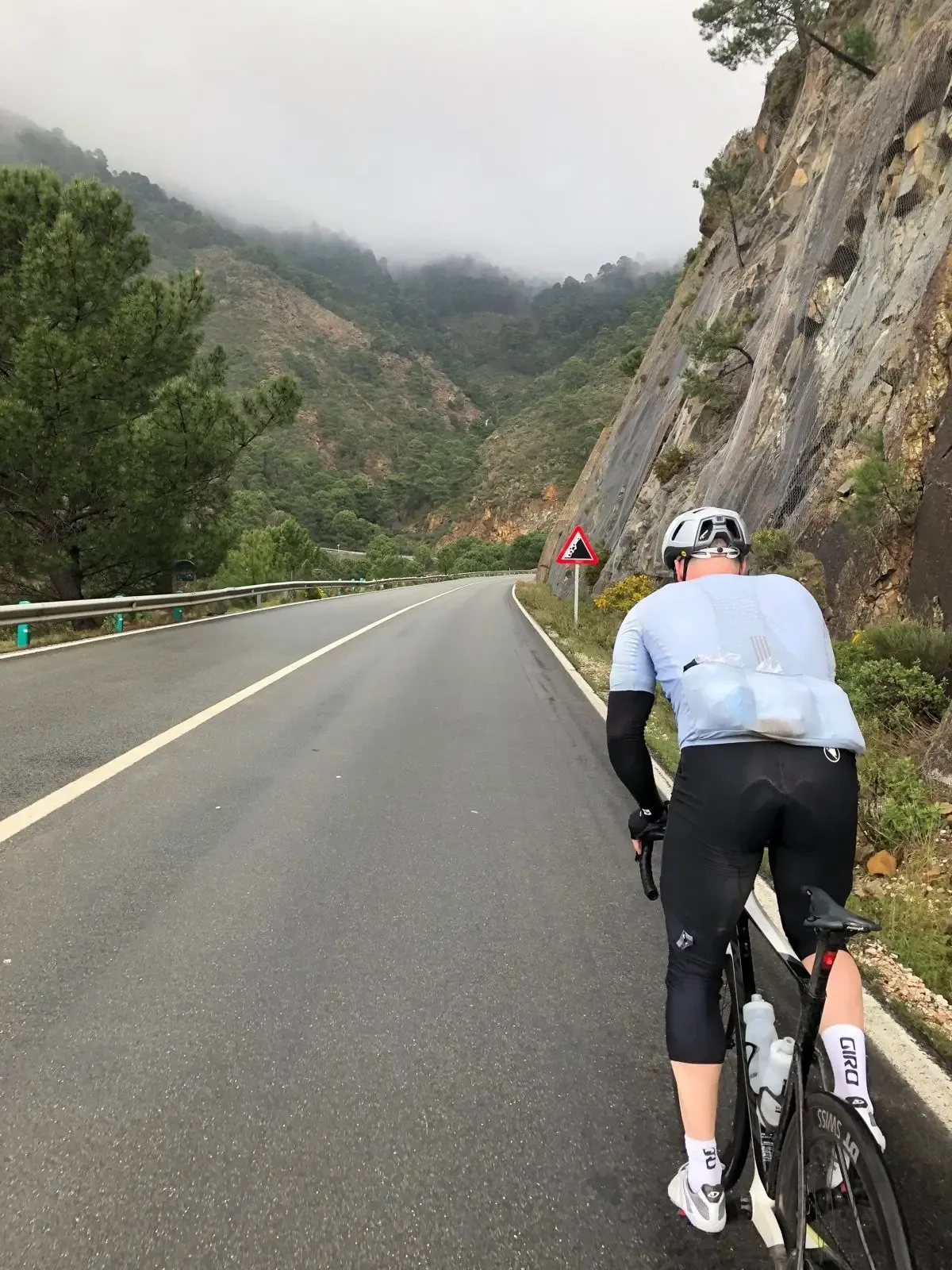
The climb to Ronda is my favourite in the area. Long, remarkably even, almost no traffic — the kind of gradient where you find a rhythm within the first kilometre and barely break it until the top. We had light drizzle hanging over the forest on the way up in March, and honestly it suited the mood: cork oaks dripping, tarmac dark and grippy, the Mediterranean haze slowly dropping away behind us. It's one of those climbs where the legs stay happy because the road never spikes.
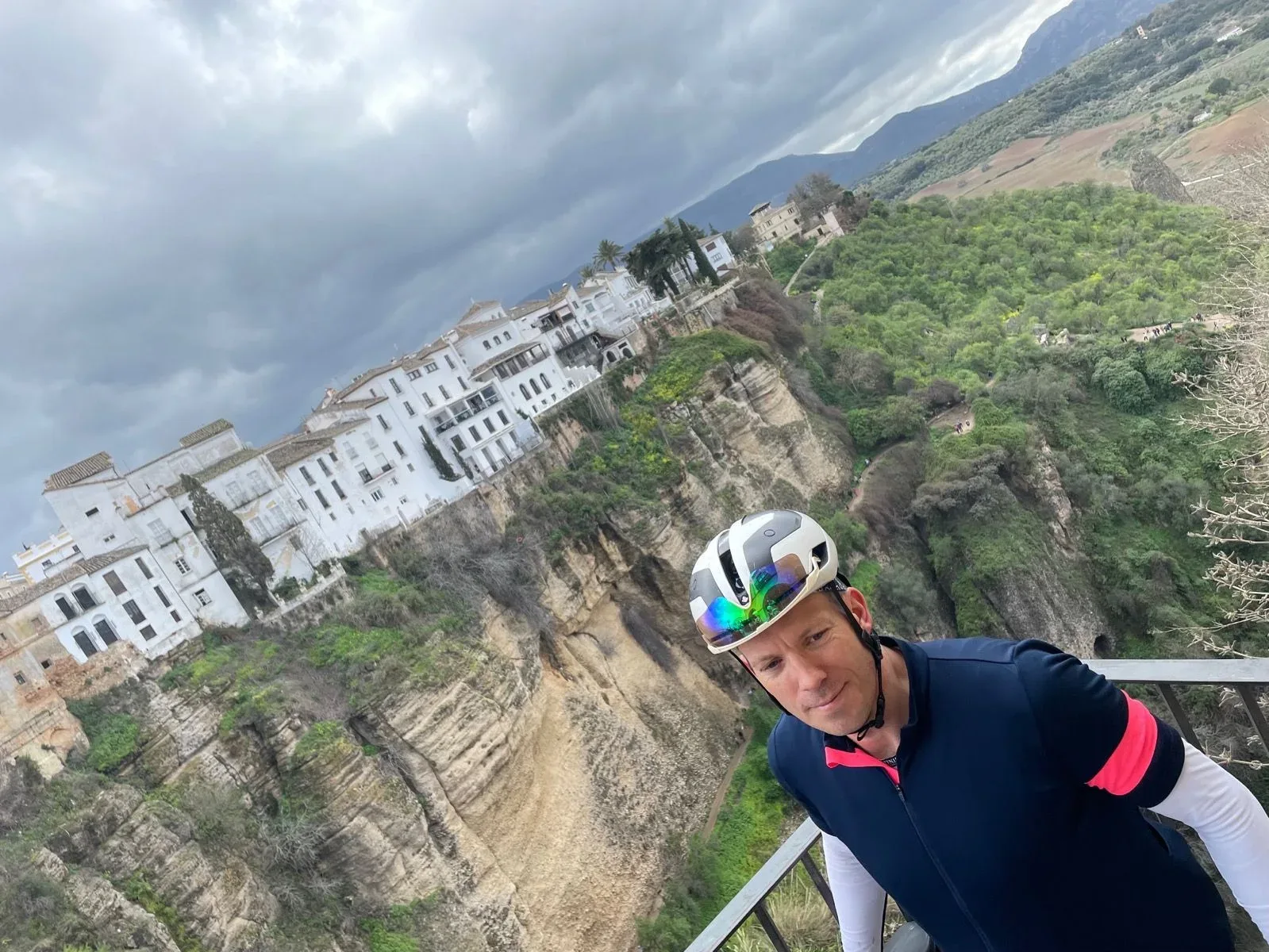
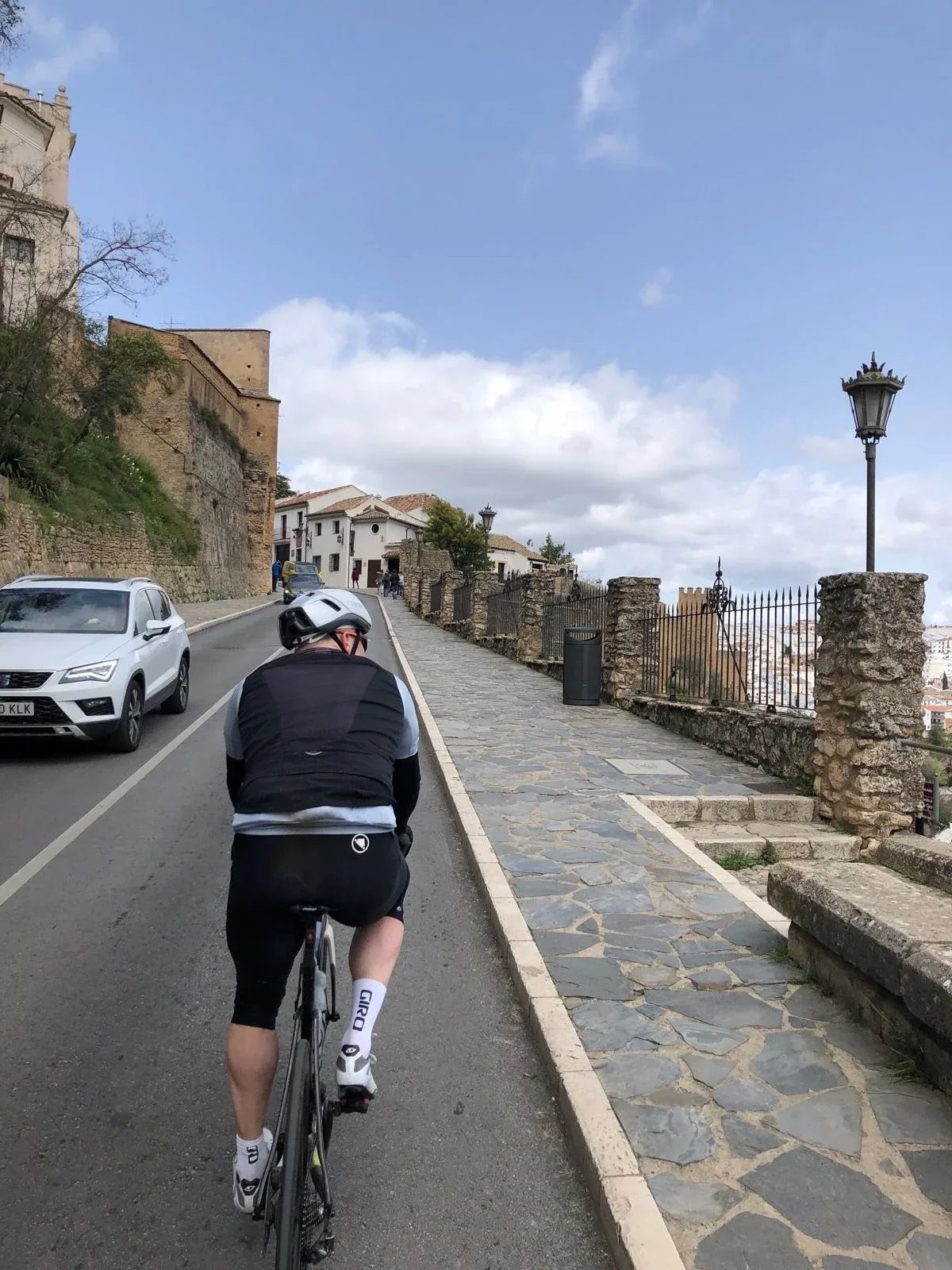
At the top we gave in and became tourists for an hour. You can't roll into Ronda and not walk out to the Puente Nuevo to look down into El Tajo — it's one of those views that stops you whether you're in lycra or not. The town has a huge selection of restaurants and cafés, and the quality is genuinely good. We sat down for a proper lunch, topped up on coffee and real food, and took our time. There's no point rushing this stop; you'll need the calories for what comes next.
Leaving Ronda is where the day bites. The road flattens into long upland drags with repeated short sharp ramps — those short, stupid little rises that don't look like much on paper but stack up in tired legs. We had a firm headwind the whole way, and for us this section ended up feeling tougher than the climb itself. The consolation is the asphalt, which is beautiful, and the views over the dehesa with sierras layered into the distance. Eventually the road tips over and hands you a fast, twisting descent back toward the coast. The Mediterranean reappears in the windscreen of your glasses, and you let the brakes off and enjoy the last reward of the day back into Marbella.
Kilometre by Kilometre
Roll inland through the urbanizaciones behind Marbella, shaking off the coastal traffic as the road tilts upward. The Mediterranean drops behind your shoulder and the air starts to cool.
The regional classic. A long, metronomic gradient through cork oak and pine, almost no cars, the kind of ascent you settle into and just keep turning. In spring expect mist or light drizzle drifting through the trees.
Into town, off the bike, out to the Puente Nuevo to look down into the gorge. Plenty of restaurants and cafés around the old town for a proper lunch — take your time here.
Leaving Ronda the road opens onto long flat drags punctuated by short sharp rises. Wind is the defining factor — a headwind here can make this harder than the climb. Beautiful tarmac and wide sierra views help.
The road finally tips over and drops through flowing mountain bends back toward Marbella. Fast, well-surfaced, the Mediterranean growing in front of you all the way down.
Gallery
Route map & elevation profile
Key Climbs
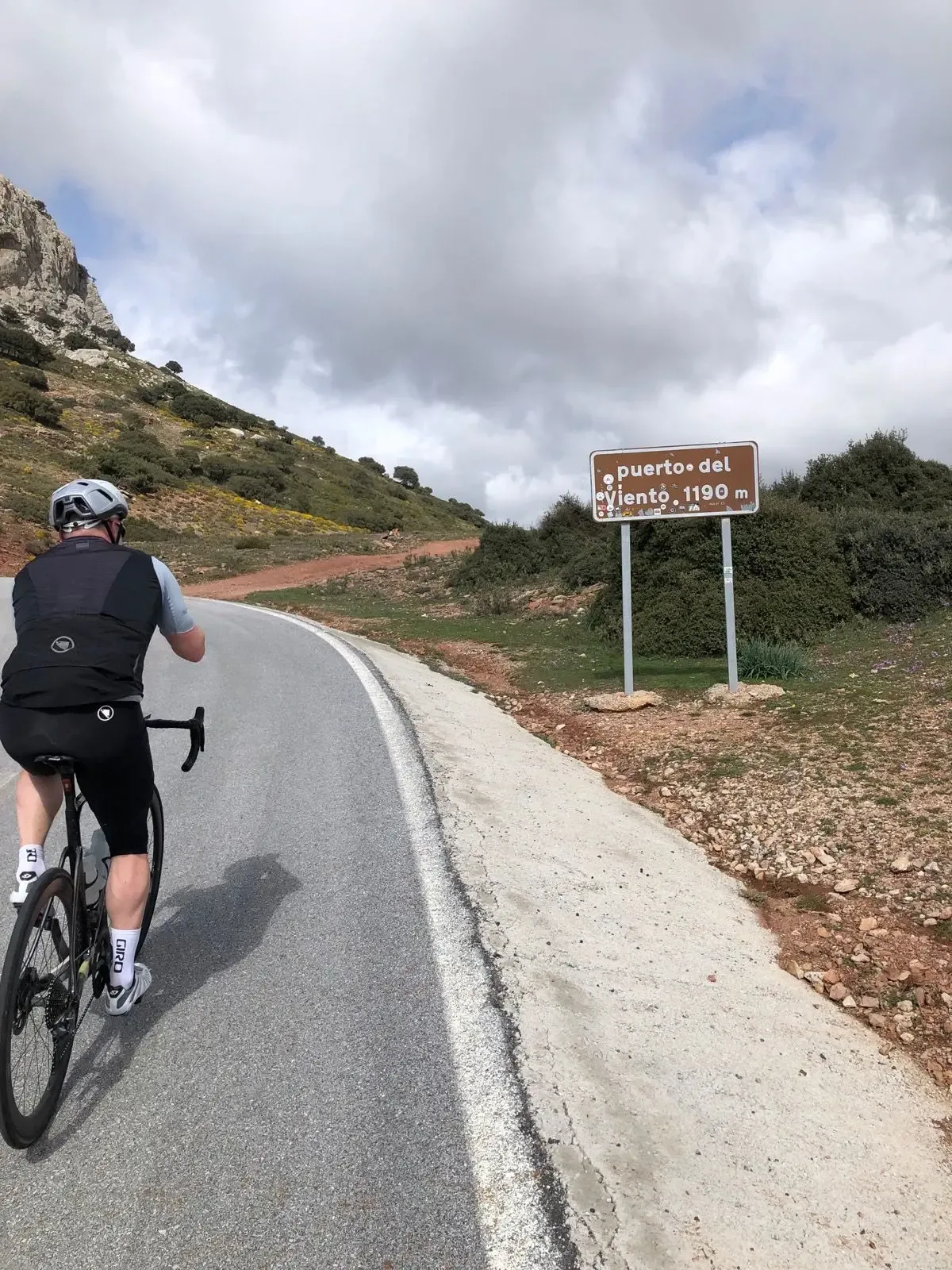
Puerto del Viento (desde Ronda)
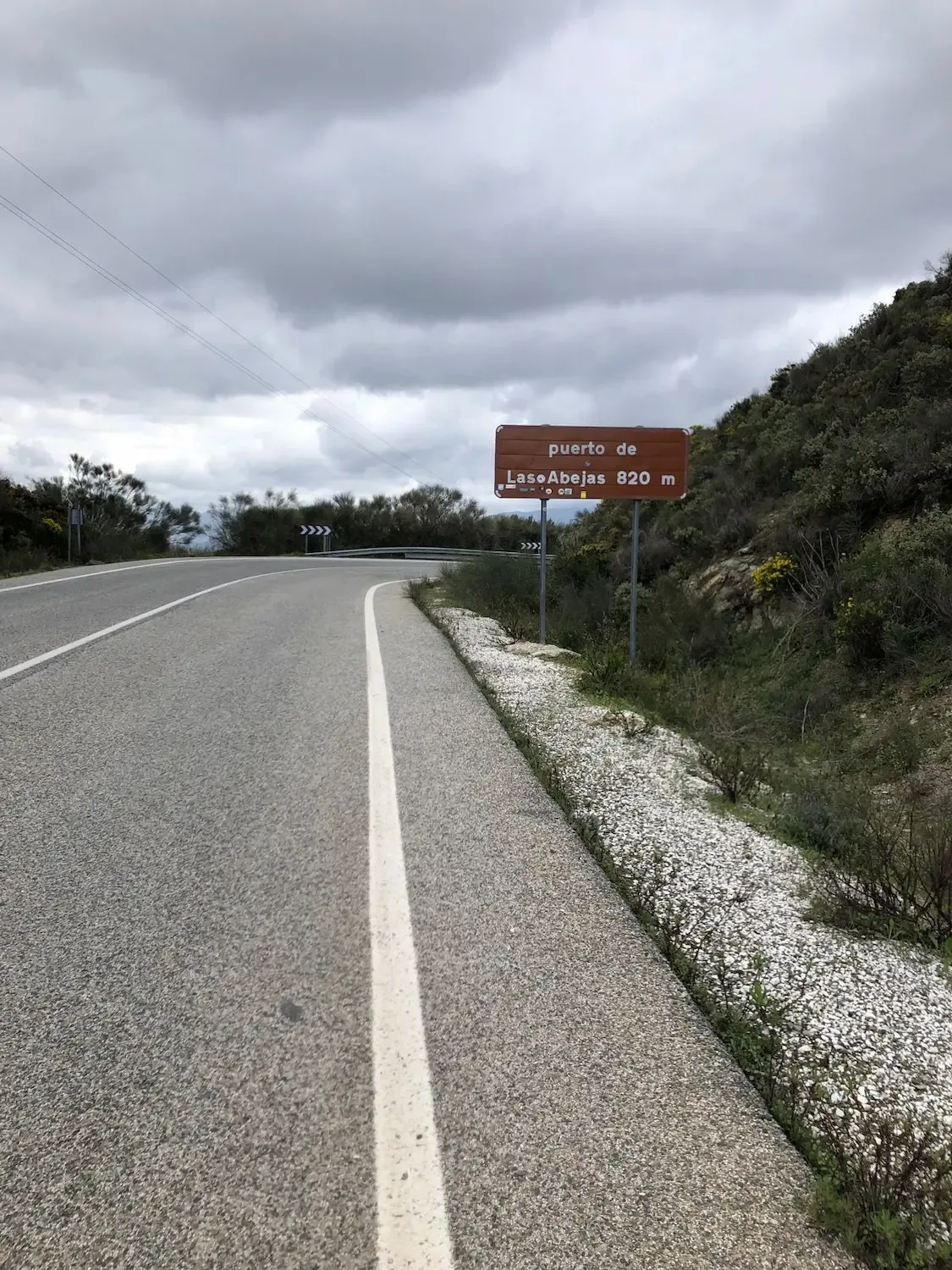
Cat 2Puerto de las Abejas (por El Burgo)
Cat 3Highlights
- •Puerto del Madroño: 19 kilometres of climbing from the coast to 1,069m – the exact same ascent featured in La Vuelta in 2018. Long, steady, and relentless.
- •Ronda and El Tajo gorge: The historic town sits above a 100-metre ravine. The iconic Puente Nuevo bridge is the landmark you're pacing towards for the entire first half.
- •Serranía de Ronda: Empty, narrow, and twisting roads through remote mountain terrain. Think whitewashed villages, olive groves, and practically zero traffic.
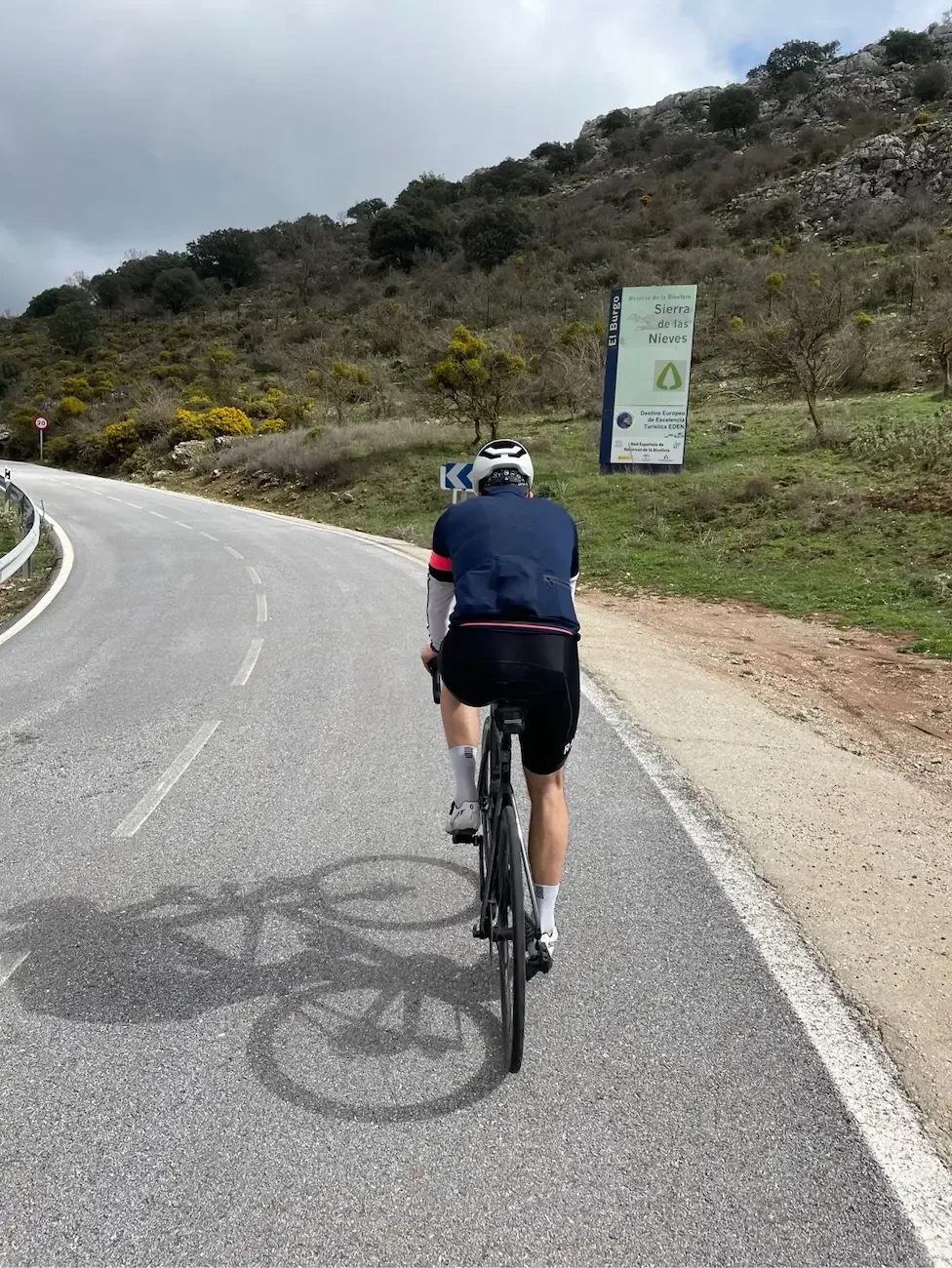
- •A double-header on the way home: Puerto del Viento and Puerto de las Abejas keep the legs honest, serving up plenty of elevation long after you think the hard work is done.
- •High-speed run to the coast: The final descent back down to Marbella opens up completely – a long, rapid section with the Mediterranean dominating the horizon.
Must know
- ⚠Set an early alarm: 151 kilometres and 2,900 metres takes most riders between 7 and 9 hours. Get out of Marbella early to beat the midday furnace.
- ⚠Don't blow up on Madroño: A 19-kilometre climb averaging under 5% sounds manageable on paper, but the sheer length grinds the legs down. Find a steady rhythm – there's a long way to go after the summit.
- ⚠Fuel up in Ronda: Fill your bottles to the brim and eat a proper lunch. The road home over the high plateau leaves you exposed with very few resupply options, and you do not want to bonk out here.
- ⚠Three climbs, not one: It's easy to fixate entirely on Madroño, but Puerto del Viento and Puerto de las Abejas are waiting on the return leg. Save some matches to burn for them.
- ⚠Respect the wind: There's a reason it's called Puerto del Viento – the Wind Pass. Check the forecast carefully, especially if riding in winter or early spring.
- ⚠Prime season: March–May and September–October are the absolute sweet spots. Midsummer heat in the Andalusian interior makes this route genuinely brutal.
Café & Water
- km 27Venta El MadroñoOpen daily
The legendary mid-climb stop on the Madroño ascent – perfect for a quick espresso and a bottle refill at the venue that gave the climb its name.
- km 56Taberna Quinto Tramo
The natural sit-down lunch stop at the route's midpoint. Tapas and local dishes in the heart of Ronda – make sure your tanks are full before tackling the two climbs home.
Frequently asked questions
- How long does this route take?
- Most active cyclists will clock between 7 and 9 hours total, including stops. Plan for a full day in the saddle and start early. Because this is a massive mountain loop, there are no easy shortcuts back to the coast if you run out of daylight or energy.
- Is Puerto del Madroño as tough as it sounds?
- It's tough because of its sheer length, not the gradients. 19 kilometres at a shade under 5% average just grinds you down over time. The secret here is to sit in, spin an easy gear, and stay on top of your hydration. If you go deep into the red here, the rest of the day will feel incredibly long.
- Where are the best stops along the way?
- Venta El Madroño (km 27) is a classic roadside cyclist haunt mid-climb – ideal for a quick coffee before the summit. Taberna Quinto Tramo in central Ronda (km 56) is your best bet for a proper lunch. Be sure to top up your bottles before leaving town, as water points are scarce on the mountain roads back.
- When is the best time of year to ride this?
- Spring (March–May) and autumn (September–October) are the prime months. The midsummer heat in the interior is far too intense for a ride of this scale, while winter can bring surprisingly bitter temperatures and wet conditions on the high passes.
- Is Puerto del Viento harder than Madroño?
- It's shorter, but it often feels harder because you've already accumulated a massive amount of climbing. It starts right out of Ronda (km 68) and throws 11 kilometres of uphill back over the 1,000-metre mark. This is where anyone who rode too hot up Madroño will start to pay the price.
- Do I need to book anything in advance?
- No logistical bookings required. Just double-check the opening times for Taberna Quinto Tramo in Ronda if you have your heart set on lunch there. Otherwise, standard self-sufficiency rules apply: ensure your bike is in top shape and pack plenty of tubes and tools. You're a long way from a bike shop if you have a mechanical out there.
Know a better line?
Submit your local route and get featured with your own author profile, Strava, Instagram and Buy Me a Coffee link.
Share a Route → →Similar routes
Estepona — Sierra Bermeja Loop
Same Costa del Sol — different mountain (Sierra Bermeja) from Estepona base
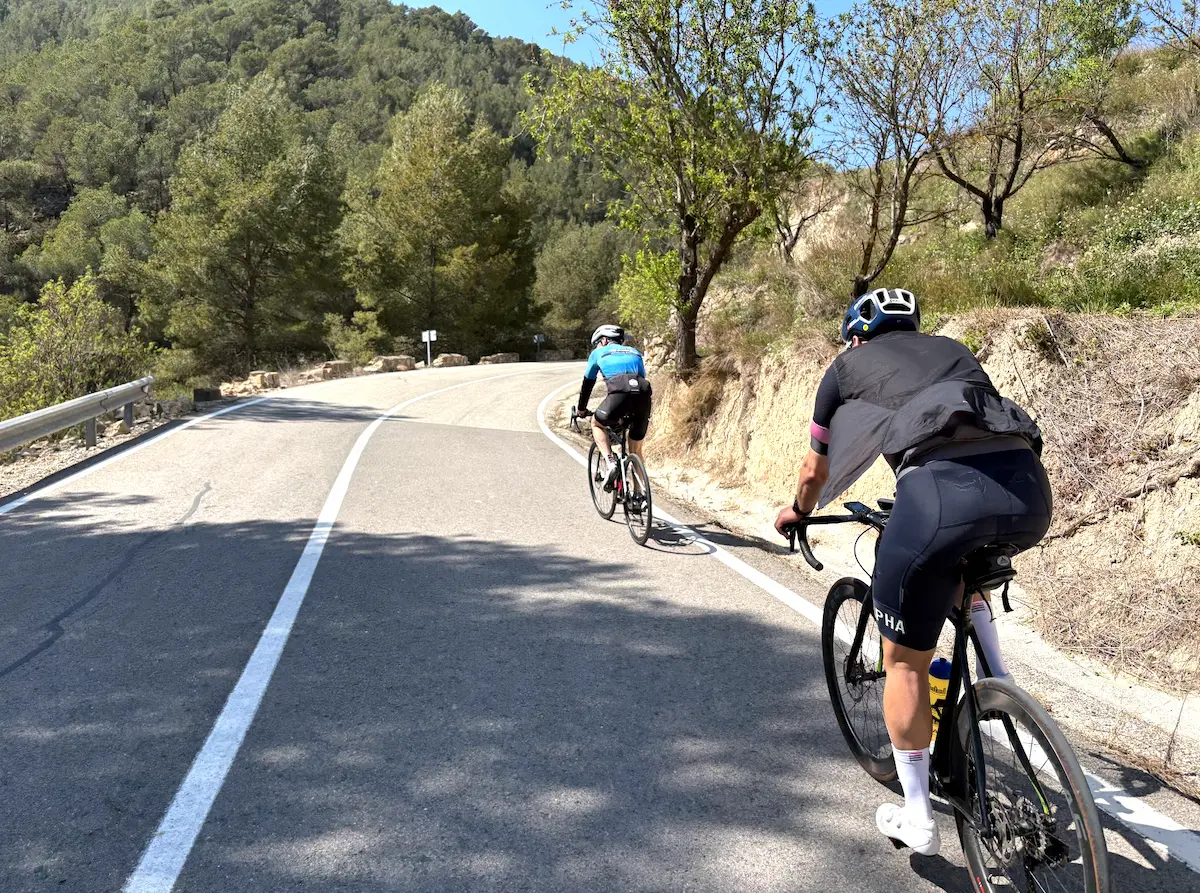
Calpe — Port de Tudons & Puerto de Confrides
Costa Blanca queen-stage equivalent — comparable distance and elevation
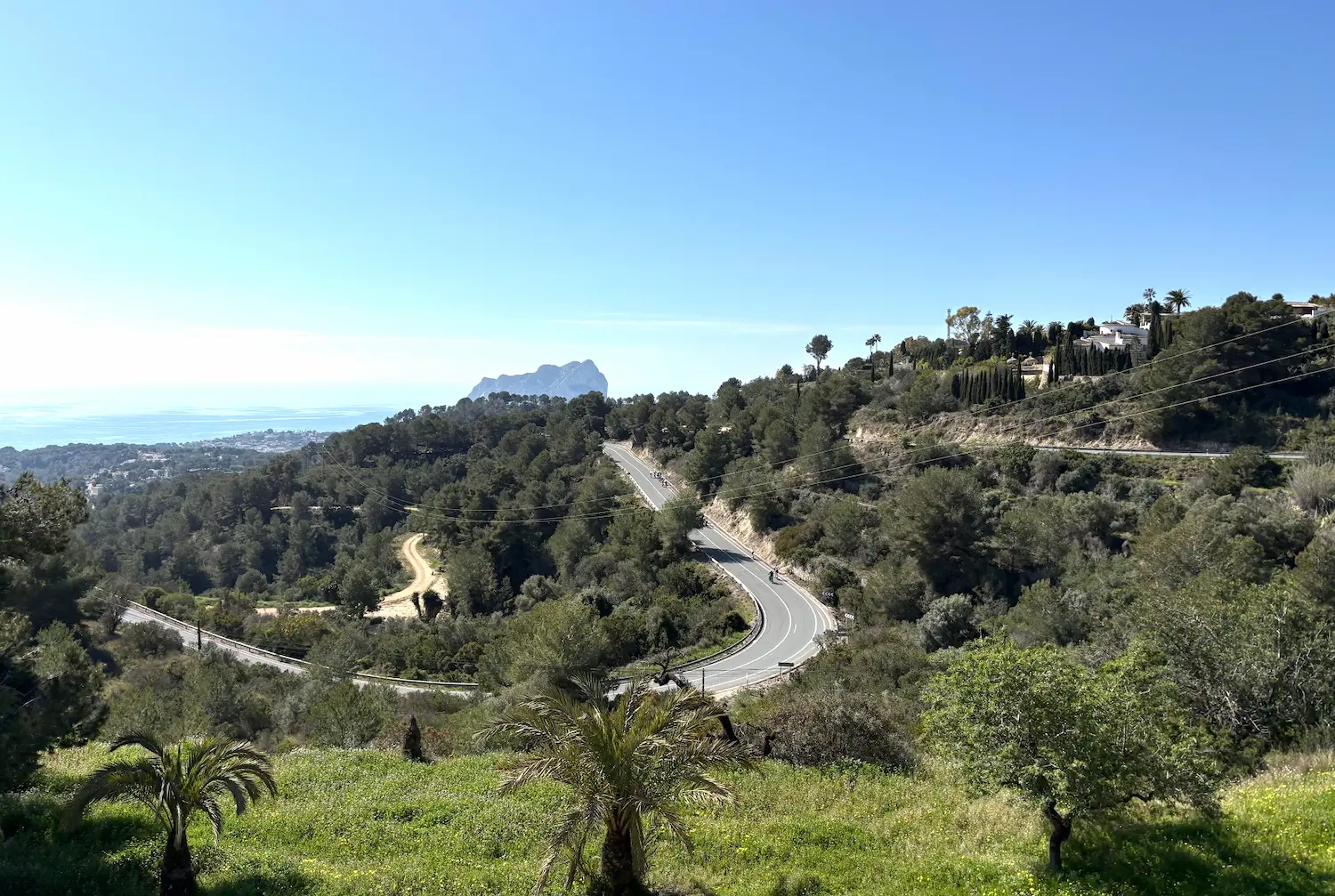
Calpe — Coll de Rates
Different Spanish coastal climb — gentler Coll de Rates from Calpe