Coll de RatesCat 2
- 6.45 km
- Length
- 5.4%
- Average
- 347 m
- Elevation gain
- 7.9%
- Steepest 500 m
- 626 m(GPX)
- Summit
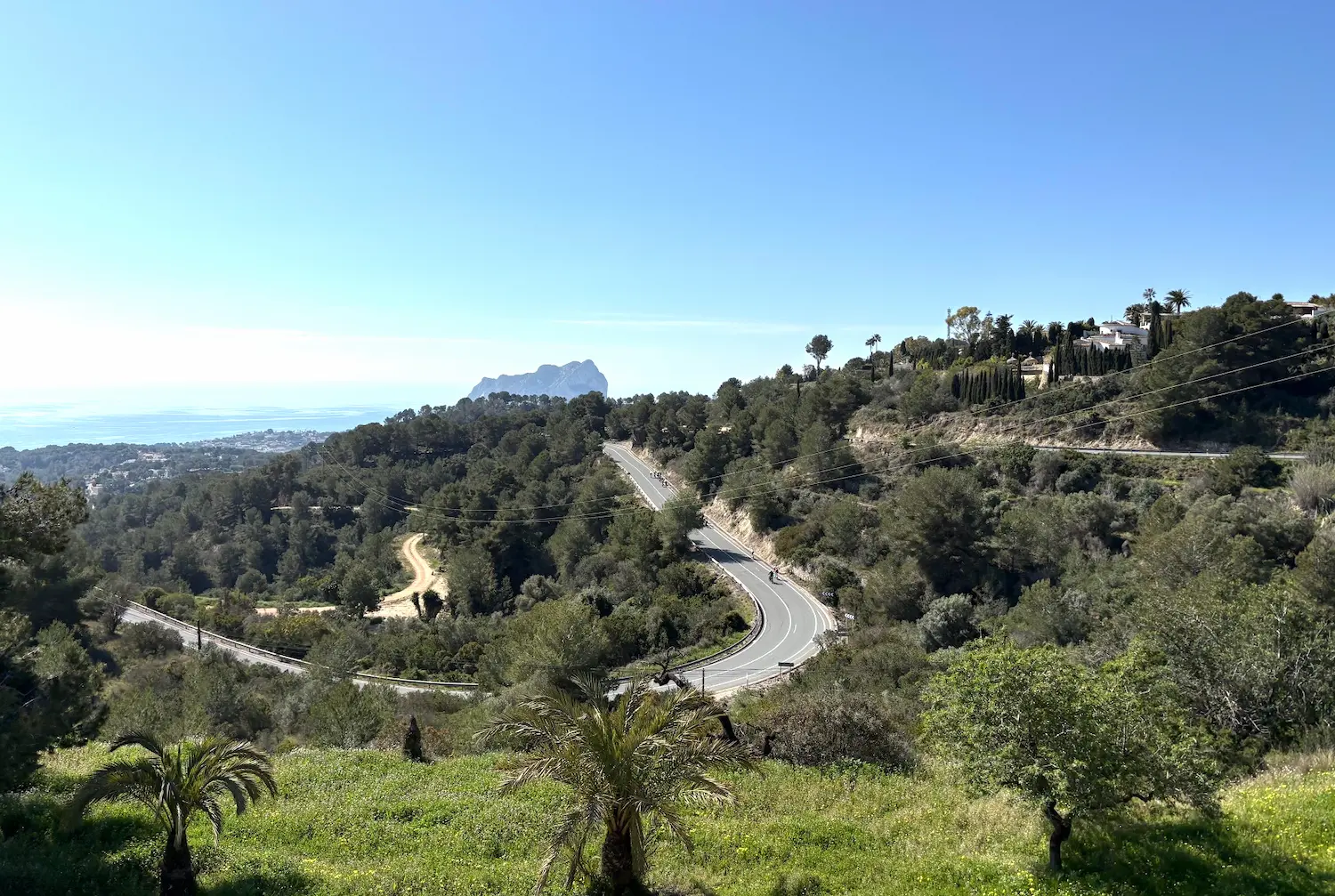
You climb Coll de Rates from Parcent. The other side, from Bolulla, is longer and gentler, and is mostly for riders who have done the Parcent side many times. From Parcent the gradient is steady all the way — nothing that stands out, and no steep ramps to save anything for. That means it can be ridden at one pace from the bottom, which is also the most common mistake here: the first few kilometres feel manageable. New asphalt was laid at the end of March 2026. At the top sits Café Coll de Rates, and it is often busy.
How long will Coll de Rates take you?
A rider at 3.0 W/kg takes about 27 minutes to climb Coll de Rates.
Put in your weight and the average power you hold on the gradient. We add 9 kg for bike and kit. The model works the time out from physics, and it has been tested against real rides.
Riders
Watch the climb

The road
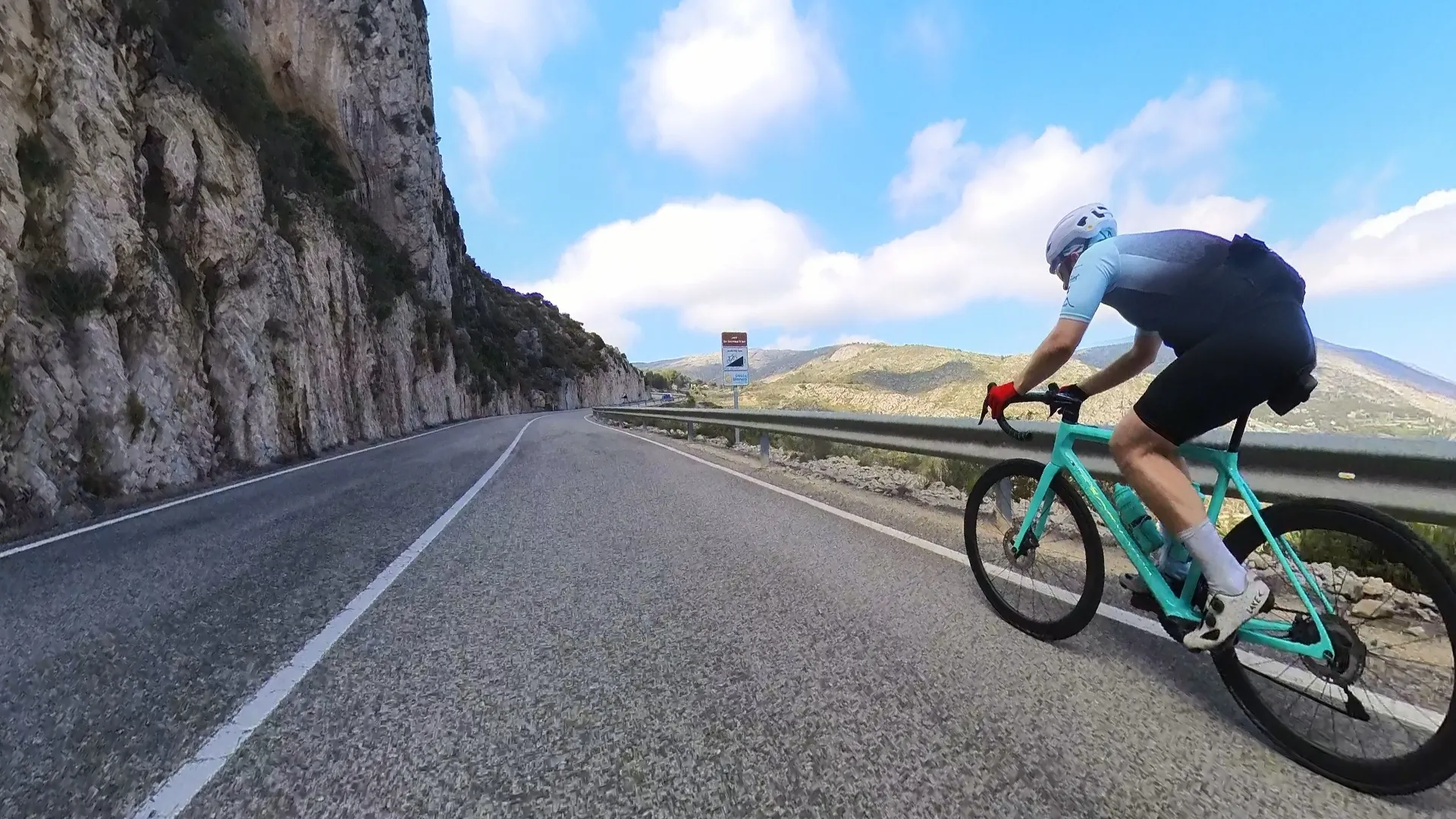
Rates is the most ridden climb on the Costa Blanca, and it shows in the road. It is wide enough for cars to pass without anyone going into the gravel, the bends are open, and the surface was relaid at the end of March 2026.
It is a real pass, not a dead end. From Parcent the road carries on over the top and down towards Tàrbena — narrower and tighter than the way up.
Behind the café at the summit a concrete road continues another 2.5 kilometres uphill. It is steeper than the pass itself and ends nowhere.
The climb
The first four kilometres are almost the same: between 4 and 5.5 per cent, with nothing to break the rhythm. This is where riders spend too much. The climb gives you no reason to hold back, which is exactly why you should.
The fifth kilometre is the hard one. The average rises to seven per cent, and the steepest hundred metres sit just above ten. If you rode the first four too fast, this is where you find out.
Then it eases for a kilometre — barely five per cent — before tightening again on the last stretch to the pass.
The top is unmistakable: the road flattens at the café, and you look down into the Jalón valley on one side and towards Tàrbena on the other.