Skip to content

Cycling Cap Formentor — Pollença classic

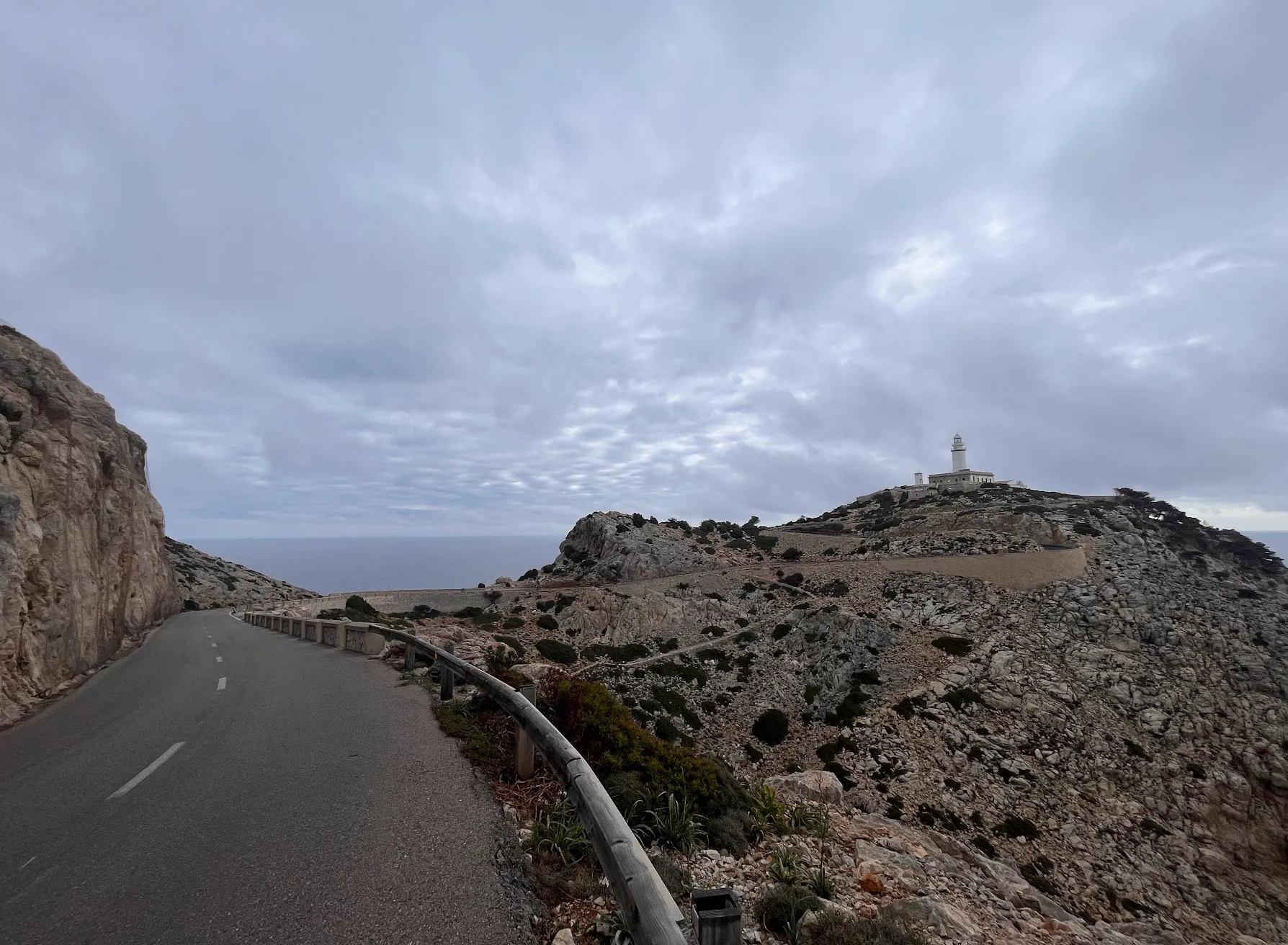
Cycling Cap Formentor on Mallorca — the Ma-2210 winding out along the cape towards Far de Formentor.
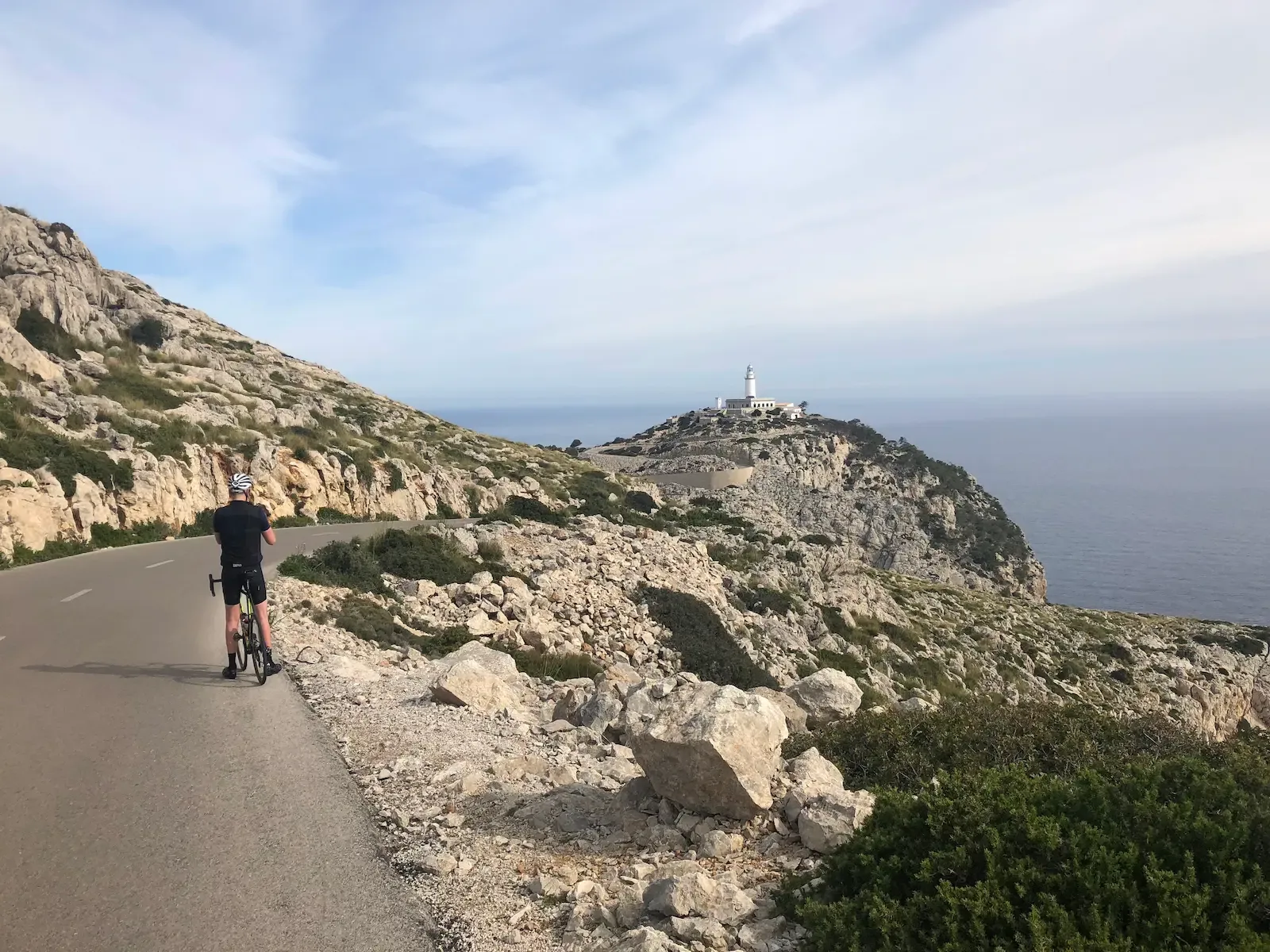
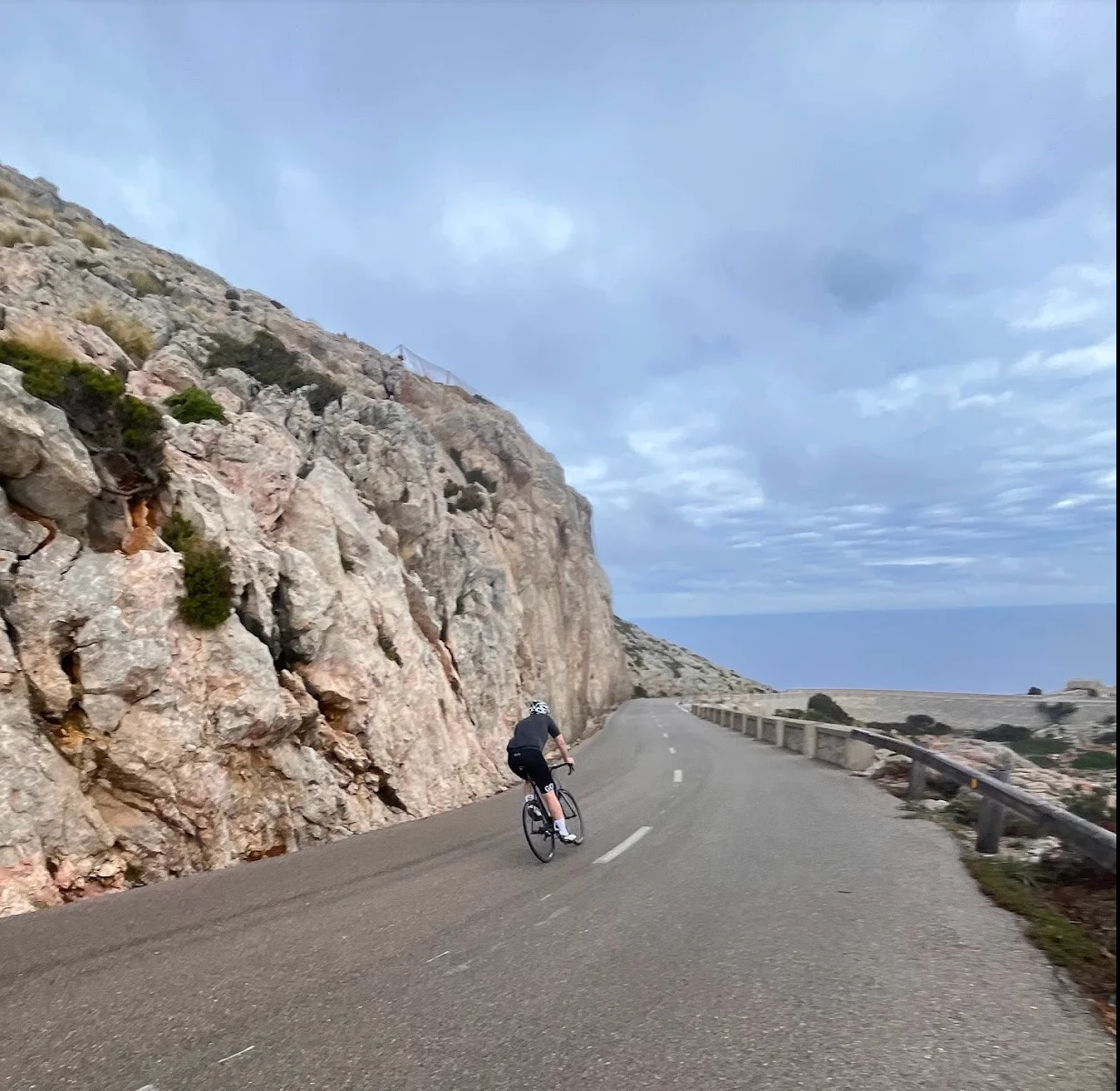
Cycling Cap Formentor — the Ma-2210 on the peninsula spine, on the way out to the lighthouse. Photo: cyclingroutes.cc community contributor.

Cap Formentor is the 39-kilometre out-and-back from Port de Pollença up the Ma-2210 to the lighthouse at Mallorca's northernmost tip. Around 879 metres of climbing across rolling terrain — the first effort is Coll de sa Creueta up to the Mirador des Colomer viewpoint at 207 m, then short ramps and fast descents past limestone tunnels out to Far de Formentor. The lighthouse café at the cape opens around 10:00 from March to October, weather permitting. Ride it at first light to beat the tour buses, or start later and time the lighthouse arrival for opening — both work, neither is wrong. Built by Antonio Parietti in 1925, the same engineer behind Sa Calobra.

Last verified: 20 June 2026.

The Cap Formentor climb — what to expect

Cap Formentor is not one climb but a chain of efforts strung along a 22-kilometre peninsula. The first 3 kilometres out of Port de Pollença are flat along the harbour, then the Ma-2210 peels north onto the cape and the road tips upward. Coll de sa Creueta is the first real effort — 3.3 km at 5.9% on the Strava segment, open and exposed up to the Mirador des Colomer viewing terrace at 207 m. It's a Cat 3 climb on a road built for tour buses and rental cars; the surface is good, the gradient steady, the early matches burn fast if you push it.

Past the Mirador the road plunges down the other side — the steepest kilometre touches more than 6% down — before a shorter, gentler second climb starts around kilometre 10. From there it's short ramps and fast descents the rest of the way out, with limestone tunnels cut straight through the rock. The cinematic tunnel-arch around kilometre 13 is the photograph you take home. Take off your sunglasses before you ride into it.

The final ramp to Far de Formentor is 3.5 km averaging 3.5%, steeper at the end. Scrub and stone, almost no shade. Mallorca Cycling Photos has a photographer at the last hairpin where the white lighthouse finally shows itself — smile when you spot it. The café terrace at the top drops straight to the Mediterranean a couple of hundred metres below. A cortado with that view is worth the climb twice over.

For an even bigger view, a small road branches right just past the Mirador up to Talaia d'Albercutx — the old watchtower above the cape. 2.5 km at 10 to 14% on rougher surface, an optional detour for stronger legs and a quieter top.

When to ride Cap Formentor

Season

March through May and September through early November are the proper Mallorca cycling windows for Cap Formentor — warm enough for shorts and short sleeves, cool enough to ride the lighthouse climb without baking. June through August stays rideable but the heat on the exposed peninsula gets serious by mid-morning, and tour-bus traffic peaks. Winter (December–February) works on calm days, but expect cold descents off Coll de sa Creueta and check the wind forecast — the cape funnels northerlies hard.

Time of day

Start at first light. The Ma-2210 traffic builds fast — tour coaches, rental cars heading for the beach at Cala Formentor, taxis ferrying lighthouse-watchers. By 9:30 the road is busy; by midday it's genuinely uncomfortable in peak season. An early start gets you Mirador des Colomer at sunrise and the lighthouse for café opening at 10:00 — the best possible rhythm.

Weekday vs weekend

Weekdays are noticeably quieter than weekends, especially in shoulder season. Locals and rental cyclists head for Cap Formentor on Saturdays and Sundays; if you have flexibility, Tuesday or Wednesday morning is the calmest window.

Summer vehicle restrictions

In peak summer (typically July and August) the local government runs vehicle restrictions on the Ma-2210, allowing access only via shuttle bus for non-resident traffic. Cyclists are not restricted — but the start of the cape can feel crowded with bus traffic. Always check the current regulation with the Pollença tourist office before the ride if you're unsure.

Practical planning

Where to start

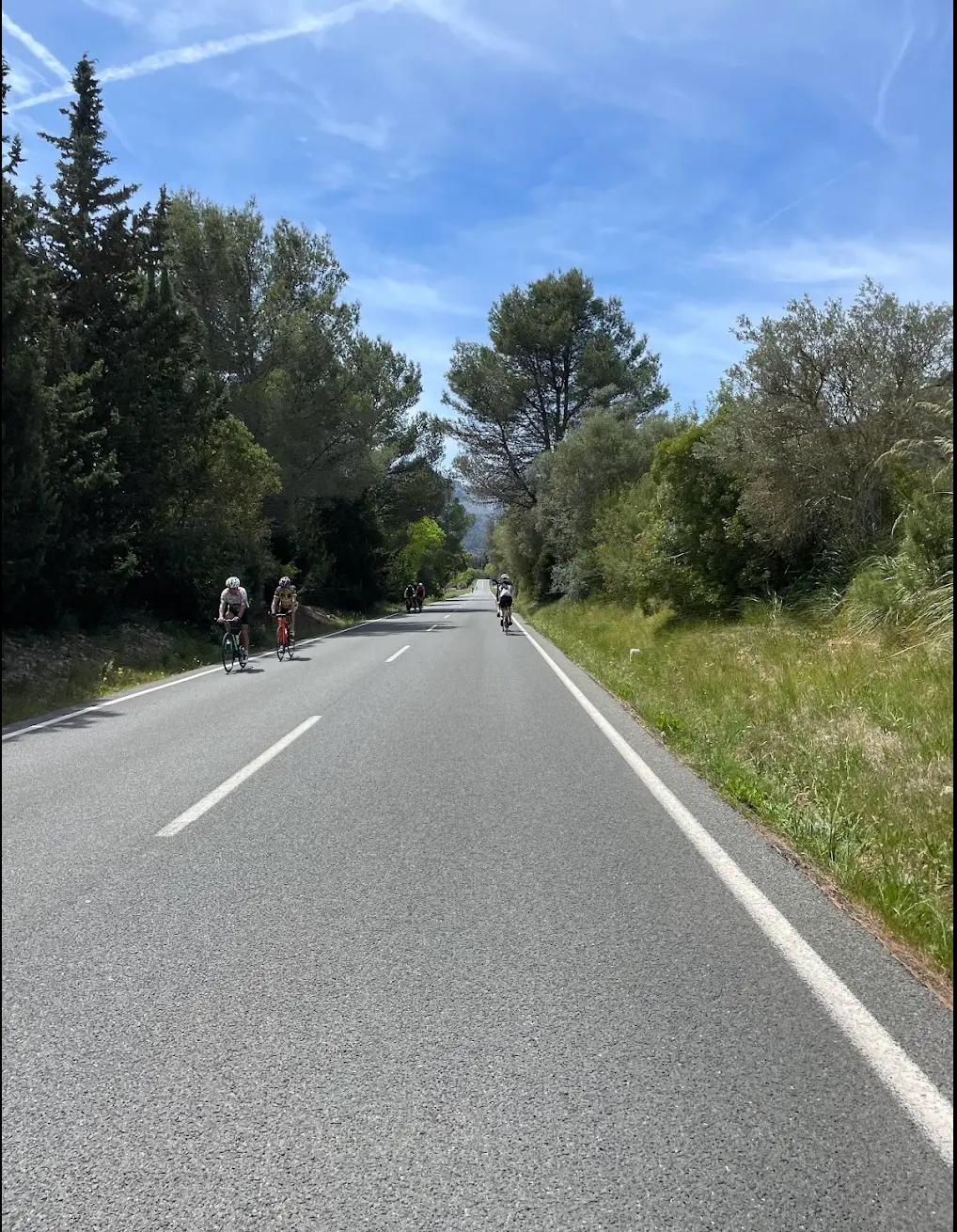
Port de Pollença is the natural base. The Ma-2210 leaves the seafront just past the marina, and the whole 39-kilometre loop starts and ends within five minutes of any hotel in town. From Pollença (the inland town, 6 km south), add a 12-kilometre warm-up and cool-down through the orange groves — total day around 51 km. From Alcúdia (10 km southeast), the approach along the Badia de Pollença adds gentle flat kilometres but no extra climbing.

Parking and logistics

If you're driving in for the ride, park on the western edge of Port de Pollença (signed P-1 and P-2 lots near the seafront) — free outside peak summer. Don't park on the cape itself: the small lots at Mirador des Colomer and the lighthouse fill up fast and are not designed for cyclists' return logistics.

Water and food

The peninsula is exposed rock and scrub — no fountains, no shops, no shade between Port de Pollença and the lighthouse café. Carry two bottles. In cooler months one will suffice if you're fast, but the return climb back over Coll de sa Creueta is where light supply runs out. The Far de Formentor café handles coffee, pastries and basic snacks; for a proper meal, stop on the way back in Port de Pollença.

Gearing

A standard compact chainset with a 28-32 tooth cassette is plenty. The steepest sustained gradient is the 5.9% on Coll de sa Creueta — manageable on the small ring even with mid-week legs. Take a 32 if you're planning to add the Talaia d'Albercutx detour: the 10-14% on rougher surface there is properly steep and benefits from the spinning gear.

Distance from other Mallorca bases

From Port de Pollença: zero — you're already there. From Alcúdia: 10 km. From Sóller: 65 km (a long day combining Cap Formentor with a Tramuntana climb). From Palma: 60 km flat; most riders skip the city ride and drive to Pollença for the Cap Formentor day.

Variations and combinations

Cap Formentor solo (39 km)

The default — Port de Pollença to lighthouse and back. Half a day, the right effort for an arrival day, a rest day or a morning when you want quality over kilometres.

Cap Formentor + base ride (60-80 km)

After the lighthouse, extend along the flat Badia de Pollença shore to Alcúdia and back, or roll inland through Pollença, Búger and Sa Pobla on quiet country roads. Adds 25-40 km of gentle flat to the day — useful when you want a longer endurance morning without adding hard climbing.

Cap Formentor + Sa Calobra (110 km)

The big day. Cap Formentor in the morning, return to Port de Pollença for a long café stop, then continue across the Tramuntana to Sa Calobra in the afternoon. Around 110 km with two of the island's defining roads — both built by Antonio Parietti, both rewarding for the same reasons. Best done in cooler months when the afternoon heat won't finish you off.

Combine with Coll de Femenia

A 90-kilometre loop joining the cape with Coll de Femenia — Pollença north over Femenia, descend through the Vall d'en Marc, ride the cape, return via Pollença. A good full day that hits both the peninsula and the Tramuntana foothills without adding extreme distance.

On the bike: a note on tunnels and traffic

The Ma-2210 has several short rock tunnels — narrow, unlit, and not designed with cyclists in mind. Take off your sunglasses before you ride into one (your eyes need three seconds to adjust), and switch on a rear light if you have one. Tour buses use the tunnels too; they'll squeeze past you, but they need the full width of their lane. Hold your line, stay right, and let them clear.

The road surface across the whole peninsula is good — well-maintained asphalt with the usual patches near the lighthouse where the cape weather chews on it. Watch for goats on the road around Mirador des Colomer in spring; they don't move for cyclists.

Frequently asked questions

How steep is Cap Formentor?

The hardest sustained climb is Coll de sa Creueta — 3.3 km at 5.9% average, up to the Mirador des Colomer terrace at 207 m. The rest of the peninsula is rolling: short ramps, fast descents, never extremely steep on the main road. The optional Talaia d'Albercutx detour off the Mirador is the steepest road on the cape — 2.5 km at 10 to 14% on rougher surface.

How long is the Cap Formentor ride?

The standard out-and-back from Port de Pollença is 39 kilometres with 879 metres of climbing. Allow 2 to 3 hours including stops at Mirador des Colomer and the lighthouse café. From Pollença town add 12 km, from Alcúdia add 20 km.

Is the Far de Formentor lighthouse café open year-round?

No. The café typically opens around 10:00 from March to October, weather permitting. In November to February it's closed or running reduced hours, so pack your own coffee or skip the café stop in winter.

Can I rent a road bike for Cap Formentor in Pollença?

Yes. Port de Pollença is one of the densest cycling-rental towns on Mallorca — multiple shops on the seafront and just behind it offer carbon road bikes, electronic shifting, deep wheels, and proper bike fits. Book ahead in peak shoulder season (April-May and September-October); same-day rental is harder than it sounds when the town fills up.

Are there summer vehicle restrictions on the Ma-2210?

Yes, in some recent summers. The local government has run shuttle-bus-only access for non-resident traffic during peak July and August. Cyclists are not affected by the restrictions but the cape still feels busy with shuttle buses. Check the current rule with the Pollença tourist office before your ride if you're visiting in summer.

Cap Formentor or Sa Calobra — which should I ride first?

Cap Formentor first if it's your first day on Mallorca. It's shorter, gentler, scenic, and you'll be back at base by mid-afternoon. Sa Calobra is the bigger effort — bigger climb, more sustained, with the Coll dels Reis grinder at the end — and works better when your legs are a few days into the trip. If you have one day total: Sa Calobra for the test, Cap Formentor for the photograph.

Sources