Milano–San Remo Cycling Route — Cipressa & Poggio
About this Route
← French Riviera Cycling GuideA cross-border loop from Menton that rides the finale of the world's longest cycling Monument. This 102 km loop follows the Ligurian coast into Italy and along the Pista Ciclabile del Parco Costiero della Riviera dei Fiori, a traffic-free railway path featuring tunnels that celebrate the history of Milan-San Remo. From San Lorenzo al Mare you take on the race's actual finale: the Cipressa and the Poggio, the two climbs that decide "La Classicissima" every March. Expect moderate gradients, sweeping sea views, and a hairpin rhythm that is far more engaging to ride than it looks on television.
Milan-San Remo is the longest one-day race in professional cycling, nearly 300 km, and one of the five Monuments. This route doesn't cover the full distance; it rides the finale, the part that decides the outcome. The approach from Menton is excellent in its own right, but the race proper begins at San Lorenzo al Mare, where the road turns inland toward the Cipressa.
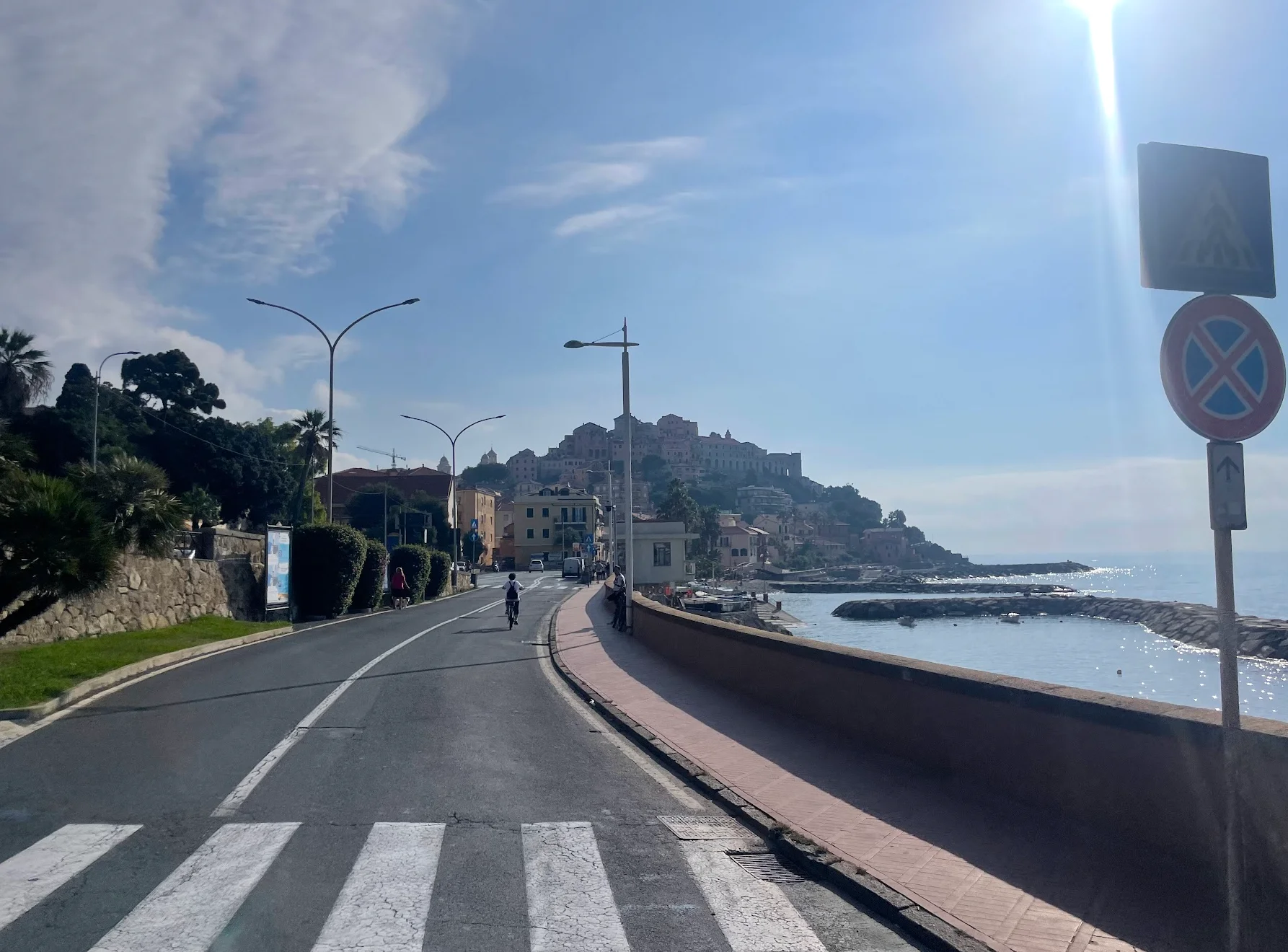
The first stretch is flat coastal riding. You cross into Italy after a few kilometres, roll through Ventimiglia and Bordighera, and at Ospedaletti pick up the Pista Ciclabile del Parco Costiero della Riviera dei Fiori, a smooth, traffic-free path built on the old Genoa-Ventimiglia railway, running 24 km right along the sea. The best part is the tunnels: cool and shaded, providing natural air-conditioning in the coastal heat. One of them, the Capo Nero tunnel, is decorated with phrases celebrating Milan-San Remo's most famous moments. The race itself doesn't go through it, but riding it is a highlight of its own.
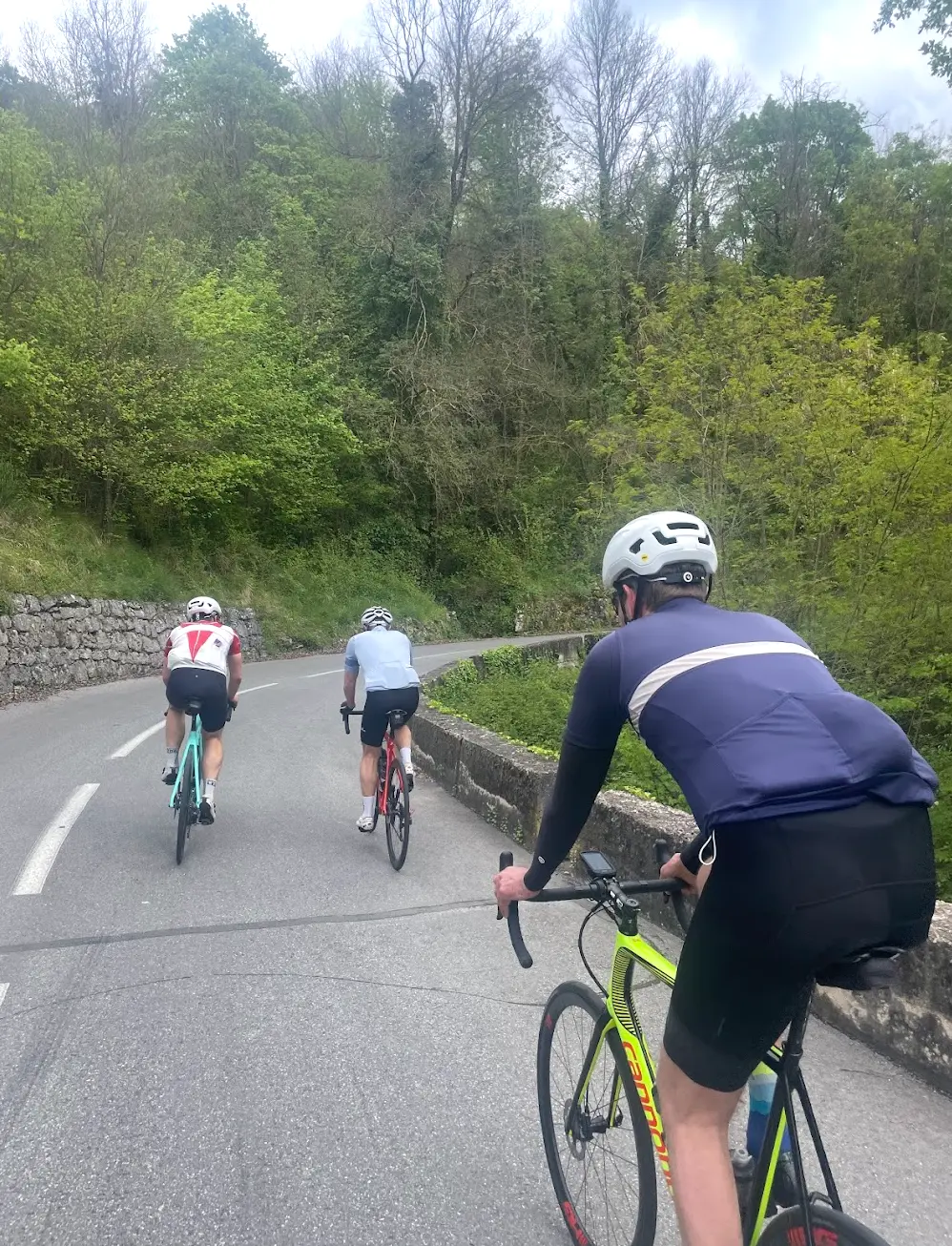
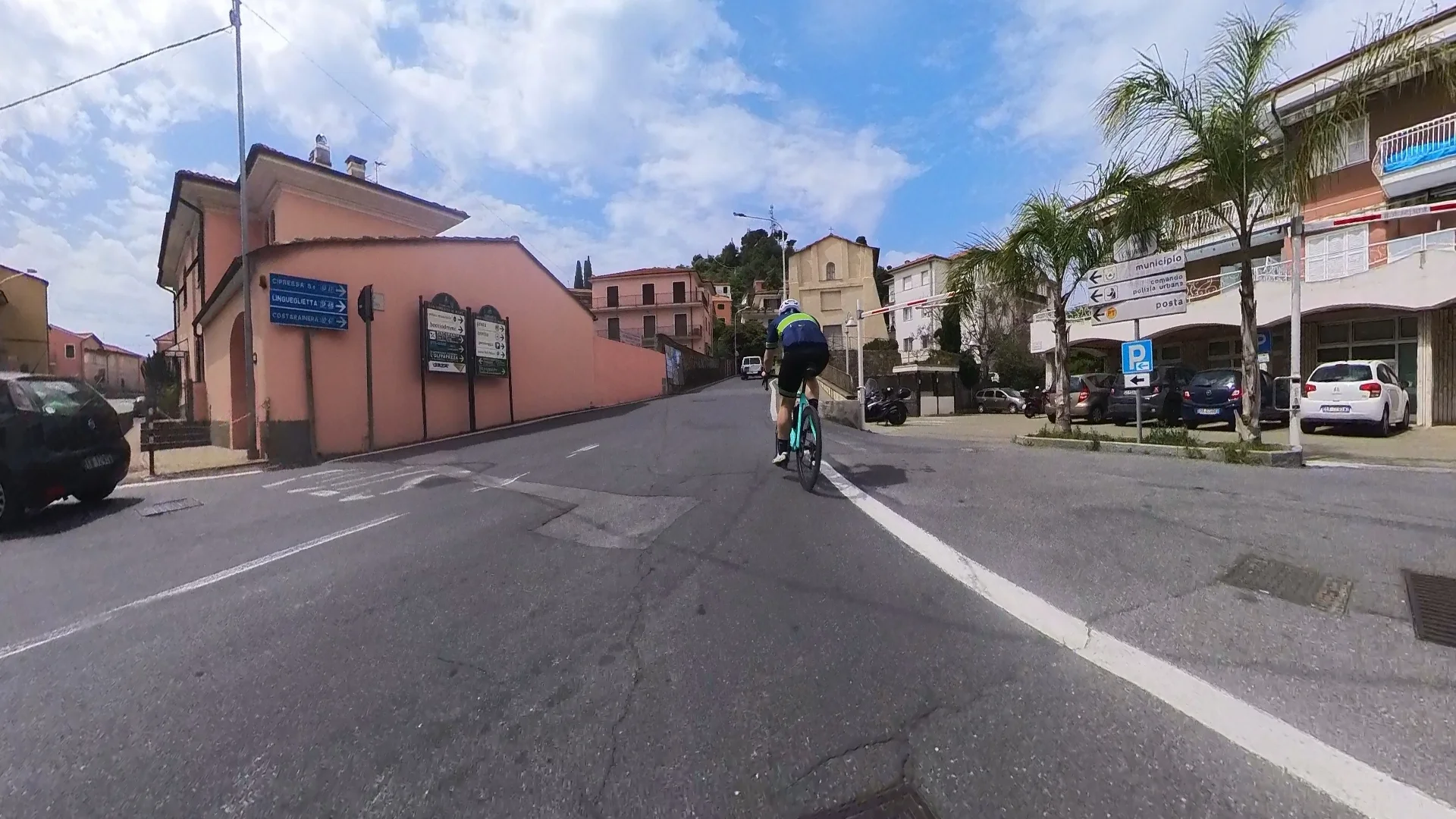
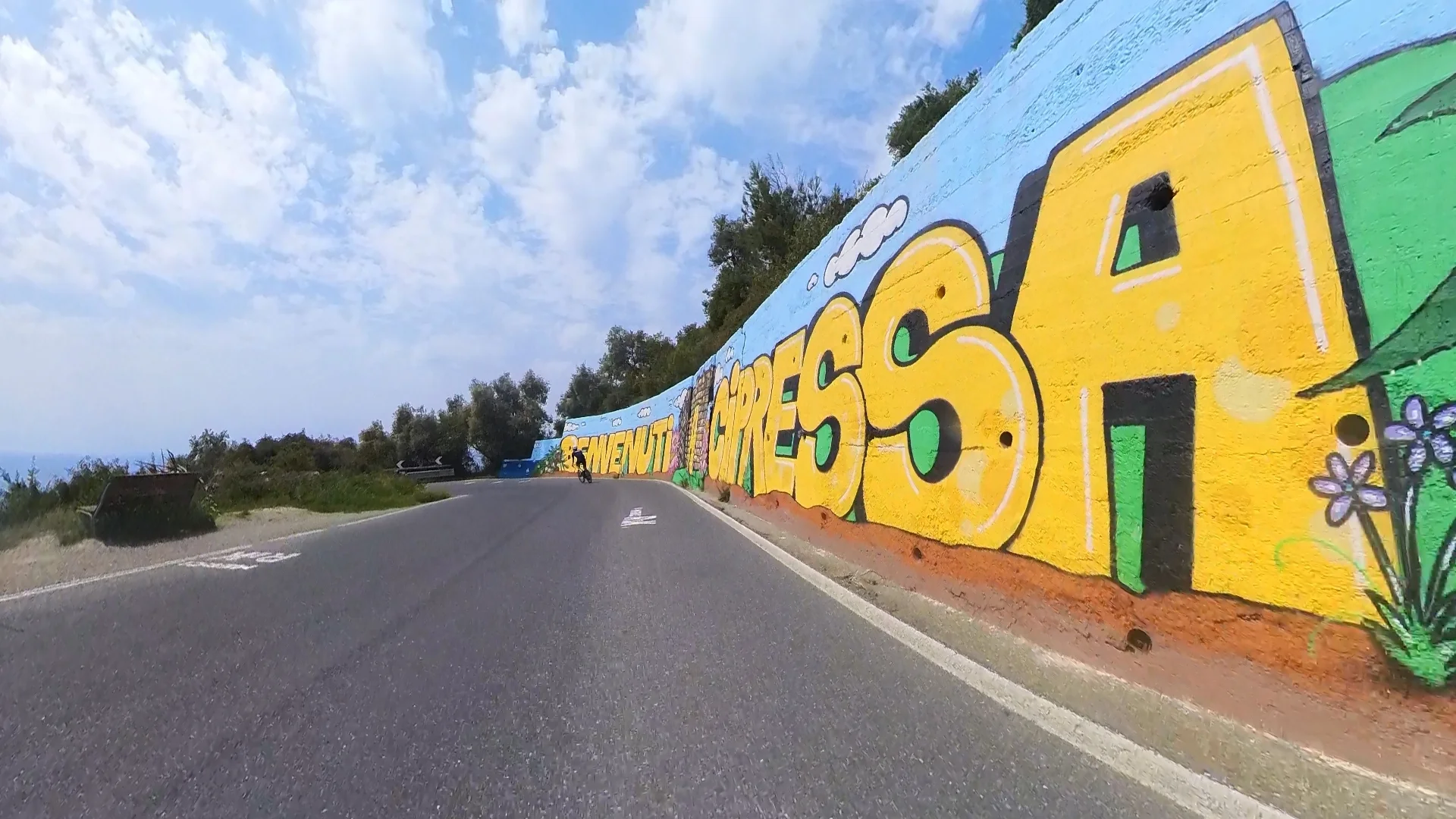
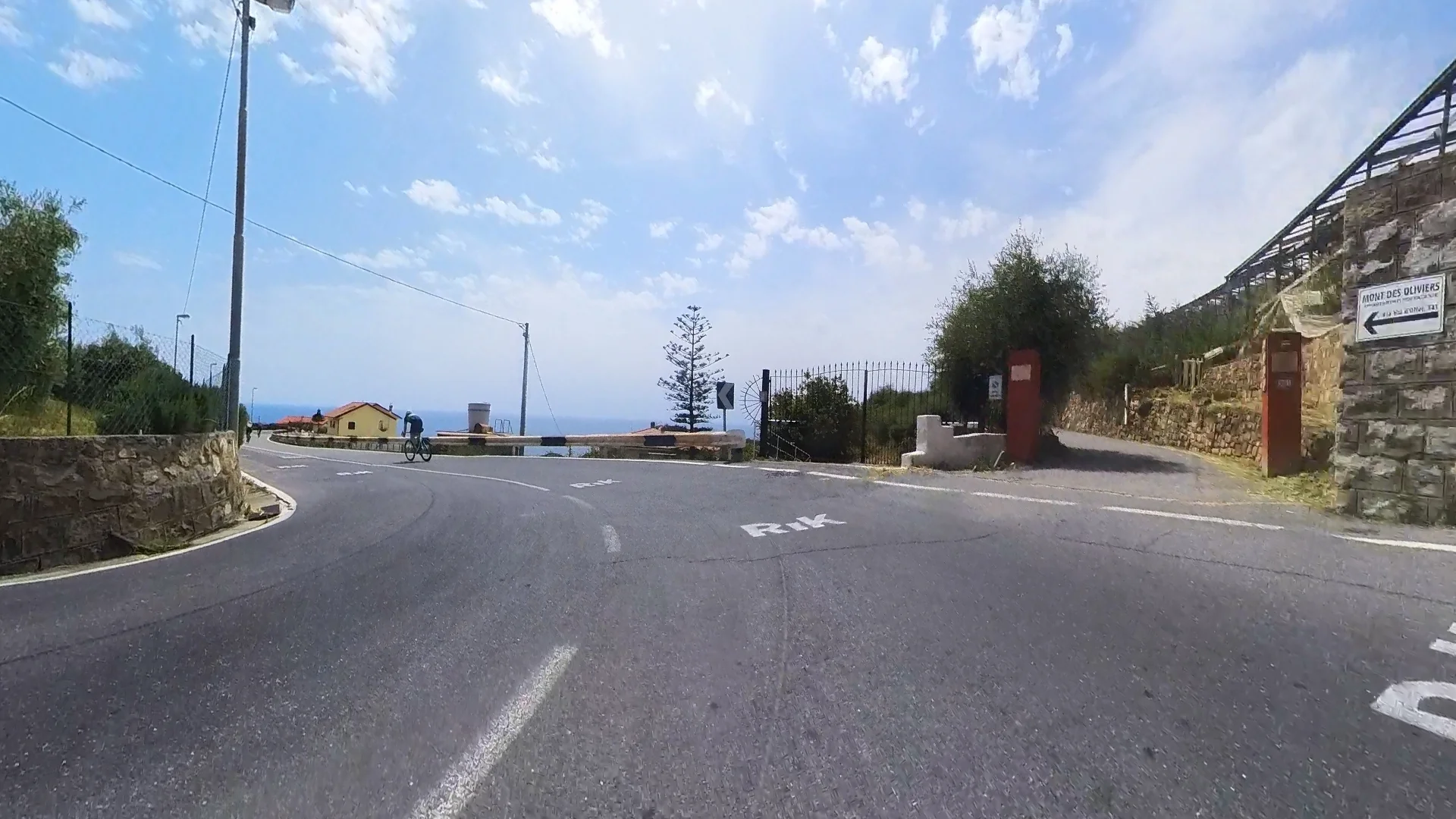
At San Lorenzo al Mare the railway path ends and the Monument's finale begins. The road turns inland to the Cipressa: 5.6 km at 4.2%, winding up through olive groves with the Mediterranean opening up behind you. It was added to the race in 1982, and for decades it rarely decided anything. Then in 2025, Tadej Pogačar tore the race apart here, the first truly decisive Cipressa attack since Gabriele Colombo in 1996. One thing that surprised me riding it: the gradient is gentle enough that you carry real speed, so the tight hairpins turn into a game of brake-and-accelerate, sprinting out of each corner to hold your pace. Watching it on television, I'd never noticed that rhythm. Ride it hard and that momentum is the challenge; take it steady and it's a smooth climb with a view.
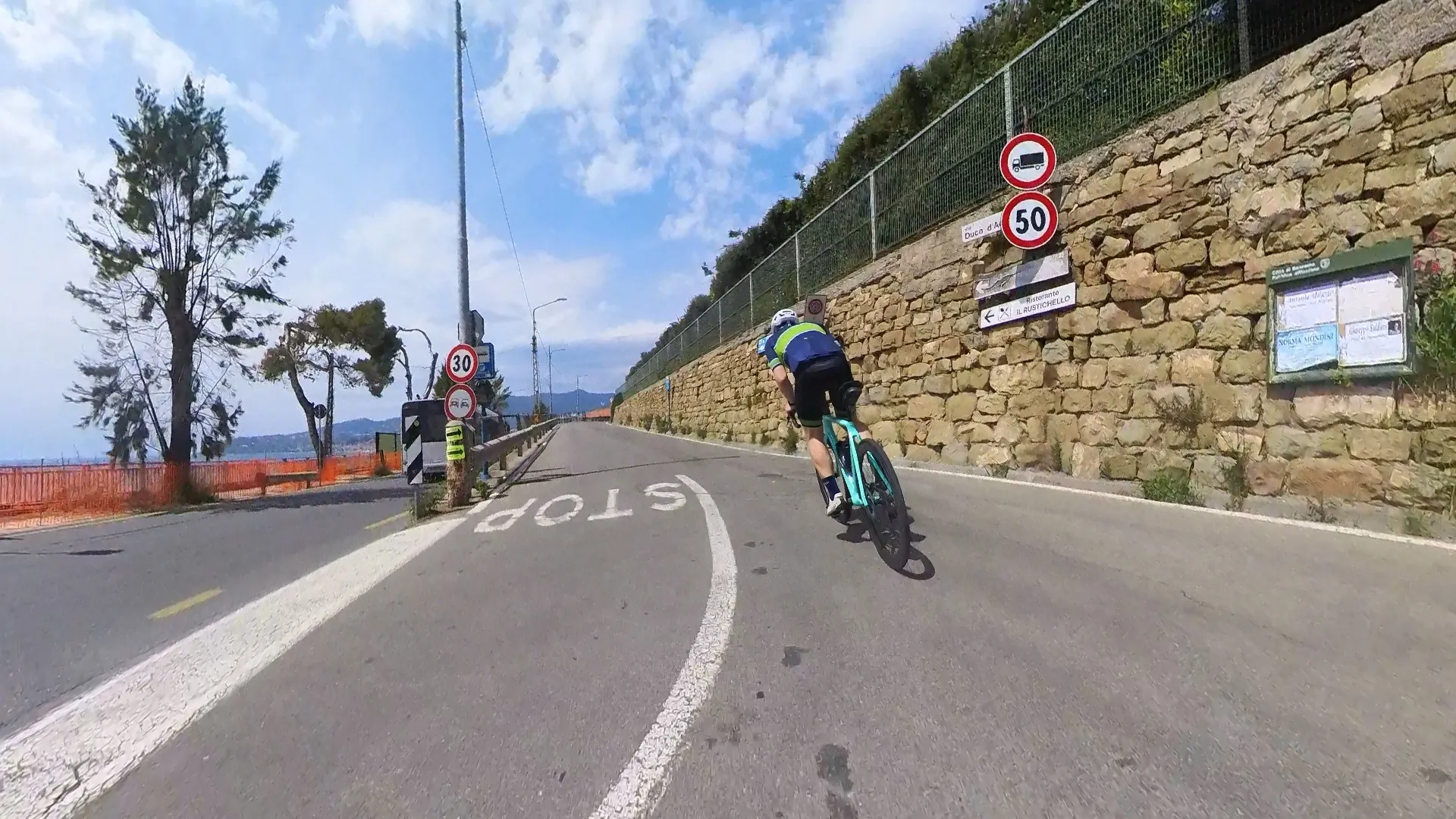
A technical descent and a few flat kilometres bring you to the Poggio di San Remo, more famous, and older: added in 1960 to break up the sprint finishes. It's short, only 3.6 km at 3.7%, with the same tight hairpins, ramps to 8% near the top, and the same sea views all the way up. This is where the race is most often won: Vincenzo Nibali in 2018, or Mathieu van der Poel's solo attack in 2023. The descent drops fast and technical straight into San Remo, then it's a flat 31 km back west to Menton. A note on the names you'll hear on these climbs: Eddy Merckx holds the record with seven Milan-San Remo wins, but he raced the Poggio, not the Cipressa. It didn't exist until six years after his last victory. Pogačar finally won the race himself in 2026.
Kilometre by Kilometre
Head east from Menton along the coast into Italy, crossing the border after a few kilometres. Flat coastal riding through Ventimiglia and Bordighera to Ospedaletti, where the converted railway cycling path begins.
A dedicated 24 km cycling path along the Ligurian coast — smooth, flat and completely traffic-free. The path follows the old railway line through San Remo and along the sea to San Lorenzo al Mare. A unique section and a welcome way to cover distance before the climbs.
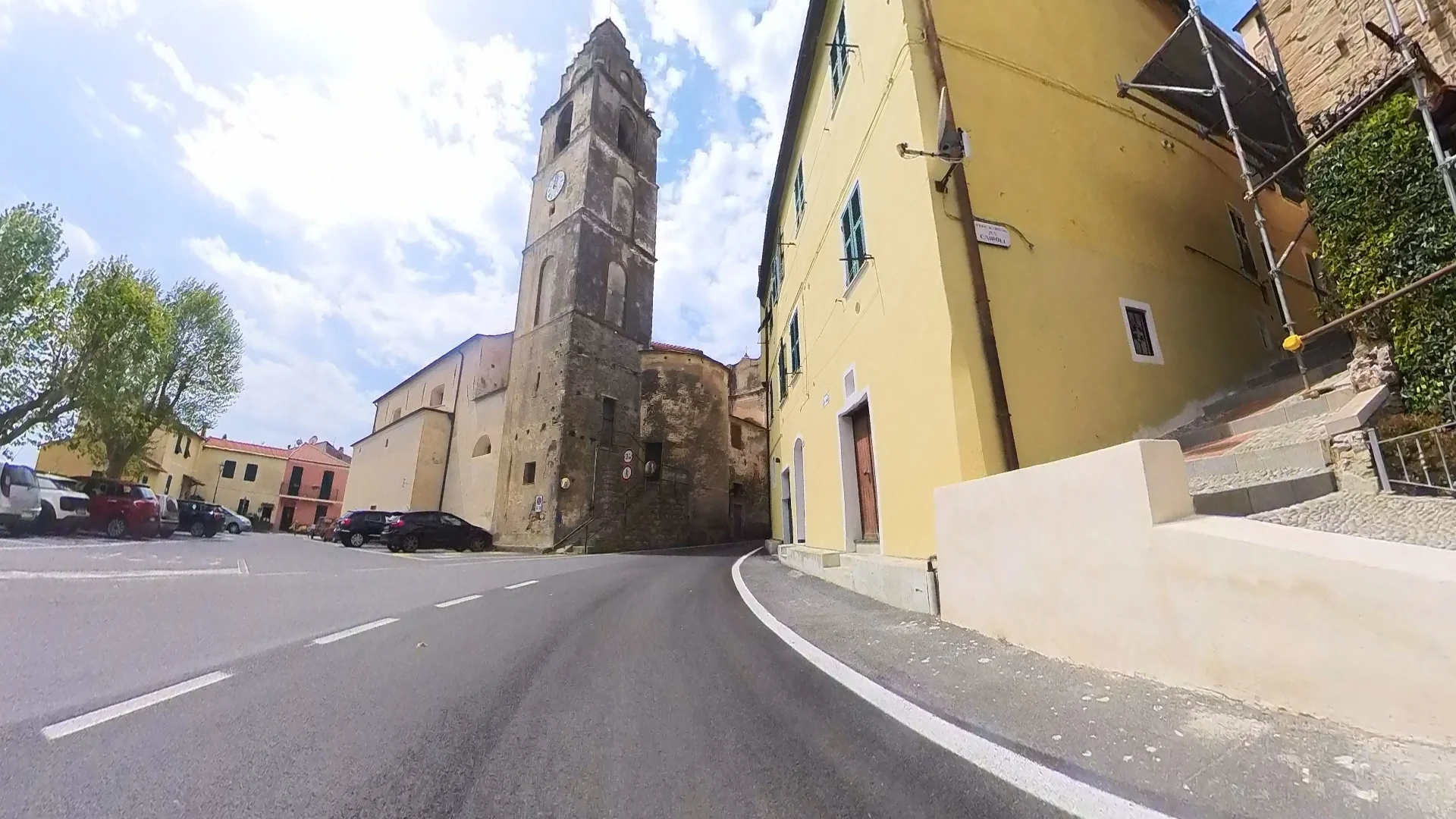
The Cipressa launches from the coast — 5.6 km at 4.2% average, winding through olive groves with sea views behind you. The summit reaches 240 m. Eddy Merckx, Fausto Coppi and Giuseppe Saronni all made their decisive moves on this climb.
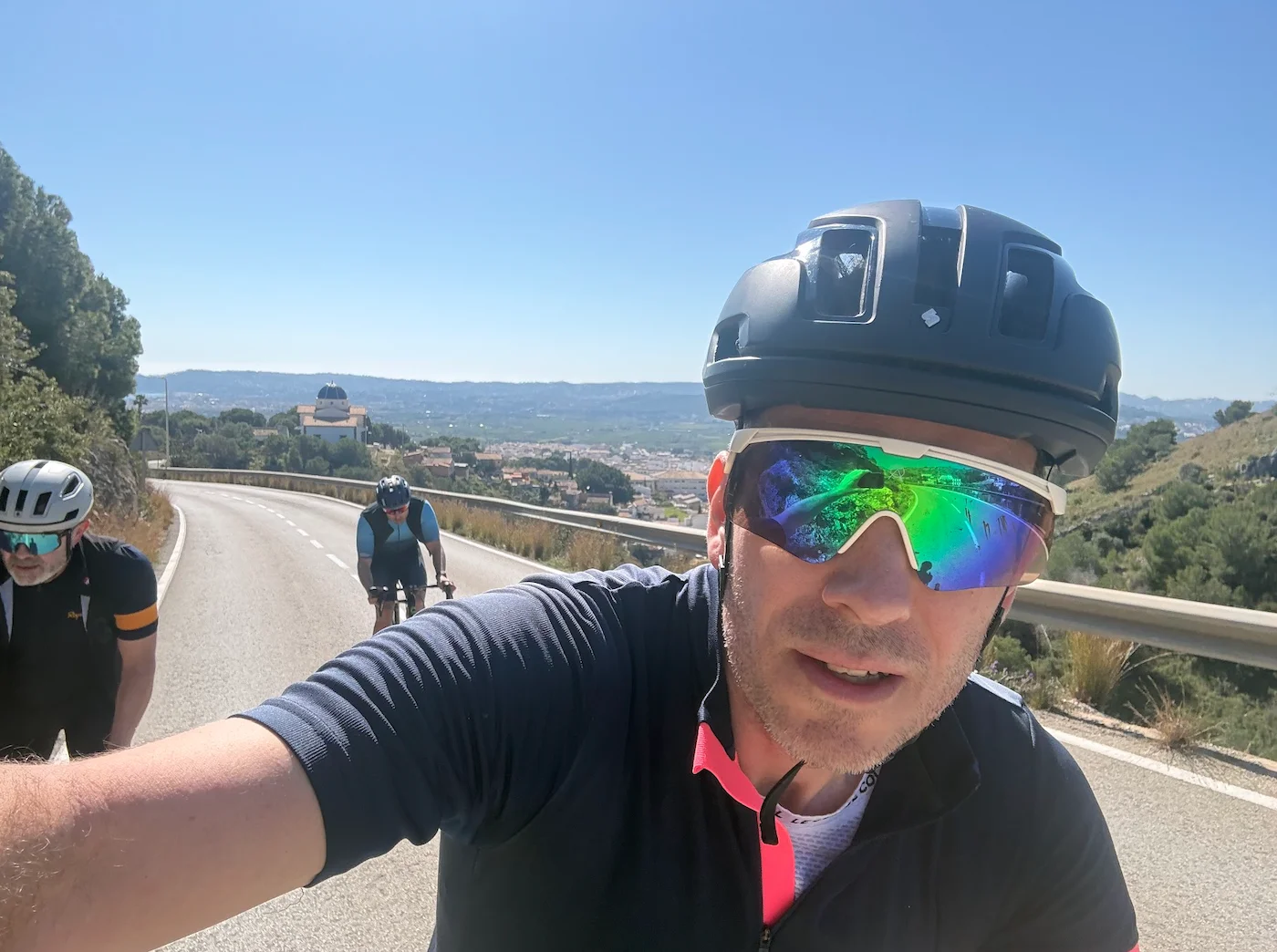
After the Cipressa descent, a few flat kilometres along the coast lead to the Poggio di San Remo — 3.6 km with ramps to 8% and sharp hairpins. The summit reaches 165 m before a narrow, technical descent drops directly into San Remo.
Flat coastal road heading west from San Remo back through Bordighera and Ventimiglia. Cross the border back into France and return to Menton along the same Ligurian coastline — 30 km of easy riding to close the day.
Gallery
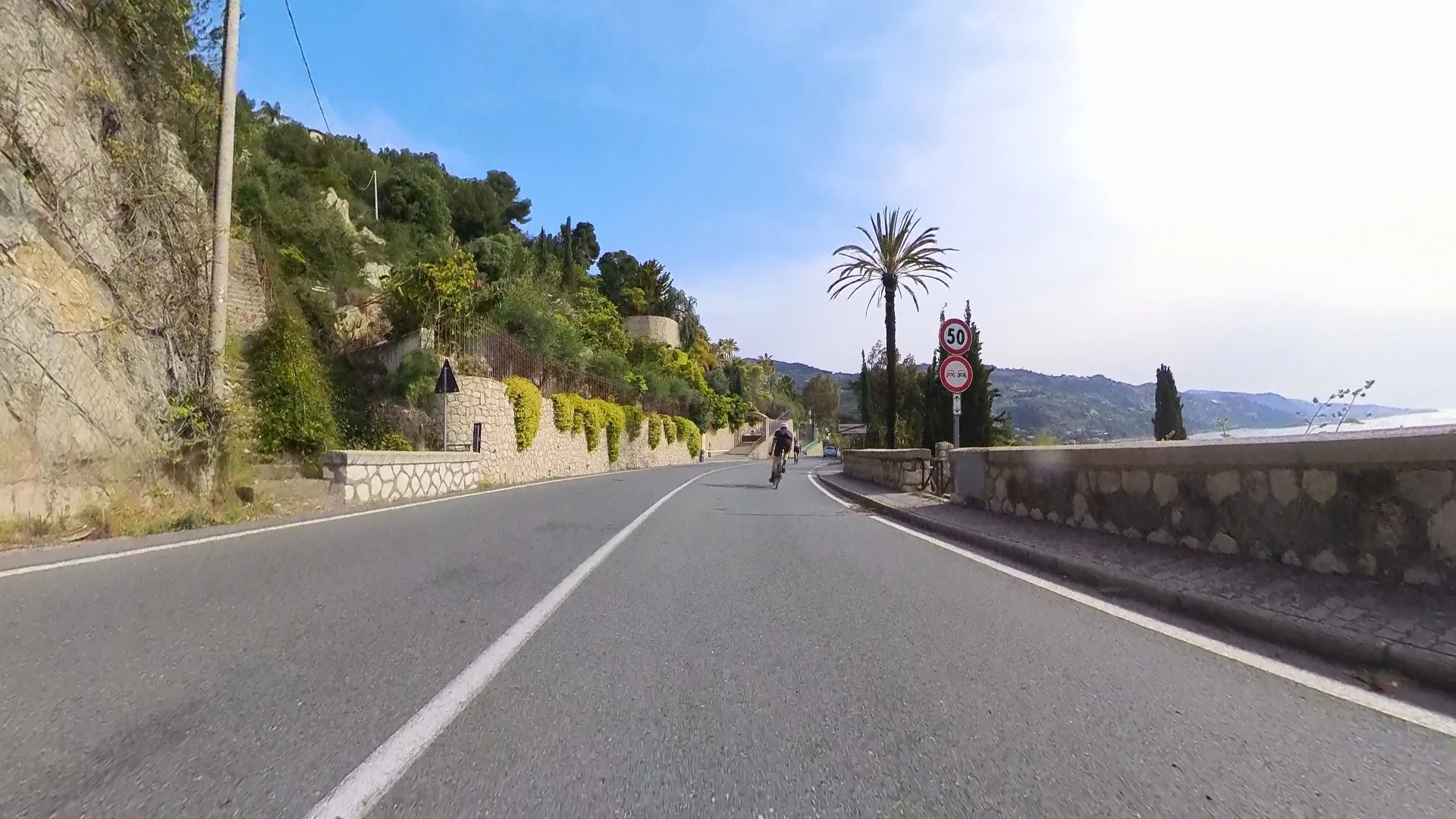
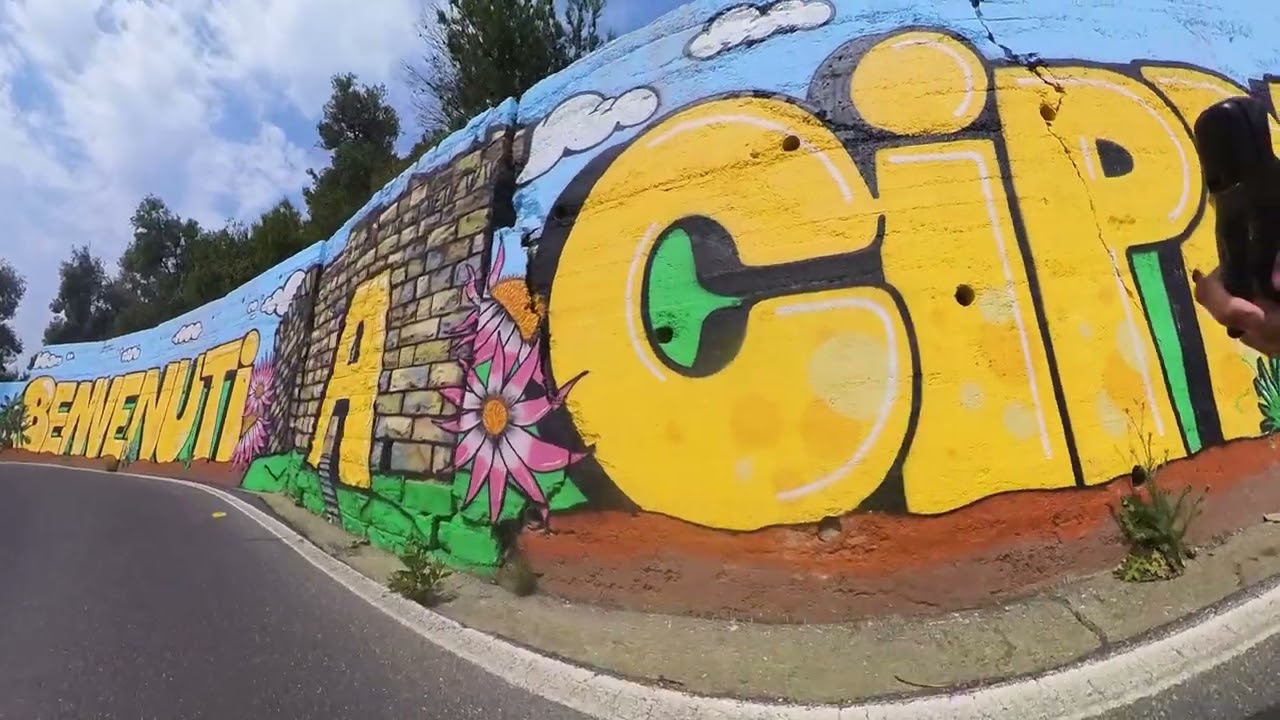
On the Road
Route map & elevation profile
Key Climbs
The climbs we single out in French RivieraPoggio di San Remo
Cat 4Highlights
- •Ride the Monument's finale: From San Lorenzo al Mare, this is the exact run-in professionals race in Milan-San Remo every March: the Cipressa, then the Poggio, then the drop into San Remo. Riding it on fresh legs, instead of after 250 km, is the whole appeal.
- •The railway cycle path: The 24 km Pista Ciclabile del Parco Costiero della Riviera dei Fiori runs traffic-free along the sea on the old Genoa-Ventimiglia line. Its tunnels are cool and shaded; the Capo Nero tunnel is even decorated with the race's most famous moments.
- •The Cipressa: 5.6 km at 4.2%, added to the race in 1982. It is gentle enough that the hairpins become a rhythm game. It was here that Tadej Pogačar blew the 2025 race apart, the first truly decisive Cipressa attack since 1996.
- •The Poggio di San Remo: The famous one, added in 1960. It is 3.6 km at 3.7% with ramps to 8% near the top, and it is where the race is most often won. Expect sea views the whole way up, followed by a fast, technical descent straight into San Remo.
- •World-class speed: Tadej Pogačar holds the Strava KOM on the Cipressa at 8:49, set during the 2026 race he finally won. On the Poggio, he shares the 5:31 record with Filippo Ganna. You will ride them significantly slower, which is exactly the point.
Must know
- ⚠The finale starts at San Lorenzo al Mare: The first 50 km is coastal approach, flat and fast. Save your legs on the railway path; the two climbs and the technical descent come in the final third.
- ⚠Carry ID for the border: The route crosses into Italy in the first few kilometres and stays there until the return leg. There is no checkpoint, but carry identification and check your roaming settings.
- ⚠Easy climbs, technical descents: Both the Cipressa and the Poggio drop fast and technical with tight hairpins. The Poggio descent in particular runs straight into San Remo and rewards a careful line over a fast one.
- ⚠Time coffee stops carefully: La Vesca on the railway path opens early, ideal for the way out. Buona Vita near the Cipressa opens at midday, so it suits a later start or a steady pace.
- ⚠Ride outside high summer: Spring and autumn offer quieter roads and better climbing temperatures. March, when the race itself is run, is a fitting time to ride, though the coast gets busy around race weekend.
- ⚠The railway path is shared: It is popular with families and walkers. It is built for bikes, but it isn't a race track, so ease off through the busy stretches.
Café & Water
- km 32.85La Vesca
Located right on the Pista Ciclabile between Ospedaletti and San Remo. It opens early, making it a great stop on the way out to fuel up before the climbs. A relaxed spot by the sea.
- km 52.1Buona Vita
Located near the top of the Cipressa. A well-placed stop right on the climb, though it opens around midday. It is a good place to pause with the sea below before the run to the Poggio.
Frequently asked questions
- Do I need to be a strong climber for this route?
- No. Both climbs are around 4% and neither is long. The Cipressa is 5.6 km and the Poggio is 3.6 km. A standard compact is plenty; this is about riding a famous finale, not surviving a hard one.
- Who holds the Strava KOMs?
- Tadej Pogačar holds both. On the Cipressa he set 8:49 at the 2026 Milan-San Remo; on the Poggio he shares the 5:31 record with Filippo Ganna from 2024. Most riders take both climbs far more steadily.
- When were the Cipressa and Poggio added to Milan-San Remo?
- The Poggio came first, in 1960, to break up sprint finishes. The Cipressa was added in 1982 to harden the finale. Neither reliably decided the race for decades until Pogačar's 2025 attack.
- Can I start from San Remo?
- Yes. Starting in San Remo lets you ride just the finale, the Cipressa and the Poggio, as a shorter loop. The full Menton version adds the coastal approach and the railway path, which is a highlight in its own right.
- Is the railway cycle path suitable for road bikes?
- Yes, it is fully paved and smooth. It is shared with walkers, so it is not a place to race, but for the 24 km between Ospedaletti and San Lorenzo al Mare it is a calm, traffic-free run.
- When is the best time to ride?
- Spring and autumn for quiet roads and good temperatures. Riding in March has a certain appeal, but expect more crowds near San Remo on race weekend.
Know a better line?
Submit your local route and get featured with your own author profile, Strava, Instagram and Buy Me a Coffee link.
Share a Route → →