The Riviera holds a dense set of climbs known from the pro peloton: Col de la Madone above Menton, Turini and Braus further inland, Vence and Gourdon behind Nice, and Cipressa and Poggio just over the Italian border. Most start at the waterline and climb without a break. Menton and Cagnes-sur-Mer make good bases. The coast is rideable all winter, but the highest inland cols can be closed by snow.
Region at a glance
All Routes in French Riviera
6 handpicked road-cycling routes in French Riviera.
Menton Cols Loop
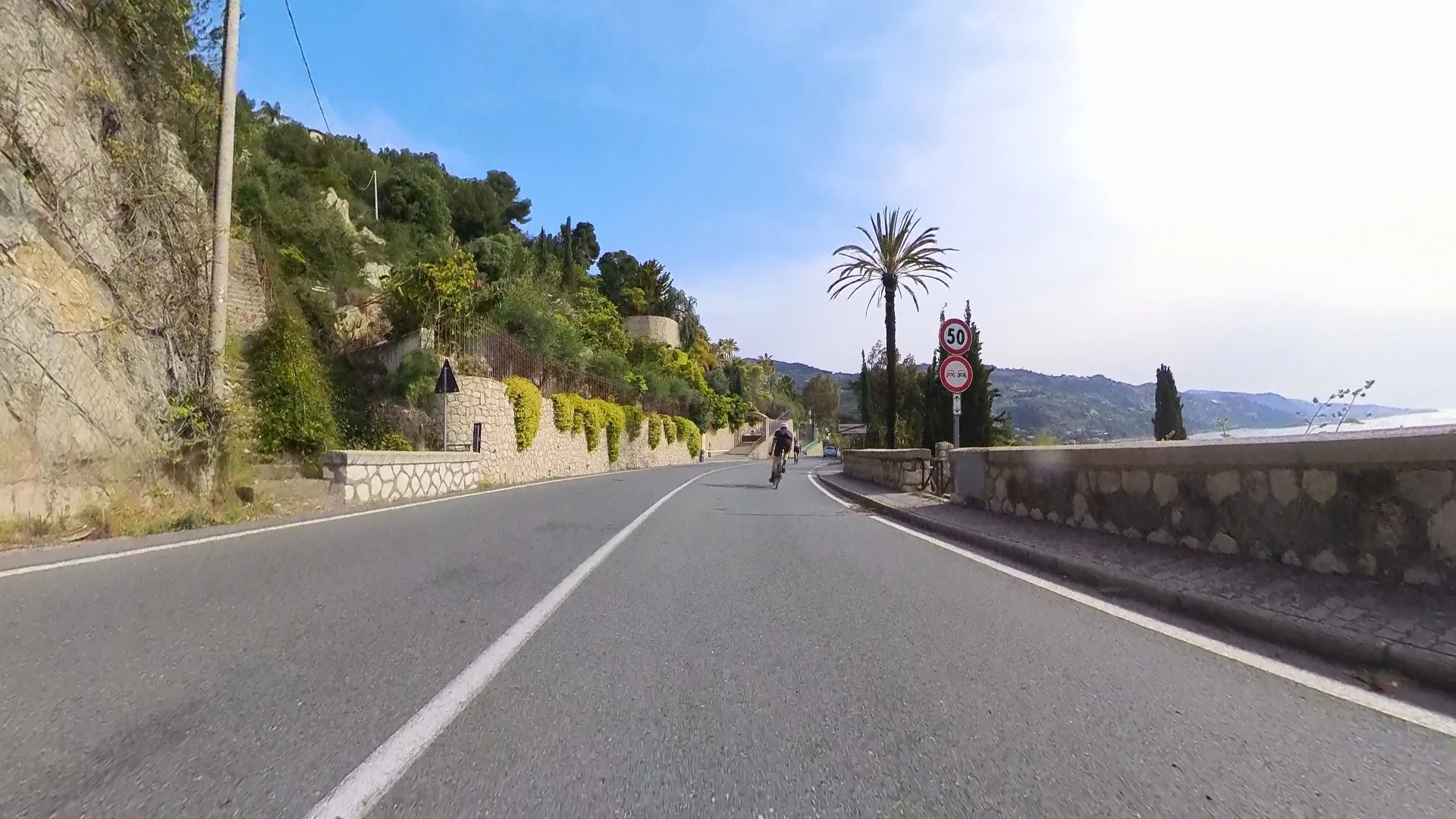
A cross-border loop from Menton — a perfect introduction to the roads behind the town. This 61 km ride crosses into Italy along the coast, then climbs two categorised cols: Col de Vescavo from the Italian side and Col de Castillon from Sospel, before a long descent back to the Mediterranean. Col de Castillon is the final pass of the Route des Grandes Alpes, and the medieval village of Sospel — with its 14th-century toll bridge that was bombed and later restored — sits between the two climbs.
Col de Turini & Col de Braus
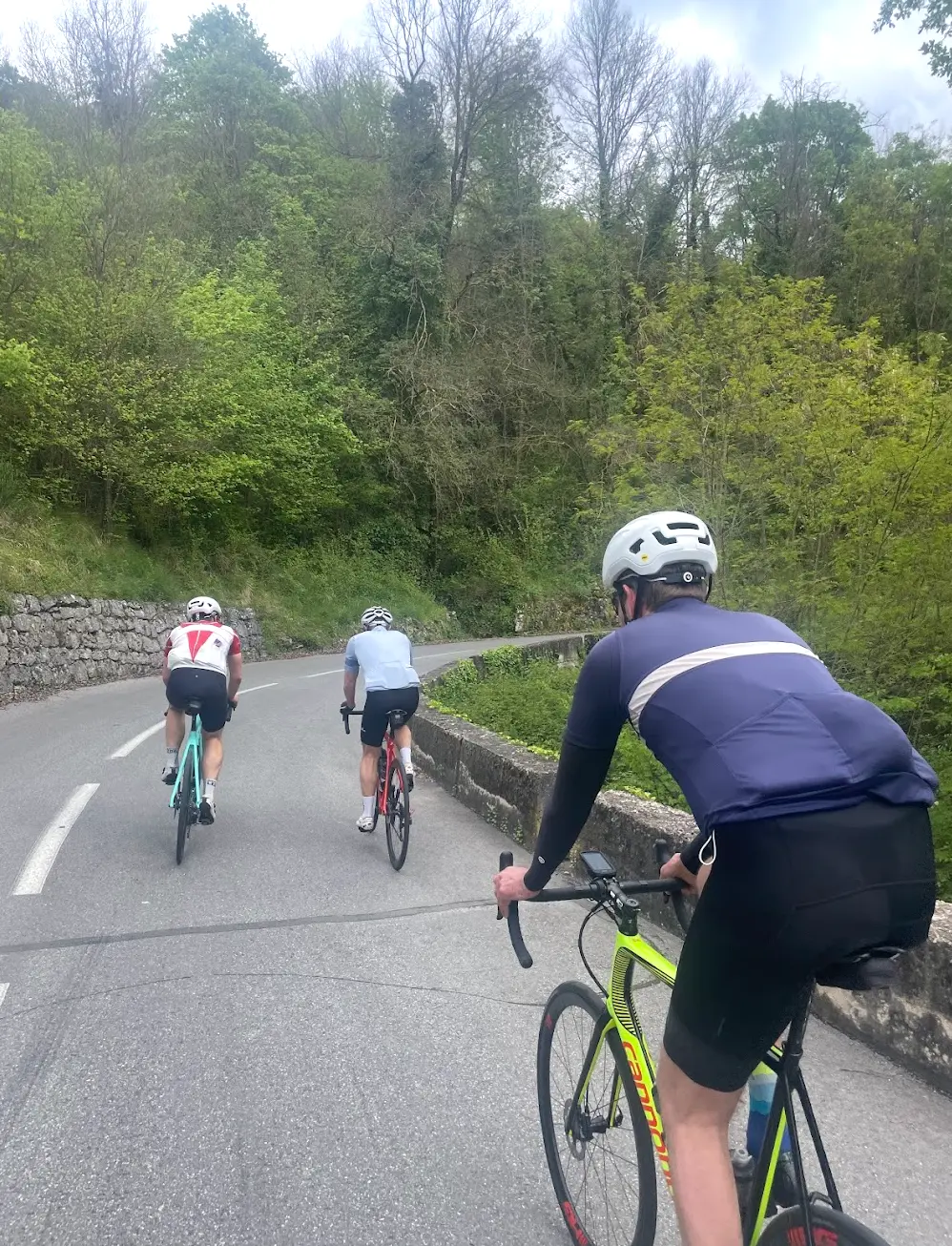
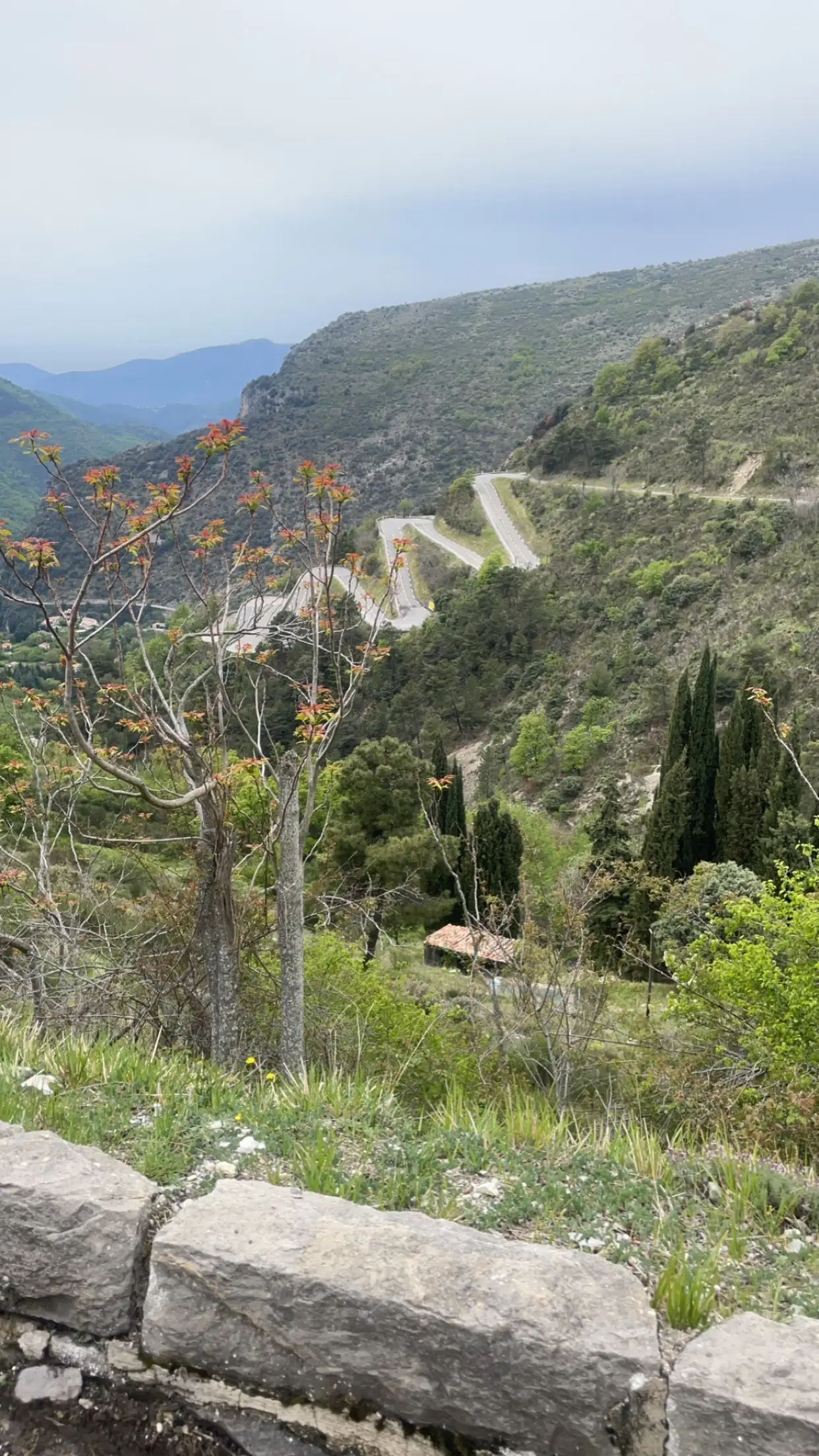
Four categorised climbs. 159 kilometres. 3,430 metres of elevation. From Menton via Monaco to Col de Turini at 1,607m, descending through Nice and climbing Col d'Èze before returning along the Corniche. Also rideable from Nice — one of the finest cycling days on the French Riviera.
Col de la Madone Classic
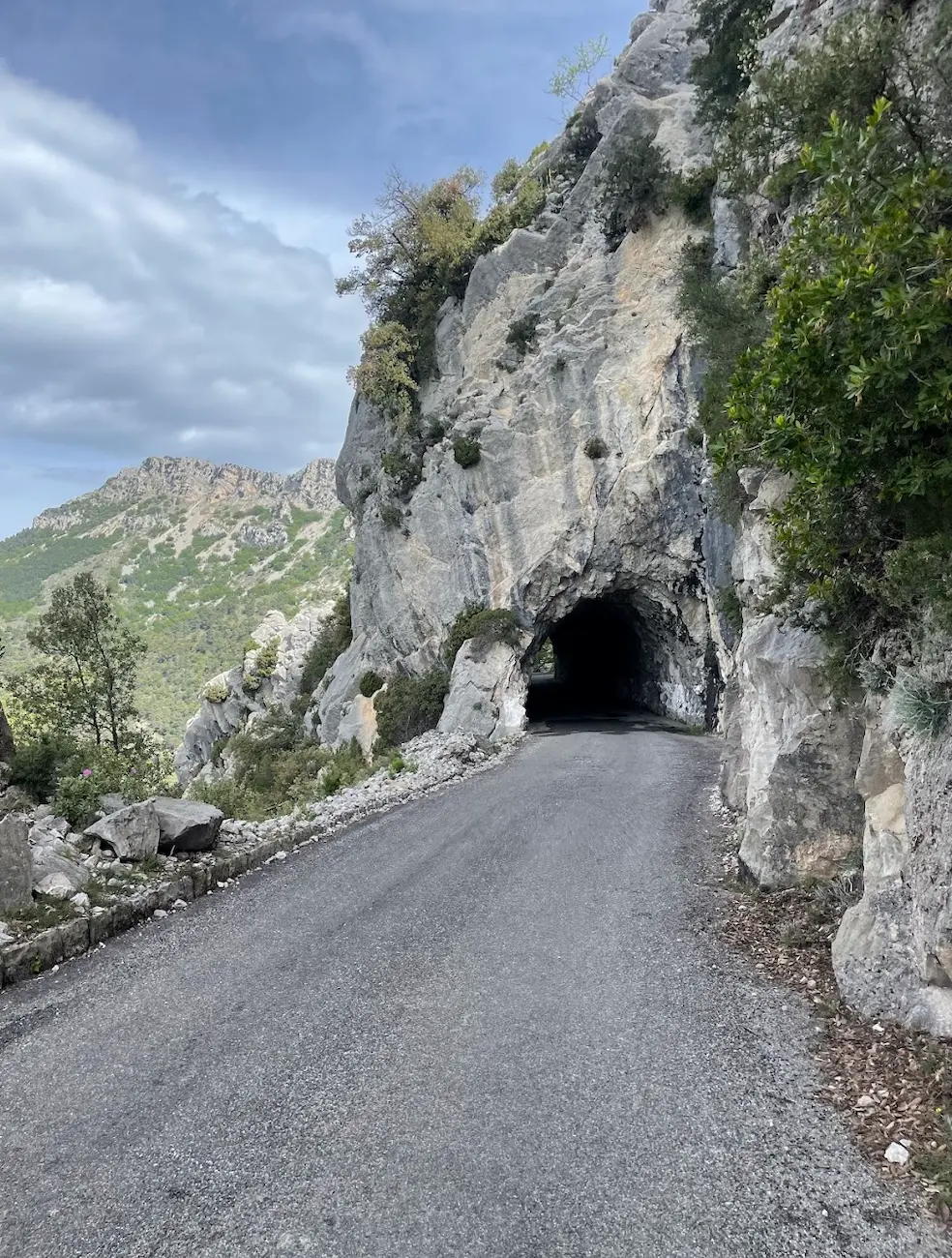
Lance Armstrong used this climb as his personal benchmark for the Tour de France, and it remains a favourite for today's pros—Tadej Pogačar set a much-talked-about time here in 2023. Trek even named a bike after it. The Madone is 13 km of sustained climbing above Menton, passing through Sainte-Agnès—one of France's most beautiful villages—with Mediterranean views all the way. A return route through Monaco rounds out one of cycling's most glamorous days.
Col de Vence & Gourdon — Long Loop from Cagnes
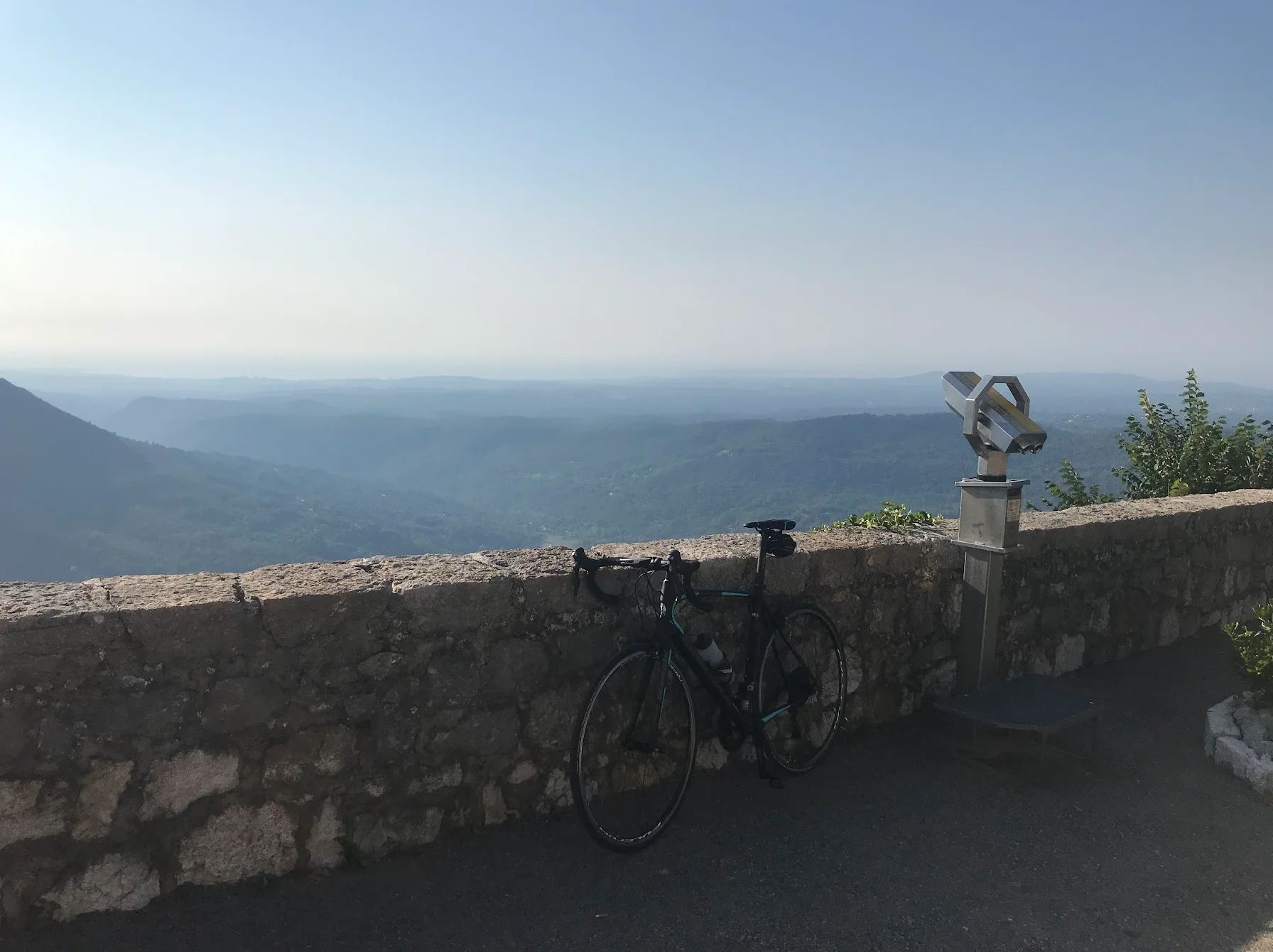
A 109 km loop from the coast at Cagnes-sur-Mer up to the clifftop village of Gourdon, then over Col de Vence at 963 m and back down through the medieval town of Vence. The two real climbs are spread far enough apart that the legs have time to recover, but the final ramps to the col bite. Best as an early-summer ride — the south-facing slopes catch the heat fast.
Col de Vence & Gourdon — Classic Loop from Cagnes
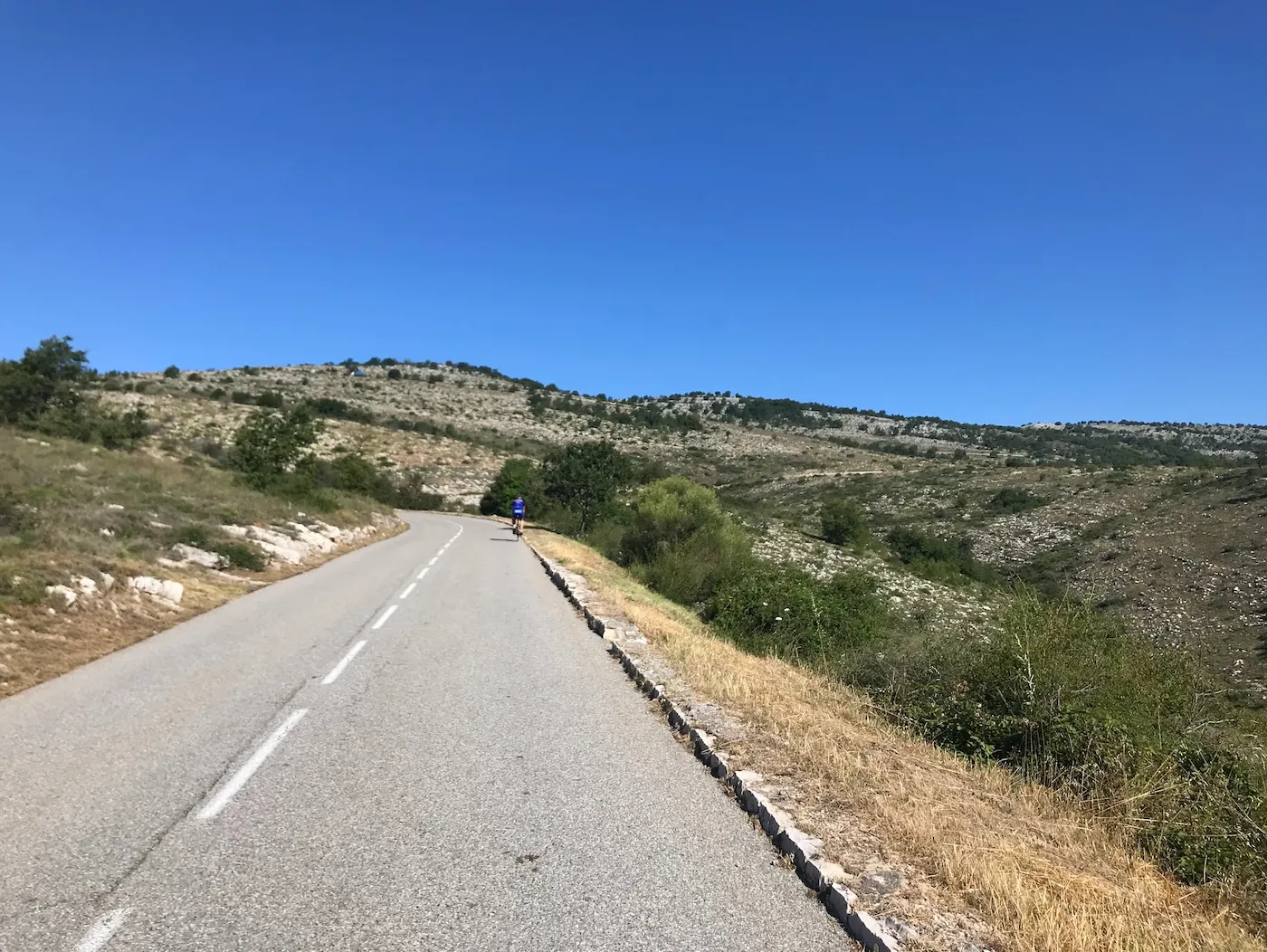
An 82 km loop from the Riviera coast into the Alpes-Maritimes behind Nice, built around Col de Vence — the climb from the Vence side, a steady 9.7 km at 6.5% with the steepest, most exposed stretch near the top. You leave Cagnes-sur-Mer at sea level, climb through the medieval town of Vence, and top out at 963 m, the highest point of the day. From there the road rolls high across to Gourdon, a village pinned to a clifftop with the whole coast laid out below, before a fast 28 km descent drops you back to the Mediterranean. It's the shorter, sharper alternative to the 109 km Col de Vence loop: the same summit from the harder direction, and home before lunch.
Milano–San Remo Cycling Route — Cipressa & Poggio
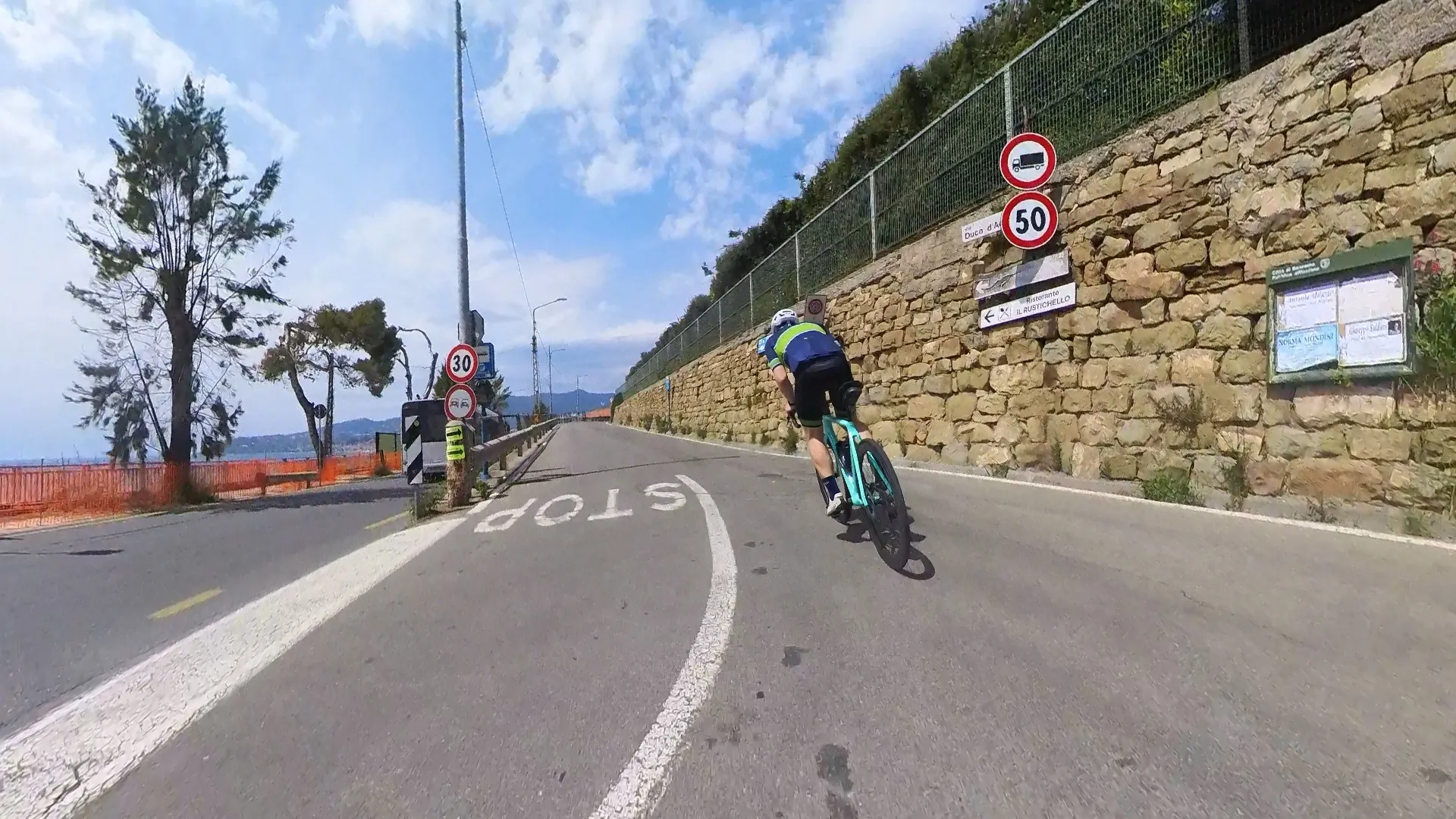
A cross-border loop from Menton that rides the finale of the world's longest cycling Monument. This 102 km loop follows the Ligurian coast into Italy and along the Pista Ciclabile del Parco Costiero della Riviera dei Fiori, a traffic-free railway path featuring tunnels that celebrate the history of Milan-San Remo. From San Lorenzo al Mare you take on the race's actual finale: the Cipressa and the Poggio, the two climbs that decide "La Classicissima" every March. Expect moderate gradients, sweeping sea views, and a hairpin rhythm that is far more engaging to ride than it looks on television.
The French Riviera is where the Alps meet the Mediterranean — and for road cyclists, that combination produces something extraordinary. Within minutes of leaving the coast, the roads climb steeply into a landscape of mountain villages, limestone gorges and switchback passes that have defined professional cycling for generations. Col de la Madone, Col de Turini, Col de Braus — these are climbs with history, and you can ride them all from the same base.
Read the full guide ↓Show less ↑
The region's routes stretch from Menton on the Italian border to the hills above Nice, taking in some of the most celebrated roads in European cycling — from coastal hairpins to deep mountain passes.
Where to stay
Menton is our top recommendation for cyclists. This charming small town sits right on the Italian border — you are out on the bike within minutes, with no urban transfer to navigate. The old town is beautiful, the restaurants and cafés are excellent, and the proximity to Italy is a genuine bonus. It is a quieter, more authentic base than Nice without sacrificing any of the access to the great climbs.
Nice is the larger and more convenient city, well connected by train and with a wide range of accommodation. If you are based in Nice, expect a few busy kilometres getting through the city before the roads open up — but once clear, the climbing begins almost immediately.
When to go
April to June is the favourite season for most cycling visitors — temperatures between 16–23°C, long days and the mountain roads at their most beautiful. The worst summer tourist traffic on the narrow Corniche roads has not yet arrived, and you can complete a full day in the mountains and still have light to spare. Pack a wind vest even in May — the higher passes can be cold at the top.
September and October offer arguably the finest conditions of the year. The Mediterranean is still warm after summer, air temperatures sit between 20–25°C, and the tourist crowds have thinned significantly — making the coastal roads noticeably safer and more pleasant. October can bring occasional heavy showers, but they typically pass quickly.
November to March is when the professional teams arrive. Nice is one of the very few places in Europe where road cycling is possible year-round — temperatures in the lowlands stay around 12–15°C through winter, and the classic climbs below 1,000 metres are rideable throughout the season. For the higher Alpine passes, wait until May or June when the snow clears.
Practical tips
Always carry cash in the mountains — not every café or village shop accepts card, and on some of the more remote climbs your options are limited. Bring more food than you think you need: it can be a long way between stops on the mountain routes. Village fountains are the best source of water on the climbs — the water is safe to drink and locals are always happy to help if you ask. A wind vest is essential kit regardless of the temperature at the coast — the summits are significantly colder, and the descents from Col de Turini or Col de la Madone can be bitterly cold even on warm days.
Frequently asked questions
- Which are the most famous cycling climbs on the French Riviera?
- Col de la Madone (famous from Lance Armstrong's training), Col de Turini and Col de Braus are the benchmark climbs. All are within an hour of Nice or Menton.
- When is the best time to cycle the French Riviera?
- March to June and September to November. Summer is hot and tourist traffic on mountain roads is heavy.
- Can I cycle the Milano–San Remo route?
- Yes — the full classic route from Milan to San Remo is rideable. Most cyclists start from Menton for the final iconic section over the Poggio and Cipressa.