Coll de sa BatallaCat 2
- 7.89 km
- Length
- 4.9%
- Average
- 387 m
- Elevation gain
- 7.0%
- Steepest 500 m
- 578 m(GPX)
- Summit
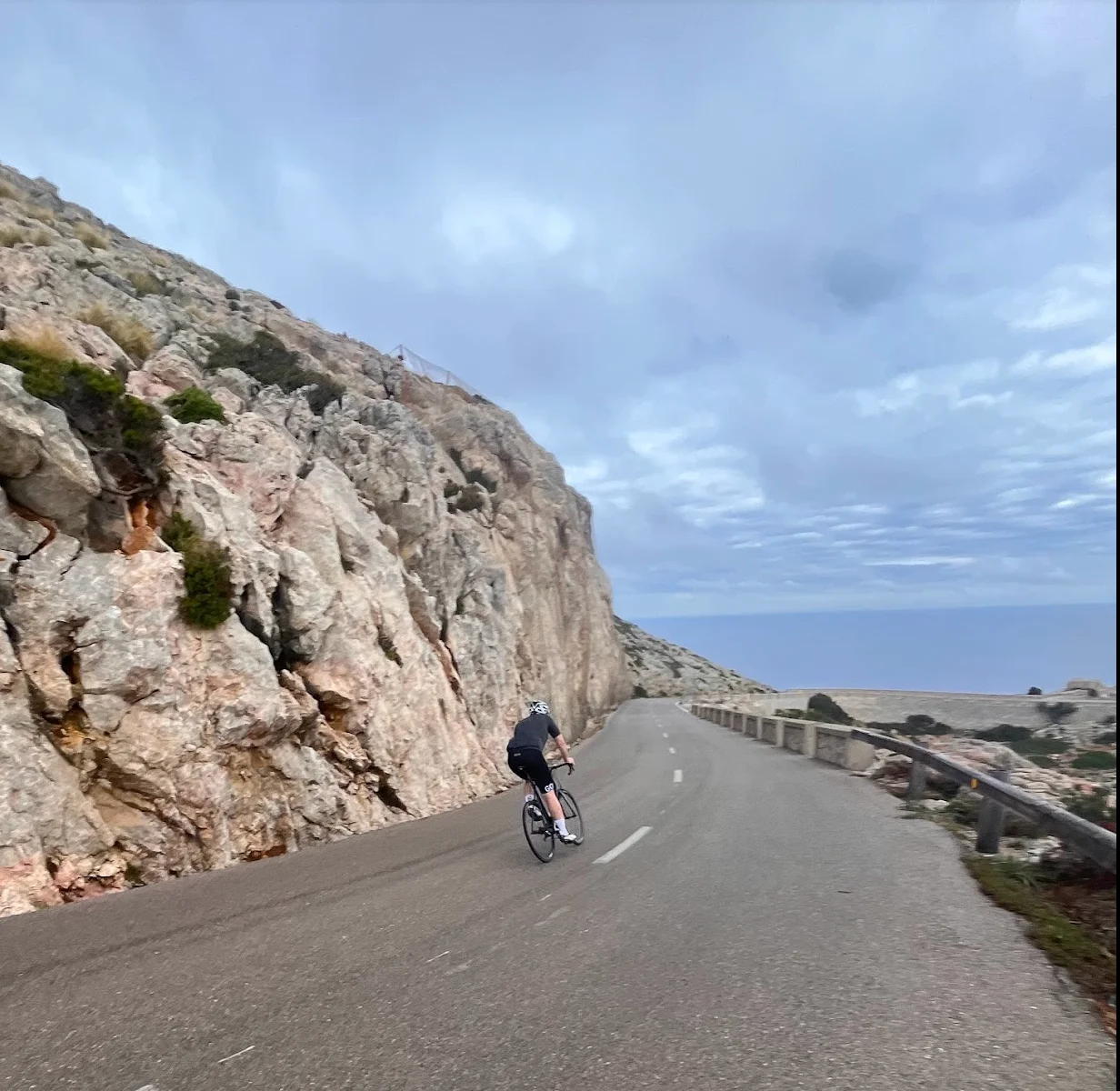
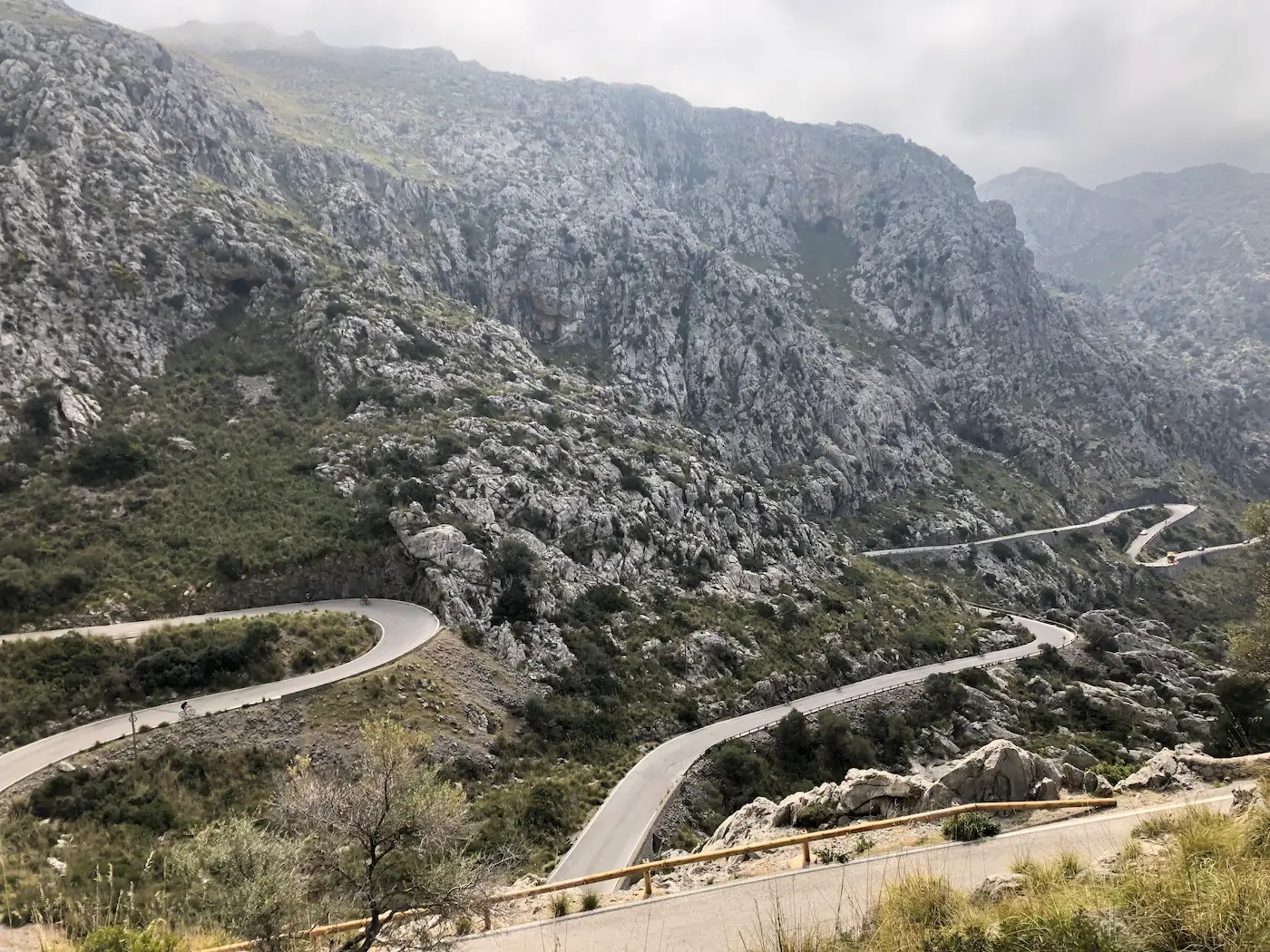
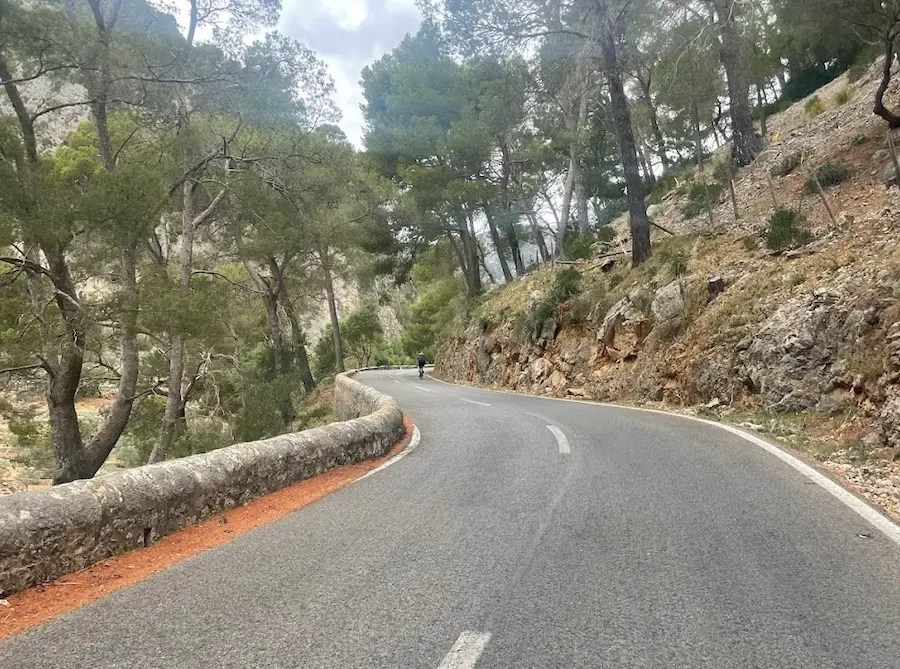
Sa Batalla climbs steadily and never kicks hard enough to put you out of the saddle. Pick a gear, settle in, and it will take you to the top. Early on the road terraces back on itself tightly enough that you can look down on riders below you; further up it runs through pine shade before the view opens near the summit. The col is the main meeting point for cyclists on the island, with a café next to the service station where groups wait for each other before dropping down the far side. It is also the last reliable water before the descent — and the café keeps seasonal hours where the station does not.
How long will Coll de sa Batalla take you?
A rider at 3.0 W/kg takes about 32 minutes to climb Coll de sa Batalla.
Put in your weight and the average power you hold on the gradient. We add 9 kg for bike and kit. The model works the time out from physics, and it has been tested against real rides.
Riders
The road
The name misleads people. Coll de sa Batalla means the pass of the battle, and the battle most people think of is Jaume I against the Almohads in 1229. That one was somewhere else entirely — at the pass near Calvià, in the south of the island.
This pass sits by Lluc, and was formerly called es Grau de Lluc. The name it carries today came later, and the sources do not agree on where it came from. The only certainty is that 1229 is not the answer.
The climb
Sa Batalla is an even, pleasant climb from the first metre. The gradient holds steady, so you find your rhythm quickly and a gear you can keep for most of the way.
Two thirds up, the climb lets go. You get the best part of a kilometre that is almost flat, and at one point the road even tips downhill, so the speed comes back.
Then you hit the steepest stretch of the whole climb. It is not especially long, but because you have just come off the flat carrying speed, it bites a little harder and feels far steeper than it is.
The last kilometres climb as steadily as the bottom did, and then you are suddenly up.