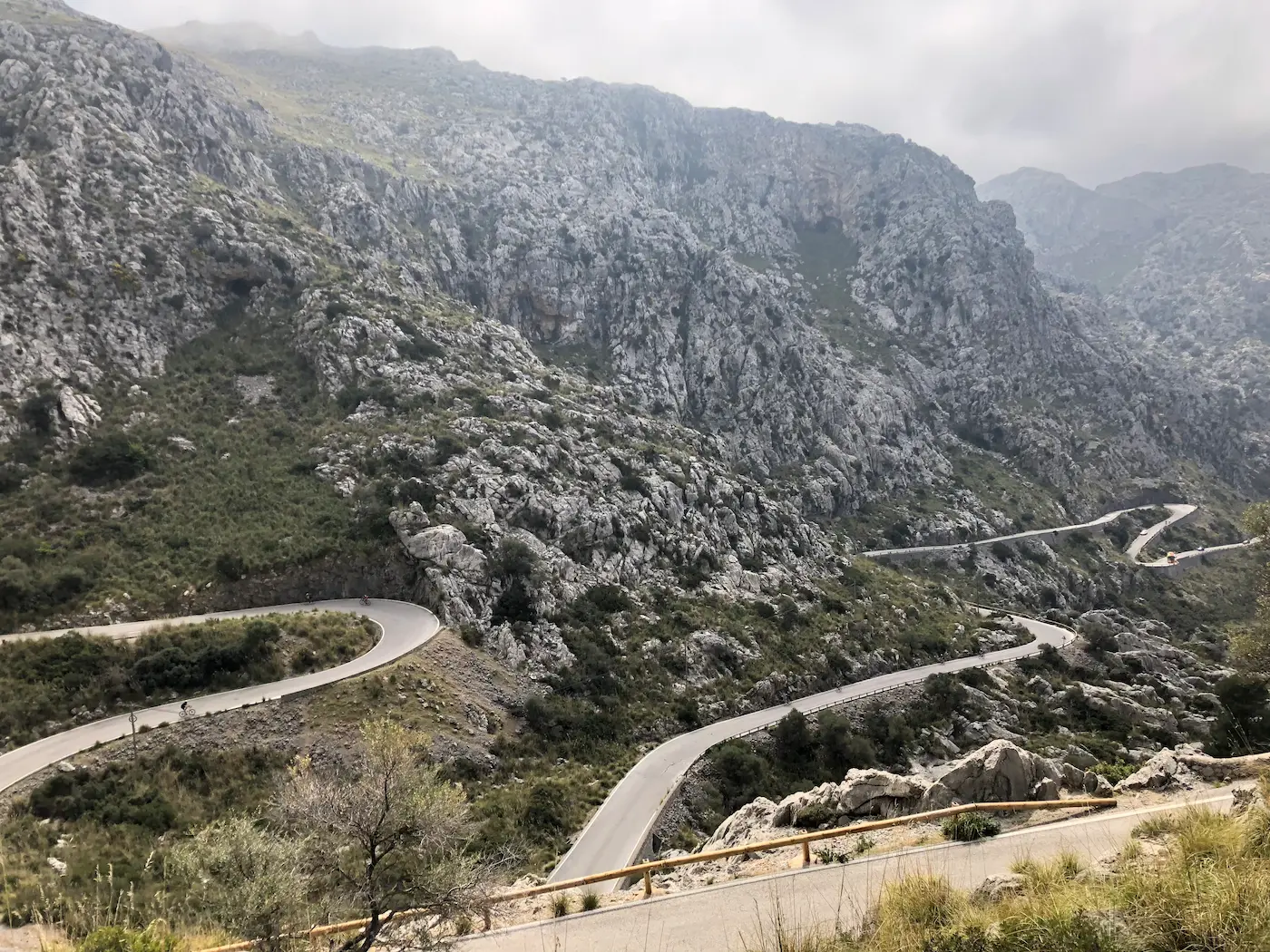
The road down to Sa Calobra is a dead end that drops all the way to the sea, so most riders descend it and climb straight back out, seeing every bend twice. Go down carefully. Tour buses use the same road, and one held up by oncoming traffic will block it completely on a blind bend. The climb back saves its hardest work for the end, so keep something in the tank through the lower half. Higher up the hairpins come thick and they help — the road flattens through each bend, which buys a second's rest and something to wind the speed up out of. Then it stops helping. Past the Nus de sa Corbata, where the road loops over itself and you ride under tarmac you were on a minute earlier, the last stretch straightens out and stays steep to the top.
How long will Sa Calobra take you?
A rider at 3.0 W/kg takes about 47 minutes to climb Sa Calobra.
Put in your weight and the average power you hold on the gradient. We add 9 kg for bike and kit. The model works the time out from physics, and it has been tested against real rides.
Riders
The road
Sa Calobra is no ordinary pass. It is a dead end: down from Coll dels Reis to a cove on the north coast, and there it stops.
Antonio Parietti Coll drew it, the same engineer behind the road out to Cap de Formentor. When it opened in 1933, the point was not to find the shortest way down to the sea. The road follows the landscape rather than the straight line.
The Nus de sa Corbata — the tie knot — is the place everyone recognises. There the road turns through 270 degrees and passes under itself, simply because the mountainside left room for nothing else.
The climb
Down in the cove there is nothing to do but get ready. The average gradient misleads a lot of people, because the gradient changes the whole way up, and if you go out too hard you pay for it.
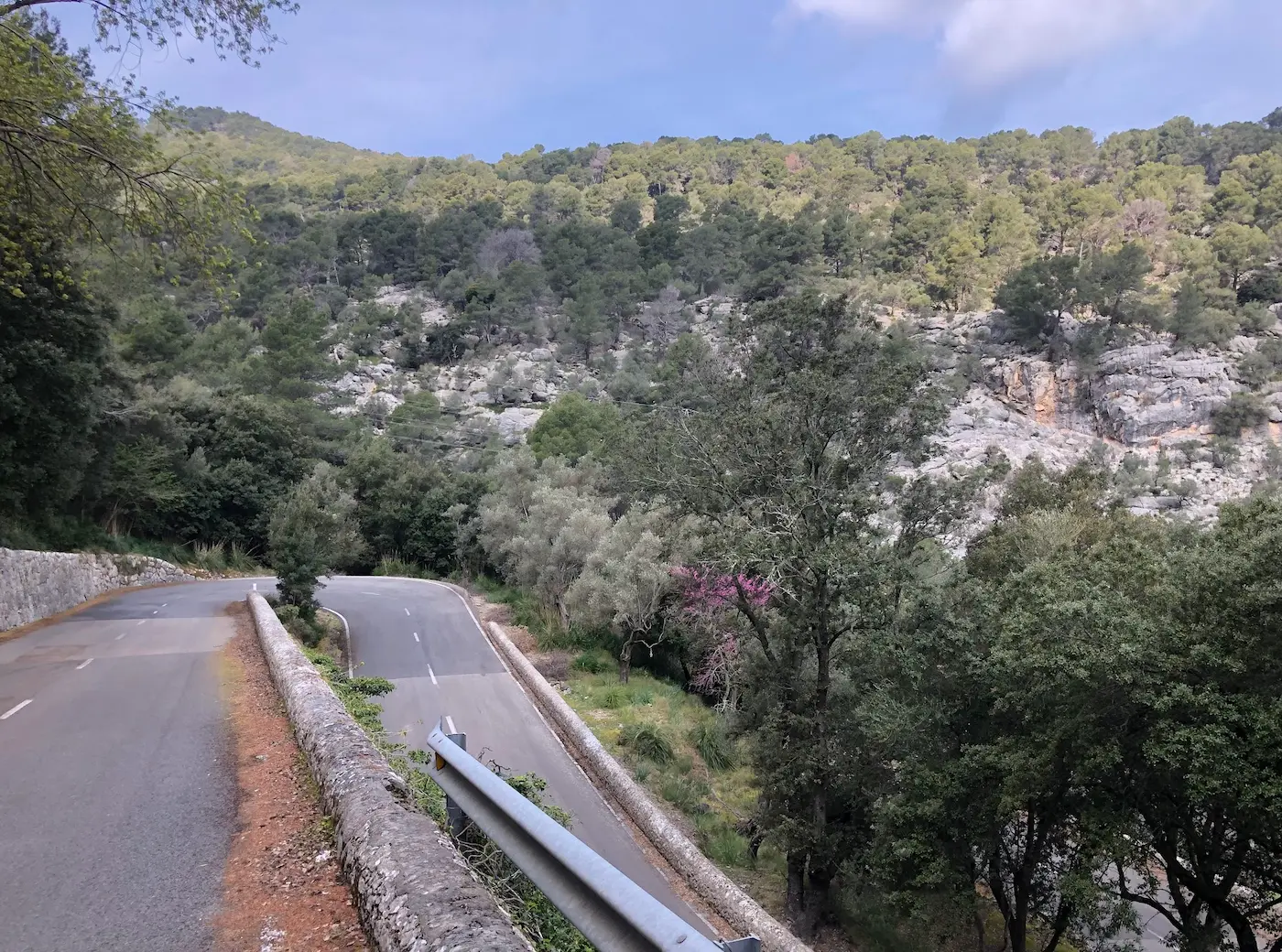
The first couple of kilometres are manageable. There is vegetation here, you are sheltered from the wind, and early on you ride through the well-known gorge where the rock almost closes over the road. From the third kilometre it steepens, and in the fourth comes the climb's first real ramp.
By halfway there is not much vegetation left to shelter you from the wind. In return the landscape opens, and if you look up you see the switchbacks stacked in the mountainside all the way to the pass.
The last kilometre and a half is the climb's most brutal stretch. It is hard going here however good you thought your legs were, and the very last kilometre squeezes out whatever you have left.