Col de la Madeleine
About this Route
← Oisans & Maurienne Cycling GuideA 39.6 km out-and-back over the Col de la Madeleine with 1,529 m of climbing — a hors catégorie Tour de France classic up the D213 from La Chambre. Nineteen kilometres of near-constant 7 to 9% to a 2,000 m summit, then the same road all the way down.
I rode this in July 2023 and, honestly, it was pure survival mode. My head unit was reading 36 to 45°C almost the whole way up — probably not entirely accurate, but it felt every bit that hot. The tarmac radiated like a pizza oven and the air in the Arc valley near La Chambre was close and still, the kind of heat where you empty a bottle in twenty minutes and still feel parched.
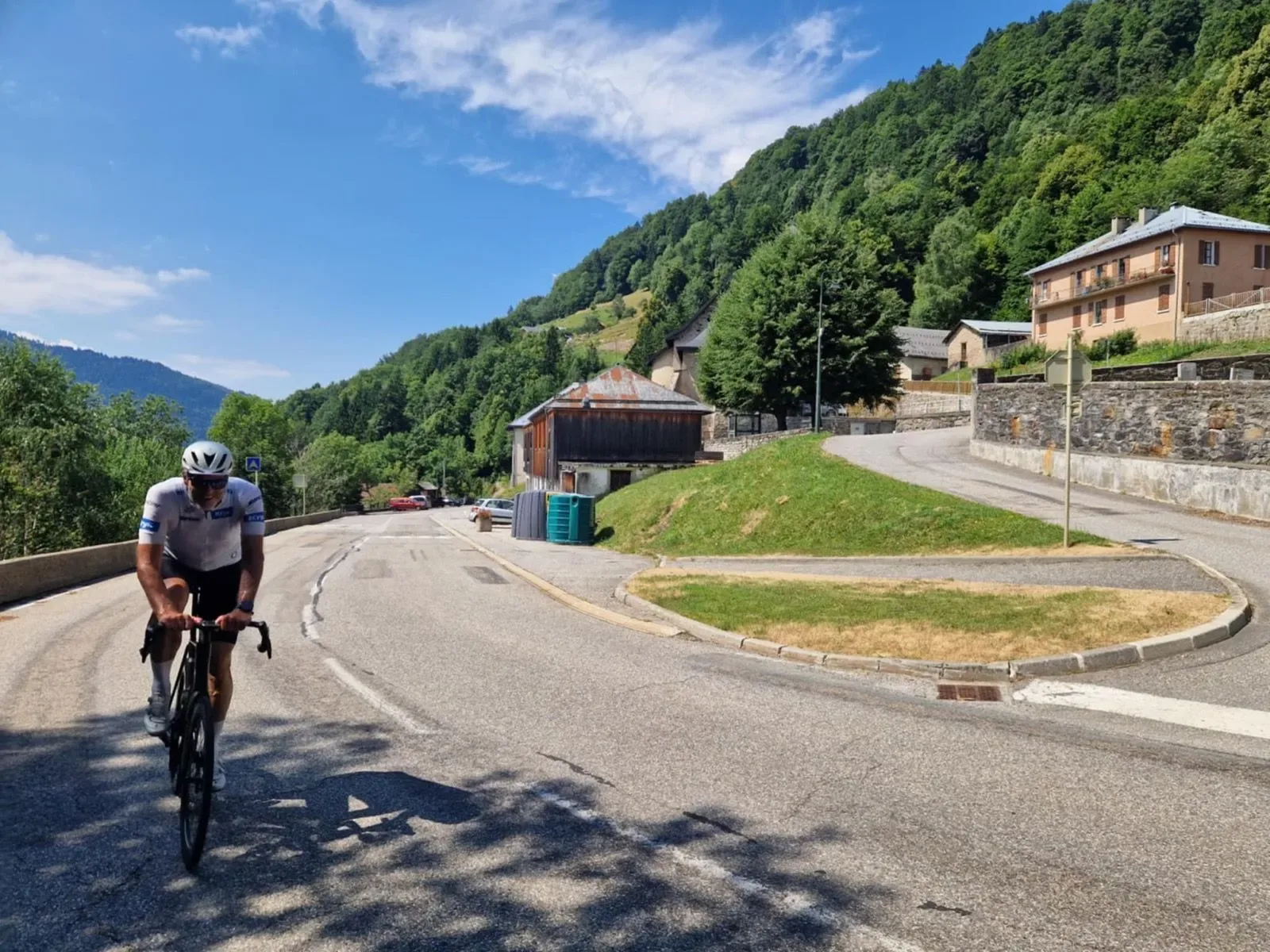
The D213 leaves the valley through Saint Martin sur la Chambre, tips upward almost immediately, and for the first handful of kilometres you're grinding between orchards and village rooftops with only brief patches of shade. Once the road enters the forest it settles into that grinding, patient rhythm the Madeleine is known for — narrow tarmac, stone barns in the hamlets, the occasional fountain that saved my ride. I stopped at every one. If you're riding this in summer, plan on it.
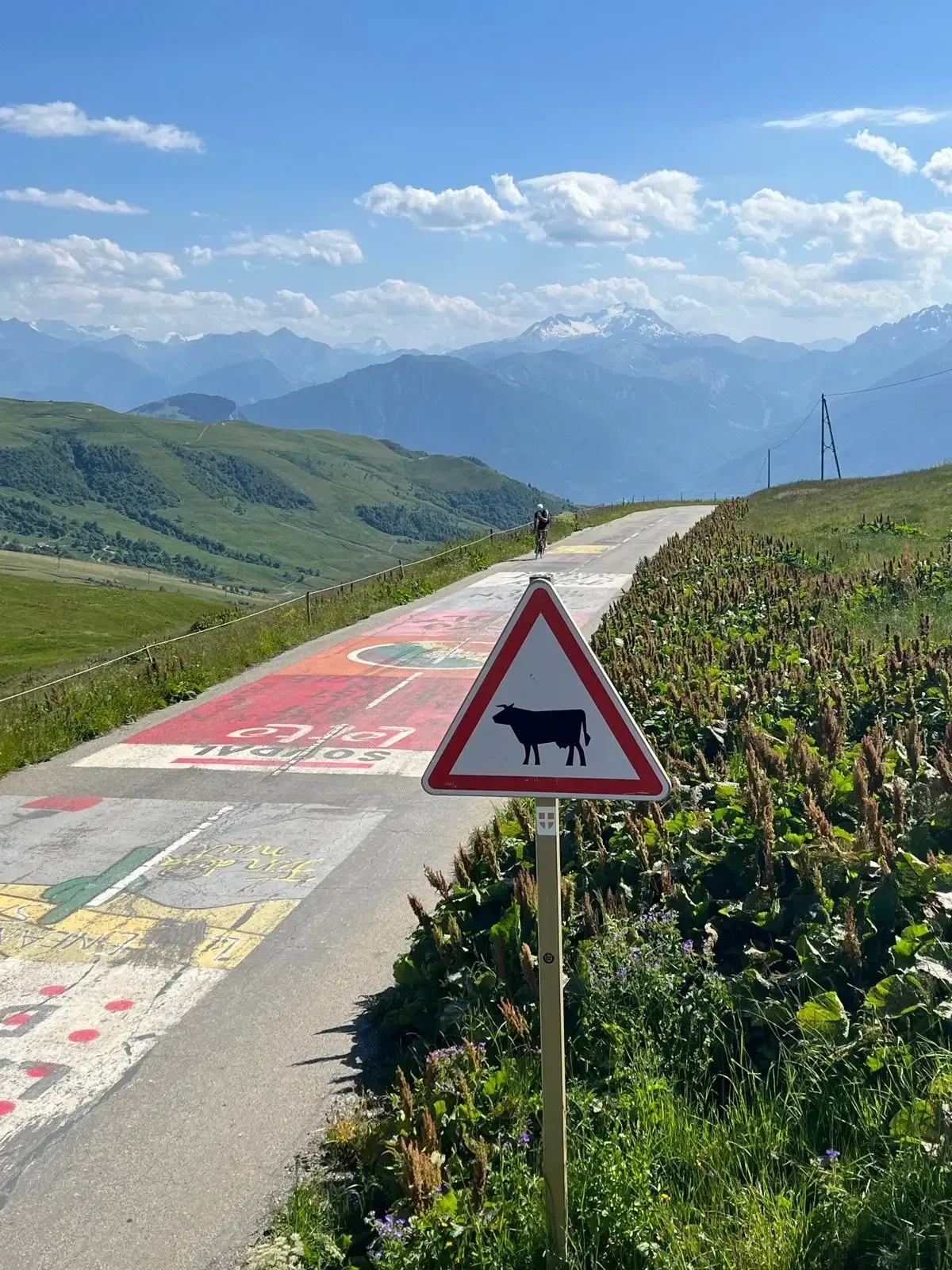
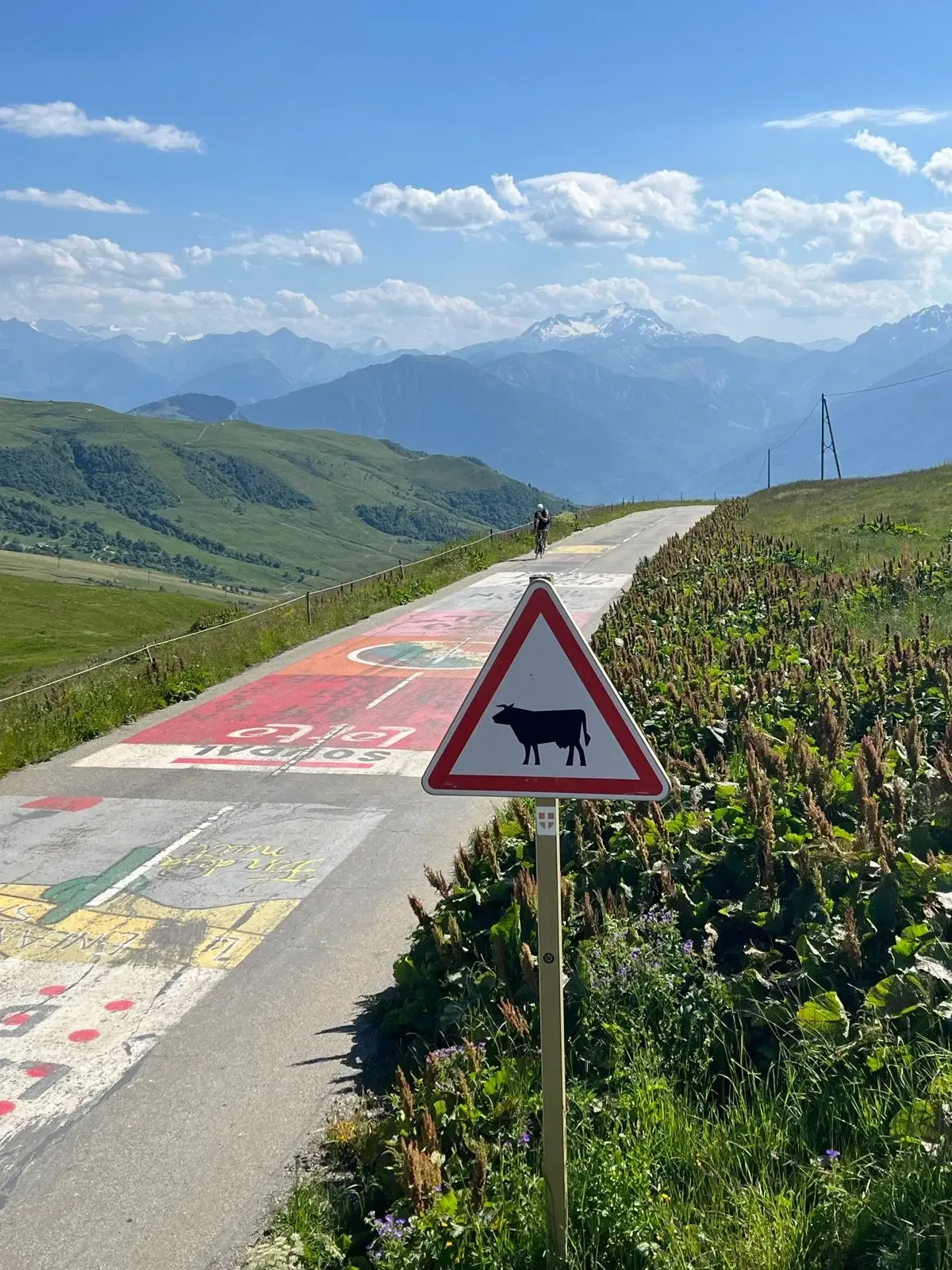
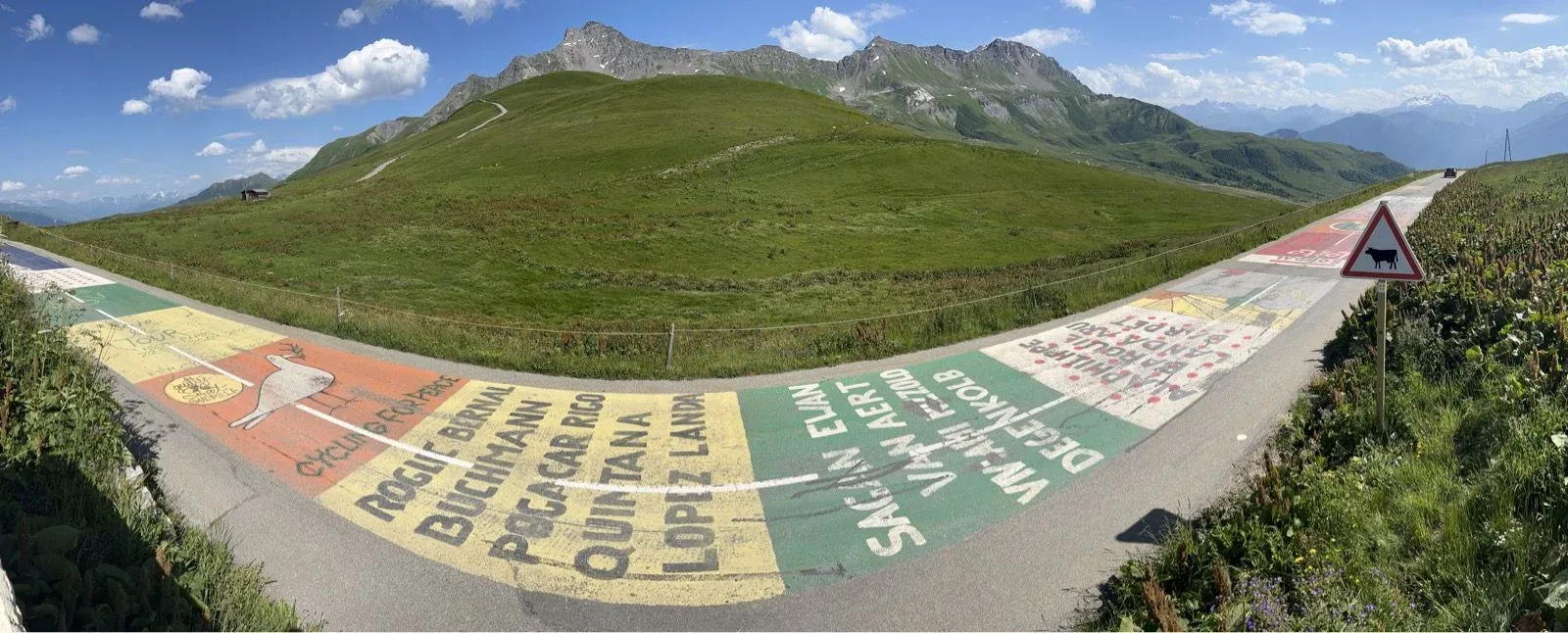
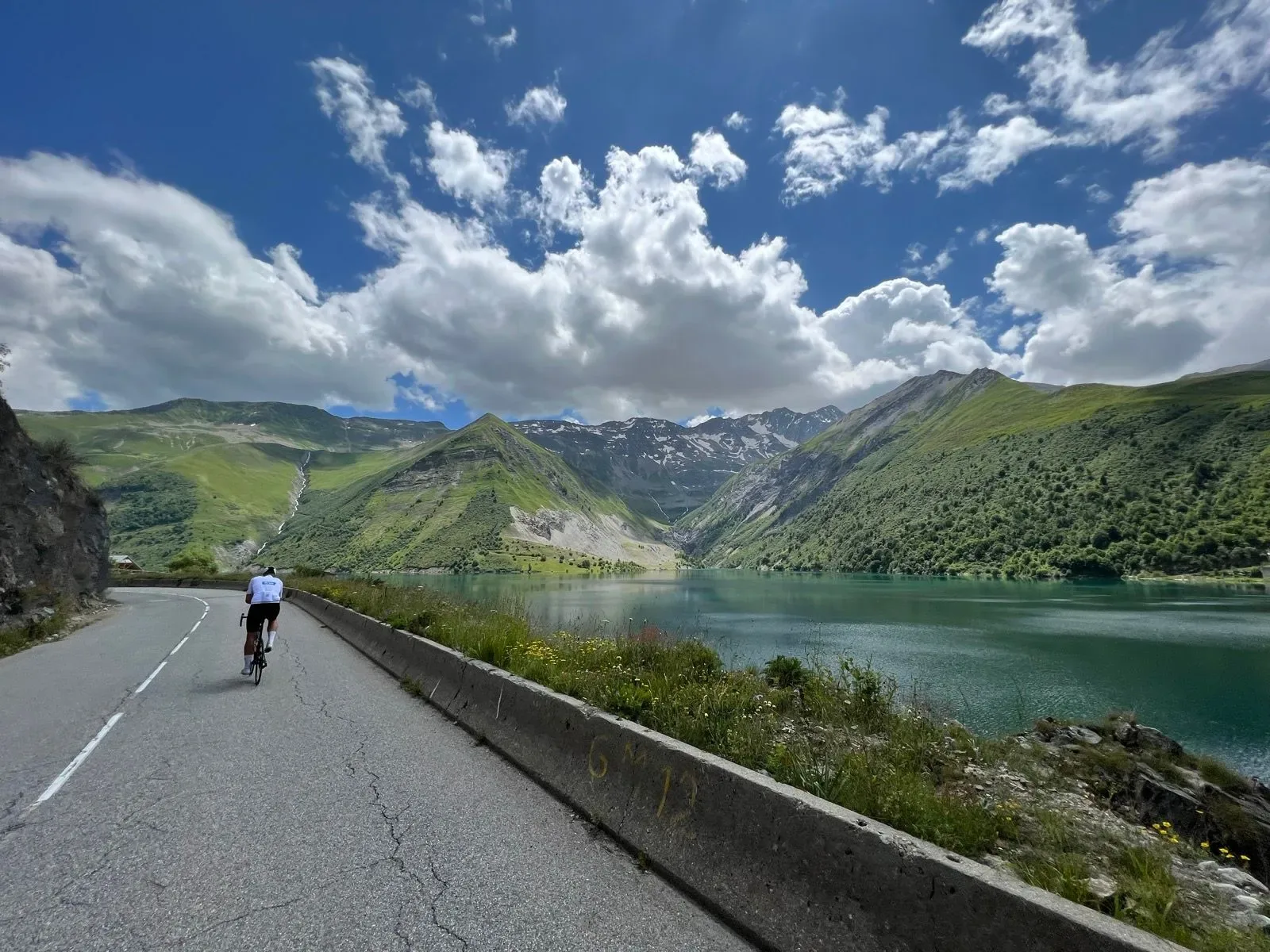
Saint François Longchamp is where the gearing gets a chance to breathe for a moment and the world opens up. The trees fall away, the alpages take over, and suddenly the road itself becomes the story: enormous painted names across the tarmac — Pogačar, Roglič, Bernal, Quintana, Van Aert, Alaphilippe — a rolling Tour de France fresco under your wheels. Cows graze behind the fences, and the gradient reminds you this is still a hors catégorie.
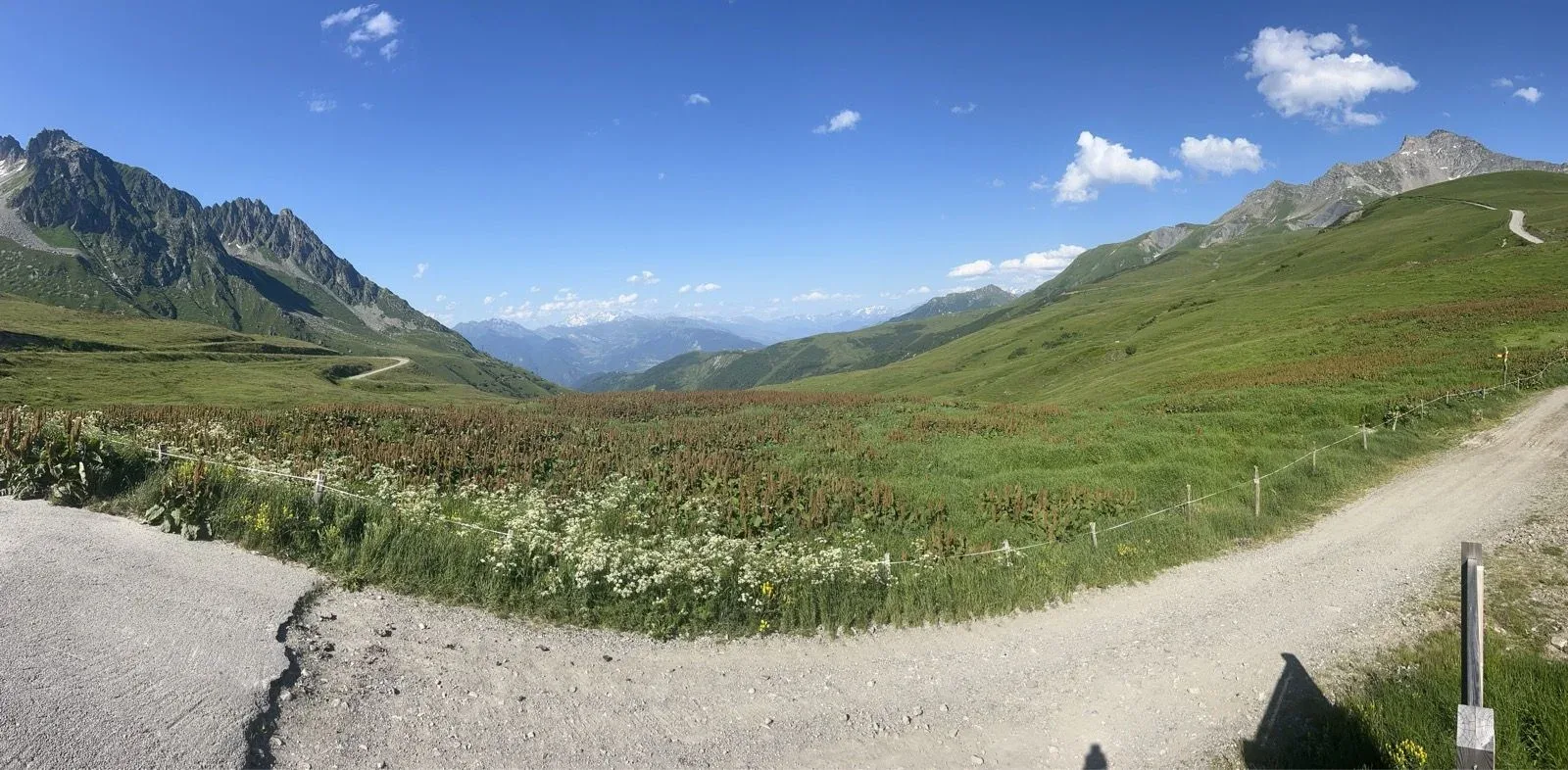
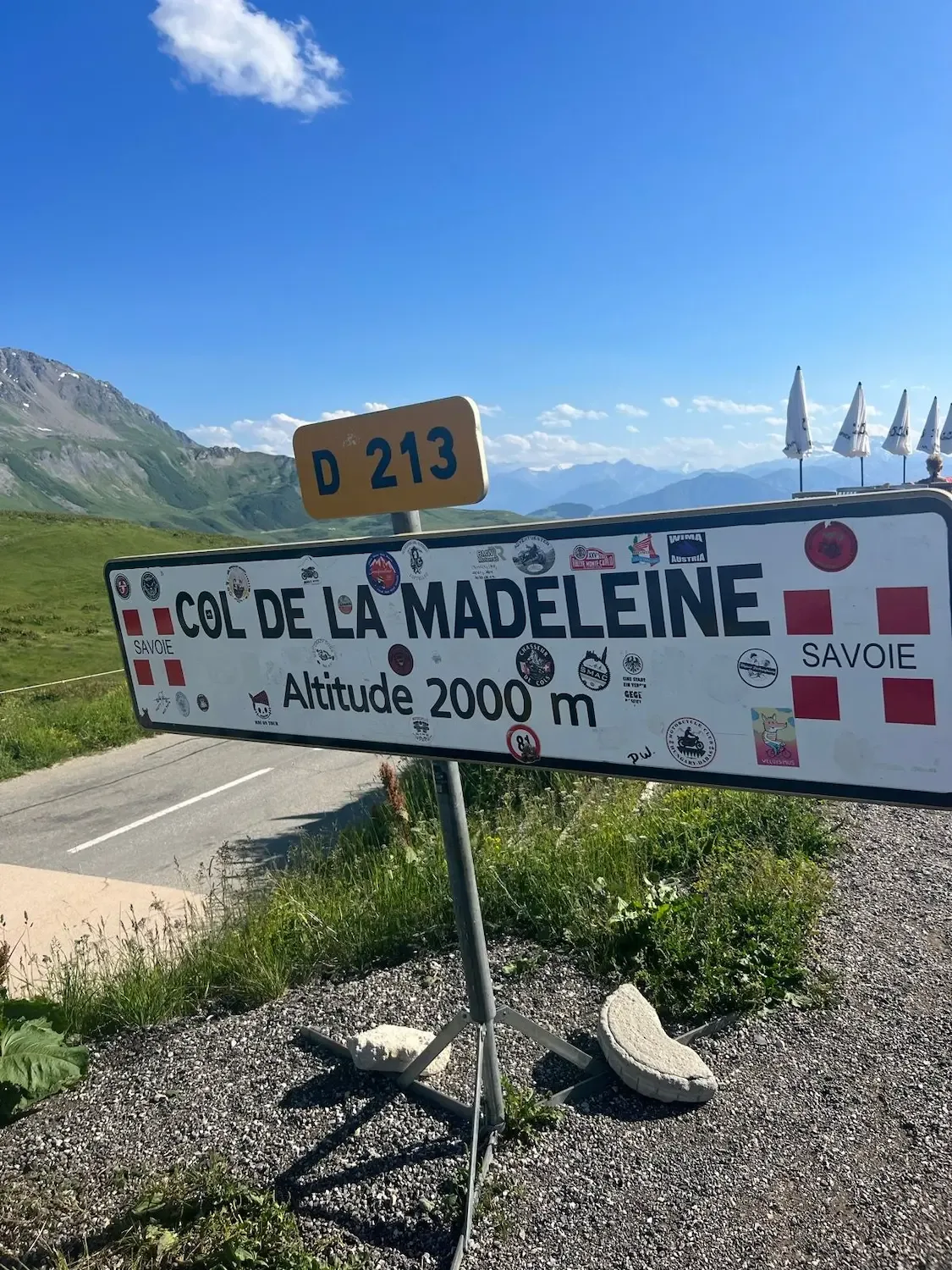
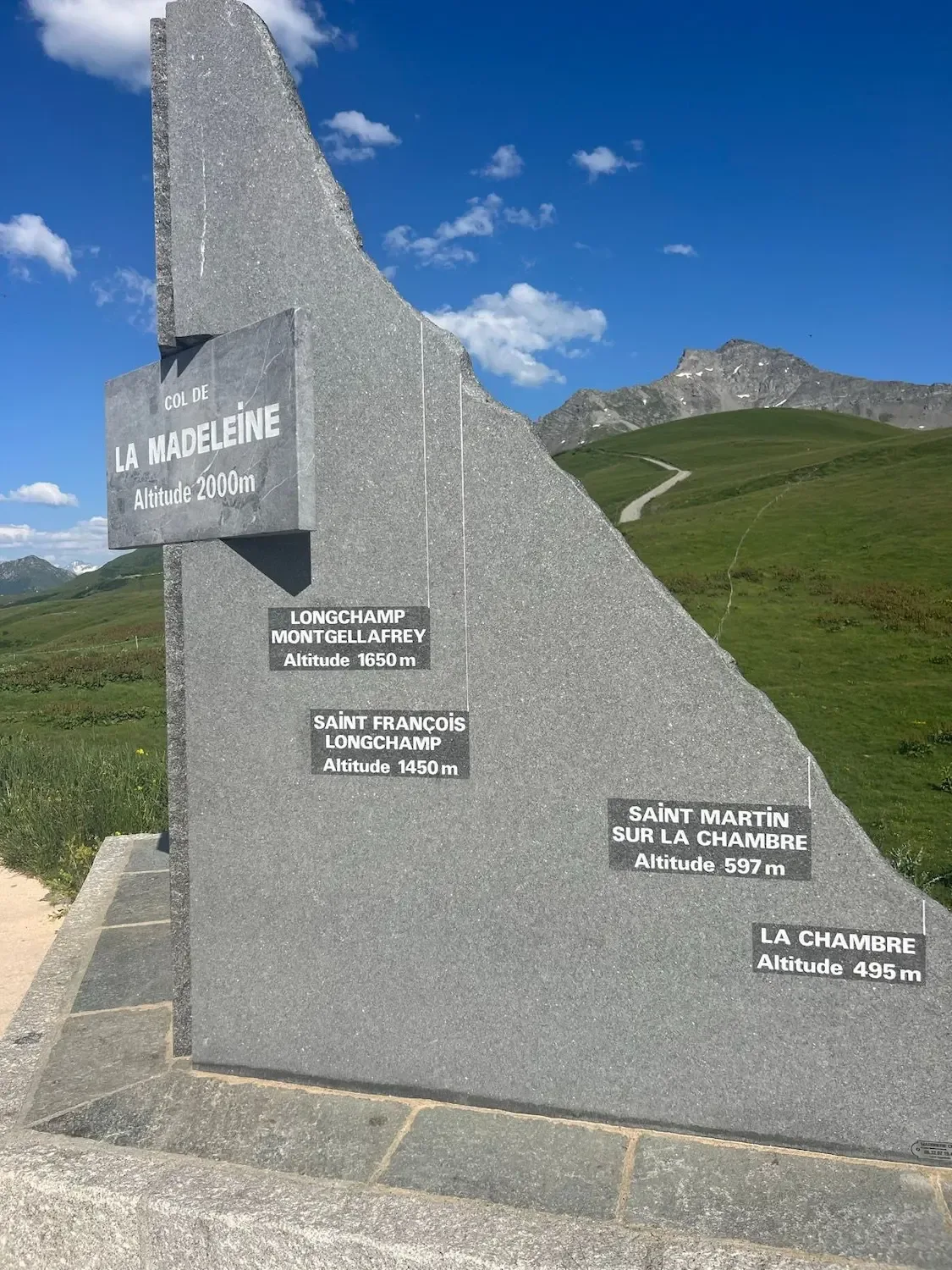
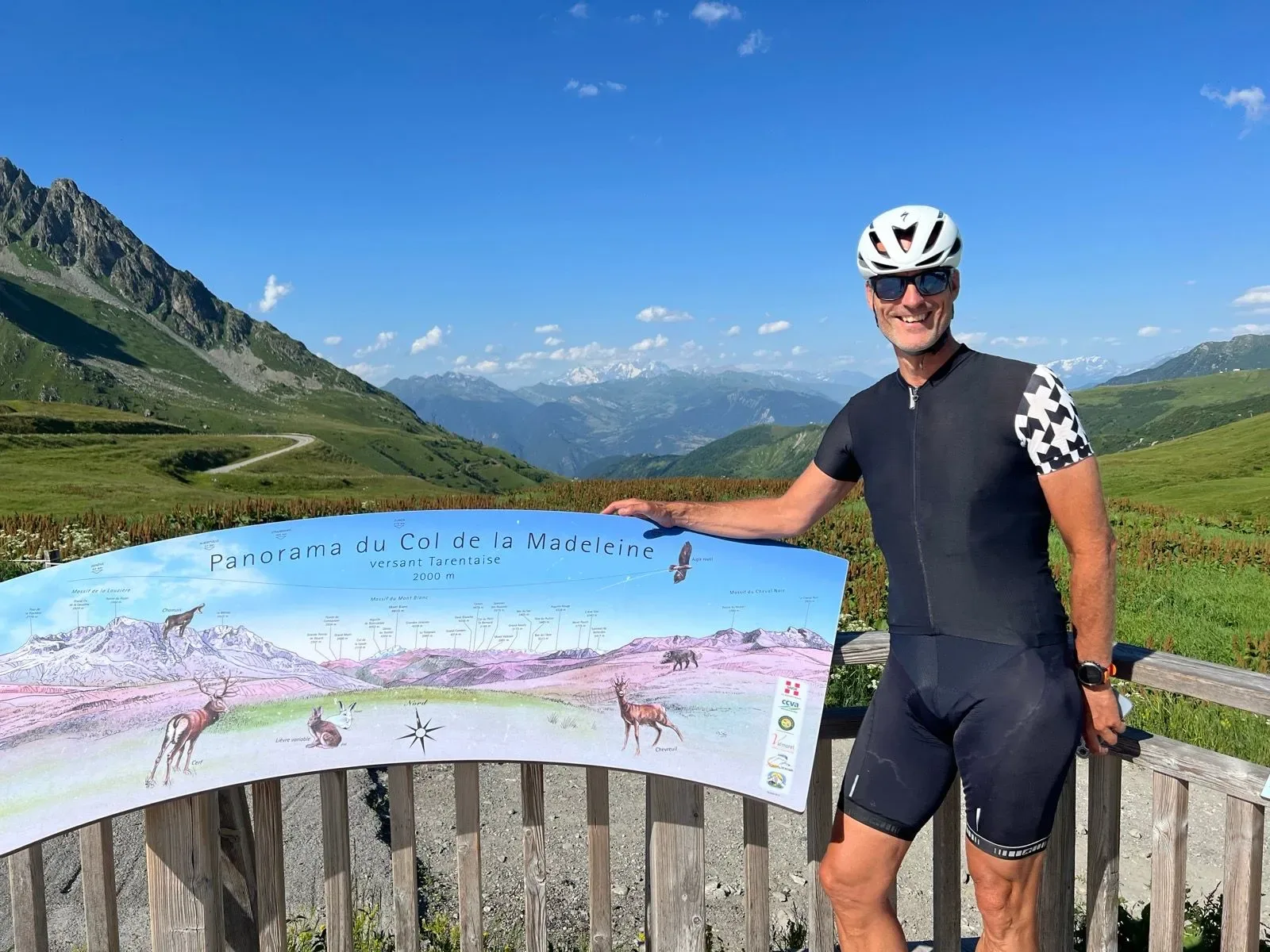
The final ramps toward Longchamp Montgellafrey and the col are brutally exposed. No shade, and the heat bouncing back up off the road. Then the summit sign at 2,000 m, stickered to within an inch of its life, and the granite monument listing the villages you've just clawed your way past. The Panorama du Col de la Madeleine orientation board looks north across the Tarentaise — and, dead centre, the snow of the Mont Blanc massif floating over the haze. Cold drink under a parasol at the refuge, legs ticking, and just staring at it.
The descent back toward the Maurienne was almost a relief until about halfway down, when the temperature climbed again with every lost metre and I was back in the furnace. 39.6 km, 1,529 m, one of the great Alpine climbs — but go early, carry more water than you think you need, and save something for those last exposed kilometres above the alpages.

Kilometre by Kilometre
The first kilometre through the orchards toward Saint-Martin barely rises, around 3%. Then the D213 tips to 7.5 and stays there or steeper all the way to the col.
Ten kilometres of hairpins through pine and beech, holding steady between 7 and 9%. Narrow roads and stone barns in the hamlets. No shop or café on the whole stretch. This is where you settle into the rhythm you hold for the rest of the climb.
The ski station spreads over two levels along the road, roughly 1,450 to 1,650 metres. Last place with a café and water before the forest ends and you climb open alpine pasture with no shade all the way to the top. Fill the bottles.
The trees drop away and the road surface turns into a gallery: Pogačar, Roglič, Bernal, Quintana painted in giant letters on the tarmac. Cows behind the fences, Savoyard crosses, no shade. The final ramps are fully exposed and the heat comes back off the road.
The sign reads 2,000 metres; the survey maps say 1,993. The granite monument stands beside it, and the panorama board facing the Tarentaise picks out the Mont Blanc massif, Cheval Noir and the Lauzière. This is where you turn.
Nineteen kilometres of descent on exactly the tarmac you climbed. Alpages first, then the forest hairpins, and the temperature climbs a degree for every hundred metres you drop. Carry a windproof even in a heatwave.
Gallery
Route map & elevation profile
Key Climbs
The climbs we single out in Oisans & MaurienneHighlights
- •The first kilometre is nearly flat and tells you nothing about the eighteen that follow.
- •Ten kilometres of unbroken hairpins through pine and beech, narrow road and little traffic.
- •Tour names painted in giant letters on the tarmac above Saint-François-Longchamp — Pogačar, Roglič, Bernal, Quintana.
- •The panorama board at the pass points out the Mont Blanc massif, the Cheval Noir and the Lauzière.
- •The pass sign and the granite monument stand at the top, looking down both sides.
Must know
- ⚠⚠️ Ten kilometres with nothing between km 2 and km 12. No shop, no café, no bakery in the whole forest section — there is a fountain at the foot in La Chambre and then nothing until Saint-François-Longchamp.
- ⚠⚠️ Saint-François-Longchamp at km 12–15.5 is the last place with water and food. There's nothing on the final 4.2 kilometres to the pass.
- ⚠⚠️ No shade from km 15.5 up. The upper ramps are open alpine pasture and the heat comes back off the tarmac.
- ⚠⚠️ The Maurienne valley gets very hot in summer. Start early if a heatwave is forecast — the first kilometres run along the valley floor.
- ⚠⚠️ Eighteen kilometres above 8% — bring a gear you can stay seated in. A 34/32 works for most riders; 34/34 gives you room on a bad day.
- ⚠⚠️ The descent is 19.8 kilometres on exactly the same road. Carry a windproof even in a heatwave — it gets cold fast coming off 2,000 metres.
Café & Water
- km 14.9109gr.
Thirty metres off the road in Saint-François-Longchamp, in the last stretch with anywhere to stop before the pass. The speciality is Liège waffles — probably the densest calorie you can buy at 1,600 metres. Open every day from ten to half six.
Frequently asked questions
- Does the pass say 2,000 or 1,993 metres?
- Both are correct. The sign at the pass reads 2,000 metres, and the Tour de France has used that figure since 2012. The French IGN survey maps put it at 1,993. An older sign said 1,984. Our GPS track measures 1,990, which is within normal range. Same mountain, measured different ways.
- Does the route go up and down the same way?
- Yes. This is an out-and-back from La Chambre: 19.7 kilometres up the D213 and the same road back. The only section you do not ride twice is the last kilometre around the pass itself.
- Is there another road up the south side?
- Yes, the D76 also climbs out of the Maurienne valley and carries almost no traffic. This route follows the D213, the main road and the one the Tour uses. If you take the D76, neither the GPS track nor the distances on this page will match.
- Is the south side harder than the north?
- The south side from La Chambre is steeper: 19.2 kilometres at 7.9% average. The north side from Aigueblanche is 28 kilometres at 5.4, but has three kilometres of descent halfway that break the rhythm. Most riders consider the south side the real Madeleine.
- Is this the same Col de la Madeleine as the one near Mont Ventoux?
- No. There is a Col de la Madeleine in Provence at 448 metres, between Malaucène and Bédoin. This is the alpine pass in Savoie, 2,000 metres, between the Maurienne and the Tarentaise.
- When can you ride it?
- The pass is normally open from late May to October. The opening date depends on snowfall, so check the status before going early in the season.
Know a better line?
Submit your local route and get featured with your own author profile, Strava, Instagram and Buy Me a Coffee link.
Share a Route → →Similar routes
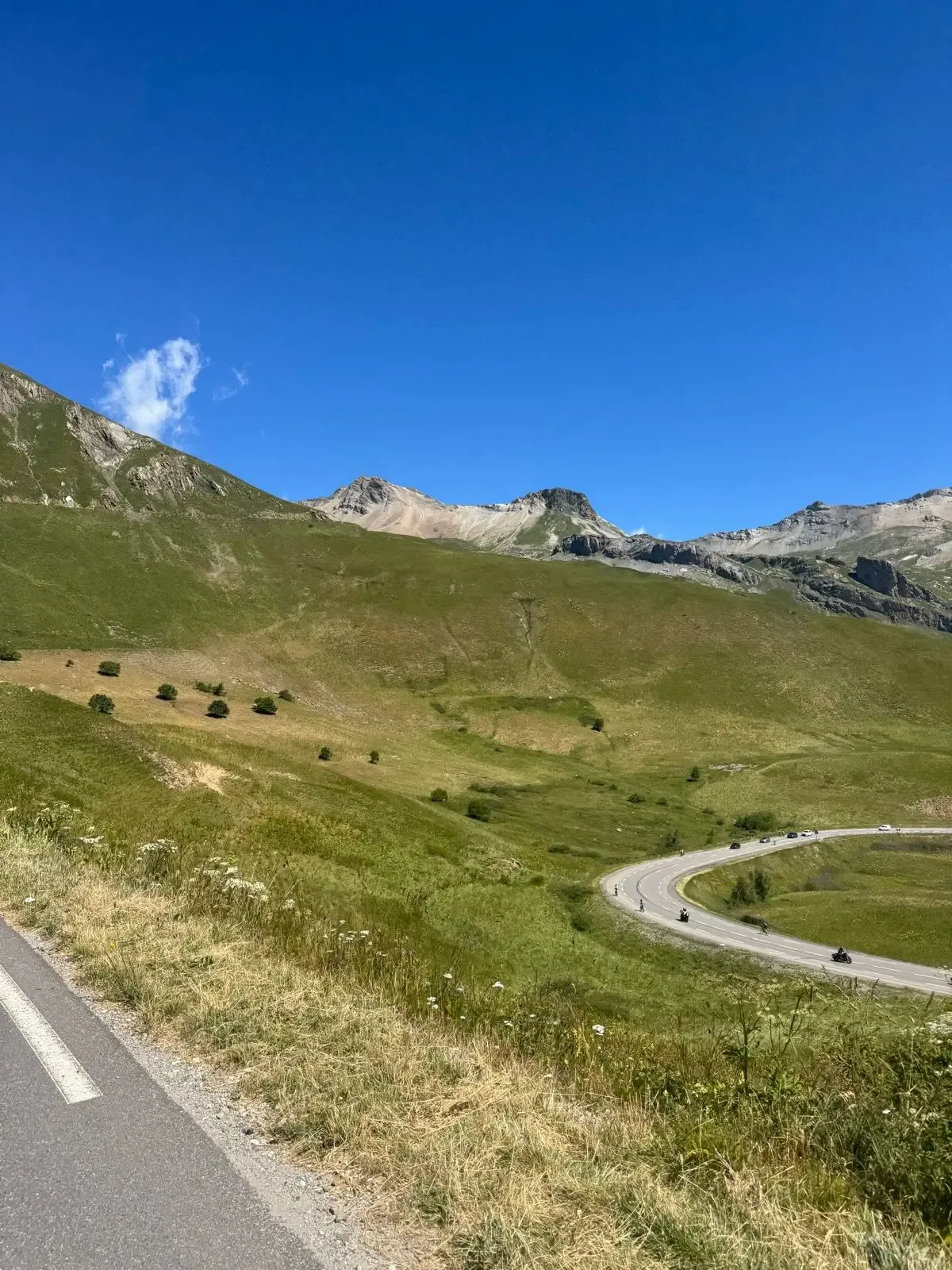
Col du Galibier & Col du Télégraphe
Same French-Alps HC tier — Galibier and Télégraphe back-to-back
Col de la Croix de Fer og Col du Glandon
Same Maurienne region — Croix de Fer and Glandon double
Côte d'Héry-sur-Ugine & Col des Saisies
Adjacent Beaufortain region — gentler approach to Tour de France climbs