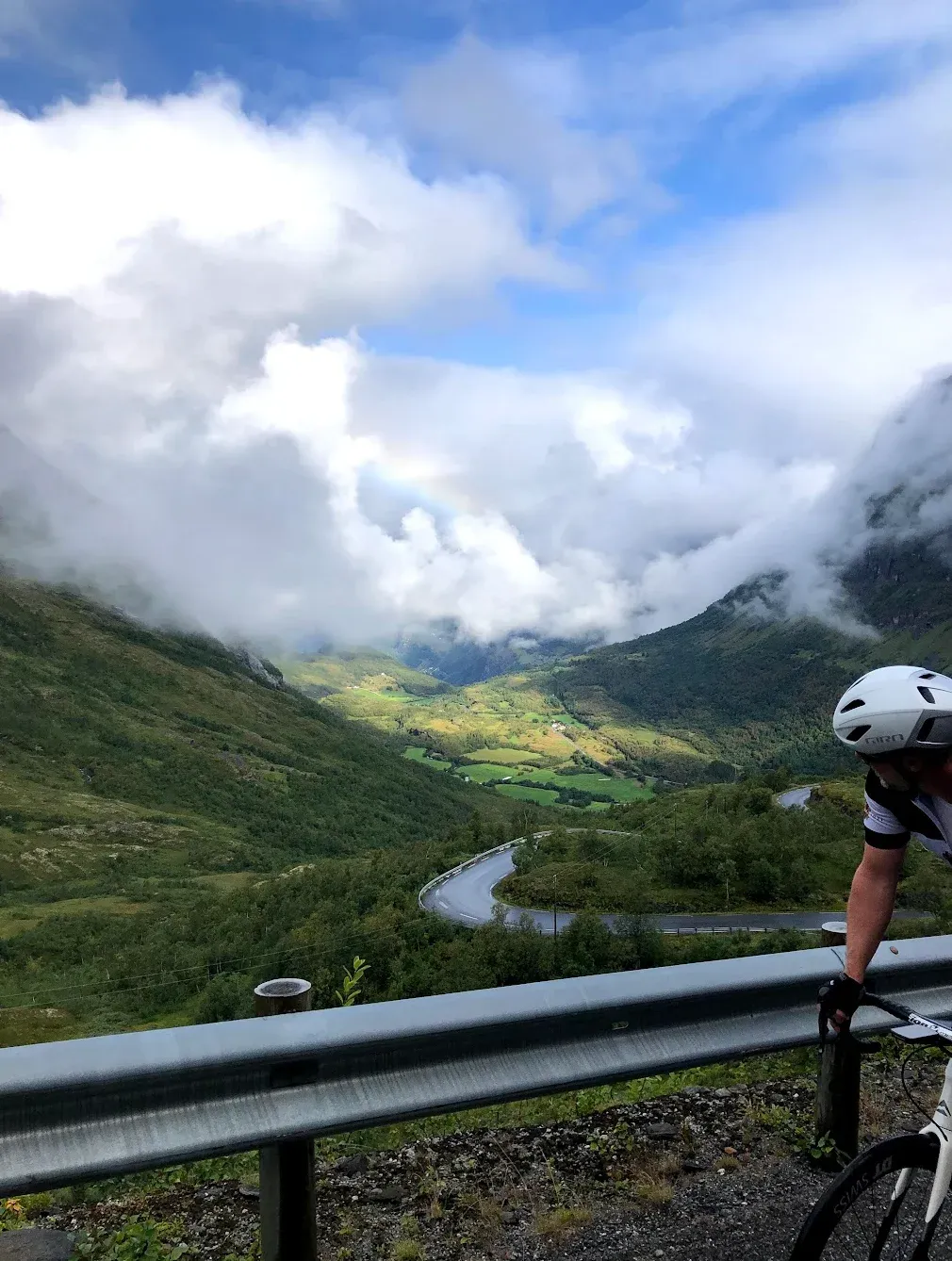
We were up early in Geiranger, knowing what was waiting. A solid breakfast at the hotel, wet asphalt outside, light rain that cleared up as we rolled out of the village. Dalsnibba starts climbing from the first pedal stroke. There is no warm-up here — the road tips upward and stays that way for 21 kilometres.
The first kilometres sat close to 8%. We pushed through the lower section with mystical clouds rolling around us — visibility shifting from full panorama down the Geirangerfjord to grey-white mist and back again, sometimes within a single hairpin. Good views down to the fjord most of the way up. The road kept tilting.
The final 4.5 kilometres to the Dalsnibba plateau averages 9.5%. Fryktelig bratt. We climbed in our easiest gears, side by side, breathing hard. At the top: cloud, no view, nothing visible from the Skywalk platform. "Så ikke en dritt — må ta denne på ny," I said. The climb is worth it regardless. Come back another day for the panorama.
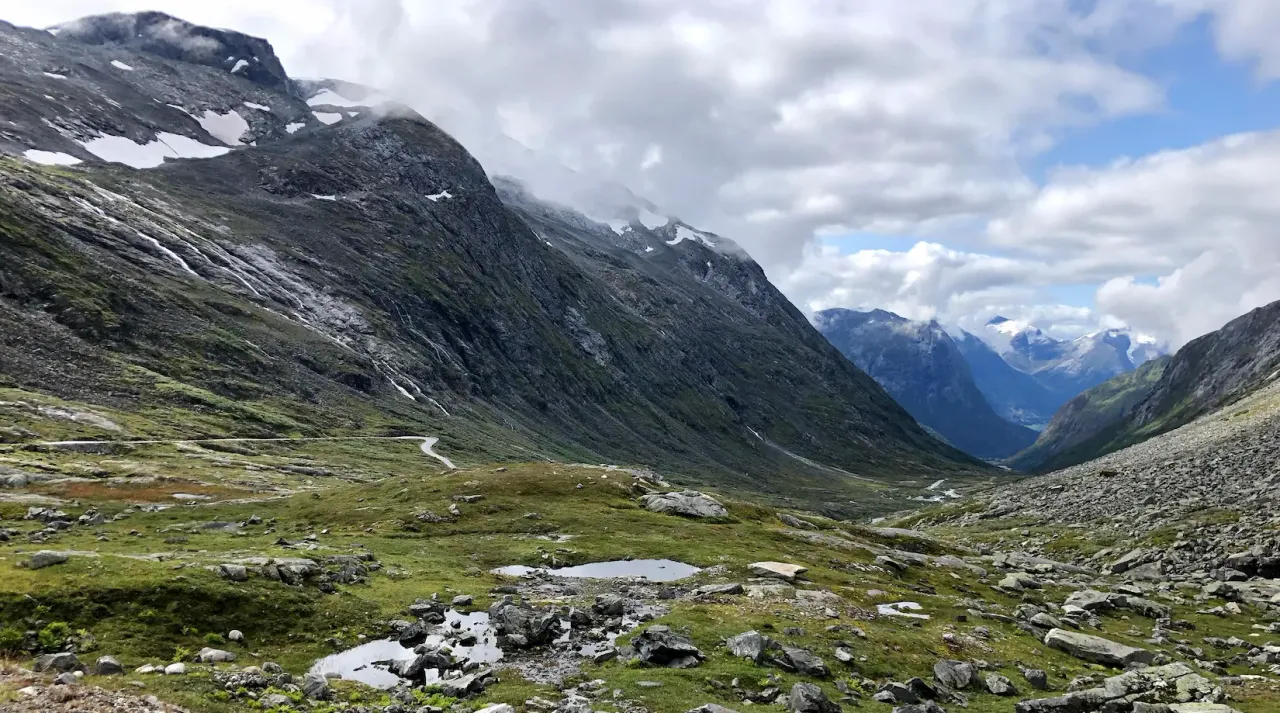
The descent on Gamle Strynefjellsveg was the surprise of the day. A short gravel plateau at the top before the road tipped over, then asphalt the whole way down — dramatic switchbacks, the kind of road that has not changed since 1894. We dropped down toward Hjelle and Oppstrynsvatnet — and the lake was there in full sun, turquoise and impossible, with snow-capped peaks behind. Lunch at Gamlebutikken outside in shorts. A different day from the cloud above.
A spin through Stryn, Hornindal for quiet scenic roads with almost no traffic, and the Hellesylt ferry waiting at the quay. The Hellesylt-Geiranger crossing is one of the most spectacular in Norway — a UNESCO World Heritage fjord, the Seven Sisters and Bridal Veil waterfalls visible from deck. We sat on the roof, ate a svele each, drank cola, and watched the same mountains we had ridden over slide past at water level. A fitting end to a hard day.