Gamle Strynefjellsveg
- 12.36 km
- Length
- 7.2%
- Average
- 894 m
- Elevation gain
- 8.9%
- Steepest 500 m
- 1,059 m(GPX)
- Summit
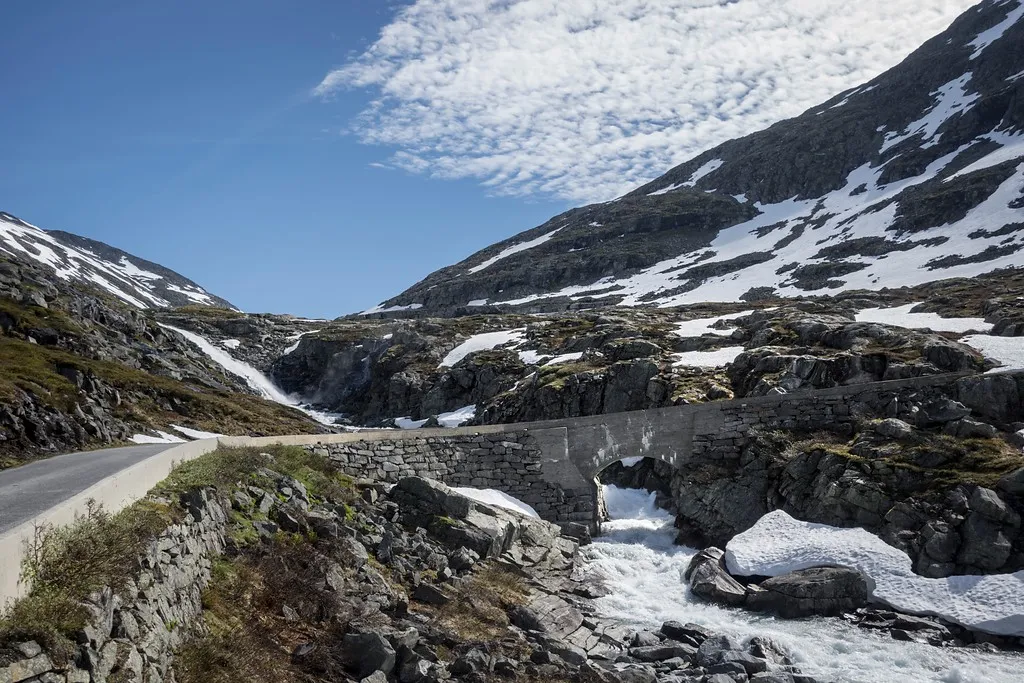
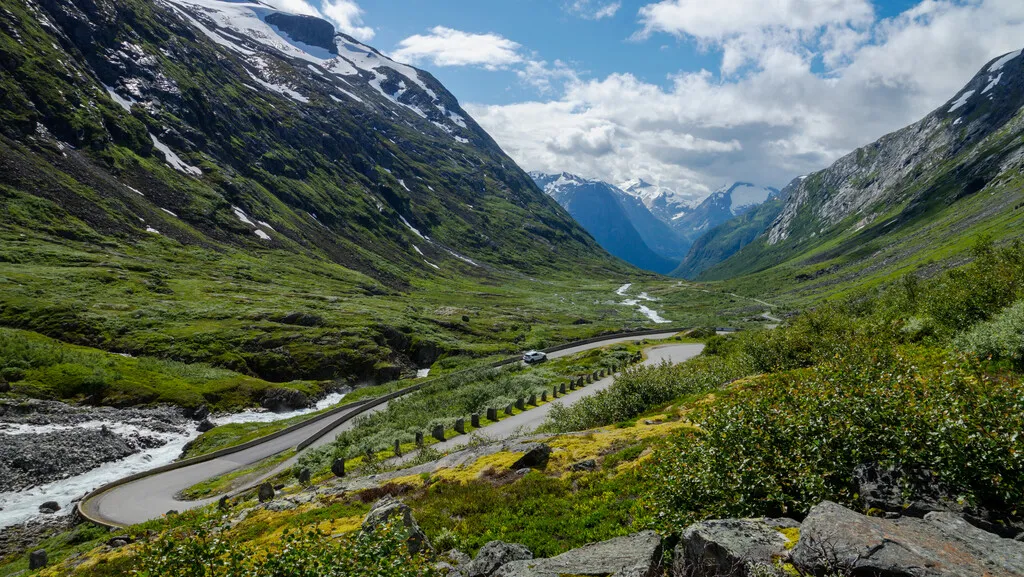
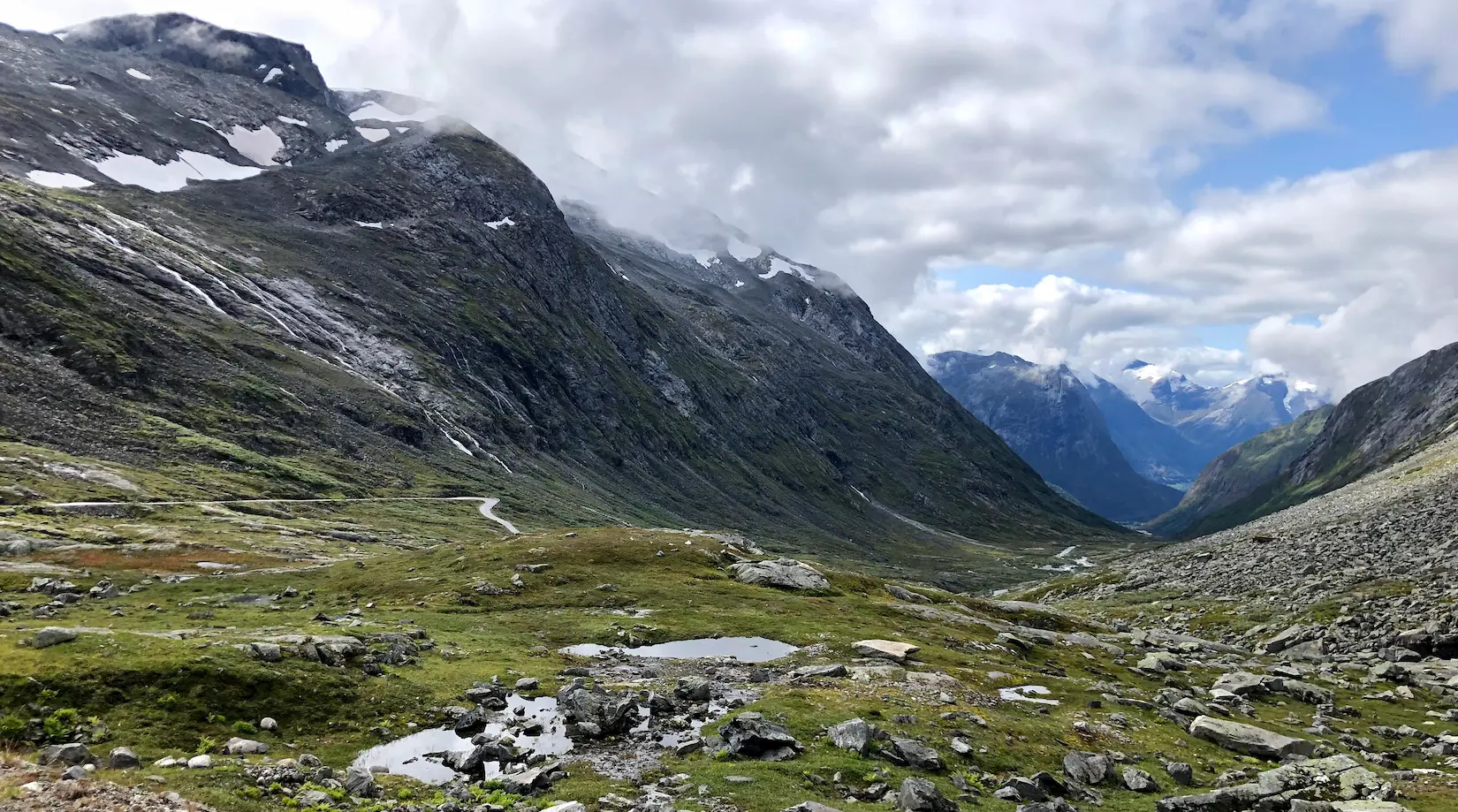
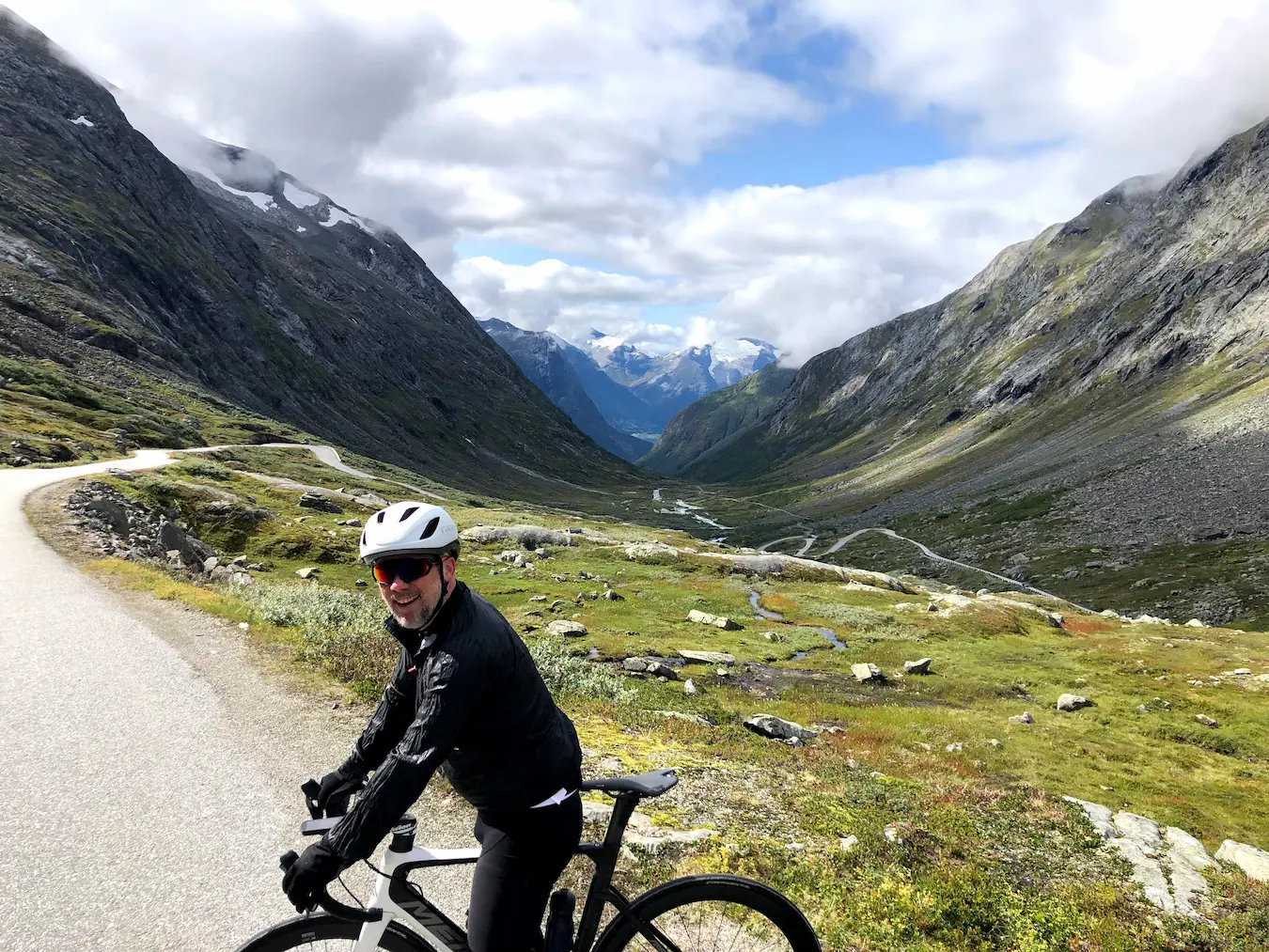
Opp Strynefjellet starts on the main road from Oppstrynsvatnet. After about five kilometres, just before the first tunnel, you turn off onto the old road, and that is what you climb the rest of the way. The gradient is steady with no hard ramps, while the landscape shifts from green down by the water to rock and bare ground higher up. The old road was built between 1889 and 1894, with hand-laid stone walls and long rows of marker stones. The climb ends just short of the summer ski centre on Tystigbreen.
How long will Gamle Strynefjellsveg take you?
A rider at 3.0 W/kg takes about 64 minutes to climb Gamle Strynefjellsveg.
Put in your weight and the average power you hold on the gradient. We add 9 kg for bike and kit. The model works the time out from physics, and it has been tested against real rides.
Riders
The road
The Gamle Strynefjellsvegen was built between 1889 and 1894 by people from Skjåk, Swedish navvies and labourers from the Gudbrandsdalen valley, working ten-hour days. It was the main road between Lom and Stryn until the tunnel road took over, and the stretch between Videsæter and Grotli sits largely as it was laid: hand-built dry stone walls and long rows of guard stones along the edge.
It is now a National Tourist Route. Vehicles over eight metres long, or with more than eight tonnes of axle load, are banned — so you are spared the coaches that dominate the other fjord roads.
The road is closed in winter, usually shutting somewhere between mid-September and early October.
The climb
The first four kilometres run between five and six and a half per cent, and that is the only warm-up you get. From the fifth kilometre the gradient settles at seven to eight per cent and stays there to the top. There is one easier stretch around the ninth kilometre, but it barely lasts a kilometre.
The hardest kilometre is the second to last, so the climb does not ease towards the summit. The steepest single ramp hits twelve per cent, but it sits low down at the fifth kilometre.
The surface is rough the whole way — not broken, but old asphalt that eats your speed. On narrow tyres at high pressure you feel it. The gravel section on the plateau lies beyond the end of the climb, so you only meet it if you carry on towards Grotli.
Along the tourist route