Deutsch ist neu auf CyclingRoutes.cc — einige Übersetzungen können ungenau sein. Hilf uns, es besser zu machen →

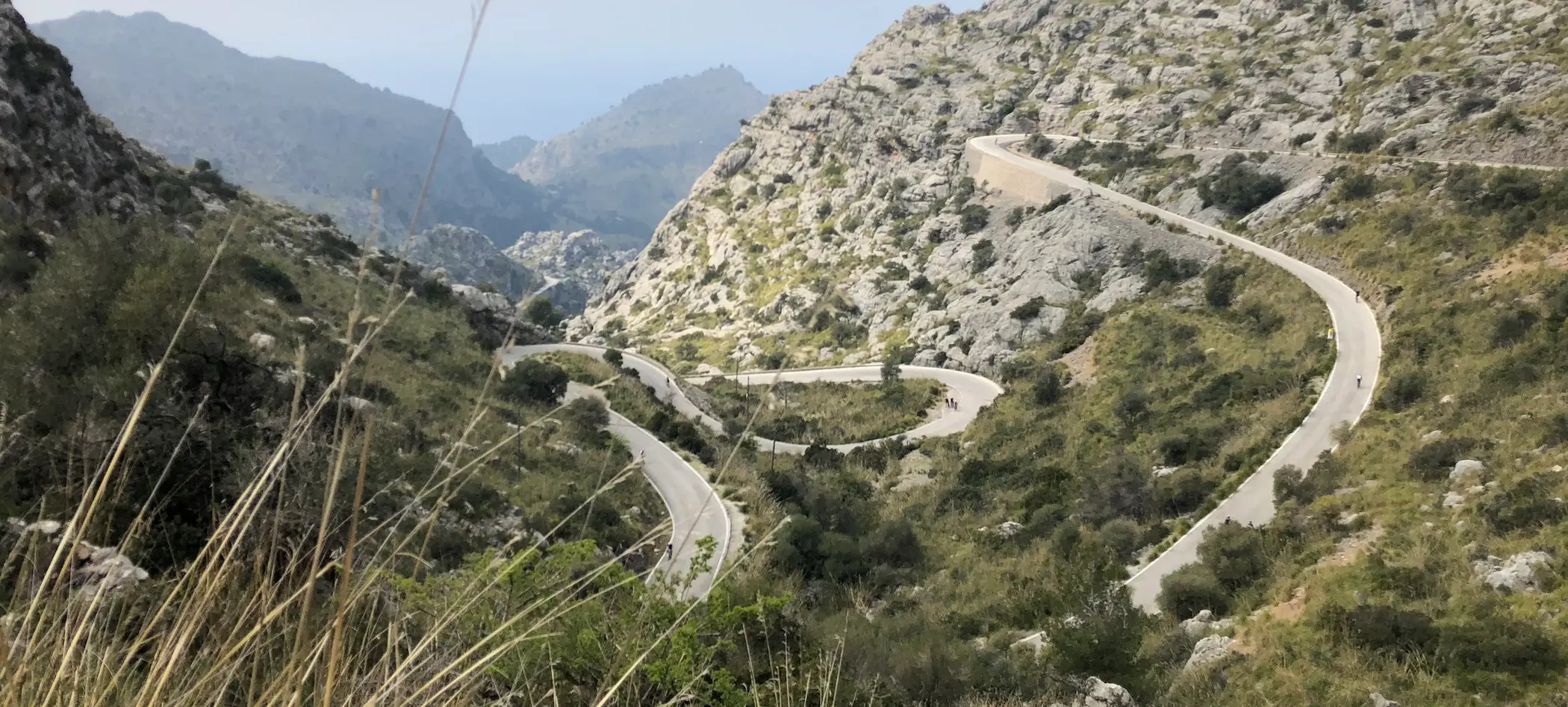
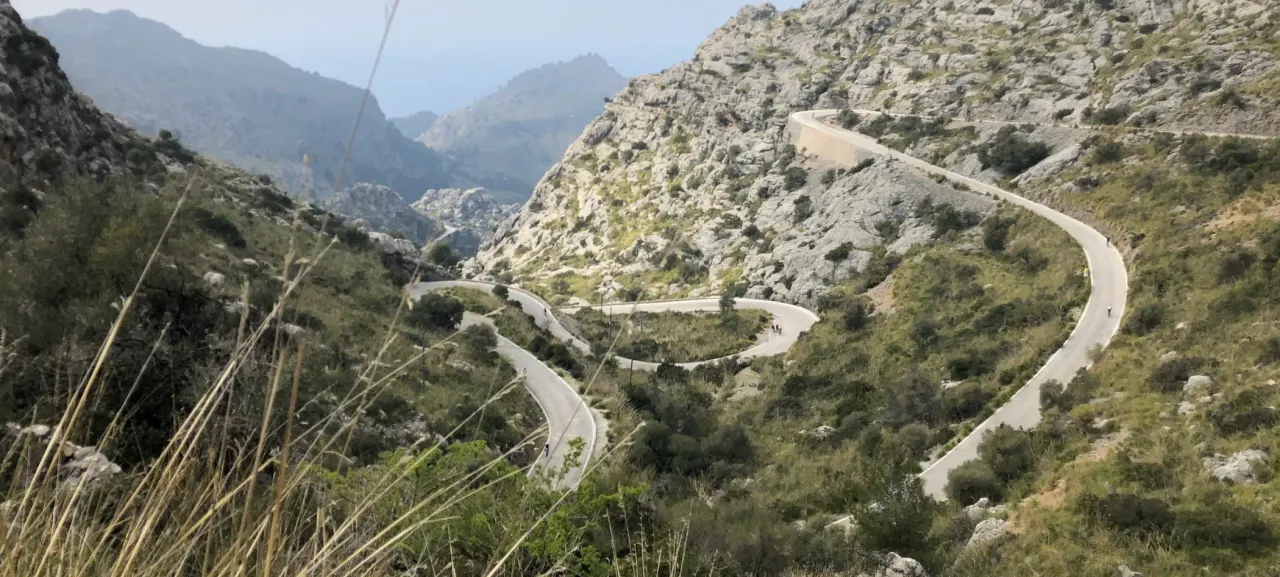
Cyclist climbing Sa Calobra in Mallorca on the Mallorca 5-day intermediate trip queen stage

Mallorca 5-Day Intermediate Cycling Trip

Base location: Port de Pollença
428 km6.578 m5 days

Written by Tommy NielsenCycling guide based in Norway

This itinerary reflects my own riding on Mallorca

Who is this trip for?

  • Comfortable with 100 km days at 1,500–2,500 m elevation
  • Looking for a mix of climbing icons and recovery
  • First-time Mallorca cyclist with no reference rides

Five days from Port de Pollença, four hand-picked routes from the Tramuntana classics catalogue plus one recovery loop built specifically for the role. The shape of the week is deliberate: a short, scenic opener on Cap Formentor on arrival day; the first full mountain day over Col de Sóller and Puig Major; a properly easy recovery loop around Pollença Bay; the queen stage over Sa Batalla and Sa Calobra; and Col de Femenia and Sa Batalla as a closing ride before the flight home.

Total distance is 428 kilometres, total elevation is 6,578 metres, and the difficulty label on this site reads "intermediate". That's accurate for the audience — riders comfortable with 100 km mountain days who don't need pro-level numbers — but worth being honest about: with two route days at hard difficulty (Day 2 and the queen-stage Day 4), this trip earns its label and then some. Day 1 and Day 3 are the deliberate counterbalance, giving the week its recovery rhythm.

Port de Pollença is the base for a reason. Three of the five days finish on the same seafront. The Tramuntana climbs all sit within a comfortable warm-up of the town. There's no transfer day, no luggage to move, no logistics to plan after the ride.

Each day's route has its own full guide on this site with elevation profile, GPX download and kilometre-by-kilometre breakdown. Use the trip page as the structure; use each route page as the field reference.

Distance
428 km
Elevation
6.578 m
Days
5 days
Difficulty
Intermediate
Best months
March, April, May, September, October
Base location
Port de Pollença

Trip overview map

Map loads when you scroll here.

5-day itinerary

1
Day 01 / 05
EasyPort de Pollenca - Cap Formentor

Arrival warm-up

Distance
39.2km
Elevation
853m
Profile

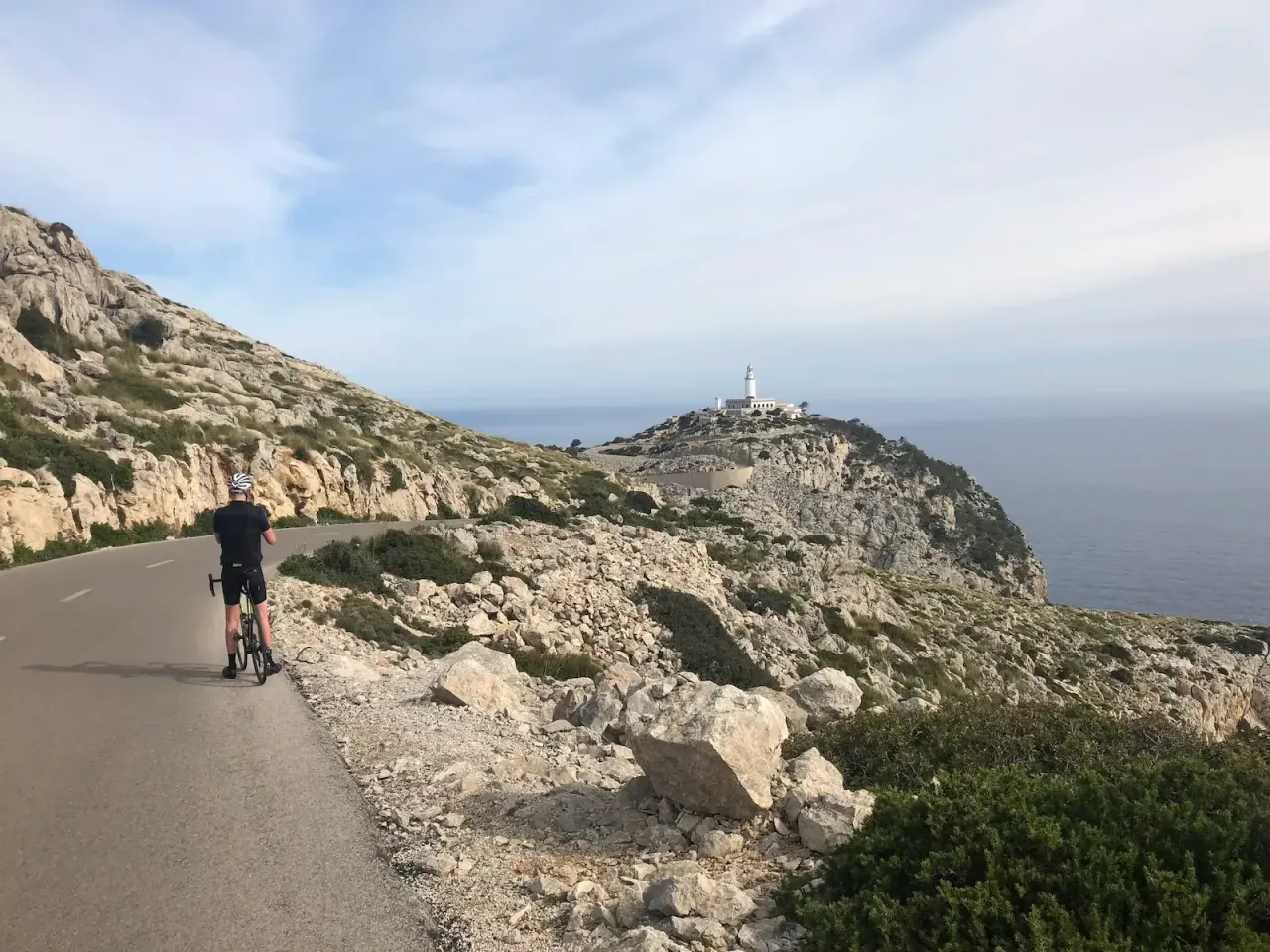
39 km / 853 m on the Cap Formentor peninsula — Mallorca's signature sea-cliff opener. Out from Port de Pollença, up the Coll de la Creueta to Mirador des Colomer for the standard photo against the Es Colomer islet, then the spine of short climbs and fast descents along the limestone headland to the Far de Formentor lighthouse. Café at the top, easy roll back along the bay. The right ride for arrival day — long enough to feel like a proper ride, short enough not to spend the legs.

This might be the best 40 km on the island. From Port de Pollença the road rolls flat along the bay before peeling north onto the peninsula. The first real effort is the climb up to Mirador des Colomer — pine forest, stacked hairpins, then that balustraded terrace bursting open above the Es Colomer islet. Everyone leans their bike against the same stone railing and takes the same photo. Do it anyway.

Past the mirador the peninsula becomes a spine of short stingers and fast descents. Rock arches have been cut straight through the limestone — one in particular, the cinematic tunnel-arch, is the signature frame of the ride. There's no rhythm to settle into; it's a conversation with the terrain the whole way out.

The final ramp to Far de Formentor is rocky and exposed, scrub and stone, until the white lighthouse finally shows itself at the end of the cape — still a climb away. The café at the lighthouse opens around 9.30, so pace accordingly. The coffee is good, the terrace drops straight to the Mediterranean a couple of hundred metres below. A cortado with that view is worth the climb twice over.

The return rides like a different route. Roll back into Port de Pollença already planning the next one.

2
Day 02 / 05
HardCol de Soller & Puig Major

Tramuntana classic

Distance
135km
Elevation
2,400m
Profile

135 km / 2,400 m — the first full mountain day. South from Port de Pollença through the hidden Orient valley using Col d'Honor and Col de Orient as a warm-up, then Col de Sóller's hairpin-stacked southern flank with almost no traffic since everything uses the tunnel. Lunch in Port de Sóller, then the 14 km climb up Puig Major at 6% average — exposed, alpine, finishing at the tunnel. Long descent past the Gorg Blau and Cúber reservoirs and home over Col de Femenia.

This is the big one. Four climbs, 135 kilometres — and every one of those metres earned. We started south from Port de Pollença, parallel to the mountains, using Col d'Honor and Col de Orient as a warm-up. Both are beautiful climbs through olive groves and quiet roads — exactly the right way to ease into a day like this.

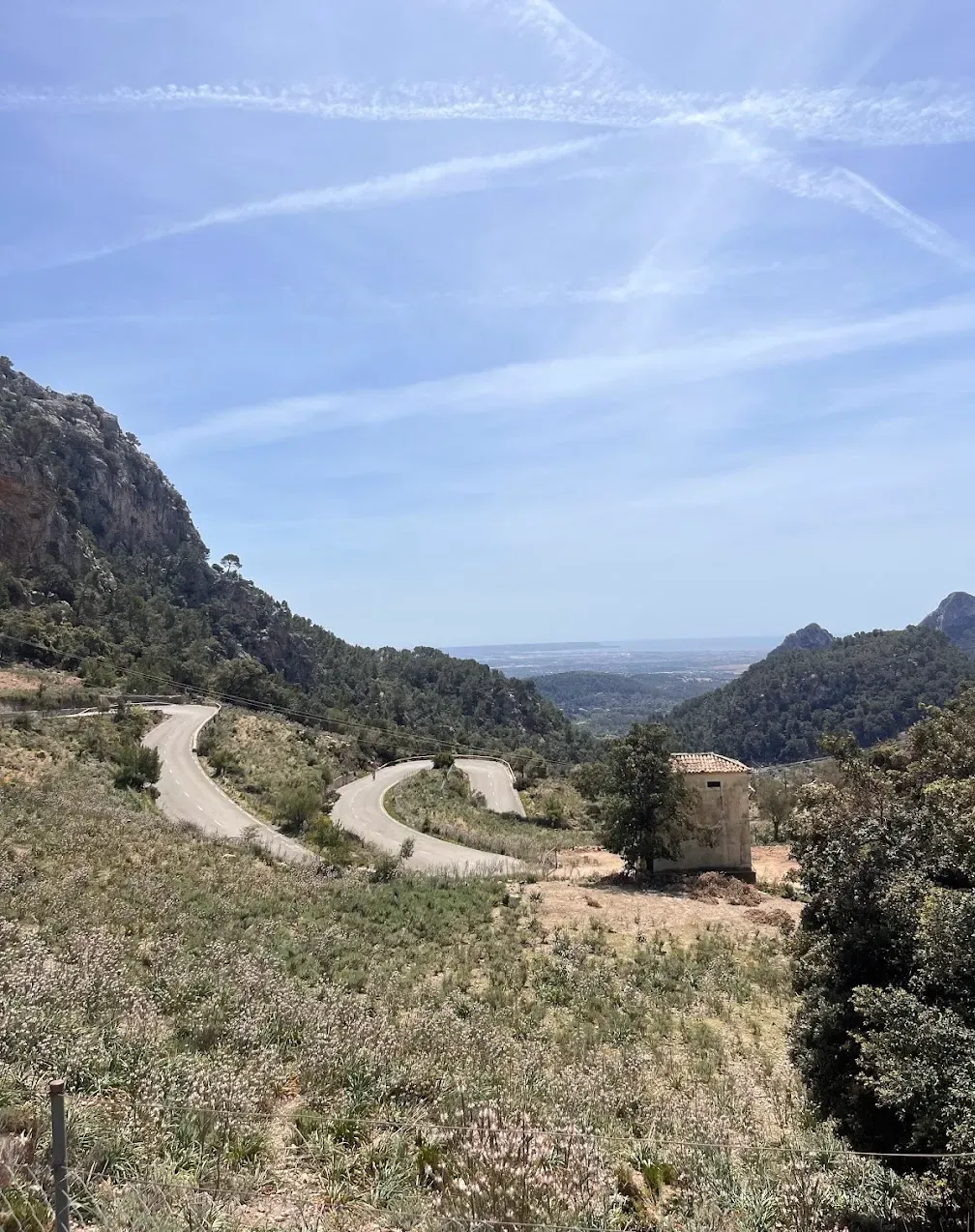
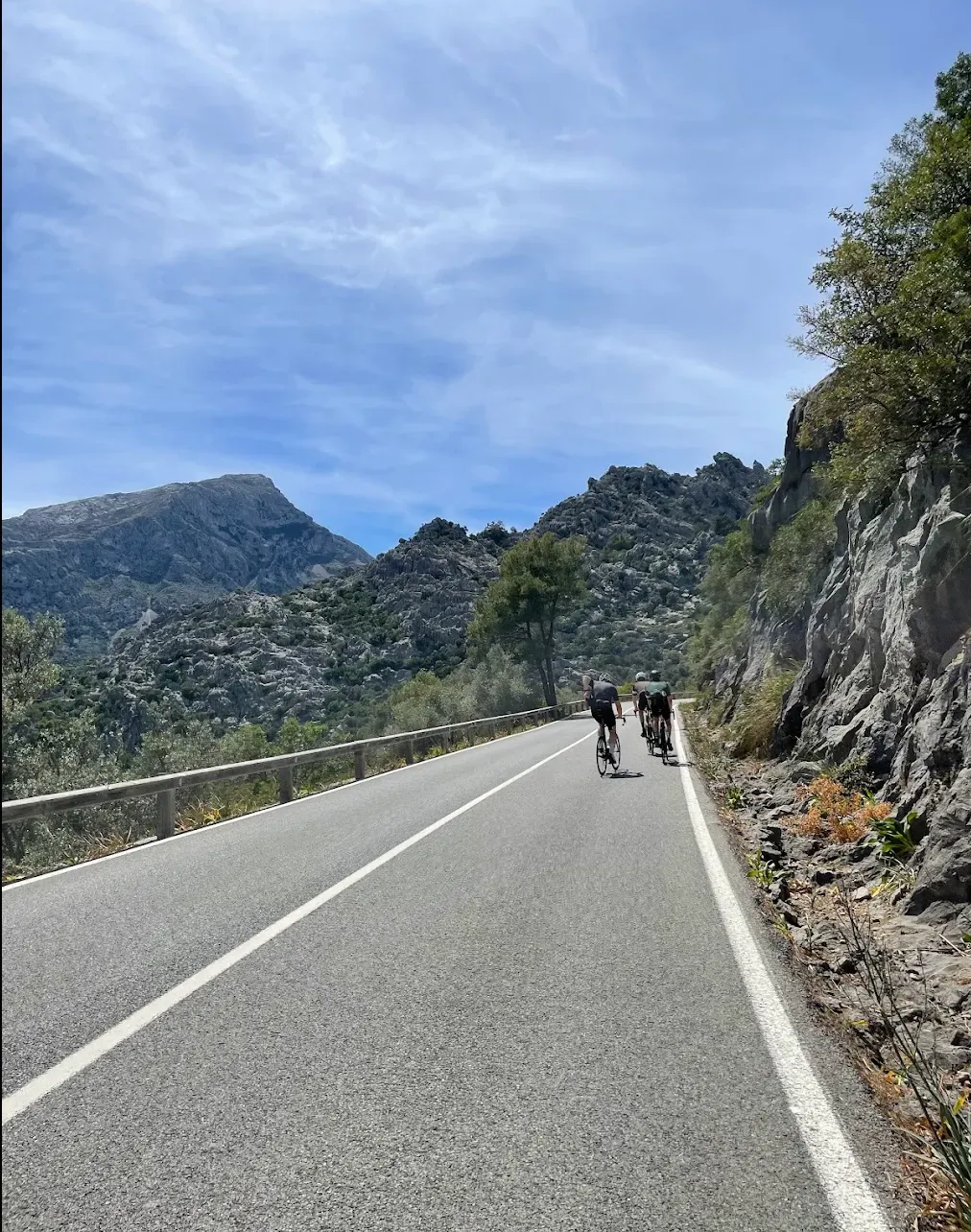
Then Col de Sóller. If you love switchbacks the way I do, this is your climb. A steady, consistent gradient with an extraordinary number of hairpins, one after another, with almost no traffic since all the cars use the tunnel.

We descended into Port de Sóller for lunch. Good choice of restaurants, good food — but a word of warning from experience: go easy. Some of us did not, and the combination of a generous lunch and Puig Major immediately afterwards was not ideal. You have been warned.

Puig Major is relentless, exposed, spectacular. The landscape transforms from lush valley to bare alpine rock as you gain height. At the top, the road disappears into a tunnel. We waited there for each other — watching the group come through one by one was one of those moments that makes a cycling trip memorable.

From the tunnel, it is largely downhill — past the Gorg Blau and Cúber reservoirs, down through Lluc, and the final drop home over Col de Femenia.

3
Day 03 / 05
RestPort de Pollença to Alcúdia Bay rest-day loop

Rest day

Distance
63.1km
Elevation
346m
Profile

63 km / 346 m around Pollença Bay — built for the actual job of a recovery day, not a half-promise that turns into a 1,200 m surprise. South out of Port de Pollença on quiet inland roads, through Sa Pobla and Santa Margalida on flat agricultural lanes, then the coastal stretch back from Can Picafort through Alcúdia to Port de Pollença with the Cap de Formentor mountain range visible across the bay. Conversation pace, no decisions, no climbing pressure.

This is the loop I take when I'm staying in Port de Pollença and need a recovery day between Tramuntana climbs. The shape of the ride is honest about what it is — flat enough that pace is up to you, long enough to count as a proper ride, and you finish with the same legs you started with.

The first stretch south is shared with the Tramuntana riders for the first ten kilometres or so before they peel west and you keep going inland. Through Sa Pobla and Santa Margalida, the riding is unhurried. Conversation pace if you have someone with you, your own thoughts if you don't.

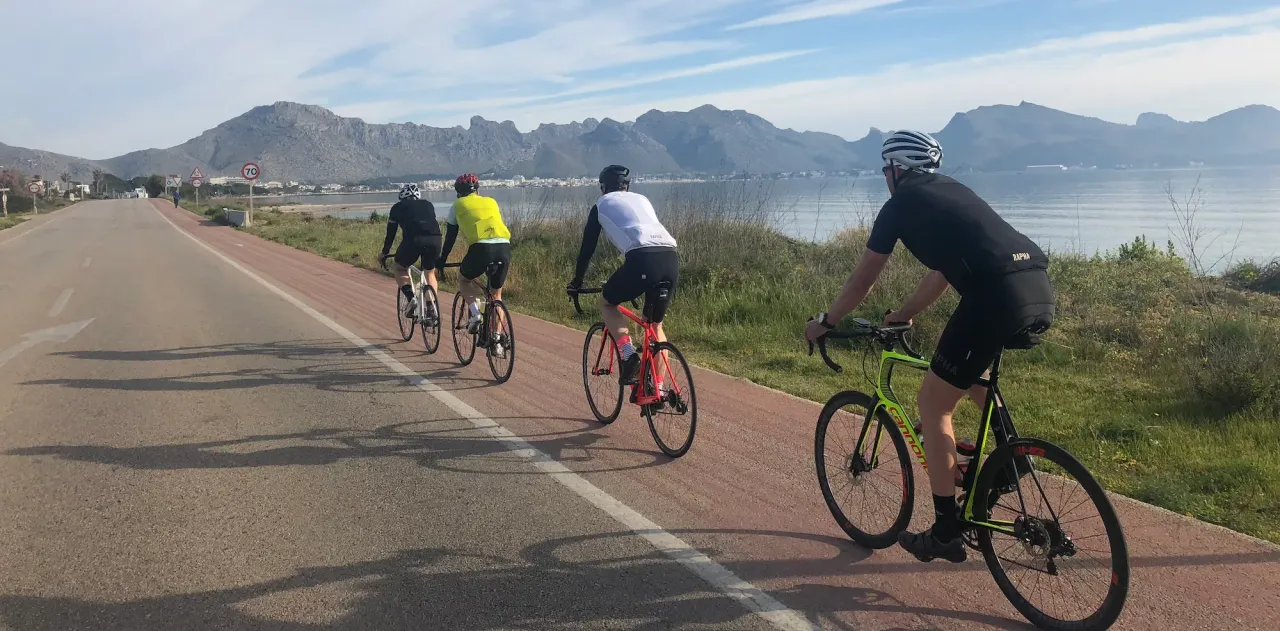
The part of the route I keep coming back for is the coastal stretch from Can Picafort back through Alcúdia to Port de Pollença. The road runs along the bay with the Cap de Formentor mountain range visible across the water. You won't see the lighthouse — only the silhouette of the range from a distance, with the sea between you and it. On the right kind of afternoon, with the light low and the bay quiet, that view is the reason this loop earns its place in a 5-day itinerary.

Stop for coffee. Bring less food than a Tramuntana day. Save the legs.

4
Day 04 / 05
Queen StagePort de Pollença — Sa Batalla and Sa Calobra queen stage

Queen stage

Distance
105km
Elevation
2,108m
Profile

105 km / 2,108 m — the queen stage. South to Caimari, up Sa Batalla's switchback terraces to the Repsol station for the regroup, on past the bridge café and over Coll dels Reis, then down La Serp to the Sa Calobra cove and back up the same 26 hairpins at 7.2% average. Home over Coll de Femenia with the bay opening below. Plan for tour buses on the descent and water consumption that scales with temperature. The day every Mallorca week is built around.

This is the loop that anchors any serious week on Mallorca. I've ridden it more than once, and the thing I notice every time is how the day breaks into chapters. Sa Batalla is the warm-up — long enough to count, regular enough that you find your rhythm without thinking. The terrace section early on, where the road switches back tightly enough that you can look down and see riders below you, gets me every time.

The middle stretch from Repsol to the Coll dels Reis bridge is where I keep the watts honest. It's tempting to push through this section because Sa Calobra is what you came for, but spending too much here costs you on the climb back up. Over Coll dels Reis, down to the bridge café, fill the bottles, then the turn-off down La Serp toward Sa Calobra.

Sa Calobra itself is everything you've heard. The descent demands respect — there's a stretch in the upper half where I once came around a hairpin to find a tour bus halted by oncoming traffic, the road completely stopped. I got the brake on. Others have not. Take it slower than you think you need to.

The climb back up is where the day gets honest. Looking up at the switchbacks above you while you're grinding through the middle is one of cycling's better moments — partly fear, partly anticipation.

The ride home down Coll de Femenia, with the bay opening up below you, is the quiet payoff. By the time you're at Stay Restaurant in Port de Pollença, you understand why this is the day every Mallorca week is built around.

5
Day 05 / 05
IntermediateCol de Femenia & Sa Batalla Loop

Closing ride

Distance
86km
Elevation
871m
Profile

86 km / 871 m — Femenia and Sa Batalla as the closing loop. West across the agricultural plain toward Pollença, then up Col de Femenia at 5.5% average — gradient steady, views opening progressively to Pollença Bay, Cap de Formentor and the Alcúdia peninsula. Across the limestone plateau past Lluc, then the descent via Sa Batalla through dense pine forest and tight hairpins. Repsol regroup at the top, café stop in Caimari on the way down. Same climb DNA as Day 2, lighter load. The right way to close the week.

This is one of the most popular and accessible mountain loops on the island, and a fitting close to the week. The roll out from Port de Pollença across the plain toward Pollença town is a gentle warm-up — flat, quiet roads through agricultural land with the Tramuntana rising ahead of you. Then Col de Femenia begins.

It is one of my favourite climbs on the island. The gradient is steady and forgiving — never savage, always honest. As you gain height the views behind you open up progressively: Pollença Bay, Cap de Formentor, the Alcúdia peninsula stretching into the distance. By the time you reach the summit you feel like you have genuinely earned the panorama.

We stopped at the Repsol station and waited for the whole group to come together before the descent. This is the ritual — everyone arrives at their own pace, fills bottles, eats something, and then you drop together. The descent via Sa Batalla is everything the reputation promises: tight hairpins through dense pine forest, dramatic cliff faces, fast and technical. We stopped at a café in Caimari on the way down for coffee and something to eat — a good call after the mountain.

The return follows quiet inland roads via Can Picafort and along the coast back to Port de Pollença, with the sea alongside for the final kilometres.

Download GPX files

Frequently asked questions

When is the best time to do this trip?

Late March through May or mid-September through late October. Spring lands you on the island as the climbing season opens — temperatures in the low to mid 20s, longer daylight, less rain than further north in Europe. Autumn is the locals' choice — the heat has come off, the crowds have thinned, and the Tramuntana light at low sun is the reason photographers from across Europe come for it.

Where should I stay?

Port de Pollença. Three of the five days finish back on the seafront, and the other two start there. Most cyclist-friendly hotels and apartments cluster within a few hundred metres of the bay. Pollença town itself is inland and beautiful but adds a transfer for every ride.

Do I need a car?

No. The whole trip is door-to-door from Port de Pollença, and Palma airport is about 75 minutes by direct shuttle bus or pre-booked transfer. Some cyclists rent a car for non-riding logistics (groceries, evenings further afield) but it's optional, not essential.

Is this trip suitable for first-time Mallorca cyclists?

Yes, if you've ridden 100 km mountain days before. The trip is anchored at the upper end of intermediate — Days 2 and 4 are hard route-difficulty, with Day 4 in particular asking for honest pacing on Sa Calobra. Days 1 and 3 give the trip its recovery rhythm; Day 5 closes the week with a lighter mountain loop. If 100 km with 2,000+ metres in a single day is new territory, ride a less aggressive trip first or split this one across more days.

What gearing do I need?

A compact 50/34 chainset paired with at least an 11-32 cassette covers the trip comfortably for most intermediate riders. Stronger climbers ride 50/34 with 11-30. The make-or-break ratio is on the upper hairpins of Sa Calobra on Day 4 — 9.41 km at 7.2% average means saving something for the climb back up. Whatever gear lets you stay seated through that section, ride that gear.

How fit do I need to be?

Comfortable with 100 km rides at 250–500 metres of climbing on home roads. The two hard days (Day 2 and Day 4) ask for steady aerobic riding for 5–7 hours. The rest day on Day 3 exists for a reason — it's not optional padding.

What's the rest day really like?

Genuinely flat. 63 kilometres, 346 metres of climbing, no Tramuntana, no surprise gradients. The coastal stretch back to Port de Pollença from Can Picafort is the highlight — sea on the right, the Cap de Formentor mountain range across the bay. Stop for coffee. Take more time at the café than you think you need.

Related Mallorca content

Auf dem Laufenden bleiben

Neue Routen, saisonale Führer und Radtipps - einmal im Monat. Kein Durcheinander, nur Radfahren.

Have you ridden this trip? I'd like to hear how it went — drop me a note.

Send a note